
🌿 The Estrobolome Explained: How Gut Health in Perimenopause Connects Bloating, Mood & Hormone Chaos
🌿 The Estrobolome Explained: How Gut Health in Perimenopause Connects Bloating, Mood & Hormone Chaos
Perimenopause has a way of walking into a woman’s life like an uninvited guest with muddy shoes.
One minute you are functioning, leading, working, caregiving, problem-solving, remembering everyone’s birthday, and keeping life from falling apart. The next minute?
You are bloated like a balloon animal, irritated by the sound of someone breathing too loudly, waking at 3:00 a.m., craving carbs like your life depended on it, and wondering why your once-reliable digestion has suddenly filed a formal complaint.
And then comes the classic line many women hear:
“Your labs are normal.”
Ma’am. Respectfully. Your body is not acting normal.
This is where we need to talk about something many women have never heard of, but absolutely should know about:
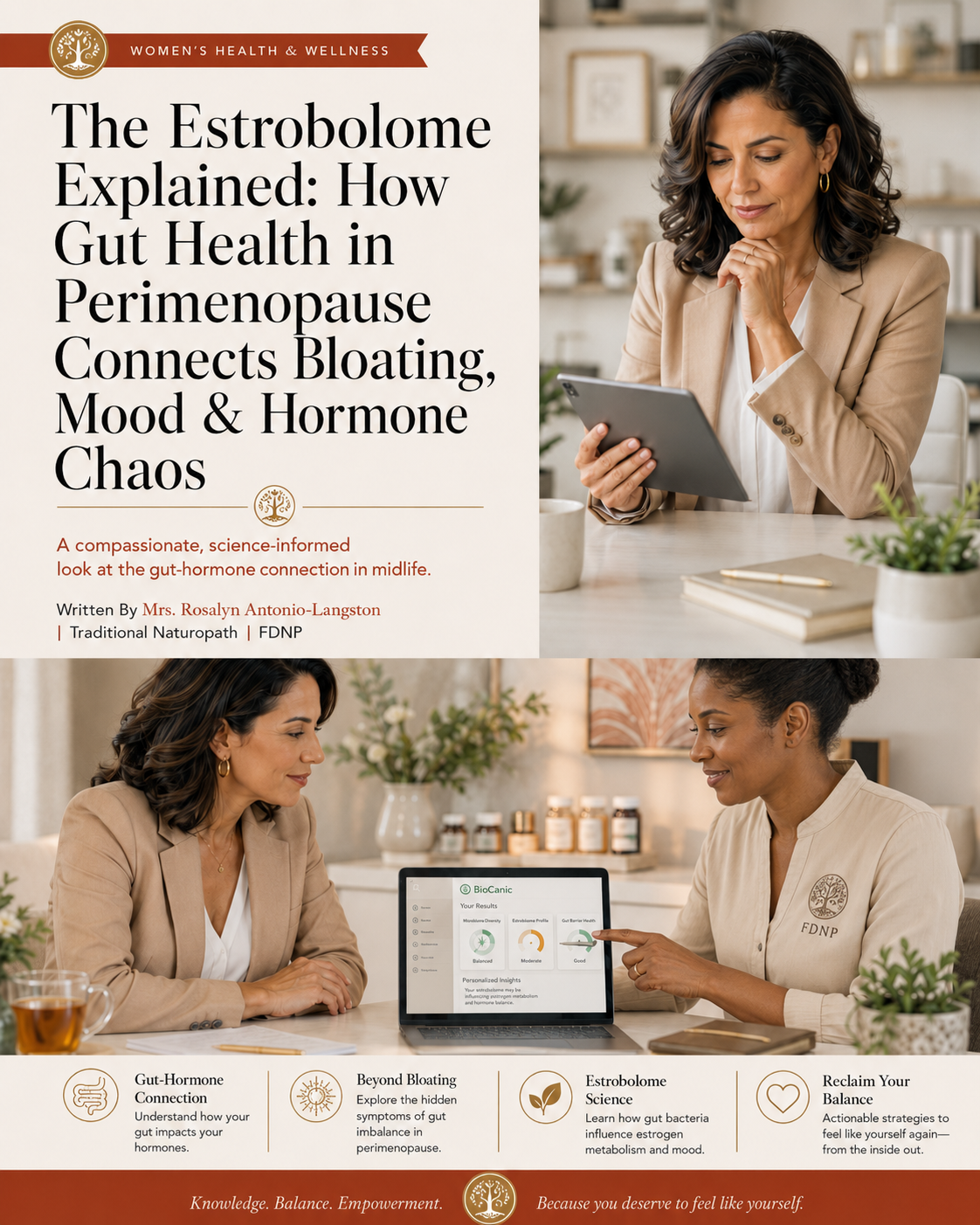
🧬 The estrobolome.
Yes, it sounds like a tiny superhero living in your gut wearing a lab coat. And honestly? Not too far off.
The estrobolome is part of your gut microbiome involved in estrogen metabolism. In simple terms, your gut bacteria help influence how estrogen is processed, recycled, or eliminated from the body.
So if your gut is inflamed, sluggish, overgrown, constipated, under-diverse, or living on ultra-processed chaos snacks and “just one more latte,” your estrogen handling may be affected too.
And during perimenopause and menopause—when estrogen and progesterone are already fluctuating like a Wi-Fi signal in a storm—the gut-hormone connection becomes even more important.
This is not the end of you.
This is a new season. A new chapter. A new invitation to understand your body with wisdom, science, and compassion.
Or as we say in Functional Diagnostic Nutrition®: this is not just symptom drama. This may be Metabolic Chaos® revealing hidden healing opportunities.
Let’s break it down.
🦠 First, What Is the Microbiome?
Your microbiome is the community of bacteria, yeasts, viruses, and other microorganisms living in and on your body.
Before anyone gets squeamish, let’s behave ourselves. Not all microbes are bad. Many are deeply beneficial.
Your gut microbes help support:
Digestion
Nutrient production and absorption
Immune balance
Inflammation regulation
Bowel regularity
Blood sugar balance
Mood and neurotransmitter signaling
Estrogen metabolism
Detoxification pathways
Gut barrier integrity
In other words, your gut is not just a food tube.
It is a communication hub.
It talks to your brain, liver, immune system, hormones, metabolism, and nervous system. It is giving group chat energy all day long.
And when the group chat gets messy? Symptoms start showing up.
Bloating. Constipation. Loose stools. Anxiety. Brain fog. PMS-like symptoms. Histamine reactions. Skin flare-ups. Sleep disruption. Cravings. Weight changes. Mood swings.
The gut does not exist in isolation. It is part of the whole woman.
💃🏽 So What Is the Estrobolome?
The estrobolome refers to the collection of gut microbes and microbial enzymes involved in estrogen metabolism.
Here is the simple version.
Your body makes estrogen. Your liver processes estrogen. Then estrogen metabolites are packaged up and sent into bile so they can leave the body through the stool.
Beautiful design.
But here is where the gut comes in.
Some gut bacteria produce an enzyme called beta-glucuronidase. This enzyme can unpack estrogen that was supposed to be eliminated and allow it to be reabsorbed back into circulation.
That is not automatically bad. The body does recycle hormones to some degree.
But when beta-glucuronidase activity is too high, or when the gut is inflamed, constipated, or dysbiotic, estrogen clearance may become less efficient.
Translation?
Your body may be trying to take the trash out, but the gut keeps dragging the bag back into the kitchen.
Not cute.
This may contribute to patterns some women describe as “estrogen dominance,” though clinically we want to be more precise. It may not mean estrogen is always objectively high. It may mean estrogen is not being metabolized, balanced, or cleared in a way that matches your body’s needs.
That is why testing matters.
Because guessing is how women end up with 27 supplements, expensive urine, and still bloated.
🔥 Why This Matters More in Perimenopause and Menopause
During perimenopause, estrogen and progesterone do not politely decline in a straight line.
They fluctuate.
Estrogen can surge. Progesterone often declines earlier. Ovulation may become inconsistent. Cortisol may rise. Sleep may suffer. Insulin sensitivity may shift. Thyroid function may feel more fragile. Histamine may become more noticeable.
It is a lot.
And then the gut says, “Since everyone else is acting up, I shall participate.”
Many women notice new or worsening digestive symptoms in midlife, including:
Bloating after meals
More gas
Food sensitivities
Reflux
Slower digestion
Loose stools
Cramping
Feeling puffy or inflamed
Mood changes tied to digestion
This is why a woman may say:
“I used to eat this with no problem.”
Exactly. But your internal terrain has changed.
Your hormones changed. Your stress load changed. Your sleep changed. Your gut motility changed. Your bile flow may have changed. Your microbial diversity may have shifted.
This is not you being dramatic.
This is physiology.
And physiology can be supported.
🧠 The Gut-Brain-Hormone Triangle
Now let’s talk about mood, because whew.
Perimenopause can feel like your nervous system has been living in airplane mode but still receiving all notifications.
The gut and brain communicate through several pathways, including:
The vagus nerve
Immune signaling
Inflammatory messengers
Short-chain fatty acids
Neurotransmitter-related pathways
Blood sugar regulation
Stress hormone signaling
Your gut microbes help produce compounds that influence mood and inflammation. They do not single-handedly “make serotonin” in a magical wellness fairy way, but they do influence the internal environment that supports neurotransmitter balance and brain resilience.
So when the gut is inflamed or imbalanced, women may experience more:
Anxiety
Low mood
Irritability
Brain fog
Poor stress tolerance
Sleep disruption
Emotional reactivity
Sensory overwhelm
And when estrogen and progesterone are fluctuating, the nervous system may already be more sensitive.
So yes, your bloating and mood may be connected.
Not because “it is all in your head.”
Because your head is connected to your gut, your gut is connected to your hormones, your hormones are connected to your nervous system, and your nervous system is connected to the woman trying not to lose it in the Tesco queue.
Amen and help us, Lord.
🧪 The Science, But Make It Understandable
Let’s break down the key mechanisms.
1. Estrogen affects the gut
Estrogen helps influence gut motility, gut barrier function, immune tone, and microbial composition. When estrogen fluctuates or declines, digestion may become less predictable.
2. The gut affects estrogen
Gut bacteria help regulate estrogen through the estrobolome. Certain microbial enzymes, especially beta-glucuronidase, can influence whether estrogen metabolites are eliminated or reactivated.
3. Constipation can worsen hormone clearance
If you are not moving your bowels regularly, estrogen metabolites and toxins may sit in the colon longer. That gives more opportunity for reabsorption.
Daily elimination is not just “nice.” It is part of hormonal hygiene.
4. Low microbial diversity can create problems
A diverse microbiome is generally more resilient. Low diversity may be linked with inflammation, poor digestion, food reactions, and less efficient hormone handling.
5. Inflammation changes everything
Inflammation can disrupt hormone signaling, insulin sensitivity, thyroid conversion, mood, digestion, and detoxification. This is classic Metabolic Chaos® territory.
The body is not broken.
It is overwhelmed.
And overwhelmed systems need strategy, not shame.
🚩 Signs Your Estrobolome May Need Support
You cannot diagnose estrobolome dysfunction by symptoms alone, but these patterns may suggest the gut-hormone connection deserves investigation:
Bloating that worsens before your cycle
Constipation or incomplete bowel movements
PMS-like mood changes in perimenopause
Breast tenderness
Heavy or clotty periods
Fibroid or endometriosis history
Histamine symptoms around ovulation or luteal phase
Migraines tied to hormonal shifts
Acne or skin flare-ups
Worsening anxiety with gut symptoms
Food sensitivities that seem to multiply
Estrogen detox supplements making you feel worse
Feeling puffy, inflamed, or “backed up”
Strong reactions to fermented foods, wine, vinegar, or leftovers
Poor tolerance to probiotics
The last one matters.
Because not every probiotic is your friend in every season.
Some women are out here taking random probiotics like they are collecting Pokémon. Meanwhile their gut is saying, “Please stop inviting strangers into my house.”
Testing helps us know what we are actually working with.
🍽️ Foods That Can Wreck the Microbiome, Temporarily or Long-Term
Let’s be clear.
This is not about food fear.
Food is not moral. You are not “bad” because you ate something processed. We are not doing shame-based wellness over here.
But some foods and ingredients can disrupt the gut microbiome, irritate the gut lining, worsen blood sugar swings, increase inflammation, or feed dysbiosis in sensitive women.
Sometimes we remove them temporarily while we calm the gut and identify healing opportunities.
Foods and ingredients often worth pausing for a season:
Sugar can feed certain opportunistic microbes, worsen cravings, destabilize blood sugar, and increase inflammatory load.
🧃 Ultra-processed foods
Packaged foods high in refined starches, additives, emulsifiers, artificial colours, preservatives, and low-quality oils may reduce diet quality and disrupt microbial balance.
🥤 Artificial sweeteners and sugar alcohols
Some women tolerate these. Others experience bloating, gas, loose stools, cravings, or microbial shifts. Common offenders include sucralose, aspartame, sorbitol, maltitol, and xylitol.
🍞 Gluten-containing grains
Gluten is not automatically evil, but in women with gut inflammation, autoimmunity, celiac disease, non-celiac gluten sensitivity, or high immune reactivity, it may be worth removing temporarily.
🥛 Dairy
Some women tolerate dairy beautifully. Others experience mucus, bloating, acne, constipation, loose stools, or inflammation. Testing and symptom tracking matter.
🍷 Alcohol
Alcohol can irritate the gut lining, burden the liver, disrupt sleep, affect blood sugar, and increase estrogen-related concerns. From a Seventh-day Adventist health message perspective, temperance and abstinence are not outdated—they are protective wisdom.
🌶️ Personal trigger foods
This may include eggs, corn, soy, nightshades, high-FODMAP foods, high-histamine foods, or specific additives. The goal is not to remove everything forever. The goal is to identify what is creating inflammation now.
A temporary elimination phase should be strategic, not fear-based.
Because the goal is food freedom with discernment, not living on lettuce, sadness, and air.
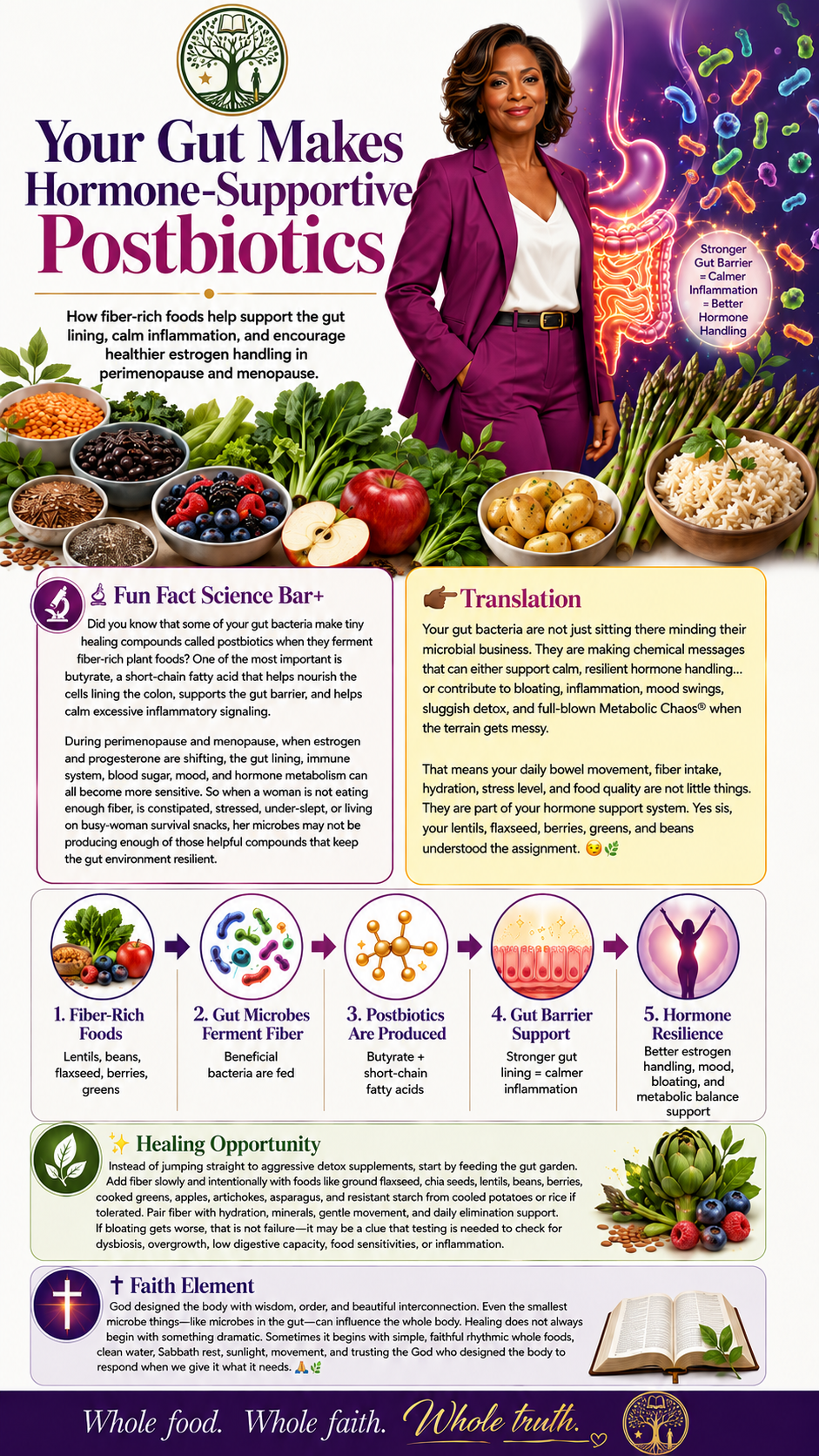
🔬 Fun Fact Science Bar+
Did you know that some of your gut bacteria make tiny healing compounds called postbiotics when they ferment fiber-rich plant foods? One of the most important is butyrate, a short-chain fatty acid that helps nourish the cells lining the colon, supports the gut barrier, and helps calm excessive inflammatory signaling.
During perimenopause and menopause, when estrogen and progesterone are shifting, the gut lining, immune system, blood sugar, mood, and hormone metabolism can all become more sensitive. So when a woman is not eating enough fiber, is constipated, stressed, under-slept, or living on “busy woman survival snacks,” her microbes may not be producing enough of those helpful compounds that keep the gut environment resilient.
👉🏾 Translation: Your gut bacteria are not just sitting there minding their microbial business. They are making chemical messages that can either support calm, resilient hormone handling… or contribute to bloating, inflammation, mood swings, sluggish detox, and full-blown Metabolic Chaos® when the terrain gets messy.
That means your daily bowel movement, fiber intake, hydration, stress level, and food quality are not “little things.” They are part of your hormone support system. Yes, sis, your lentils, flaxseed, berries, greens, and beans understood the assignment. 😌🌿
✨ Healing Opportunity: Instead of jumping straight to aggressive detox supplements, start by feeding the gut garden. Add fiber slowly and intentionally with foods like ground flaxseed, chia seeds, lentils, beans, berries, cooked greens, apples, artichokes, asparagus, and resistant starch from cooled potatoes or rice if tolerated. Pair fiber with hydration, minerals, gentle movement, and daily elimination support. If bloating gets worse, that is not failure—it may be a clue that testing is needed to check for dysbiosis, overgrowth, low digestive capacity, food sensitivities, or inflammation.
✝️ Faith Element: God designed the body with wisdom, order, and beautiful interconnection. Even the smallest unseen things—like microbes in the gut—can influence the whole body. That is a reminder that hidden places matter. Just like spiritual health is nourished by daily bread, prayer, rest, and obedience, physical health is nourished by consistent stewardship. Healing does not always begin with something dramatic. Sometimes it begins with simple, faithful rhythms: whole foods, clean water, Sabbath rest, sunlight, movement, and trusting the God who designed the body to respond when we give it what it needs. 🙏🏾🌿
🌱 Food-Based Support for the Estrobolome
Before supplements, we start with the plate.
The gut loves consistency, minerals, fiber, polyphenols, hydration, and calm meals.
Not “perfect” meals.
Supportive meals.
🫘 1. Feed your microbes with fiber
Fiber helps support bowel regularity and short-chain fatty acid production. Short-chain fatty acids, like butyrate, help nourish colon cells and support gut barrier integrity.
Great options include:
Lentils
Beans
Chickpeas
Ground flaxseed
Chia seeds
Psyllium
Oats if tolerated
Apples
Berries
Artichokes
Asparagus
Onions and garlic if tolerated
Sweet potatoes
Green bananas or plantains
Cooked and cooled potatoes or rice for resistant starch
If you are very bloated, do not suddenly jump from low fiber to “bean evangelist” overnight.
Increase slowly.
Your microbes need discipleship, not a surprise crusade.
🥦 2. Support estrogen metabolism with crucifers
Cruciferous vegetables contain compounds that support healthy estrogen metabolism pathways.
Try:
Broccoli sprouts
Broccoli
Cauliflower
Brussels sprouts
Cabbage
Kale if tolerated
Bok choy
Arugula
Mustard greens
For sensitive guts, cooked crucifers may be better than raw.
🍓 3. Add polyphenol-rich foods
Polyphenols are plant compounds that feed beneficial microbes and support antioxidant pathways.
Beautiful choices include:
Berries
Pomegranate
Green tea if tolerated
Hibiscus
Cacao if tolerated
Rosemary
Thyme
Turmeric
Ginger
Red cabbage
Olives
Apples
Grapes
Plant foods are not just “side dishes.”
They are information for your cells.
💧 4. Hydrate like your hormones depend on it
Constipation and sluggish elimination are not helped by dehydration.
Hydration supports:
Bowel movements
Lymph flow
Blood volume
Cellular detoxification
Energy
Skin
Mood
Temperature regulation
Mineral-rich hydration may be especially helpful for women dealing with fatigue, low blood pressure tendencies, headaches, or adrenal stress patterns.
🥗 5. Eat enough protein
Many midlife women are under-proteined and over-caffeinated.
Protein supports:
Liver detoxification
Blood sugar stability
Muscle maintenance
Neurotransmitter production
Immune function
Hormone transport
Satiety
For plant-based women, consider lentils, beans, tofu if tolerated, tempeh if tolerated, edamame, hemp seeds, pumpkin seeds, protein-rich whole grains, and clean plant protein powders when needed.
💊 Supplements & Nutraceuticals That May Support the Gut-Hormone Axis
Supplements are not magic confetti.
They can be helpful, but they should match the person, the lab findings, the symptoms, the season, and the capacity of the body.
Here are categories I may consider in a personalized protocol.
🌾 Prebiotics
Prebiotics feed beneficial bacteria.
Options may include:
Partially hydrolyzed guar gum
Acacia fiber
Inulin, if tolerated
Fructooligosaccharides, if tolerated
Psyllium husk
Resistant starch
Ground flaxseed
Sensitive gut note: start low and slow.
🦠 Probiotics
Probiotics can be supportive, but strain selection matters.
Potential options may include:
Bifidobacterium strains
Lactobacillus strains
Spore-based probiotics
Saccharomyces boulardii
Akkermansia-supportive strategies
But if someone has SIBO tendencies, histamine intolerance, severe bloating, or immune reactivity, I do not throw probiotics at the wall and hope one sticks.
We test. We assess. We personalize.
Where to Buy Professional-Grade Supplements
🇺🇸 United States: Click here
🇬🇧 United Kingdom: Click here code: KXCTGG
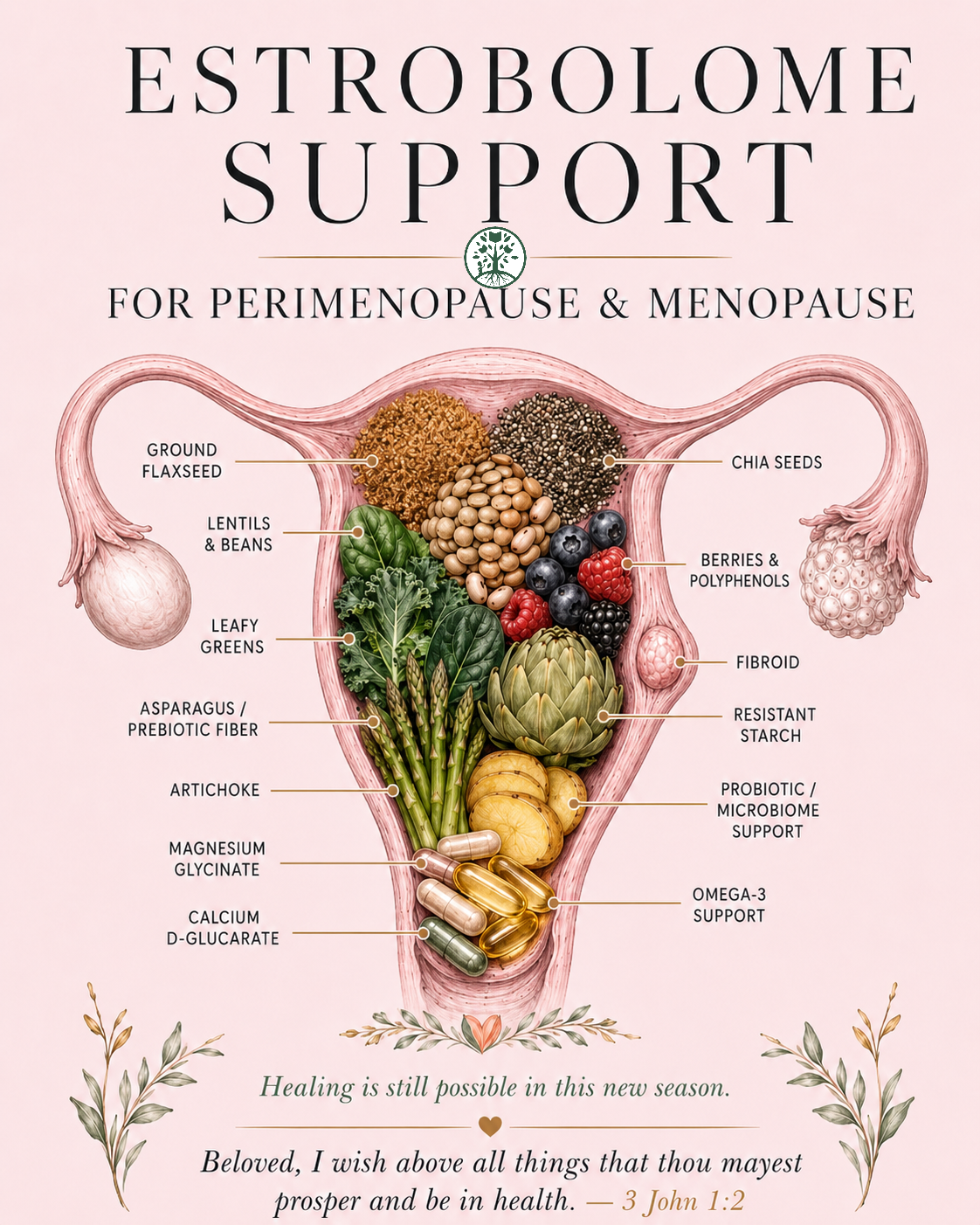
🌿 Estrogen metabolism support
Depending on the woman, labs, symptoms, and medical history, support may include:
Broccoli sprout extract
Sulforaphane
DIM
Calcium D-glucarate
Ground flaxseed
Green tea extract
Milk thistle
NAC
Glutathione support
B vitamins
Magnesium
Zinc
Selenium
Important: DIM is not for everyone. Calcium D-glucarate is not for everyone. “Detox” is not for everyone in every season.
If your drainage pathways are blocked, bowels are sluggish, sleep is poor, and stress is high, aggressive detox support can make you feel worse.
Open the exit doors before pushing more through the hallway.
🔥 Inflammation and gut barrier support
Depending on need, this may include:
L-glutamine
Zinc carnosine
Aloe inner leaf
Marshmallow root
Slippery elm
Quercetin
Curcumin
Omega-3s from algae
Colostrum alternatives for those avoiding animal products
Butyrate
Immunoglobulin alternatives when appropriate and compatible with values
For plant-based clients, I pay close attention to sourcing, additives, capsules, fillers, and whether the product aligns with dietary convictions and tolerance.
🧘🏽♀️ Nervous system support
Your gut cannot heal well if your nervous system thinks it is being chased by a lion every day.
Support may include:
Magnesium glycinate
L-theanine
Lemon balm
Passionflower
Holy basil
Ashwagandha, if appropriate
Phosphatidylserine, if cortisol patterns suggest need
Breathwork
Prayer walks
Morning light
Sabbath rest
Gentle strength training
Consistent sleep rhythms
Sometimes the most powerful “gut protocol” begins with convincing the body it is safe enough to digest.
Where to Buy Professional-Grade Supplements
🇺🇸 United States: Click here
🇬🇧 United Kingdom: Click here code: KXCTGG
🧪 Why Testing Matters: Because Guessing Is Expensive
Symptoms tell us something is going on.
Testing helps us understand what kind of something.
In my practice, functional testing is not about chasing numbers or collecting fancy PDFs. It is about identifying the hidden stressors contributing to Metabolic Chaos® and creating a personalized plan.
Here are some of the tools that may be helpful.
🧬 DUTCH Hormone Testing
DUTCH testing can help evaluate sex hormones, adrenal hormones, cortisol patterns, and hormone metabolites.
This matters because two women may both say, “I feel estrogen dominant,” but one may have high estrogen, another may have low progesterone, another may have poor estrogen clearance, another may have cortisol chaos, and another may have all of the above wearing a trench coat.
🧬 DNAlife DNA Hormones
DNA Hormones can help assess genetic variations related to hormone metabolism and detoxification pathways.
Genes are not destiny, but they are helpful context.
They tell us where a woman may need extra support with estrogen metabolism, methylation, detoxification, oxidative stress, or hormone signaling.
💩 GI-MAP
GI-MAP helps evaluate gut microbes, pathogens, H. pylori, parasites, fungi, bacteria, and important digestive and inflammatory markers.
This can be especially helpful when a woman has bloating, constipation, loose stools, reflux, food reactions, histamine issues, skin flares, or mood symptoms connected to gut patterns.
Depending on the panel and markers used, stool testing may also help us assess things like inflammation, immune activity, digestion, and gut barrier concerns.
🥗 MRT Food Sensitivity Testing
MRT can help identify foods and food chemicals that may be provoking inflammatory mediator release.
This can be useful for women who feel like they are reacting to “everything” and need a structured way to calm inflammation without eliminating half the grocery store forever.
🧾 FBCA
Functional Blood Chemistry Analysis helps look at patterns in standard bloodwork through a functional lens.
This may reveal healing opportunities related to:
Blood sugar regulation
Iron status
Inflammation
Liver stress
Kidney markers
Thyroid patterns
Nutrient status
Protein status
Immune patterns
Standard labs are not useless. They are often under-interpreted.
🧪 Additional Testing May Include
Depending on the woman, I may also consider:
Metabolomix+
Fluids iQ Mucosal Barrier and Metabolic Wellness
Full thyroid panel with antibodies
Nutrient testing
Organic acids
Hair tissue mineral analysis
Cortisol rhythm testing
Inflammatory markers
The goal is not to test everything.
The goal is to test wisely.
Because personalized care should be personal.
🛠️ A Gentle Gut-Hormone Reset Strategy
Here is a simple framework many women can begin thinking about.
1. Remove what is irritating
Temporarily reduce ultra-processed foods, refined sugar, alcohol, artificial sweeteners, and known triggers.
2. Replace what is missing
Support stomach acid, bile flow, digestive enzymes, minerals, hydration, and protein where appropriate.
3. Reinoculate carefully
Use food-based prebiotics, targeted probiotics, polyphenols, and fermented foods only if tolerated.
4. Repair the terrain
Support the gut lining, inflammation balance, and nervous system regulation.
5. Rebalance hormones
Support estrogen metabolism, progesterone resilience, cortisol rhythm, insulin sensitivity, and thyroid function.
6. Retest and refine
Because your body changes. Your plan should too.
This is not a 7-day skinny tea situation.
This is rebuilding.
And rebuilding is holy work.
🙏🏽 A Faith-Based Perspective: Your Body Is Designed, Not Defective
From a biblical worldview, the body is fearfully and wonderfully made.
Not randomly thrown together.
Not defective because it needs support.
Not shameful because it changes.
Perimenopause and menopause are not punishments. They are transitions. And transitions require wisdom.
The Seventh-day Adventist health message has long emphasized principles that beautifully support the microbiome and hormone resilience:
Positive attitude
Whole plant foods
Temperance
Rest
Fresh air
Sunlight
Movement
Water
Trust in God
That sounds a lot like nervous system care, metabolic support, gut nourishment, and hormone stewardship.
Imagine that.
God’s design was not behind the times. We are simply catching up with it.
Your body’s symptoms may be whispers asking for attention before they become screams.
And when we listen early, we often find healing opportunities.
🌸 This Is Not the End—It Is a New Chapter
To the woman who feels bloated, anxious, exhausted, puffy, reactive, and confused by her own body:
You are not crazy.
You are not lazy.
You are not “just getting older.”
You are in a transition that deserves support, strategy, and compassion.
Your gut may be asking for restoration.
Your hormones may be asking for rhythm.
Your nervous system may be asking for safety.
Your liver may be asking for nourishment.
Your bowels may be asking for consistency.
Your soul may be asking for rest.
And your body may still have a tremendous capacity to heal when given the right conditions.
This season is not the closing chapter.
It may be the chapter where you finally stop pushing through and start partnering with your body.
With wisdom.
With testing.
With faith.
With food that nourishes.
With rest that restores.
With boundaries that protect.
With a plan that fits you.
Because midlife is not where women go to fade.
It is where many women finally become rooted.
🌿 Call to Action: Ready to Find Your Healing Opportunities?
At Leaves from the Tree of Life LLC, we help Businesswomen who are Hormonal, Anxious, and Bloated through Functional Nutrition Coaching + Labs.
Using a root-cause, faith-forward approach, we look beyond “normal labs” and surface-level symptoms to investigate the hidden stressors contributing to Metabolic Chaos®.
Through functional lab testing such as DUTCH, DNAlife Hormones, GI-MAP, MRT, FBCA, and other personalized assessments, we help women understand what their body is trying to communicate—then build a realistic, nourishing plan to support gut health, hormone resilience, mood, energy, and midlife confidence.
If your gut, mood, hormones, and energy feel like they are all having a meeting without your permission, it may be time to stop guessing and start investigating.
Your body is not betraying you.
It is speaking.
Let’s learn its language.
✨ Book a Call today and take the first step toward uncovering your healing opportunities with Functional Nutrition Coaching + Labs.
Leaves from the Tree of Life LLC
Whole food. Whole faith. Whole truth. 🌿
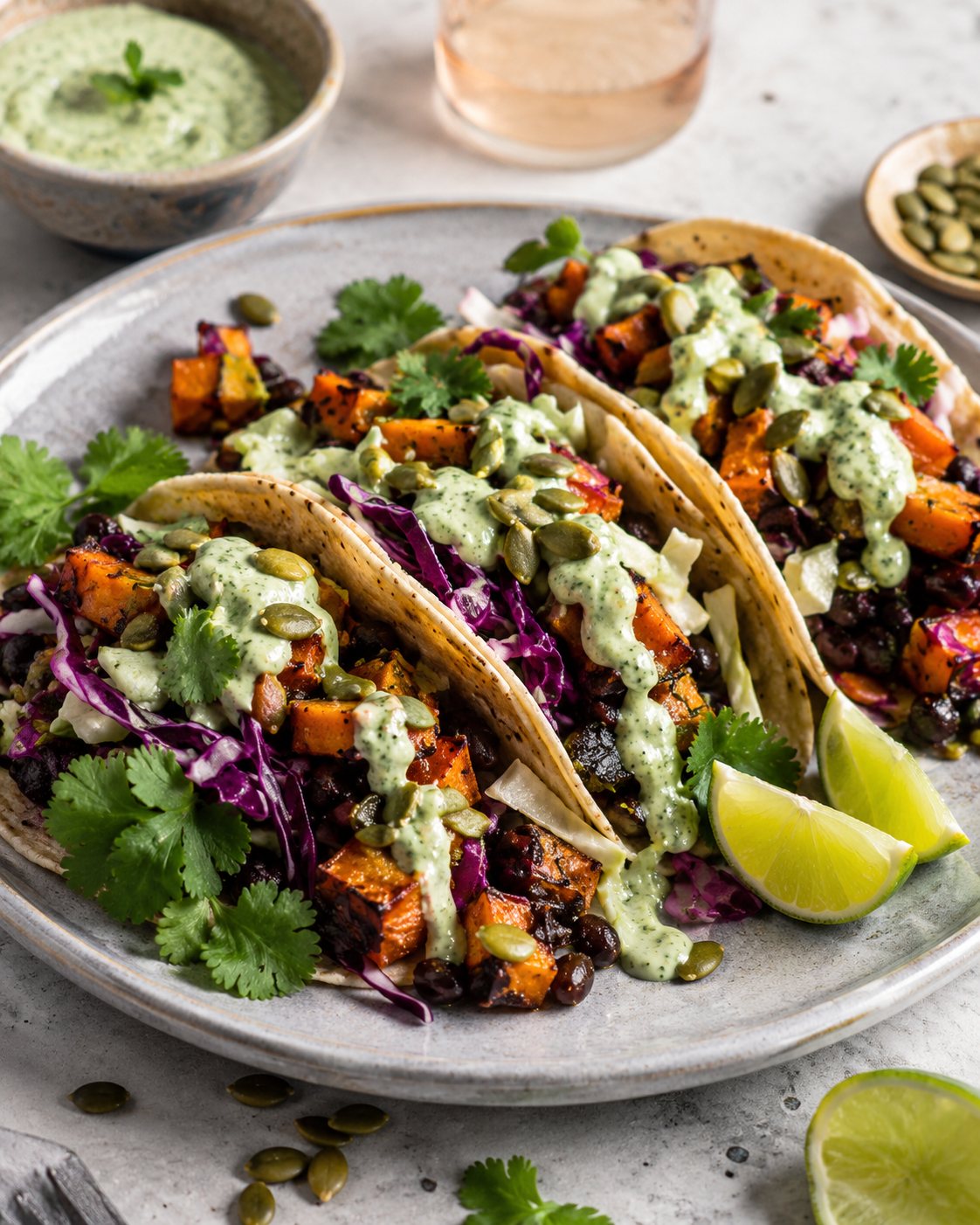
🌮 Roasted Sweet Potato & Black Bean Estrobolome Tacos
With Creamy Avocado-Lime Sauce
⏱️ Time
Prep Time: 15 minutes
Cook Time: 25–30 minutes
Total Time: 40–45 minutes
Servings: 4
Makes: About 8 tacos
🌱 Why These Tacos Work for the Estrobolome
Your estrobolome is the part of your gut microbiome involved in estrogen metabolism and hormone handling. During perimenopause and menopause, supporting the gut matters because digestion, elimination, inflammation, mood, blood sugar, and hormone balance are all connected.
These tacos bring together:
🌮 Black beans for microbiome-friendly fibre and plant protein
🍠 Sweet potatoes for blood-sugar-friendly comfort and gut-supportive carbohydrates
🥬 Cabbage for cruciferous support and estrogen metabolism pathways
🥑 Avocado for creamy, mineral-rich, dairy-free satisfaction
🌿 Cilantro and lime for freshness, flavour, and digestive brightness
🌽 Corn tortillas for a simple gluten-free taco base
Translation: hormone support, but make it delicious.
🛒 Ingredients
🌮 For the Tacos
8 soft corn tortillas
2 medium sweet potatoes, peeled or unpeeled, diced into small cubes
1 ½ cups cooked black beans, rinsed and drained
2 cups shredded red or green cabbage
½ cup fresh cilantro, chopped
1 small red onion, thinly sliced, optional
1 lime, cut into wedges
1–2 tablespoons pumpkin seeds, optional for topping
Extra cilantro for garnish
🍠 For the Roasted Sweet Potatoes
2 medium sweet potatoes, diced
1 tablespoon avocado oil or vegetable broth for oil-free roasting
1 teaspoon smoked paprika
1 teaspoon ground cumin
½ teaspoon garlic powder
½ teaspoon onion powder
¼ teaspoon cayenne pepper or chili flakes, optional
Sea salt to taste
🫘 For the Smoky Black Beans
1 ½ cups cooked black beans
¼ cup water or vegetable broth
½ teaspoon smoked paprika
½ teaspoon cumin
½ teaspoon garlic powder
¼ teaspoon onion powder
Pinch of cayenne pepper or chili flakes, optional
Juice of ½ lime
Sea salt to taste
🥑 For the Avocado-Lime Cream
1 ripe avocado
Juice of 1 lime
2–3 tablespoons water, more as needed
1 small garlic clove, optional
2 tablespoons fresh cilantro
¼ teaspoon cumin
Sea salt to taste
Optional add-ins:
1 tablespoon hemp seeds for extra creaminess
1 tablespoon pumpkin seeds for minerals
A small splash of unsweetened plant milk if you want it extra silky
👩🏾🍳 Instructions
1. 🍠 Roast the Sweet Potatoes
Preheat oven to 200°C / 400°F.
Add diced sweet potatoes to a bowl with smoked paprika, cumin, garlic powder, onion powder, cayenne or chili flakes, and sea salt.
Add avocado oil or use a splash of vegetable broth for oil-free roasting. Toss until well coated.
Spread on a lined baking tray and roast for 25–30 minutes, flipping halfway through, until tender and lightly caramelised.
You want those edges golden and slightly crisp. We are not steaming sadness today.
2. 🫘 Warm the Smoky Black Beans
In a small pan, add black beans, water or vegetable broth, smoked paprika, cumin, garlic powder, onion powder, cayenne or chili flakes, and sea salt.
Warm over medium heat for 5–7 minutes, stirring occasionally.
Mash a few beans with the back of a spoon to create a thicker, creamier texture.
Finish with fresh lime juice.
3. 🥑 Blend the Avocado-Lime Cream
Add avocado, lime juice, water, cilantro, garlic if using, cumin, and sea salt to a blender or food processor.
Blend until smooth and creamy.
Add more water, one tablespoon at a time, until it reaches a drizzle-able sauce consistency.
Taste and adjust lime or salt as needed.
4. 🌽 Warm the Tortillas
Warm corn tortillas in a dry skillet for about 20–30 seconds per side until soft and flexible.
You can also wrap them in foil and warm them in the oven for a few minutes.
5. 🌮 Assemble the Tacos
Layer each tortilla with:
Smoky black beans
Roasted sweet potatoes
Shredded cabbage
Avocado-lime cream
Fresh cilantro
Pumpkin seeds, if using
A squeeze of lime
Serve immediately while warm, creamy, crunchy, and absolutely not boring.
🌿 Health Benefits of Each Ingredient
🍠 Sweet Potatoes
Sweet potatoes provide complex carbohydrates, fibre, potassium, and beta-carotene. They help make the tacos satisfying while supporting blood sugar stability better than refined carbohydrates.
🫘 Black Beans
Black beans are rich in fibre, plant protein, resistant starch, magnesium, and polyphenols. They help feed beneficial gut bacteria and support regular elimination, which is important for healthy estrogen clearance.
🥬 Cabbage
Cabbage is a cruciferous vegetable that contains compounds involved in healthy estrogen metabolism pathways. It also adds crunch, fibre, and gut-friendly plant compounds.
🥑 Avocado
Avocado brings creamy texture, fibre, potassium, magnesium, and healthy plant fats. It helps make the meal more satisfying without dairy.
🌿 Cilantro
Cilantro adds fresh flavour and plant compounds. It also gives the tacos brightness, which helps balance the sweetness of the roasted sweet potato.
🍋 Lime
Lime juice supports flavour, freshness, and digestive stimulation. It helps brighten the beans, sauce, and overall taco experience.
🌽 Corn Tortillas
Corn tortillas are naturally gluten-free and make a simple base for the tacos. Choose options with minimal ingredients when possible.
🎃 Pumpkin Seeds
Pumpkin seeds provide magnesium, zinc, plant protein, and healthy fats. They add crunch and mineral support, especially helpful for midlife women navigating stress, sleep, and hormone changes.
🌶️ Cayenne or Chili Flakes
These add gentle heat and circulation-supportive warmth. Use as tolerated, especially if you are sensitive to spicy foods, reflux, or histamine-type reactions.
✨ Serving Ideas
Serve with:
A side of lime-cilantro quinoa
A simple cucumber and tomato salad
Steamed greens with lemon
Roasted peppers and onions
A warm cup of peppermint, ginger, or nettle tea
For extra richness, add a drizzle of tahini-lime sauce or a spoonful of dairy-free cashew cream.
🙏🏾 Faith & Food Encouragement
Food is not just fuel. It is stewardship.
These tacos are a reminder that supporting your body does not have to feel restrictive, joyless, or complicated. God designed the body with wisdom, and He also filled the earth with colourful, nourishing foods that can support healing, resilience, and renewal.
🌮 Final Plate Vibe
These tacos are perfect for the woman who is tired, bloated, hormonal, busy, and still wants her food to taste like somebody cared.
They are colourful, filling, gut-supportive, hormone-friendly, and full of flavour.
Because perimenopause may be doing the most…
…but dinner does not have to be boring.
References
🌸 Perimenopause, Menopause & Hormonal Changes
NICE. Menopause: identification and management (NG23).
https://www.nice.org.uk/guidance/ng23 [1]
NHS. Menopause and perimenopause.
https://www.nhs.uk/conditions/menopause-and-perimenopause/ [2]
NHS. Symptoms of menopause and perimenopause.
https://www.nhs.uk/conditions/menopause-and-perimenopause/symptoms/ [3]
British Menopause Society. What is the menopause? PDF, January 2026.
https://thebms.org.uk/wp-content/uploads/2026/01/17-NEW-BMS-TfC-What-is-the-menopause-JAN2026-A.pdf [4]
The Menopause Society. Position Statements / Professional Resources.
https://menopause.org/professional-resources/position-statements [5]
The Menopause Society. The 2022 Hormone Therapy Position Statement. PubMed.
https://pubmed.ncbi.nlm.nih.gov/35797481/ [6]
🦠 Menopause, the Microbiome & Midlife Gut Changes
Peters BA, et al. Spotlight on the Gut Microbiome in Menopause: Current Insights. PMC.
https://pmc.ncbi.nlm.nih.gov/articles/PMC9379122/ [7]
Nieto MR, et al. Menopausal shift on women’s health and microbial niches. Nature / npj Women’s Health, 2025.
https://www.nature.com/articles/s44294-024-00050-y [8]
Wang H, et al. Gut microbiota has the potential to improve health of postmenopausal women. Frontiers in Endocrinology, 2025.
https://www.frontiersin.org/journals/endocrinology/articles/10.3389/fendo.2025.1562332/full [9]
Wang H, et al. Gut microbiota has the potential to improve health of postmenopausal women. PMC.
https://pmc.ncbi.nlm.nih.gov/articles/PMC12183514/ [10]
Liaquat M, et al. The gut microbiota in menopause: Is there a role for prebiotic and probiotic interventions? PMC, 2025.
https://pmc.ncbi.nlm.nih.gov/articles/PMC12209548/ [11]
🧬 The Estrobolome, Estrogen Metabolism & β-Glucuronidase
Larnder AH, et al. The estrobolome: Estrogen-metabolizing pathways of the gut microbiome. PMC, 2025.
https://pmc.ncbi.nlm.nih.gov/articles/PMC12178105/ [12]
Hu S, et al. Gut microbial beta-glucuronidase: a vital regulator in female estrogen metabolism. PMC, 2023.
https://pmc.ncbi.nlm.nih.gov/articles/PMC10416750/ [13]
Ervin SM, et al. Gut microbial β-glucuronidases reactivate estrogens as components of the estrobolome that reactivate estrogens. PMC.
https://pmc.ncbi.nlm.nih.gov/articles/PMC6901331/ [14]
Sui Y, et al. The Role of Gut Microbial β-Glucuronidase in Estrogen Reactivation and Breast Cancer. Frontiers in Cell and Developmental Biology.
https://www.frontiersin.org/journals/cell-and-developmental-biology/articles/10.3389/fcell.2021.631552/full [15]
Lim MJS, et al. Diet, the Gut Microbiome, and Estrogen Physiology. PMC, 2026.
https://pmc.ncbi.nlm.nih.gov/articles/PMC13074627/ [16]
🌾 Fiber, Butyrate, Short-Chain Fatty Acids & Gut Barrier Support
Ney LM, et al. Short chain fatty acids: key regulators of the local and systemic immune response in inflammatory diseases and infections. PMC, 2023.
https://pmc.ncbi.nlm.nih.gov/articles/PMC10049789/ [17]
Siddiqui MT, et al. The Immunomodulatory Functions of Butyrate. PMC.
https://pmc.ncbi.nlm.nih.gov/articles/PMC8608412/ [18]
Vinelli V, et al. Effects of Dietary Fibers on Short-Chain Fatty Acids and Gut Microbiota Composition in Healthy Adults: A Systematic Review. PMC.
https://pmc.ncbi.nlm.nih.gov/articles/PMC9268559/ [19]
Mazhar M, et al. The Interplay of Dietary Fibers and Intestinal Microbiota Affects Type 2 Diabetes by Generating Short-Chain Fatty Acids. PMC.
https://pmc.ncbi.nlm.nih.gov/articles/PMC10001013/ [20]
Zhao Y, et al. Linking Short-Chain Fatty Acids to Systemic Homeostasis. PMC, 2025.
https://pmc.ncbi.nlm.nih.gov/articles/PMC12321436/ [21]
Bischoff SC, et al. Intestinal permeability — a new target for disease prevention and therapy. PubMed.
https://pubmed.ncbi.nlm.nih.gov/25407511/ [22]
🥦 Food, Phytoestrogens, Lignans & Microbial Metabolism
Baldi S, et al. Interplay between Lignans and Gut Microbiota. PMC, 2023.
https://pmc.ncbi.nlm.nih.gov/articles/PMC9822457/ [23]
Senizza A, et al. Lignans and Gut Microbiota: An Interplay Revealing Potential Health Implications. PMC.
https://pmc.ncbi.nlm.nih.gov/articles/PMC7731202/ [24]
Musazadeh V, et al. The effect of flaxseed supplementation on sex hormone profile: a systematic review and meta-analysis. Frontiers in Nutrition, 2023.
https://www.frontiersin.org/journals/nutrition/articles/10.3389/fnut.2023.1222584/full [25]
Linus Pauling Institute, Oregon State University. Lignans.
https://lpi.oregonstate.edu/mic/dietary-factors/phytochemicals/lignans [26]
🚫 Ultra-Processed Foods, Artificial Sweeteners & Microbiome Disruption
Rondinella D, et al. The Detrimental Impact of Ultra-Processed Foods on Human Gut Health. PMC, 2025.
https://pmc.ncbi.nlm.nih.gov/articles/PMC11901572/ [27]
Brichacek AL, et al. Ultra-Processed Foods: A Narrative Review of the Impact on the Human Gut Microbiome and Variations in Classification Methods. PMC, 2024.
https://pmc.ncbi.nlm.nih.gov/articles/PMC11174918/ [28]
Spiller AL, et al. Ultra-Processed Foods, Gut Microbiota, and Inflammatory Bowel Disease: Insights and Future Directions. PMC, 2025.
https://pmc.ncbi.nlm.nih.gov/articles/PMC12389707/ [29]
Hetta HF, et al. Artificial Sweeteners: A Double-Edged Sword for Gut and Metabolic Health. PMC, 2025.
https://pmc.ncbi.nlm.nih.gov/articles/PMC12025785/ [30]
Lee CY, et al. Impact of artificial sweeteners and rare sugars on the gut microbiome. PMC, 2024.
https://pmc.ncbi.nlm.nih.gov/articles/PMC11315849/ [31]
🧪 Functional Testing Mentioned in the Blog
DUTCH Test. DUTCH Complete — Precision Analytical.
https://dutchtest.com/dutch-complete [32]
DUTCH Test. DUTCH Complete Overview.
https://dutchtest.com/overview/dutch-complete-overview [33]
Diagnostic Solutions Laboratory. GI-MAP — GI Microbial Assay Plus.
https://www.diagnosticsolutionslab.com/tests/gi-map [34]
Gingras BA, et al. Performance of a new molecular assay for the detection of gastrointestinal pathogens. PMC.
https://pmc.ncbi.nlm.nih.gov/articles/PMC7660239/ [35]
DNAlife. DNA Hormones.
https://www.dnalife.healthcare/products/dna/dna-hormones [36]
Oxford Biomedical Technologies / LEAP. The Patented Mediator Release Test — MRT.
https://www.nowleap.com/the-patented-mediator-release-test/ [37]
Genova Diagnostics. Metabolomix+ Nutritional Test.
https://www.gdx.net/products/metabolomix [38]
Optimal DX. Functional Blood Chemistry Analysis.
https://www.optimaldx.com/ [39]
Optimal DX. What Is Functional Blood Chemistry Analysis?
https://www.optimaldx.com/about-blood-chemistry [40]
Fluids iQ. Permeability / Zonulin — Intestinal Permeability.
https://fluidsiq.com/en/intestinal-permeability/ [41]
🌱 Faith-Aligned Lifestyle Context: Whole Food, Rest & Stewardship
Ellen G. White. The Ministry of Healing. PDF.
https://media3.egwwritings.org/pdf/en_MH.pdf [42]
Ellen G. White Writings. The Use of Remedies.
https://m.egwwritings.org/en/book/135.1478 [43]
Ellen G. White Writings. With Nature and With God.
https://m.egwwritings.org/en/book/135.1344 [44]
NEWSTART Lifestyle Program. NEWSTART Lifestyle Principles.
https://newstart.com/ [45]
Adventist Health Ministries. Health Ministries — Seventh-day Adventist Church.
https://www.healthministries.com/ [46]
Blog Disclaimer
The health information on this blog is for general educational purposes only and is not intended to diagnose, treat, cure, or prevent any disease. It should not be used as a substitute for professional medical advice. Always consult a qualified healthcare provider before making any health-related decisions
This blog may contain affiliate links, meaning Leaves from the Tree of Life LLC may earn a small commission if you purchase a product or service through these links—at no additional cost to you. Your support helps us continue to provide valuable content. Thank you!
