
Perimenopause Constipation in 2026: The Estrogen Exit Route You Can’t Ignore
🚽 In 2026, We’re Done Normalizing “I Haven’t Gone in Days”
If you’ve been Googling, DuckDuckGo-ing, asking the group chat, and doom-scrolling reels that say “just take magnesium and pray”… welcome. 😅
Constipation during peri/menopause is common, yes—but it’s not something you have to accept as your new personality trait.
From a Traditional Naturopath + Functional Diagnostic Nutrition® Practitioner lens, constipation is often a signal—a clue that your gut, hormones, nervous system, liver/bile flow, and stress response are caught in Metabolic Chaos®… which means there are healing opportunities hiding in plain sight.
And here’s the big one many women don’t hear enough:
Your poop is part of your hormone plan.
I said what I said. 🤌🏾🫰🏾

♻️ The “Estrogen Exit Route”: Why Regular Bowel Movements Matter
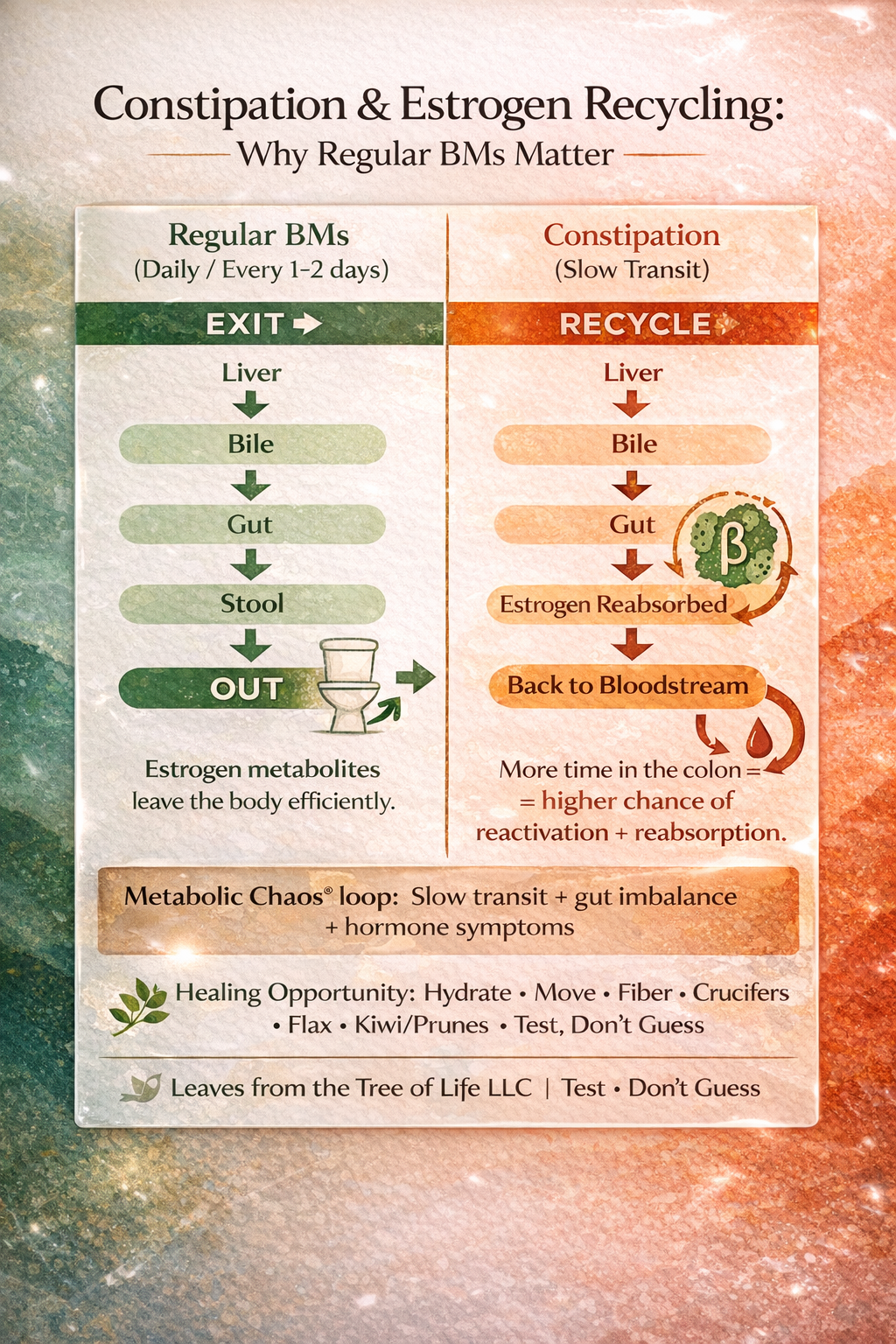
One of the main ways the body clears used/excess estrogen is through the liver → bile → gut → stool route.
Here’s the simplified version:
Your liver helps “package” estrogen metabolites for removal.
Those metabolites move into bile and enter the intestines.
Ideally, you eliminate them in stool.
But when you’re constipated, stool sits longer in the colon—and that can increase the chance of estrogen being re-activated and reabsorbed back into circulation (often discussed via the gut enzyme beta-glucuronidase and what’s called enterohepatic recirculation). Translation: your body tries to take the trash out, but the trash keeps coming back inside. 🗑️🔁
So yes—constipation can contribute to “estrogen dominance” patterns
“Estrogen dominance” isn’t a formal medical diagnosis, but it’s a useful functional phrase for when estrogen effects feel too strong relative to progesterone and/or estrogen clearance feels sluggish.
This can show up as:
heavy or clotty periods
breast tenderness
bloating/water retention
mood swings/irritability
headaches/migraines around the cycle
stubborn weight gain (especially hips/thighs for some)
PMS that feels like a full-time job
And over time, estrogen-driven patterns can be part of the bigger picture behind hormone-influenced conditions like:
fibroids
endometriosis
adenomyosis
ovarian cysts (often multifactorial—still important to evaluate properly)
Important nuance (because we don’t do fear-based wellness here): constipation alone doesn’t “cause” these conditions. But if you already have the tendency, supporting estrogen clearance is a very real healing opportunity.
🧠 Why Peri/Menopause Makes Constipation More Likely
Perimenopause is a whole-body transition. Hormone shifts can influence:
gut motility (how quickly things move)
bile flow/digestion
stress response/cortisol rhythms
sleep quality (and poor sleep = slower everything)
thyroid patterns (thyroid affects motility)
pelvic floor tone and coordination
So if you feel like your digestion changed “out of nowhere,” it might not be random—it may be your body asking for a new strategy for this new season.
🔬 Fun Fact Science Bar+
Did you know your bowel movement frequency can influence how much “used” estrogen actually leaves the body? After estrogen is processed in the liver, it’s sent into the gut through bile so it can be eliminated in stool. But when stool sits in the colon too long (hello constipation), certain gut bacteria can “unpack” those estrogen metabolites (via an enzyme often discussed as beta-glucuronidase)—which may increase the chance of estrogen being reabsorbed back into circulation instead of exiting stage left. ♻️🚽
👉🏾 Translation: If you’re constipated, your body may be trying to take excess estrogen out… but your gut can unintentionally recycle it back in. For some women, that can amplify “estrogen-dominant” symptoms—like heavier flow, breast tenderness, bloating, mood swings—and may worsen the terrain for estrogen-influenced issues like fibroids, endometriosis, adenomyosis, and ovarian cyst patterns. (Not the only cause—but a BIG overlooked contributor.)
In Functional Diagnostic Nutrition® language, this is a Metabolic Chaos® loop: sluggish detox + stressed gut + hormone imbalance feeding into each other… until you interrupt the cycle with a real plan (not vibes).
✨ Healing Opportunity: Make “daily elimination” part of your hormone strategy:
Hydrate + move + fiber (slowly) + bile-friendly foods. Think: warm water in the morning, a 10-minute walk after meals, crucifers (broccoli/cabbage), ground flax, kiwi/prunes/pears, and olive oil with meals. If needed, targeted support like magnesium, DIM, myo-inositol, and bile support (e.g., TUDCA) should be personalized—ideally using testing like GI-MAP + DUTCH Cycle Mapping Plus + FBCA so you’re not guessing.
✝️ Faith Element: Your body thrives on God-designed rhythm. The Sabbath principle—rest, reset, restore—isn’t just spiritual hygiene, it’s nervous-system medicine. Less striving, more stewardship. Temperance isn’t restriction; it’s wisdom. When you support regularity, you’re caring for the body-temple with peace—not pressure. 🙌🏾🕊️
🧪 Test, Don’t Guess: The Functional Testing “Bigger Picture” Approach
If you’ve tried all the things and you still feel stuck, this is where I gently (and lovingly) slide the truth across the table:
You don’t need more internet tips. You need data. 😌
Functional testing helps us stop guessing and start identifying your main drivers—because constipation can come from multiple root causes at once.
Here’s how the tests you mentioned fit together:
🧬 DNA Hormones
Gives insight into genetic tendencies related to hormone pathways, detox capacity, inflammation patterns, and other “pressure points.” Not destiny—just direction.
🧬 DNA Gut + GI-MAP
A powerful combo:
DNA Gut helps personalize likely terrain tendencies.
GI-MAP helps assess what’s happening now in the gut ecosystem (opportunistic bacteria, H. pylori, dysbiosis patterns, inflammation markers, etc.).
If gut imbalance is driving estrogen recycling or constipation, this helps us see it.
🍽️ MRT Food Sensitivity
Helpful when constipation is paired with bloating, skin issues, headaches, joint aches, or that “my body is reacting to everything” feeling. It can guide a structured elimination/reintroduction plan—when used wisely (not fearfully).
🩸 FBCA (Functional Blood Chemistry Analysis)
Uses standard blood labs to look for functional patterns: thyroid strain, inflammation, iron patterns, blood sugar swings, nutrient depletion—things that can absolutely affect motility and hormone clearance.
🔬 DUTCH Cycle Mapping PLUS: Why It’s Relevant for Constipation
Constipation isn’t only a gut issue—it’s often a hormone + stress + metabolism issue.
A brief (but important) note on DUTCH Cycle Mapping PLUS:
This test can help map hormone patterns across the cycle, and also includes a deeper look at hormone metabolites and stress-related cortisol rhythms.
How that can help with constipation clues:
If you’re in perimenopause and ovulation is inconsistent, progesterone patterns can shift—some women notice digestion changes with those shifts.
Estrogen metabolism patterns can suggest whether clearance pathways look “sluggish” or imbalanced.
Stress/cortisol rhythm insights can matter because chronic stress signaling can slow motility and disrupt digestion.
In other words, it helps answer:
“Is this constipation mainly gut terrain, stress physiology, hormone metabolism… or all three?”
That’s the bigger picture we’re after.
💊 Supplement Support (Practitioner-Style Options)
Not medical advice—especially if you’re on HRT, hormonal contraception, blood thinners, have liver/gallbladder conditions, are pregnant/breastfeeding, or have complex medical history. Always personalize.
✨ Estrogen clearance + bile flow support
CellCore Advanced TUDCA (bile support; some people notice improved stool flow—others may need slower titration)
CellCore GCO (often used in gut terrain protocols—best chosen based on stool testing + symptoms, not random “detox” guessing)
🌿 Estrogen metabolism support
DIM (supports healthier estrogen metabolism patterns for some women; not for everyone—timing and dose matter)
🍬 Blood sugar + ovarian support (especially PCOS-type traits)
Inositol / Myo-inositol (often used for cycle support, insulin signaling, cravings, and metabolic patterns—can be a great fit when constipation co-exists with blood sugar swings)
🧡 “Make it move” basics (often overlooked)
Magnesium (form matters; some forms are more stool-supportive than others)
Targeted fiber (start low, go slow, and hydrate—adding fiber to a slow gut without enough water can backfire)
Motility support (sometimes it’s nervous system + rhythm more than “more supplements”)
🥦 Foods That Help You “Clear and Not Recycle”
Think: fiber + crucifers + hydration + gut-friendly diversity.
✅ Estrogen-supportive foods
Cruciferous veggies: broccoli, cauliflower, cabbage, Brussels sprouts (food-source support for estrogen metabolism)
Ground flaxseed (great for fiber + stool bulk for many women)
Beans/lentils (if tolerated): fiber + microbiome support
Bitter greens (arugula, dandelion greens): supports digestive signaling for some
Colorful plants daily: polyphenols help feed beneficial bacteria
✅ Constipation-friendly whole foods
Kiwi, prunes, pears, cooked apples
Chia/flax “gel” (if you tolerate it)
Warm fluids in the morning (simple but effective)
Olive oil with meals (for some women, this helps “grease the wheels” gently)
And yes—this is where the Seventh-day Adventist “health message” quietly shines: whole foods, water, movement, and rest are not trendy—they’re timeless.
✝️ The Faith Piece: God Designed Rhythm, Not Backup
There’s a reason Sabbath is more than a day—it’s a principle. A holy pause. A reset.
Your body thrives on rhythm: sleep, hydration, meals, movement, stress relief, and yes… elimination.
God is not the author of confusion—and chronic constipation often feels like internal confusion. In 2026, we’re choosing alignment: body, mind, and spirit.
📣 Ready to Stop Guessing and Start Getting Answers?
If constipation is messing with your mood, your hormones, and your confidence—and you’re tired of random supplements and social media advice—this is your sign.
Let’s chat. If you want a clear, personalised plan (not guesswork), I offer 1:1 consultations and functional wellness services to help you identify your root causes and map your next steps with confidence.
👉🏾 Book a consultation / view services here
Let’s identify your root causes and build a plan based on testing + truth:
GI-MAP + DNA Gut (terrain + reality)
DUTCH Cycle Mapping PLUS (hormones + metabolism + stress patterns)
MRT + FBCA (inflammation + functional patterns)
Because your body isn’t broken.
It’s communicating. And there are healing opportunities here.
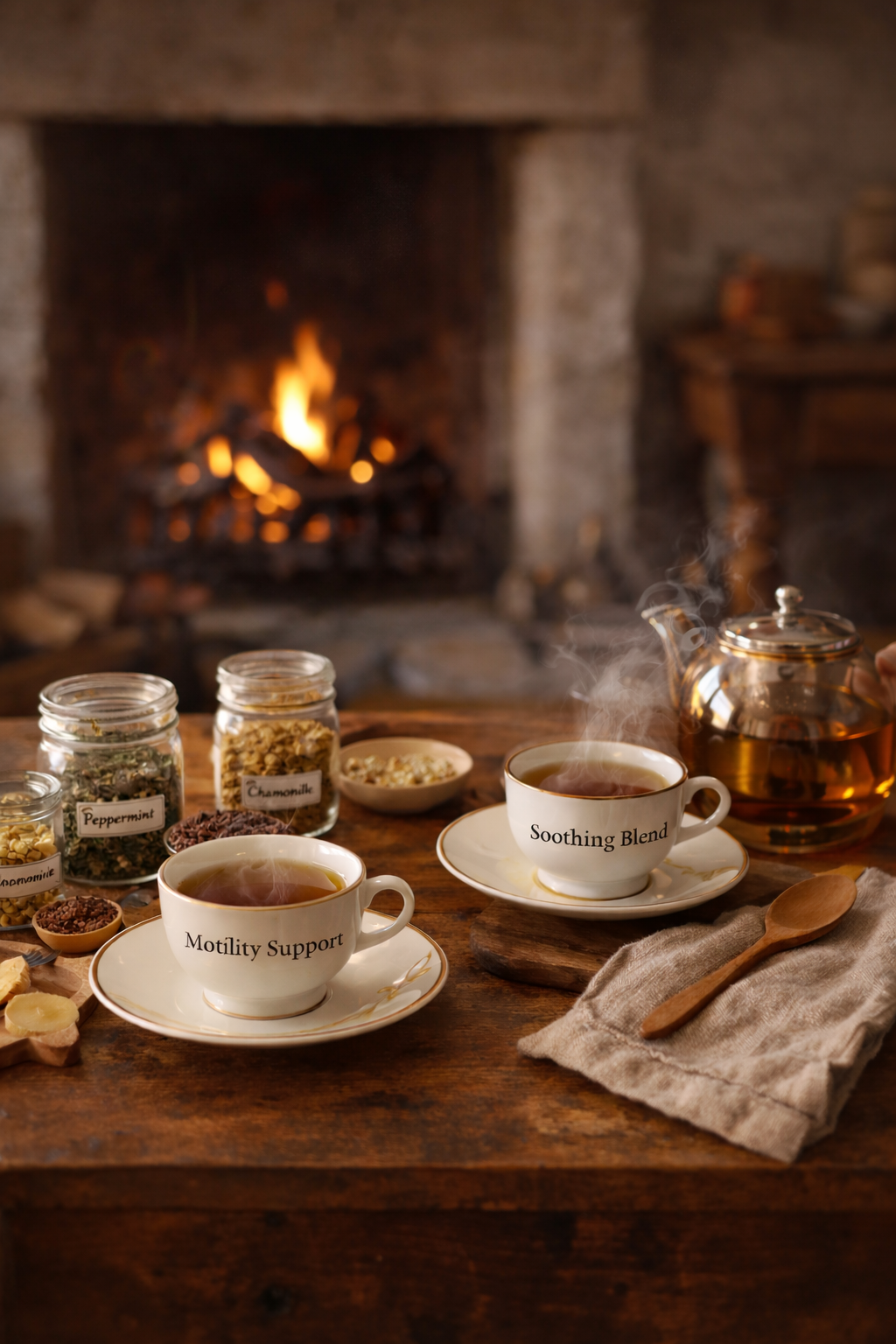
🌿🚽 Gentle “Estrogen Exit” Regularity Tea (Daily Support)
Safety first (real-life disclaimer): If constipation is persistent or new, or you have blood in stool, unexplained weight loss, ongoing bloating, or pain, please check in with your GP.
Option 1: 🚶🏾♀️🚽 “Motility Support” Tea (Gentle, Gas-Reducing, Get-It-Moving)
🌿 Ingredients (1 large mug / 350–400 ml)
🌾 Fennel seed — 1 tsp (lightly crushed)
🫚 Ginger root — 1 tsp dried or 3–4 thin fresh slices
🌿 Peppermint leaf — 1 tsp
🌼 Chamomile — 1 tsp (optional but nice for tension + gut grip)
🌰 Ground flaxseed — 1 tsp (optional add-in after steeping)
⏱️ Time
Prep: 3–5 min
Steep: 12–15 min
Total: ~15–20 min
👩🏾🍳 Step-by-step
Crush fennel 🌾
Lightly crush seeds with a spoon/mortar to release the aromatic oils.Add herbs to infuser or pot 🫖
Fennel + ginger + peppermint (+ chamomile).Pour hot water 💧
Add just-boiled water and cover (covering matters—keeps the volatile oils in).Steep 12–15 minutes ⏳
Strain + optional flax 🌰
Stir in 1 tsp ground flax after steeping. Drink promptly, then follow with a little extra water.
✅ Why these herbs help (quick benefits)
🌾 Fennel seed: traditionally used for gas/bloating and digestive comfort (carminative action).
🫚 Ginger: supports digestive comfort and is well-studied for nausea; often used to “wake up” digestion gently.
🌿 Peppermint: helpful for cramping/IBS-type discomfort in studies; reflux can be a side effect for some.
🌰 Ground flaxseed (optional): evidence suggests flax can improve constipation outcomes (stool frequency/characteristics) in trials.
🗓️ How often to drink
Start: 1 cup in the morning daily for 7–10 days
If needed: 2 cups/day (AM + early evening)
If stools get loose → drop flax first, then reduce to 1 cup/day.
Option 2: 🤍🫖 “Soothing + Softening” Tea (For Dry Stool, Irritation, Sensitive Gut)
This is the “my gut is cranky and everything feels dry/tight” blend.
🌿 Ingredients (1 mug / 350–400 ml)
🤍 Marshmallow root — 1 tsp
🌼 Chamomile — 1 tsp
🌾 Fennel seed — ½–1 tsp (lightly crushed)
🌿 Peppermint leaf — ½ tsp or omit if reflux-prone
Optional: 🍯 a little honey if you use it
⏱️ Time
Prep: 3–5 min
Steep: 15–20 min
Total: ~20–25 min
👩🏾🍳 Step-by-step
Crush fennel 🌾 (same as above)
Add herbs to pot 🫖
Marshmallow root + chamomile + fennel (+ peppermint if tolerating).Pour hot water + cover 💧
Steep 15–20 minutes ⏳
Marshmallow is gentle — give it time.Strain + sip slowly ✨
Bonus: ❄️ Overnight “Ultra-Soothing” Cold Infusion (best mucilage)
Marshmallow root is rich in mucilage; cold infusion can be extra soothing.
Add 1 tbsp marshmallow root to a jar
Add 500 ml cool water, cover
Steep 4–8 hours / overnight in fridge
Strain, warm gently (don’t boil)
✅ Why these herbs help
🤍 Marshmallow root: contains mucilage; commonly used to coat/soothe irritated tissues. Also note: mucilage can reduce medicine absorption, so space meds away.
🌼 Chamomile: gentle calming herb, often used for digestive soothing.
🌾 Fennel: supports gas/bloat relief and digestive comfort.
🌿 Peppermint (optional): can calm cramping, but may aggravate reflux.
🗓️ How often to drink
1–2 cups/day as needed
Great evening tea (especially when stress is tightening everything up).
⚠️ Quick cautions (keep it safe for regular use)
Marshmallow root: take medications 2 hours away (it may reduce absorption).
Peppermint: if you have reflux/GERD, use less or skip.
If constipation persists despite hydration + movement + gentle support, treat it as a signal, not a personality trait — consider evaluation.
🛒 Where to buy organic herbs
US: Starwest Botanical (example: organic peppermint leaf)
📚 References
🚽 Constipation + Bowel Regularity (Basics + When to Seek Help) NHS — Constipation (causes, self-care, when to see a GP)
👉🏾 https://www.nhs.uk/conditions/constipation/
NHS England — Bristol Stool Chart (types 1–7; constipation indicators) (PDF)
👉🏾 https://www.england.nhs.uk/wp-content/uploads/2023/07/Bristol-stool-chart-for-carer-web-version.pdf
Cambridge University Hospitals (NHS) — Improving bowel function in constipation (fluids, warmth, fibre, movement)
👉🏾 https://www.cuh.nhs.uk/patient-information/improving-bowel-function-in-constipation/
Women’s Health Concern (British Menopause Society patient arm) — Digestive health and menopause (incl. constipation) (PDF, July 2025)
👉🏾 https://www.womens-health-concern.org/wp-content/uploads/2025/07/36-NEW-WHC-FACTSHEET-Digestive-health-and-menopause-JULY2025-A.pdf
♻️ Estrogen “Exit Route,” Estrobolome + β-Glucuronidase (Reactivation + Reabsorption) Frontiers (Cell & Dev Biology) — Gut microbial β-glucuronidase in estrogen metabolism (bile excretion → gut → reactivation → reabsorption)
👉🏾 https://www.frontiersin.org/journals/cell-and-developmental-biology/articles/10.3389/fcell.2021.631552/full
PMC Review (2023) — Gut microbial β-glucuronidase as a regulator in female estrogen metabolism & estrogen-related disease
👉🏾 https://pmc.ncbi.nlm.nih.gov/articles/PMC10416750/
Journal of Biological Chemistry (2019) — Gut microbial β-glucuronidases can reactivate estrogen glucuronides (mechanistic study)
👉🏾 https://www.sciencedirect.com/science/article/pii/S0021925820304130
Frontiers Endocrinology (2025) — Gut microbiota & estrogen homeostasis during menopause (β-glucuronidase + enterohepatic circulation discussion)
👉🏾 https://www.frontiersin.org/journals/endocrinology/articles/10.3389/fendo.2025.1562332/full
🥦 Fiber, Transit Time, Microbiome & Estrogen Handling PMC (2020) — Dietary fiber, fecal microbiota, and estrogen: discusses reduced deconjugation/reabsorption + faster transit hypotheses
👉🏾 https://pmc.ncbi.nlm.nih.gov/articles/PMC7875566/
🌺 Estrogen-Influenced Conditions Mentioned (Context) PMC (2020) — Endometriosis is highly estrogen-dependent (overview)
👉🏾 https://pmc.ncbi.nlm.nih.gov/articles/PMC7215544/
PMC (2012) — Endometriosis described as an estrogen-dependent disease (mechanisms)
👉🏾 https://pmc.ncbi.nlm.nih.gov/articles/PMC4077338/
PMC (2020) — Uterine fibroids: cells depend on estrogen/progesterone stimulation (progesterone often central)
👉🏾 https://pmc.ncbi.nlm.nih.gov/articles/PMC8314923/
PMC (2025) — Adenomyosis described as a common estrogen-dependent disease (review)
👉🏾 https://pmc.ncbi.nlm.nih.gov/articles/PMC12635047/
🧪 Functional Testing Tools Mentioned (Official / Primary Sources) DUTCH — Cycle Mapping Plus (what it measures; menstrual cycle + cortisol awakening response)
👉🏾 https://dutchtest.com/cycle-mapping-plus
Diagnostic Solutions — GI-MAP Interpretive Guide (qPCR stool DNA + markers) (PDF)
👉🏾 https://www.diagnosticsolutionslab.com/assets/documents/gi-map-interpretive-guide.pdf
DNA Life — DNA Hormones (sex hormone metabolism/detox gene variants)
👉🏾 https://www.dnalife.healthcare/products/dna/dna-hormones
DNA Life — DNA Gut (genetic variants linked to gut homeostasis tendencies)
👉🏾 https://www.dnalife.healthcare/products/dna/gut
LEAP / Oxford Biomedical — Mediator Release Test (MRT) overview
👉🏾 https://www.nowleap.com/the-patented-mediator-release-test/
Integris Health — MRT overview + “no consensus on effectiveness” caution (helpful balance for readers)
👉🏾 https://integrishealth.org/resources/on-your-health/2023/april/mrt-test
AAAI — Why IgG food panels are not recommended (important “don’t confuse food testing types” context)
👉🏾 https://www.aaaai.org/tools-for-the-public/conditions-library/allergies/igg-food-test
MedlinePlus — Complete Blood Count (CBC)
👉🏾 https://medlineplus.gov/lab-tests/complete-blood-count-cbc/
MedlinePlus — Comprehensive Metabolic Panel (CMP)
👉🏾 https://medlineplus.gov/lab-tests/comprehensive-metabolic-panel-cmp/
💊 Supplements Mentioned (Evidence / Safety / Context) PMC (2017) — DIM randomized trial: DIM can change estrogen metabolism markers (note medication interaction considerations, e.g., tamoxifen context)
👉🏾 https://pmc.ncbi.nlm.nih.gov/articles/PMC5571834/
Memorial Sloan Kettering — DIM (summary of evidence + cautions/interactions)
👉🏾 https://www.mskcc.org/cancer-care/integrative-medicine/herbs/diindolylmethane
JCEM / PubMed (2024) — Inositol for PCOS: systematic review/meta-analysis (evidence noted as limited/inconclusive overall)
👉🏾 https://pubmed.ncbi.nlm.nih.gov/38163998/
PubMed (2016) — TUDCA trial in primary biliary cholangitis (safety/efficacy context)
👉🏾 https://pubmed.ncbi.nlm.nih.gov/27893675/
PMC (2018) — Flaxseed trial: improved constipation measures in a clinical population
👉🏾 https://pmc.ncbi.nlm.nih.gov/articles/PMC5944250/
CellCore — Advanced TUDCA (product info)
👉🏾 https://cellcore.com/products/advanced-tudca
CellCore — GCO (product info)
👉🏾 https://cellcore.com/products/gco
🍵 Herbal Tea Ingredients (Evidence/Safety Sources) NICE CKS — IBS antispasmodics (peppermint oil prescribing info; safety notes)
👉🏾 https://cks.nice.org.uk/topics/irritable-bowel-syndrome/prescribing-information/antispasmodic-drugs/
EMA — EU herbal monograph: Foeniculum vulgare (fennel) for mild spasmodic GI complaints incl. bloating/flatulence (PDF, 2024)
👉🏾 https://www.ema.europa.eu/en/documents/herbal-monograph/final-european-union-herbal-monograph-foeniculum-vulgare-miller-subsp-vulgare-var-vulgare-fructus-revision-1_en.pdf
NCCIH (NIH) — Chamomile: usefulness & safety
👉🏾 https://www.nccih.nih.gov/health/chamomile
NCCIH (NIH) — Ginger: usefulness & safety
👉🏾 https://www.nccih.nih.gov/health/ginger
EMA — EU herbal monograph: Althaea officinalis (marshmallow root) (PDF)
👉🏾 https://www.ema.europa.eu/en/documents/herbal-monograph/final-european-union-herbal-monograph-althaea-officinalis-l-radix_en.pdf
Blog Disclaimer
The health information on this blog is for general educational purposes only and is not intended to diagnose, treat, cure, or prevent any disease. It should not be used as a substitute for professional medical advice. Always consult a qualified healthcare provider before making any health-related decisions
This blog may contain affiliate links, meaning Leaves from the Tree of Life LLC may earn a small commission if you purchase a product or service through these links—at no additional cost to you. Your support helps us continue to provide valuable content. Thank you!
