
Testosterone in Perimenopause (2026): Strength, Stamina, Bone Density & Libido—Without the Guessing Game
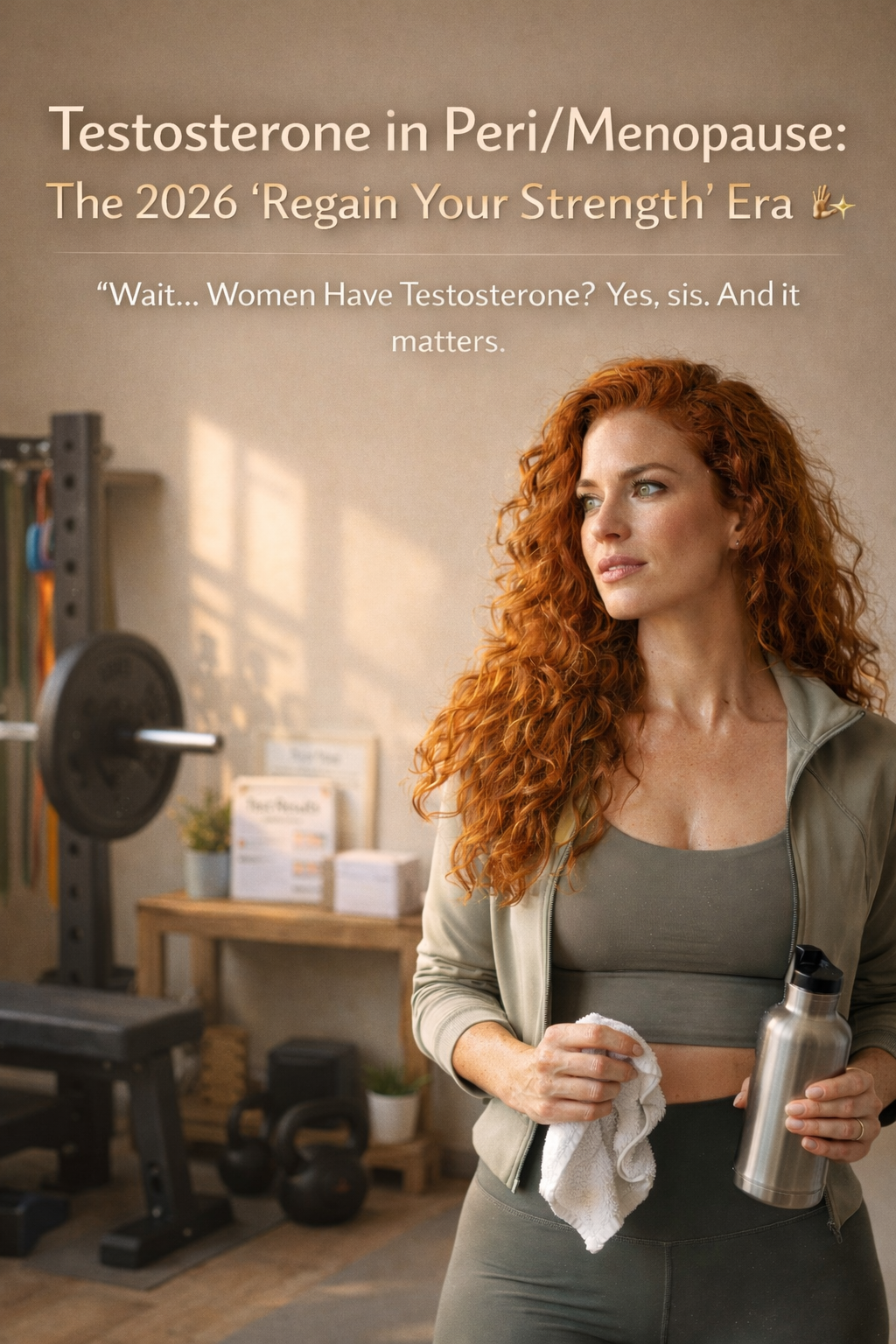
Testosterone in Peri/Menopause: The 2026 “Regain Your Strength” Era 💪🏽✨
(Because we’re done shrinking ourselves—physically, emotionally, and metabolically.)
🌿 “Wait… Women Have Testosterone?” Yes, sis. And it matters.
If you’ve been Googling, DuckDuckGo-ing, asking “the ground” (because honestly, same), and scrolling social media trying to figure out why you feel weaker, flatter, tireder, or less “you”… you’re not imagining things.
Perimenopause and menopause can feel like your body switched operating systems overnight—and nobody gave you the manual.
Here’s one of the biggest missing pieces: testosterone.
Not “testosterone to become a bodybuilder.”
Not “testosterone because you’re broken.”
But testosterone as part of God’s design for female vitality—supporting strength, stamina, motivation, bone density, mood resilience, and libido.
And in 2026, it’s time to stop being told:
“It’s normal—just deal with it.”
“Your labs are fine.”
“It’s stress.” (as if that explains everything and solves nothing)
In my world (Traditional Naturopath + Functional Diagnostic Nutrition® Practitioner), we look for healing opportunities and patterns—because most women aren’t “fine.” They’re in Metabolic Chaos®: hidden dysfunction across hormones, gut, blood sugar, nutrients, stress pathways, inflammation, and detox capacity that quietly drains vitality.
🔥 The Midlife Misunderstanding: Testosterone Isn’t a “Male Hormone”
Women naturally produce testosterone (mostly from the ovaries + adrenal glands), and it plays real roles in:
💪 Strength + muscle maintenance (hello metabolism + stability)
🦴 Bone density support (especially when estrogen is shifting)
⚡ Energy + stamina (that “get up and go” feeling)
🧠 Drive + cognition (motivation, mental sharpness, confidence)
❤️ Libido + arousal (desire, sensation, responsiveness)
🧘🏽♀️ Mood resilience (not a magic fix—part of the whole picture)
So when hormones shift in peri/menopause, it’s not just “estrogen is low.” It can be:
testosterone output changes
SHBG (a binding protein) changes, altering what’s available
stress hormones (cortisol) influence sex hormones
insulin resistance can impact androgens
gut inflammation can disrupt hormone signaling
nutrient depletion can affect hormone production and detox pathways
That’s why random supplement roulette often fails.
🧩 Why “Just Test Testosterone” Often Isn’t Enough
Many women get a basic blood test (sometimes not even a thorough one), get told it’s “normal,” and still feel awful.
Here’s the issue: testosterone symptoms are rarely just testosterone problems. They’re frequently the downstream smoke from a bigger metabolic fire.
That’s where functional testing comes in—not because testing is trendy, but because patterns tell the truth when symptoms are loud and conventional care is vague.
🔬 The “Bigger Picture” Tests I Use (and How They Connect to Testosterone)
Below is a simple, no-fluff overview of how each test helps reveal what’s actually influencing testosterone—production, conversion, availability, and how your body is handling the whole hormone ecosystem.
🧪 DUTCH Plus: Hormone Patterns + Stress Crosstalk
What it helps with:
A more complete look at sex hormones and how they’re being metabolized
Context from cortisol patterns (stress physiology affects testosterone output)
Identifies trends that may explain libido shifts, mood swings, fatigue, and “wired-tired” patterns
Why it matters for testosterone:
Because testosterone doesn’t live in isolation. If stress pathways are dysregulated, your body often downshifts “non-urgent” functions like reproductive hormones.
🔬 Fun Fact Science Bar+ (Testosterone Edition)
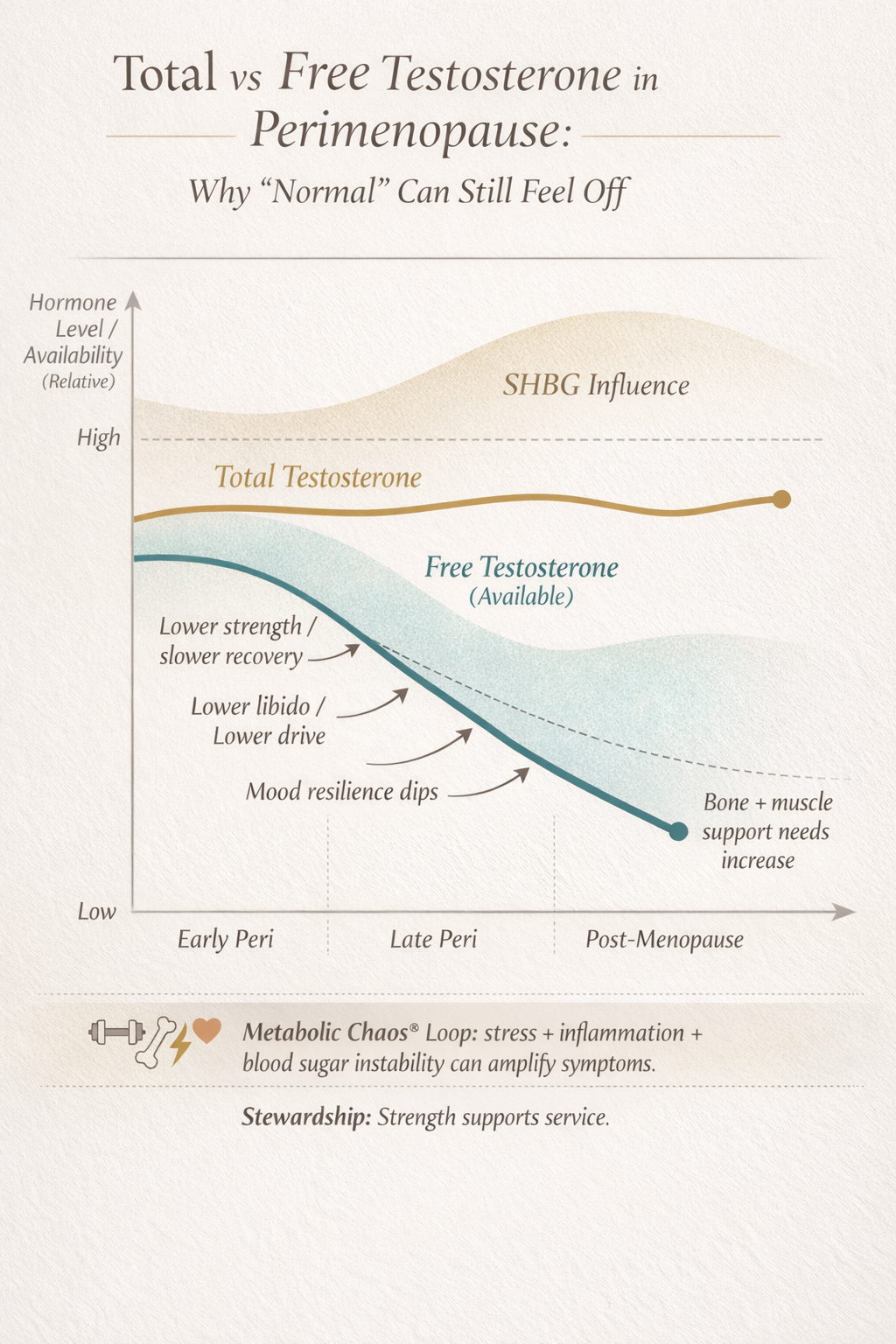
Did you know testosterone helps protect muscle and bone in women—and as we move through peri/menopause, even subtle dips (or shifts in what’s “free” vs. bound) can show up as lower strength, slower recovery, reduced stamina, flatter mood/drive, and a quieter libido?
Here’s the plot twist: many women don’t have “no testosterone”—they have a “not enough available testosterone” situation. Why? Because SHBG (sex hormone–binding globulin) can rise (or behave differently) during midlife transitions, meaning total testosterone might look “fine,” but free testosterone—the usable portion—can be low.
👉🏾 Translation: You can be doing “everything right” and still feel like your body’s running on low battery, because the issue isn’t just hormone levels—it’s hormone availability + stress load + gut inflammation + nutrient/mineral status + blood sugar stability all interacting. In Functional Diagnostic Nutrition® language, this is a Metabolic Chaos® loop, where stress and inflammation can suppress hormonal vitality and your body starts prioritizing survival over strength.
✨ Healing Opportunity: Don’t guess—test the system. Pair symptom patterns with functional testing (like DUTCH Plus for hormone + cortisol patterns, HTMA for mineral stress signatures, GI-MAP for gut inflammation burden, and FBCA for “normal labs” that aren’t optimal). Then build a plan that supports protein intake, resistance training, sleep repair, blood sugar stability, and stress resilience—because your body doesn’t rebuild strength in chaos; it rebuilds in rhythm.
✝️ Faith Element: In the SDA health message, we’re reminded that the body is a gift to steward—not to obsess over. Strength isn’t vanity; it’s capacity—to serve, to lead, to endure. Practising temperance (balance), honoring Sabbath rest, and choosing habits that support vitality is a quiet act of worship: “Lord, help me care for what You entrusted to me.” 🙌🏾
🧬 DNA Hormones: Your Blueprint (Not Your Destiny)
What it helps with:
Genetic tendencies that may affect hormone metabolism, detox pathways, inflammation response, or sensitivity at receptor level (depending on the panel used)
Why it matters for testosterone:
Some women do “all the right things” and still struggle because their body processes hormones differently. DNA insights can guide a more personalized strategy—not guessing, not copying influencer protocols.
💩 GI-MAP: Gut Inflammation + Immune Burden
What it helps with:
Microbiome balance, pathogens/overgrowth patterns, inflammation markers
Digestive function clues that affect nutrient status (needed for hormone production)
Why it matters for testosterone:
Chronic gut stress can drive systemic inflammation, disrupt signaling, and contribute to fatigue, mood changes, and hormonal instability—aka fertile ground for Metabolic Chaos®.
🩸 FBCA (Functional Blood Chemistry Analysis): What Your “Normal” Labs Are Whispering
What it helps with:
Interprets standard bloodwork patterns more functionally (energy, thyroid clues, blood sugar trends, inflammation signals, nutrient status indicators, liver/detox capacity)
Why it matters for testosterone:
Testosterone is influenced by blood sugar stability, liver clearance capacity, nutrient reserves, and stress load. FBCA can highlight the “why” behind symptoms even when you’ve been told everything is normal.
🧂 HTMA: Minerals That Power Hormones + Stress Resilience
What it helps with:
Mineral patterns that reflect long-term stress adaptation and nutrient depletion
Helps identify imbalances that can affect energy, mood, thyroid function, and recovery
Why it matters for testosterone:
Minerals are foundational. When the body is depleted or dysregulated, hormonal output and resilience often follow.
🍽️ MRT Food Sensitivity: Hidden Triggers That Keep Inflammation “On”
What it helps with:
Identifies food triggers that may be driving immune activation and inflammation
Why it matters for testosterone:
If your body is constantly inflamed or reactive, hormone harmony gets harder. MRT can be a game-changer for women who “eat clean” but still feel puffy, foggy, achy, anxious, or exhausted.
🌿💪🏽 Natural Ways to Support Testosterone in Peri/Menopause
Let’s be clear: we’re not trying to “turn you into a dude.” We’re supporting the female vitality God designed—strength, stamina, bone support, motivation, and libido—without triggering more Metabolic Chaos®.
Here are evidence-informed, real life ways to support healthy testosterone patterns (and testosterone availability) during peri/menopause:
🏋🏽♀️ 1) Lift heavy-ish (with wisdom)
Progressive resistance training (think: squats, deadlifts, rows, presses) supports lean muscle, which supports metabolism, which supports hormone resilience. Muscle is not vanity—it’s your glucose sponge and your stability engine.
🫘🌱 2) Prioritize protein at every meal
Under-eating protein is a sneaky midlife testosterone (and recovery) sabotage. Aim for a solid protein anchor at breakfast and lunch—especially if you’re training.
😴 3) Guard your sleep like it’s Sabbath preparation
Sleep is where hormone repair happens. Fragmented sleep = stress hormones up, sex hormones down (for many women). Build a wind-down routine and treat bedtime like an appointment.
💆🏾♀️ 4) Lower cortisol spikes (because your adrenals aren’t your enemy)
Chronic stress can push the body into survival mode—where it deprioritizes “bonus” functions like libido and robust recovery. Breathwork, prayer walks, nervous system regulation, and Sabbath rest are not “soft”—they’re strategic.
🍬 5) Stabilize blood sugar (especially if cravings + crashes are your personality now)
Blood sugar swings can amplify hormone symptoms and deepen the fatigue/irritability loop. Front-load meals with protein + fiber + healthy fats, then carbs.
🧂 6) Rebuild mineral foundations
Minerals help run the whole system—thyroid, adrenals, energy production, and recovery. When minerals are off, hormones often feel off too (this is one reason HTMA can be such a helpful “pattern” tool).
🍷 7) Practice temperance with alcohol + overtraining
Alcohol and excessive high-intensity workouts (especially without recovery) can worsen sleep and stress physiology—two big levers that influence testosterone output and availability.
✨ Healing Opportunity: If you’ve tried “clean eating, walking, supplements, and vibes” but still feel flat… it may not be a motivation problem. It may be a pattern problem. And patterns show up best when we test—don’t guess.
🧪✨ Quicksilver Scientific Options I Sometimes Use to Support Hormone Vitality
Below are a few Quicksilver Scientific products that are commonly used in functional wellness to support the upstream foundations that influence testosterone—especially DHEA support, hormone balance, and endocrine resilience.
1) Pure DHEA
DHEA is a foundational hormone that the body uses to help synthesize sex hormones, including testosterone. Quicksilver’s Pure DHEA is a liquid format designed for easy dose titration.
A daily liposomal formula that combines DHEA + pregnenolone plus supportive herbs/compounds, designed as foundational hormone support.
3) Thrivagen
An adaptogenic tonic positioned for female reproductive + endocrine support, often used when stress load, sleep disruption, and “I’m running on fumes” patterns are part of the story.
A liposomal adaptogen + pregnenolone tonic aimed at supporting hormonal balance/HPA-axis resilience as part of healthy aging support.
Important note (the “please don’t freestyle hormones” reminder):
DHEA/pregnenolone can be inappropriate for some people (ex: hormone-sensitive conditions, androgen-excess patterns like acne/hair growth, some PCOS presentations, certain meds). This is exactly why I prefer pairing supplements with functional testing and your history—so we’re supporting your biology, not TikTok’s.
👩🏽💻 “My Doctor Said I Was Fine… But I Didn’t Feel Fine.”
Let’s call her Nadia.
Nadia found me: a reel on social media that hit a little too close to home—then a friend confirmed, “No seriously… book with her.”
She was 46, high-achieving, health-conscious, and exhausted from the medical merry-go-round. Her symptoms:
declining strength and stamina (workouts felt harder, recovery worse)
lower libido + “I feel disconnected from myself”
mood dips, more irritability, and sleep that wasn’t restoring
brain fog and afternoon crashes
stubborn midsection weight despite “doing everything right”
Her doctor ran a few tests and said:
“Your labs are normal. It’s stress. Welcome to midlife.”
But Nadia knew something was missing.
We took a test-don’t-guess approach. We mapped her symptoms through the lens of Metabolic Chaos®—looking for healing opportunities instead of labels.
Her functional testing helped us see patterns that explained her experience:
stress load and poor recovery signals
gut inflammation burden (affecting energy + mood)
mineral depletion patterns consistent with chronic output and under-recovery
blood sugar instability contributing to crashes and body composition changes
hormone patterns that needed support within the context of her whole system
The win wasn’t “one magic supplement.”
It was clarity—and a strategy that matched her biology.
Within weeks, she reported:
improved energy consistency
better training recovery
fewer crashes and less “snappy” mood swings
libido starting to return as her nervous system stabilized
deeper sleep (not perfect, but noticeably better)
That’s what happens when we stop chasing symptoms and start addressing root patterns.
🕊️ Strength Is Stewardship, Not Vanity
As a Seventh-day Adventist Christian, I don’t see midlife vitality as a cosmetic project. I see it as stewardship.
Your body is not your enemy. It’s not betraying you.
It’s communicating.
And sometimes the most spiritual thing you can do is:
honor rest (hello, Sabbath principles)
reduce overwhelm
eat in a way that supports peace in the gut and stability in the blood sugar
stop living in survival mode
and seek wise counsel when you’re getting the runaround
God’s design includes strength—because strength supports service, leadership, clarity, and endurance.
✅ Ready to Stop Guessing and Start Getting Answers? 📩✨
If you’re done with “maybe it’s hormones” and “everything looks normal,” I can help you connect the dots.
Here’s how to work with me (simple + clear):
👉🏾 Visit my Services Page to book your consult and get started
After booking, you’ll receive an assessment by email to complete before we meet—so our time is focused and productive.
If you’re ready for a plan built on real data, not vibes and viral advice, let’s talk.
💌 Bonus Support (for the “I’ve been Googling forever” season):
I also offer a 5-day email course to help you calm the confusion and take next steps with clarity:
https://leaves-from-the-tree-of-life.kit.com/014d1022a6
Because 2026 isn’t the year you fade.
It’s the year you rebuild—wisely, faithfully, and with receipts. 💪🏽🧠🦴❤️
If you want, I can also:
add a “Signs Your Testosterone Support Needs a Bigger Picture” checklist
write a matching IG carousel + reel script to drive readers to this blog and your consult link
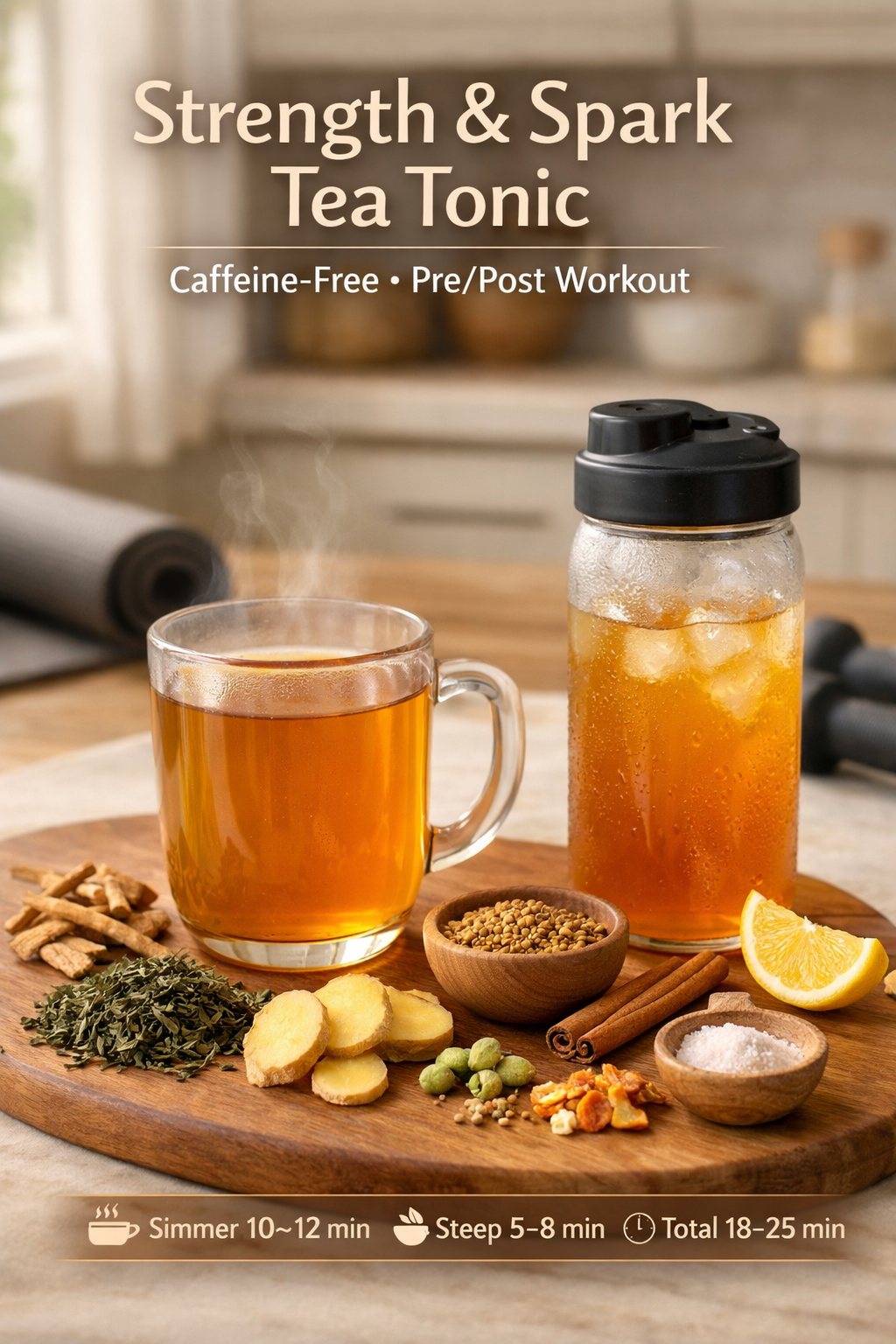
💪🏽 “Strength & Spark” Organic Tea Tonic (Pre/Post-Workout) — Caffeine-Free
Total time: 18–25 minutes
Prep: 3–5 min
Simmer: 10–12 min
Steep: 5–8 min
This is a caffeine-free herbal “tea tonic” you can use before training for warm circulation + steady energy, or after training to support recovery (without the crash). It supports the foundations that influence testosterone in peri/menopause: stress resilience, mineral nourishment, blood sugar steadiness, and circulation. Purchase Organic Herbs Here
🧺 Ingredients (Makes ~2 servings)
All organic herbs/spices:
🌿 1 tsp ashwagandha root (cut/sifted)
🌿 1 tbsp nettle leaf
🌱 1 tsp fenugreek seeds
🌶️ 1 tsp fresh grated ginger (or ½ tsp dried)
🍂 1 small cinnamon stick (or ½ tsp ground cinnamon)
🌼 2 cardamom pods, lightly crushed (optional but delicious)
🍊 1 tsp dried orange peel (optional)
💧 2 cups filtered water
Optional “Workout Tonic” Boosters (choose 1–2)
🍋 1–2 tsp fresh lemon juice (bright + refreshing)
🧂 Pinch of sea salt (electrolyte support—especially if you sweat a lot)
🍯 1 tsp raw honey or maple syrup (quick glycogen support—great pre-workout)
🥛 Splash of unsweetened coconut milk (post-workout cozy recovery vibe)
🔥 Step-by-Step Instructions
Toast the fenugreek 🔥 (1 minute)
Dry-toast fenugreek seeds in a small pot for 30–60 seconds until fragrant.Simmer the “tonic base” 🍂 (10–12 minutes)
Add water + ashwagandha, ginger, cinnamon, cardamom, orange peel.
Bring to a gentle boil, then simmer on low 10–12 minutes.Steep nettle 🌿 (5–8 minutes)
Turn off heat. Add nettle leaf, cover, and steep 5–8 minutes.Strain + customize 🫖
Strain into a mug or shaker bottle. Add your boosters (lemon/salt/honey) depending on pre vs post.
🏋🏽♀️ How to Use It for Training
⚡ Pre-Workout Version (15–30 min before)
Goal: gentle “pep,” warm circulation, stable energy without caffeine
Add:
🍯 1 tsp honey/maple (optional for quick fuel)
🧂 Pinch of sea salt (especially if you sweat easily)
🍋 1 tsp lemon (refreshing + helps it go down easy)
Sip tip: Drink warm in winter, iced in summer.
🧘🏽♀️ Post-Workout Version (within 60 min after)
Goal: calm recovery, replenish minerals, support steady blood sugar
Add:
🧂 Pinch of sea salt (rehydration support)
🥛 Splash coconut milk (optional for a soothing finish)
🍋 lemon if you want it lighter, or skip for cozy mode
Pair it with: a protein-forward meal or shake (because tea can’t do what protein does 😄).
🌟 Benefits of Each Ingredient (Quick + Real)
🌿 Ashwagandha root: supports stress resilience—helpful because chronic stress can downshift hormone vitality
🌿 Nettle leaf: mineral-rich support for overall vitality + recovery
🌱 Fenugreek seeds: traditionally used to support libido + metabolic balance
🌶️ Ginger: supports circulation + digestion, adds natural “kick”
🍂 Cinnamon: supports blood sugar steadiness (key for energy + hormone harmony)
🌼 Cardamom: digestive comfort + calming aromatics
🍊 Orange peel: bright flavor + gentle digestive support
🧂 Sea salt (optional): supports hydration/electrolytes
🍯 Honey/maple (optional): quick fuel for training (especially helpful if you’re dragging)
⚠️ Quick Cautions
Ashwagandha: use caution with certain thyroid situations/meds or sedatives
Fenugreek: use caution if on blood sugar-lowering meds
If you’re pregnant/breastfeeding or symptoms worsen, pause and check with your clinician.
📚 References
💪🏽 Testosterone in Peri/Menopause (What it’s for + when it’s used clinically)
NHS — Menopause Treatment (testosterone may be offered for low libido if HRT doesn’t help)
👉🏾 https://www.nhs.uk/conditions/menopause/treatment/
British Menopause Society (BMS) — Testosterone replacement in menopause (PDF)
👉🏾 https://thebms.org.uk/wp-content/uploads/2022/12/08-BMS-TfC-Testosterone-replacement-in-menopause-DEC2022-A.pdf
Global Consensus Position Statement — Testosterone therapy for women (PDF)
👉🏾 https://www.imsociety.org/wp-content/uploads/2020/07/global-consensus-testosterone-english.pdf
Global Consensus Position Statement (PubMed record) — Davis et al., 2019 (JCEM)
👉🏾 https://pubmed.ncbi.nlm.nih.gov/31498871/
❤️ Libido / HSDD + Testosterone (Evidence base + guidance)
The Menopause Society / NAMS — Practice Pearls page (Testosterone for HSDD)
👉🏾 https://menopause.org/professional-resources/practice-pearls-nm
NAMS Practice Pearl PDF — Testosterone therapy for HSDD (postmenopause)
👉🏾 https://www.huntingtonhealth.org/wp-content/uploads/2024/09/NAMS_practice-pearl-testosterone_.pdf
Islam et al., 2019 — Systematic review & meta-analysis (testosterone therapy in women) (PubMed)
👉🏾 https://pubmed.ncbi.nlm.nih.gov/31353194/
Scott et al., 2020 — “Should we be prescribing testosterone to perimenopausal women?” (open access)
👉🏾 https://pmc.ncbi.nlm.nih.gov/articles/PMC7098532/
🦴 Strength Training, Muscle + Bone Density in Midlife Women
Mohebbi et al., 2023 — Exercise training & bone mineral density in postmenopausal women (systematic review/meta-analysis)
👉🏾 https://pubmed.ncbi.nlm.nih.gov/36749350/
Zhao et al., 2025 — Resistance training parameters & BMD in postmenopausal women (meta-analysis, open access)
👉🏾 https://pmc.ncbi.nlm.nih.gov/articles/PMC12107943/
🧬 Total vs Free Testosterone + SHBG (why “normal” labs can still feel awful)
MedlinePlus — Testosterone Levels Test (bound vs free testosterone)
👉🏾 https://medlineplus.gov/lab-tests/testosterone-levels-test/
MedlinePlus — SHBG Blood Test
👉🏾 https://medlineplus.gov/lab-tests/shbg-blood-test/
Lab Tests Online (UK) — SHBG overview
👉🏾 https://labtestsonline.org.uk/tests/sex-hormone-binding-globulin-shbg
BMS — Testosterone replacement in menopause (notes SHBG effects, oral estrogen considerations) (PDF)
👉🏾 https://thebms.org.uk/wp-content/uploads/2022/12/08-BMS-TfC-Testosterone-replacement-in-menopause-DEC2022-A.pdf
🧪 Functional Testing “Bigger Picture” Tools Mentioned in the Blog
DUTCH Plus / DUTCH testing (hormones + metabolites context) — Precision Analytical
DUTCH Interpretive Guide
👉🏾 https://dutchtest.com/resources/dutch-interpretive-guide
DUTCH Treatment Guide (includes testosterone-focused guidance) (PDF)
👉🏾 https://shop.dutchtest.com/wp-content/uploads/2020/04/Treatment-Guide-Booklet-REF040220.pdf
GI-MAP (stool DNA/qPCR method + interpretive guide) — Diagnostic Solutions
GI-MAP test overview
👉🏾 https://www.diagnosticsolutionslab.com/tests/gi-map
GI-MAP Interpretive Guide (PDF)
👉🏾 https://www.diagnosticsolutionslab.com/assets/documents/gi-map-interpretive-guide.pdf
Independent performance evaluation paper (GI-MAP)
👉🏾 https://pmc.ncbi.nlm.nih.gov/articles/PMC7660239/
DNA Hormones (genetic variants affecting sex hormone metabolism) — DNA Life
DNA Hormones overview
👉🏾 https://www.dnalife.healthcare/products/dna/dna-hormones
MRT Food Sensitivity / Mediator Release Test (what it is + evidence cautions)
LEAP / MRT overview (Oxford Biomedical / LEAP)
👉🏾 https://www.nowleap.com/the-patented-mediator-release-test/
Integris Health — MRT overview + “no consensus on effectiveness” caution
👉🏾 https://integrishealth.org/resources/on-your-health/2023/april/mrt-test
AAAAI — Why IgG food panels are not recommended (important context when discussing “food sensitivity tests” broadly)
👉🏾 https://www.aaaai.org/tools-for-the-public/conditions-library/allergies/igg-food-test
EAACI Task Force (IgG4 food testing not recommended) (PDF)
👉🏾 https://www.parsemus.org/wp-content/uploads/2015/09/EAACI-report-on-IgG4-20081.pdf
HTMA (hair tissue mineral analysis—lab provider info)
Trace Elements (HTMA provider overview)
👉🏾 https://www.traceelements.com/
🩸 Foundational Blood Chemistry (FBCA-style pattern review: CBC/CMP/lipids/glucose trends)
MedlinePlus — Complete Blood Count (CBC)
👉🏾 https://medlineplus.gov/lab-tests/complete-blood-count-cbc/
MedlinePlus — Comprehensive Metabolic Panel (CMP)
👉🏾 https://medlineplus.gov/lab-tests/comprehensive-metabolic-panel-cmp/
MedlinePlus — Lipid profile test
👉🏾 https://medlineplus.gov/ency/article/007812.htm
Diabetes UK — HbA1c (average glucose over ~2–3 months)
👉🏾 https://www.diabetes.org.uk/about-diabetes/looking-after-diabetes/hba1c
🧴 Quicksilver Scientific products referenced in the “support” section (example pages)
Quicksilver Scientific — Pure DHEA
👉🏾 https://us.fullscript.com/welcome/leavesfromthetreeoflife
Quicksilver Scientific — Core Hormone Support
👉🏾 https://leavesfromthetreeoflife.fdnstores.com/core-hormone-support-3-38-fl-oz-100-ml.html
Quicksilver Scientific — Longevity Elite
👉🏾 https://leavesfromthetreeoflife.fdnstores.com/longevity-elitetm.html
Quicksilver Scientific — Thrivagen
👉🏾 https://leavesfromthetreeoflife.fdnstores.com/dr-shade-s-thrivagen-1-7-fl-oz.html
Blog Disclaimer
The health information on this blog is for general educational purposes only and is not intended to diagnose, treat, cure, or prevent any disease. It should not be used as a substitute for professional medical advice. Always consult a qualified healthcare provider before making any health-related decisions
This blog may contain affiliate links, meaning Leaves from the Tree of Life LLC may earn a small commission if you purchase a product or service through these links—at no additional cost to you. Your support helps us continue to provide valuable content. Thank you!
