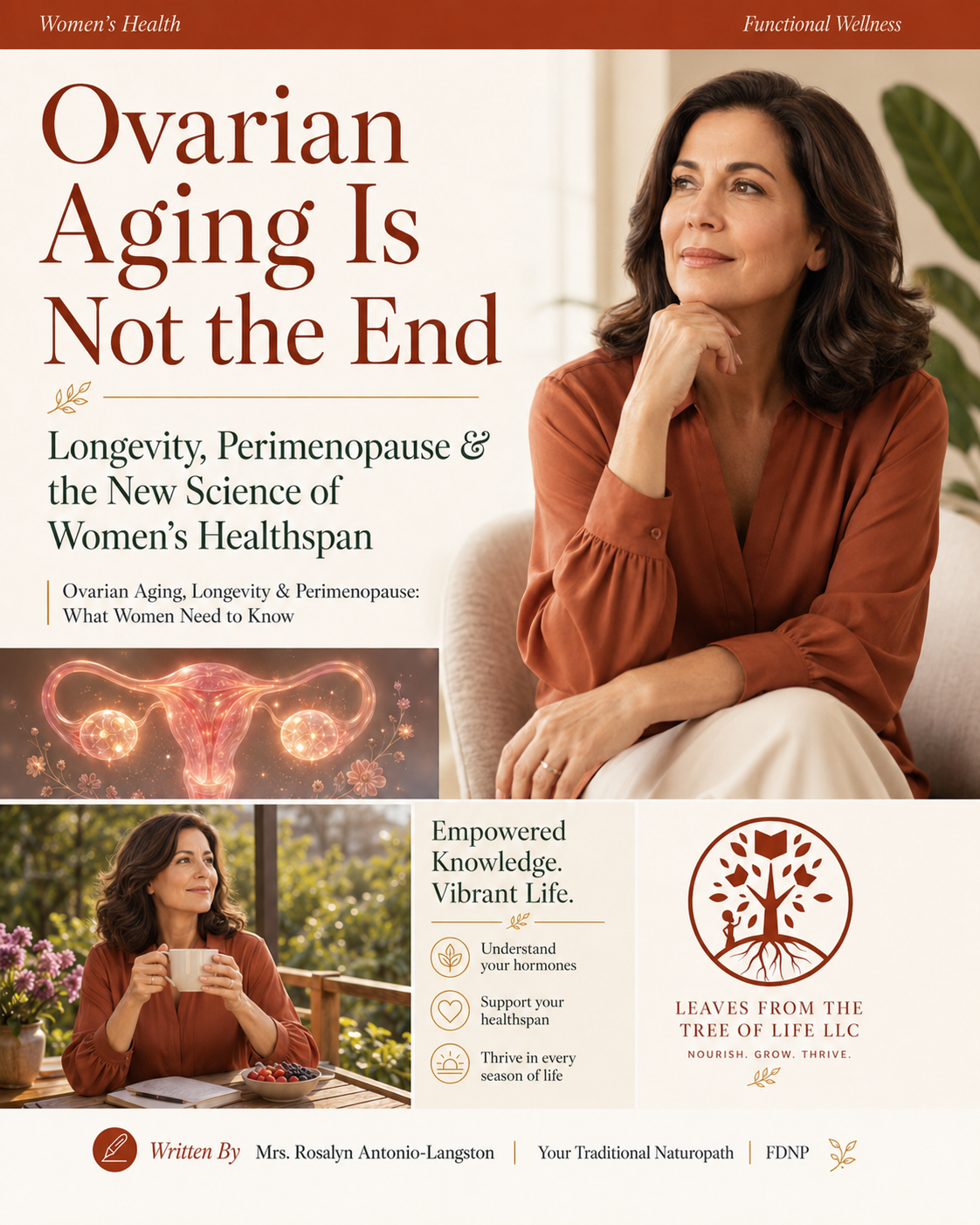
Ovarian Aging, Longevity & Perimenopause: What Women Need to Know
🌺 Ovarian Aging Is Not the End: Longevity, Perimenopause & the New Science of Women’s Healthspan
🌿 Introduction: Your Ovaries Are Not Just “Fertility Organs,” Sis
For far too long, women have been told that ovarian aging is only about fertility, baby-making, and the dreaded countdown clock. But modern science is finally catching up to what women’s bodies have been loudly whispering for years: the ovaries are not just reproductive organs. They are endocrine, metabolic, vascular, immune, brain, bone, skin, and heart communicators.
Yes, the conversation around ovarian aging and longevity is getting louder. Researchers are asking big questions: Can we slow ovarian aging? Can menopause timing be delayed? Could supporting the ovaries improve women’s long-term healthspan?
It is fascinating. It is overdue. And yes, some of it is still very experimental, so we are not about to let social media sell us fairy dust in a supplement bottle and call it “ovarian rejuvenation.” Let’s breathe, test, discern, and get educated.
Ovarian function affects far more than fertility. A 2026 review in PLOS Biology described ovarian aging as one of the most consequential yet understudied processes in female biology, with effects that may ripple through the brain, heart, liver, blood vessels, immune system, bone, skin, and muscle over time.
That means perimenopause and menopause are not a failure of the body. They are a major biological transition. A new season. A new chapter. And with the right information, testing, nourishment, movement, and support, it can become a season of healing opportunities—not panic.
🧬 The Science: What Is Ovarian Aging?
Ovarian aging refers to the natural decline in ovarian follicle number, egg quality, and hormone production over time. Women are born with their lifetime supply of eggs. Over the years, that ovarian reserve gradually declines, and by midlife the hormonal messaging between the brain, ovaries, adrenal glands, liver, gut, thyroid, and nervous system can become more unpredictable.
This is where many women start saying:
“Why am I anxious out of nowhere?”
“Why am I bloated all the time?”
“Why is my sleep acting possessed?”
“Why am I gaining weight when I eat the same?”
“Why is my period suddenly auditioning for a crime scene?”
“Why do I feel like myself… but also not myself?”
Welcome to Metabolic Chaos® in a skirt.
Perimenopause is not simply “low estrogen.” It is often fluctuating estrogen, shifting progesterone, changing ovulation patterns, altered cortisol rhythm, thyroid stress, liver detox demand, gut changes, blood sugar shifts, inflammation, nutrient depletion, and mitochondrial strain all happening at once.
In simple terms: your body is not being dramatic. It is adapting.
🔥 Ovarian Aging Is a Whole-Body Conversation
One of the biggest scientific shifts is this: ovarian aging is now being viewed as a systemic health issue, not just a fertility issue.
As ovarian hormone patterns shift, women may see changes in:
❤️ Cardiovascular health — blood pressure, cholesterol, vascular tone, and inflammation
🦴 Bone health — bone density and fracture risk
🧠 Brain health — mood, memory, focus, and sleep
🔥 Metabolic health — insulin sensitivity, belly fat, blood sugar, and energy
🦠 Gut health — microbiome diversity, estrogen recycling, bloating, and bowel changes
💪🏾 Muscle health — strength, recovery, body composition, and resilience
🧴 Skin and hair — dryness, thinning, collagen changes, and wound healing
Researchers are also paying attention to oxidative stress, mitochondrial dysfunction, chronic inflammation, and vascular aging inside the ovarian environment. Human ovarian aging studies have found oxidative damage and mitochondrial changes in oocytes from women of advanced reproductive age, supporting the idea that mitochondrial and redox health matter.
Translation: if the mitochondria are tired, inflamed, undernourished, and stressed, the ovaries are not exactly throwing a wellness retreat.
🧪 Can Menopause Be Delayed? What We Know vs. What We Don’t
This is the question getting attention in the longevity world: can menopause be delayed?
The honest answer: maybe one day, but we are not there yet.
There is growing interest in interventions such as rapamycin, red light therapy, ovarian tissue preservation, mitochondrial therapies, stem-cell-derived approaches, and other experimental longevity tools. Rapamycin is being studied in ovarian aging, including a randomized pilot trial evaluating whether low-dose rapamycin may delay ovarian aging in women.
But let’s be very clear: these are not everyday wellness recommendations for women to start casually experimenting with. Many of these approaches are still under investigation, and expert discussions continue to emphasize that lifestyle foundations, metabolic health, and medical guidance still matter.
So no, we are not fearfully chasing youth. We are wisely supporting healthspan.
The goal is not to “fight menopause” but to understand the transition, reduce unnecessary suffering, support the body’s God-given healing capacity, and protect long-term vitality.
🧠 Why Symptoms Can Feel So Intense in Perimenopause
During the menopausal transition, hormone levels can fluctuate unpredictably. Mayo Clinic notes that there is no single test or symptom that can confirm perimenopause, because hormones can rise and fall in an irregular pattern during this season.
This is why one month you may feel calm, focused, and “I’ve got this,” and the next month you are crying because someone breathed too loudly near your oat milk latte.
Common perimenopause patterns may include:
🌙 Sleep disruption
🔥 Hot flashes or night sweats
😵💫 Anxiety or internal buzzing
🧠 Brain fog
🩸 Heavy, irregular, or shorter cycles
💩 Constipation or bloating
🍫 Blood sugar cravings
😤 Irritability
💪🏾 Joint aches or slower recovery
🧴 Hair thinning or dry skin
🫀 Heart palpitations
🧊 Cold intolerance or thyroid-like symptoms
😴 Exhaustion that coffee cannot fix
These symptoms are not character flaws. They are signals. And signals are invitations to investigate.
🧬 The Mitochondria-Ovary Connection: Tiny Powerhouses, Big Drama
Mitochondria are the energy-producing structures inside cells. Oocytes are especially dependent on mitochondrial function because egg maturation and hormone signaling require energy.
Ovarian aging research increasingly points to mitochondrial dysfunction, oxidative stress, and chronic inflammation as key drivers of ovarian decline. A 2026 review described ovarian aging as a dynamic process influenced by oxidative stress, mitochondrial dysfunction, chronic inflammation, smoking, high-fat diets, endocrine-disrupting chemicals, and environmental exposures.
In everyday language: your ovaries are listening to your lifestyle.
They listen to sleep.
They listen to blood sugar.
They listen to gut health.
They listen to stress.
They listen to toxins.
They listen to inflammation.
They listen to whether your body feels safe.
And if the body feels like it is living in constant emergency mode, hormone harmony is not the priority. Survival is.
🔬 Fun Fact Science Bar +
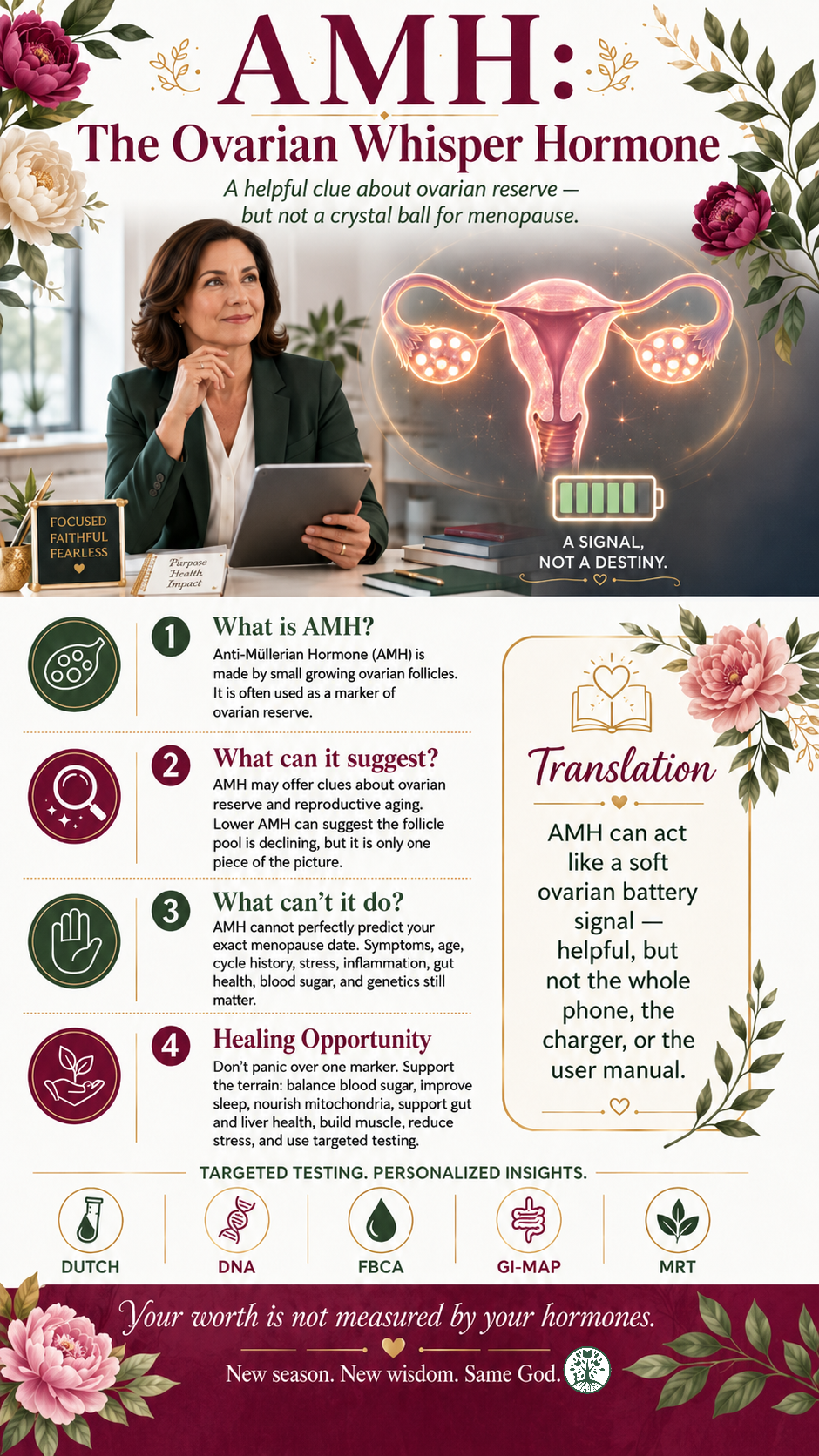
Did you know your ovaries have their own “whisper hormone” called Anti-Müllerian Hormone, also known as AMH? AMH is made by the granulosa cells of small growing follicles in the ovaries, and it is often used as a marker of ovarian reserve — meaning it gives clues about the remaining follicle pool. But here is the important part: AMH is not a crystal ball, and it cannot perfectly tell a woman the exact date menopause will arrive. It may give helpful context, but it does not define your worth, your womanhood, or your future.
👉🏾 Translation: AMH can be like a soft ovarian “battery signal,” but it is not the whole phone, the charger, the Wi-Fi, or the user manual. 😅 A lower AMH may suggest ovarian reserve is declining, but symptoms, cycle history, age, metabolic health, stress load, inflammation, gut health, thyroid patterns, blood sugar, and genetics all matter too. Research shows AMH can help estimate time to menopause in some women, especially when menopause is closer, but prediction is still imperfect when menopause is not imminent.
✨ Healing Opportunity: Instead of panicking over one marker, use AMH as one possible piece of the puzzle. In Functional Diagnostic Nutrition® language, we are not chasing one number; we are looking for patterns of Metabolic Chaos®. If ovarian reserve signals are shifting, that is an opportunity to support the terrain: stabilize blood sugar, reduce oxidative stress, nourish mitochondria, improve sleep rhythm, support gut and liver clearance, build muscle, manage stress, and test deeper where needed. This is where tools like DUTCH, DNAlife Hormones, FBCA, GI-MAP, MRT, and other labs can help us move from guessing to strategy.
✝️ Faith Element: Your value is not measured by your follicle count, your hormone levels, your cycle pattern, or your menopause status. God did not design women to expire at midlife. This season may be calling you into deeper stewardship, wiser rhythms, and a renewed relationship with your body. Just as Sabbath reminds us that rest is holy, this transition can remind us that slowing down, listening, nourishing, and rebuilding are not weakness — they are wisdom. 🙏🏾🌿
🦠 The Gut-Hormone Link: The Estrobolome Has Entered the Chat
The gut microbiome plays a role in estrogen metabolism through what researchers call the estrobolome—the collection of gut microbial genes involved in estrogen processing and recycling.
Menopause research suggests that lower estrogen states are associated with changes in gut microbiome diversity and estrobolome potential, though researchers are still studying exactly how this influences symptoms and disease risk.
This matters because gut health can influence:
🦠 Estrogen recycling
💩 Constipation and toxin clearance
🔥 Inflammation
🧠 Mood and neurotransmitter balance
🍽️ Blood sugar and cravings
🛡️ Immune regulation
🌿 Nutrient absorption
🩸 Histamine reactivity
So when a woman says, “My hormones are crazy,” I often want to ask, “How is your gut, liver, blood sugar, sleep, stress, and mineral status?” Because hormones rarely act alone.
They have a group chat. And sometimes the group chat is messy.
🧪 Why Testing Matters: Test, Don’t Guess
Here is where we need nuance.
Perimenopause and menopause are often diagnosed clinically based on symptoms, age, and menstrual history. NICE guidance states that in otherwise healthy women aged 45 and over, perimenopause and menopause are diagnosed based on symptoms alone, and FSH testing does not usually help because hormones fluctuate during this transition.
However, from a functional and root-cause perspective, testing can still be incredibly valuable—not to “prove” you are in perimenopause, but to understand the terrain.
At Leaves from the Tree of Life LLC, testing helps us look for healing opportunities in the systems that influence hormones.
Helpful testing may include:
🧪 DUTCH Complete or DUTCH Plus
Looks at sex hormones, estrogen metabolites, progesterone patterns, and cortisol rhythm. This can help us understand how the body is producing, metabolizing, and clearing hormones.
🧬 DNAlife Hormones
Helps identify genetic tendencies related to estrogen metabolism, detoxification pathways, methylation, oxidative stress, inflammation, and hormone receptor sensitivity.
🩸 FBCA — Functional Blood Chemistry Analysis
Looks for patterns in blood sugar regulation, liver stress, inflammation, thyroid function, iron status, kidney markers, protein status, electrolytes, and metabolic stress.
💩 GI-MAP
Evaluates gut pathogens, dysbiosis patterns, H. pylori, parasites, inflammation markers, pancreatic elastase, secretory IgA, and beta-glucuronidase activity.
🥗 MRT Food Sensitivity Testing
Helps identify foods that may be triggering inflammatory mediator release and contributing to bloating, pain, headaches, skin issues, or hormone chaos.
🌿 HTMA — Hair Tissue Mineral Analysis
Can be used carefully as a pattern tool for mineral stress, toxic element exposure clues, and adrenal/metabolic trends. It should not be oversold as a perfect “mineral status” test.
🧬 Additional DNA Panels
DNA Mind, DNA Health, DNA Diet, DNA Resilience, and DNA Core can help personalize lifestyle, nutrition, detoxification, and stress support.
Testing is not about fear. It is about strategy.
Because “take this for hormones” is not a plan. It is a guess with a label.
🥗 Food Foundations: Eat Like Your Hormones Are Listening
Nutrition cannot stop time, but it can influence inflammation, insulin sensitivity, gut health, mitochondrial function, detoxification, and symptom resilience.
A hormone-supportive plate should include:
🥦 Cruciferous vegetables
Broccoli, cauliflower, cabbage, Brussels sprouts, rocket, and kale support phase II liver detox pathways and estrogen metabolism.
🫘 Beans and lentils
Fiber feeds the gut microbiome, supports bowel regularity, helps bind waste, and supports blood sugar balance. Also, beans are very much giving “Bible health reform meets modern microbiome science.”
🌱 Ground flaxseed and chia
Helpful for fiber, lignans, bowel regularity, and plant-based omega-3 support.
🍓 Colorful berries and polyphenol-rich plants
Support antioxidant defenses and vascular health.
🥑 Healthy fats
Avocado, olives, walnuts, hemp seeds, chia, flax, and algae-based omega-3s support cell membranes, brain health, and inflammatory balance.
🍠 Smart carbohydrates
Sweet potatoes, quinoa, oats, buckwheat, beans, lentils, and squash support thyroid conversion, sleep, serotonin, and exercise recovery.
🌰 Mineral-rich foods
Pumpkin seeds, sesame, tahini, leafy greens, legumes, almonds, and sea vegetables can support magnesium, zinc, calcium, and trace mineral intake.
And yes, we are keeping it whole-food, plant-forward, fiber-rich, and blood-sugar wise. Because your hormones love stability. They are not fans of the “coffee, chaos, and crumbs” diet.
🚫 Foods to Pause for a Time: Not Forever, Just Investigate
Sometimes a temporary elimination can be helpful when a woman is inflamed, bloated, itchy, anxious, constipated, histamine reactive, or stuck in symptom chaos.
This is not about food fear. It is about gathering data.
Possible foods or triggers to pause for 3–6 weeks may include:
🚫 Alcohol — liver burden, sleep disruption, hot flash trigger, estrogen metabolism chaos
🚫 Ultra-processed foods — inflammatory oils, additives, refined sugars, and low nutrient density
🚫 Refined carbohydrates — blood sugar spikes, cravings, insulin stress
🚫 Excess caffeine — anxiety, palpitations, poor sleep, cortisol dysregulation
🚫 Gluten — consider a trial if bloating, autoimmune history, brain fog, joint pain, or gut issues are present
🚫 Dairy — consider a trial if congestion, acne, bloating, inflammation, or histamine symptoms are present
🚫 High-histamine foods — fermented foods, aged foods, vinegar, leftovers, kombucha, wine, and certain canned foods if histamine symptoms are present
🚫 Trigger foods identified on MRT — personalize instead of guessing
The key is reintroduction. We do not eliminate everything forever and then live on lettuce and sadness. That is not healing; that is dietary prison.
🌿 Natural Remedies & Nutraceuticals: Support the Terrain
Supplements can be helpful, but they should be targeted. More is not always better. In fact, more can be expensive urine with a side of overwhelm.
Here are nutraceuticals that may be considered based on symptoms, testing, medications, history, and practitioner guidance:
✨ CoQ10
Supports mitochondrial energy production and antioxidant defense. CoQ10 has been studied in women with diminished ovarian reserve and ovarian aging, especially in fertility settings, with some research suggesting benefits for ovarian response and IVF-related outcomes.
🌙 Melatonin
Supports circadian rhythm and has antioxidant roles. It is being studied in ovarian aging models, but it should be used thoughtfully, especially with medications, mood concerns, or daytime sleepiness.
🧬 NAC — N-acetylcysteine
Supports glutathione production, detoxification, oxidative stress balance, and mucus thinning. May be useful when oxidative stress, liver burden, or inflammatory patterns are present.
🟡 Curcumin or turmeric extracts
Supports inflammatory balance, joint comfort, and liver signaling. Use caution with blood thinners or gallbladder/bile issues.
🌿 Sulforaphane
Supports phase II detoxification, antioxidant response pathways, and estrogen metabolism.
🍊 Vitamin C
Supports collagen, adrenal function, antioxidant protection, iron absorption, and immune health.
🧲 Magnesium glycinate or taurate
May support sleep, muscle relaxation, nervous system calm, bowel regularity, and blood pressure patterns.
🦴 Vitamin D3 + K2, calcium when needed, and minerals
Important for bone, immune, muscle, and metabolic health. Test vitamin D and assess calcium intake before supplementing blindly.
🧠 Creatine
Often thought of as a gym supplement, but emerging research in women suggests possible benefits for strength, body composition, brain energy, and menopausal health. A 2025 study in peri- and postmenopausal women found creatine supplementation increased lower body strength in participants.
🌊 Algae-based omega-3 EPA/DHA
Supports cardiovascular health, brain function, inflammatory balance, and cell membranes. Research on omega-3s for hot flashes is mixed, but omega-3s remain valuable for cardiometabolic support.
🦠 Probiotics and prebiotics
Especially when GI-MAP shows dysbiosis, low beneficial bacteria, immune stress, or beta-glucuronidase concerns. Food first, then targeted support.
🌱 Soy isoflavones or whole soy foods
Some women benefit from organic tofu, tempeh, edamame, or soy isoflavones for vasomotor symptoms, while others do not tolerate soy well. A 2025 systematic review found soy isoflavones showed benefit for some menopausal symptoms, but individual response varies.
🌼 Herbs such as nettle, red clover, sage, holy basil, ashwagandha, or black cohosh
These may support stress, mineral status, hot flashes, or nervous system resilience, but they should be matched to the person. Black cohosh, for example, needs caution with liver concerns and medications.
Natural does not automatically mean safe for every woman. The right supplement for one woman may be wrong for another. This is why we test, assess, and personalize.
Where to Buy Professional-Grade Supplements
🇺🇸 United States: Click here
🇬🇧 United Kingdom: Click here Code: KXCTGG
🏋🏾♀️ Exercise: Your Longevity Prescription in Leggings
Exercise is one of the most powerful tools for midlife women because it supports insulin sensitivity, muscle mass, bone density, mood, sleep, mitochondrial function, and cardiovascular health.
During perimenopause and menopause, the focus should shift from “burn calories” to “build capacity.”
A strong routine may include:
💪🏾 Strength training 2–4 times per week
Essential for muscle, bones, metabolism, and healthy aging.
🚶🏾♀️ Daily walking or gentle cardio
Supports blood sugar, lymph flow, stress regulation, digestion, and cardiovascular health.
🦴 Impact or weight-bearing movement if appropriate
Stair climbing, hiking, loaded carries, rebounding, or gentle jumping can support bone density if joints and pelvic floor tolerate it.
🧘🏾♀️ Mobility, stretching, and restorative movement
Supports nervous system regulation, pain reduction, and recovery.
🌬️ Zone 2 cardio
Low-to-moderate intensity movement where you can still hold a conversation. Great for mitochondrial health and metabolic flexibility.
Regular movement matters because smoking, metabolic stress, sedentary lifestyle, and inflammation are all connected to reproductive and metabolic aging. Large pooled data show smoking is strongly associated with earlier menopause, with clear dose-response patterns.
And no, you do not need to punish your body into wellness. We are not doing “beast mode” while the nervous system is begging for mercy.
Train like a woman building her future bones, brain, and blood sugar.
🔴 Red Light Therapy: Helpful Tool or Hype?
Red light therapy, also called photobiomodulation, is getting attention in ovarian aging, fertility, skin health, pain, pelvic wellness, mitochondrial support, and menopause spaces.
The proposed mechanisms include:
🔴 Supporting mitochondrial ATP production
🔴 Improving local blood flow
🔴 Reducing oxidative stress signaling
🔴 Supporting tissue repair
🔴 Modulating inflammation
There is early research suggesting red and near-infrared photobiomodulation may support female reproductive health and fertility outcomes, but menopause-specific evidence and claims about delaying menopause are still limited.
So here is the balanced take:
Red light therapy may be a useful supportive tool, especially for inflammation, recovery, tissue comfort, skin health, pain, pelvic support, and mitochondrial function. But it should not be marketed as a guaranteed ovarian age-reversal device. That is where the wellness world starts doing too much with a discount code. 😅
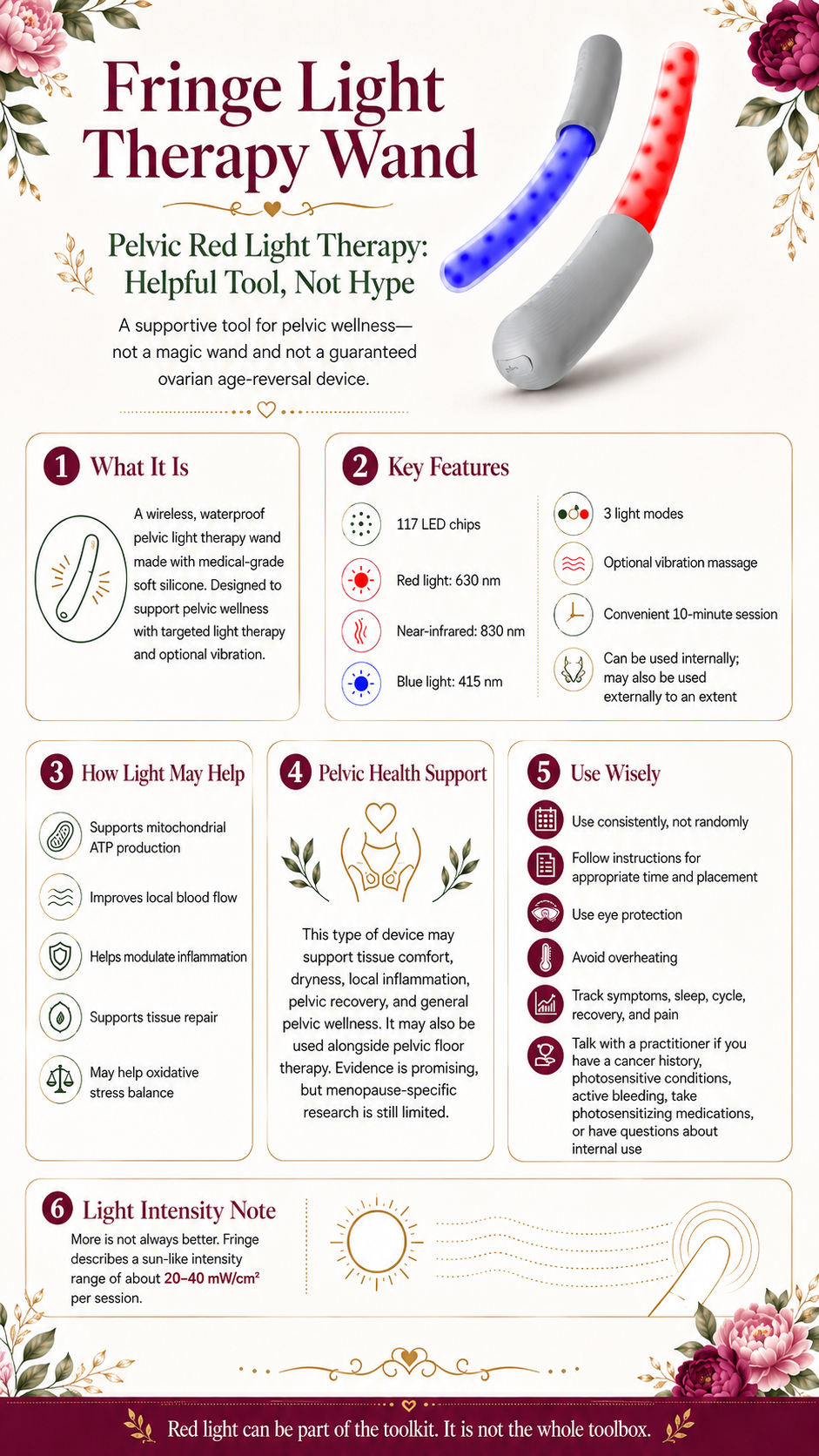
One product getting attention in the pelvic wellness space is the Fringe Light Therapy Wand. According to Fringe Heals, this wand is wireless, waterproof, made with medical-grade soft silicone, and designed for pelvic light therapy support. It includes 117 LED chips using red light at 630 nm, near-infrared light at 830 nm, and blue light at 415 nm, with 3 light modes, optional vibration massage, and a convenient 10-minute session. Fringe also notes that the wand can be used internally and, to an extent, externally.
This type of tool may be considered for women dealing with pelvic tissue discomfort, dryness, local inflammation, pelvic recovery, or general pelvic wellness, especially alongside pelvic floor therapy when appropriate. However, let’s be clear: promising does not mean proven for every woman, every symptom, or every menopause concern. Menopause-specific research is still developing, and internal pelvic devices should be used wisely, respectfully, and with proper guidance.
If using red light therapy, consider:
🔴 Consistent use rather than random use
🔴 Appropriate wavelength, placement, and timing
🔴 Eye protection
🔴 Avoiding overheating
🔴 Tracking symptoms, sleep, cycle, recovery, and pain
🔴 Discussing use with a practitioner if you have a cancer history, photosensitive conditions, active bleeding concerns, pelvic pain, infections, prolapse, pregnancy, recent surgery, implanted devices, or take photosensitizing medications
🔴 Following the manufacturer’s instructions carefully, especially for internal use
Another helpful note: more intensity is not always better. Fringe states that their light therapy products are engineered to deliver a sun-like intensity range of about 20–40 mW/cm² per session, rather than very high-intensity exposure.
Red light can be part of the toolkit. It is not the whole toolbox.
Where to buy:
👉🏾 Fringe Heals — click here for the Fringe Light Therapy Wand.
Where to buy:
🧴 Environmental Toxins: Your Ovaries Do Not Love Chemical Chaos
Ovarian aging research is also paying attention to environmental stressors, including endocrine-disrupting chemicals like BPA and phthalates. These compounds can interfere with hormone signaling and may affect ovarian function through oxidative stress and inflammatory pathways.
Practical swaps:
🧴 Use fragrance-free or low-tox body care
🥘 Avoid heating food in plastic
💧 Use filtered water when possible
🧼 Choose cleaner cleaning products
🕯️ Reduce synthetic fragrances and candles
🥫 Reduce canned foods lined with BPA-type chemicals
🍳 Avoid scratched non-stick cookware
🧾 Stop hoarding receipts like they are love letters from the endocrine disruptor kingdom
Small swaps add up. The goal is not perfection. The goal is lowering the body burden.
😴 Sleep, Sabbath Rhythm & Nervous System Safety
In a faith-based health model, rest is not laziness. Rest is design.
As a Seventh-day Adventist-flavored reminder: the Creator built rhythm into life. Day and night. Work and rest. Six days and Sabbath. The body was never designed to run on adrenaline, caffeine, blue light, and unresolved stress forever.
When sleep is broken, cortisol rhythm shifts. Blood sugar becomes more unstable. Cravings increase. Inflammation rises. Mitochondria suffer. Hormones become harder to regulate.
Support sleep by:
🌙 Morning sunlight within 30–60 minutes of waking
🌙 Protein and fiber earlier in the day
🌙 No caffeine after late morning if sensitive
🌙 Magnesium-rich foods
🌙 Evening screen boundaries
🌙 Cooling the bedroom
🌙 Prayer, Scripture, journaling, or calming breathwork
🌙 A consistent bedtime routine
🌙 Sabbath rest as a weekly nervous system reset
A simple verse for this season:
“Beloved, I wish above all things that thou mayest prosper and be in health…” — 3 John 1:2
Health is not vanity. Stewardship matters.
🧭 The Empowering Reframe: This Is Not the End
Menopause is not the end of womanhood.
It is not the end of beauty.
It is not the end of purpose.
It is not the end of intimacy.
It is not the end of strength.
It is not the end of ministry, business, creativity, leadership, or joy.
It is a biological transition that deserves respect, not dismissal.
This season may be asking you to stop overriding your body, stop living on stress hormones, stop eating like your gut is not involved, stop ignoring your sleep, stop guessing with supplements, and stop accepting “your labs are normal” when you know your body is waving a red flag.
Perimenopause and menopause can uncover Metabolic Chaos®, but they can also reveal healing opportunities.
Your body is not betraying you.
Your body is communicating.
And with the right support, you can learn the language.
🌳 Call to Action: Your New Chapter Deserves a Strategy
At Leaves from the Tree of Life LLC, we help Businesswomen who are Hormonal, Anxious, and Bloated through Functional Nutrition Coaching + Labs.
If you are tired of guessing, tired of being dismissed, tired of buying another supplement because a reel told you to, and tired of feeling like your body has become a mystery novel with missing pages—it may be time to look deeper.
Through functional testing such as DUTCH, DNAlife Hormones, FBCA, GI-MAP, MRT, and other personalized tools, we help identify patterns in hormones, gut health, blood chemistry, food reactions, detoxification, stress response, and metabolic function.
This is not about chasing youth.
This is about supporting your healthspan with wisdom.
This is about honoring your body as fearfully and wonderfully made.
This is about moving into the next chapter with clarity, confidence, and a little bit of holy sass.
✨ Ready to stop guessing and start investigating?
👉🏾 Click here to jump on a Discovery Call.
Your ovaries may be changing, but your story is far from over.
New season. New strategy. Same God. Stronger woman.
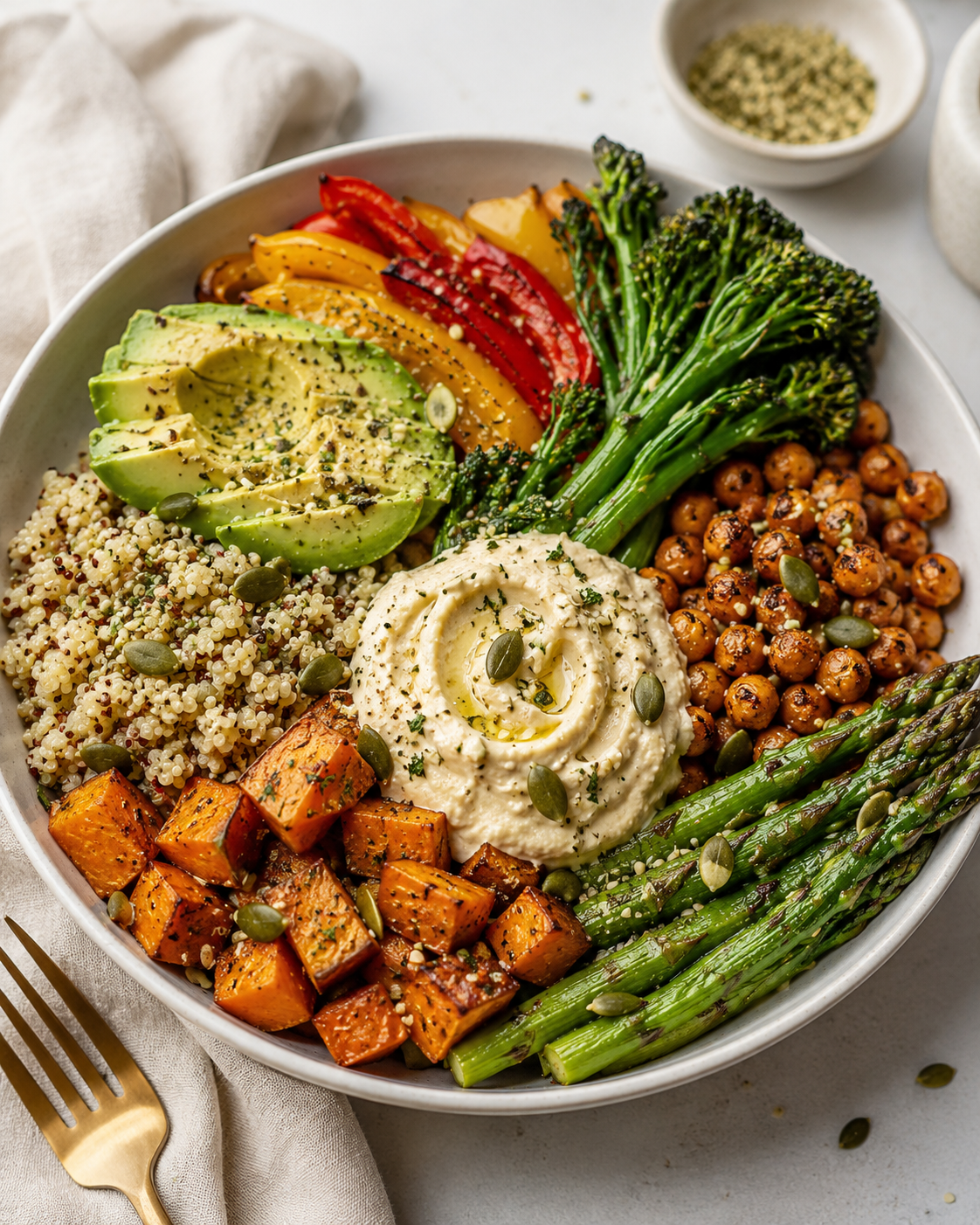
🌺 The Vitality Harvest Bowl
Roasted Veggies, Spiced Chickpeas, Quinoa, Avocado & Creamy Lemon-Herb Hummus
A colourful, organic, whole-food plant-based bowl created to support midlife hormones, gut health, blood sugar balance, mitochondrial nourishment, and healthy aging — because ovarian aging may be real, but bland food is absolutely unnecessary. 😅🌿
Serves: 2 generous bowls
Prep Time: 15 minutes
Cook Time: 25–30 minutes
Total Time: About 40–45 minutes
Style: Whole food plant-based, gluten-free, dairy-free, egg-free, oil-free option
🛒 Organic Ingredients
🥣 Bowl Base
1 cup organic quinoa, rinsed
2 cups filtered water or low-sodium vegetable broth
1 medium organic sweet potato, cubed
1 can or 1½ cups cooked organic chickpeas, drained and rinsed
1 bunch organic asparagus, trimmed
1 bunch organic tenderstem broccoli or broccolini
1 organic red bell pepper, sliced
1 organic yellow bell pepper, sliced
1 ripe organic avocado, sliced
2 tablespoons organic pumpkin seeds
1 tablespoon organic hemp seeds, optional
🌶️ Spiced Chickpea + Veggie Seasoning
1 teaspoon smoked paprika
½ teaspoon turmeric
½ teaspoon cumin
¼ teaspoon cayenne pepper or chili flakes, optional
½ teaspoon garlic powder
½ teaspoon onion powder
1–2 tablespoons fresh lemon juice
1–2 tablespoons aquafaba, water, or vegetable broth for roasting
Mineral salt to taste
🍋 Creamy Lemon-Herb Hummus
1 cup cooked organic chickpeas
2 tablespoons organic tahini
2 tablespoons fresh lemon juice
1 small garlic clove
2–4 tablespoons water, as needed
1 tablespoon fresh parsley or coriander
½ teaspoon cumin
Mineral salt to taste
👩🏾🍳 Step-by-Step Instructions
1. 🍚 Cook the quinoa
Add rinsed quinoa and water or vegetable broth to a pot. Bring to a boil, then reduce heat, cover, and simmer for 15 minutes. Turn off the heat and let it sit covered for 5 minutes. Fluff with a fork.
2. 🍠 Roast the sweet potato
Preheat oven to 200°C / 400°F. Place cubed sweet potato on a lined baking tray. Toss with a splash of lemon juice, a little aquafaba or broth, smoked paprika, cumin, turmeric, garlic powder, and a pinch of mineral salt. Roast for 25–30 minutes until golden and tender.
3. 🌶️ Roast the chickpeas and peppers
On another lined tray, add chickpeas and sliced bell peppers. Season with smoked paprika, turmeric, garlic powder, onion powder, cayenne or chili flakes, lemon juice, and a splash of broth or aquafaba. Roast for 20–25 minutes, shaking halfway through.
4. 🥦 Steam-sauté the greens
In a pan, add asparagus and broccolini with 2–3 tablespoons water or broth. Cover for 3–4 minutes, then uncover and cook another 2–3 minutes until bright green and tender-crisp. Add lemon juice and a pinch of mineral salt.
5. 🍋 Blend the hummus
Blend chickpeas, tahini, lemon juice, garlic, cumin, herbs, mineral salt, and water until creamy. Add more water for a softer, spoonable texture.
6. 🥗 Build the bowl
Add quinoa to the base of each bowl. Arrange roasted sweet potato, spiced chickpeas, bell peppers, asparagus, broccolini, avocado, and a generous scoop of hummus. Sprinkle pumpkin seeds and hemp seeds on top.
7. ✨ Finish it beautifully
Add extra lemon juice, fresh herbs, chili flakes, and a tiny pinch of mineral salt. Make it pretty — because midlife nourishment should look like abundance, not punishment.
🌿 Why This Bowl Works for Ovarian Aging, Longevity & Perimenopause
🍚 Organic Quinoa
Provides plant protein, fiber, magnesium, and complex carbohydrates to support steady energy, mood, and blood sugar balance. Helpful for women who feel wired, tired, or snacky during perimenopause.
🧡 Organic Sweet Potato
Rich in beta-carotene, potassium, and slow-release carbohydrates. Supports gut health, healthy skin, adrenal nourishment, and stable energy without the blood sugar rollercoaster.
🫘 Organic Chickpeas
A beautiful fiber + plant protein combo. Chickpeas support the gut microbiome, bowel regularity, blood sugar balance, and estrogen clearance through healthy elimination. Translation: your estrobolome approves.
🥦 Organic Broccolini
Part of the cruciferous vegetable family, which supports liver detoxification pathways and estrogen metabolism. A hormone-support bowl without crucifers is like a sermon without Scripture — something is missing. 😅
🌱 Organic Asparagus
Supports hydration, minerals, prebiotic fiber, and gentle digestive support. It also brings that elegant “I care about my mitochondria” energy to the plate.
🌶️ Organic Bell Peppers
High in vitamin C and colourful antioxidants. Vitamin C supports collagen, immune health, adrenal function, iron absorption, and tissue repair — all important in the midlife season.
🥑 Organic Avocado
Provides potassium, fiber, and healthy whole-food fats that support satiety, skin, brain health, and blood sugar steadiness. Creamy without dairy, because we love options.
🎃 Organic Pumpkin Seeds
A mineral-rich powerhouse, especially for zinc, magnesium, and plant-based iron. These nutrients support mood, immune health, thyroid function, skin, hair, and nervous system resilience.
🌿 Organic Hemp Seeds
Add extra plant protein, omega fats, and minerals. Great for women who need more protein but do not want another powder, bar, or “mystery wellness snack.”
🍋 Lemon Juice
Supports flavour, digestion, and vitamin C intake. It also brightens the whole bowl and helps the heavier ingredients feel fresh and balanced.
🌰 Tahini
Made from sesame seeds, tahini brings calcium, magnesium, healthy fats, and creaminess. Helpful for bone support, especially as estrogen patterns shift in peri/menopause.
🧄 Garlic
Supports immune resilience, gut diversity, and cardiovascular wellness. Small but mighty — like the quiet auntie who knows everything.
🟡 Turmeric
Contains curcumin compounds that support inflammatory balance. Lovely for women dealing with joint stiffness, recovery issues, or that midlife “why do my knees have opinions?” moment.
🌶️ Paprika, Cumin & Cayenne
These spices support warmth, flavour, circulation, and antioxidant intake. They also make chickpeas taste like they came with a personality.
✨ Practitioner Note
This bowl supports the foundations that matter during perimenopause: fiber, minerals, blood sugar balance, gut support, plant protein, liver-loving nutrients, and colourful antioxidants.
It will not “reverse ovarian aging” — we are not doing fairy dust science over here. But it can support the terrain, reduce Metabolic Chaos® triggers, and nourish the body’s God-given healing opportunities.
New season. New strategy. Same God. Stronger woman. 🌿🙏🏾
References
🌸 Perimenopause, Menopause & Hormonal Changes
NICE. Menopause: identification and management (NG23).https://www.nice.org.uk/guidance/ng23 [1]
NICE. Menopause: identification and management — Recommendations.https://www.nice.org.uk/guidance/ng23/chapter/recommendations [2]
NICE CKS. Diagnosis of menopause and perimenopause.https://cks.nice.org.uk/topics/menopause/diagnosis/diagnosis-of-menopause-perimenopause/ [3]
NHS. Menopause and perimenopause.https://www.nhs.uk/conditions/menopause-and-perimenopause/ [4]
NHS. Symptoms of menopause and perimenopause.https://www.nhs.uk/conditions/menopause-and-perimenopause/symptoms/ [5]
The Menopause Society. Position Statements and Professional Resources.https://menopause.org/professional-resources/position-statements [6]
The Menopause Society / PubMed. The 2022 hormone therapy position statement of The North American Menopause Society.https://pubmed.ncbi.nlm.nih.gov/35797481/ [7]
International Menopause Society. Position Papers and Consensus Statements, including the 2024 IMS White Paper on Menopause and MHT.https://www.imsociety.org/statements/position-papers-and-consensus-statements/ [8]
British Menopause Society. Menopause Practice Standards — May 2026 PDF.https://thebms.org.uk/wp-content/uploads/2026/05/NEW-BMS-Menopause-Practice-Standards-MAY2026-A.pdf [9]
🌺 Ovarian Aging, Longevity & Women’s Healthspan
PLOS Biology. The ovary as a systemic regulator of female health and aging.https://journals.plos.org/plosbiology/article?id=10.1371/journal.pbio.3003800 [10]
PMC / NIH. Studying ovarian aging and its health impacts.https://pmc.ncbi.nlm.nih.gov/articles/PMC12315883/ [11]
PMC / NIH. Ovarian Aging: Mechanisms, Age-Related Disorders, and Interventions.https://pmc.ncbi.nlm.nih.gov/articles/PMC12620568/ [12]
PMC / NIH. Mechanisms of ovarian aging in women: a review.https://pmc.ncbi.nlm.nih.gov/articles/PMC10080932/ [13]
Nature Aging. Molecular and genetic insights into human ovarian aging.https://www.nature.com/articles/s43587-024-00762-5 [14]
npj Aging. The role of cellular senescence in ovarian aging.https://www.nature.com/articles/s41514-024-00157-1 [15]
PMC / NIH. Searching for female reproductive aging and longevity.https://pmc.ncbi.nlm.nih.gov/articles/PMC8266318/ [16]
PMC / NIH. Ages at menarche and menopause and reproductive lifespan as predictors of exceptional longevity in women.https://pmc.ncbi.nlm.nih.gov/articles/PMC5177476/ [17]
PMC / NIH. Menopause accelerates biological aging.https://pmc.ncbi.nlm.nih.gov/articles/PMC4995944/ [18]
🧬 AMH, Ovarian Reserve & Menopause Prediction
PMC / NIH. The role of Anti-Müllerian Hormone: insights into ovarian insufficiency and menopause prediction.https://pmc.ncbi.nlm.nih.gov/articles/PMC12289849/ [19]
PubMed. Anti-Müllerian hormone for the diagnosis and prediction of menopause: a systematic review.https://pubmed.ncbi.nlm.nih.gov/36651193/ [20]
NCBI Bookshelf / NICE. Menopause: identification and management.https://www.ncbi.nlm.nih.gov/books/NBK552590/ [21]
PMC / NIH. The best ovarian reserve marker to predict ovarian response: a systematic review and network meta-analysis.https://pmc.ncbi.nlm.nih.gov/articles/PMC11657140/ [22]
🔬 Can Menopause Be Delayed? Experimental Longevity Research
ClinicalTrials.gov. Effect of Rapamycin in Ovarian Aging — NCT05836025.https://clinicaltrials.gov/study/NCT05836025 [23]
NewYork-Presbyterian Advances. Pilot Study Evaluates Weekly Pill to Slow Ovarian Aging, Delay Menopause.https://www.nyp.org/advances/article/womens-health/pilot-study-evaluates-weekly-pill-to-slow-ovarian-aging-delay-menopause [24]
NIH. Clinical Research Trials and You.https://www.nih.gov/health-information/nih-clinical-research-trials-you [25]
PMC / NIH. Innovative approaches beyond hormone replacement therapy.https://pmc.ncbi.nlm.nih.gov/articles/PMC12843827/ [26]
Health. Can You Delay Menopause? Experts Explain What’s Actually Possible.https://www.health.com/can-you-delay-menopause-11982989 [27]
🔥 Mitochondria, Oxidative Stress & Ovarian Aging
PMC / NIH. Antioxidants and fertility in women with ovarian aging.https://pmc.ncbi.nlm.nih.gov/articles/PMC11345374/ [28]
PMC / NIH. Clinical evidence of coenzyme Q10 pretreatment for women with diminished ovarian reserve.https://pmc.ncbi.nlm.nih.gov/articles/PMC11321116/ [29]
PMC / NIH. Exploring the protective effects of coenzyme Q10 on female reproductive aging.https://pmc.ncbi.nlm.nih.gov/articles/PMC12425901/ [30]
PMC / NIH. Aging-related ovarian failure and infertility: melatonin to the rescue?https://pmc.ncbi.nlm.nih.gov/articles/PMC10045124/ [31]
PMC / NIH. Sleep, melatonin, and the menopausal transition.https://pmc.ncbi.nlm.nih.gov/articles/PMC5611767/ [32]
PMC / NIH. Influence of melatonin treatment on emotion, sleep, and life quality in perimenopausal women.https://pmc.ncbi.nlm.nih.gov/articles/PMC10581846/ [33]
🦠 Gut Health, Estrobolome & Estrogen Metabolism
International Journal of Women’s Health. Spotlight on the gut microbiome in menopause: current insights.https://www.dovepress.com/spotlight-on-the-gut-microbiome-in-menopause-current-insights-peer-reviewed-fulltext-article-IJWH [34]
PMC / NIH. The estrobolome: estrogen-metabolizing pathways of the gut microbiome.https://pmc.ncbi.nlm.nih.gov/articles/PMC12178105/ [35]
PMC / NIH. Gut microbial beta-glucuronidase: a vital regulator in female estrogen metabolism and estrogen-related disease.https://pmc.ncbi.nlm.nih.gov/articles/PMC10416750/ [36]
PMC / NIH. Gut microbial β-glucuronidases reactivate estrogens as components of the estrobolome.https://pmc.ncbi.nlm.nih.gov/articles/PMC6901331/ [37]
PMC / NIH. Diet, the gut microbiome, and estrogen physiology.https://pmc.ncbi.nlm.nih.gov/articles/PMC13074627/ [38]
PMC / NIH. Gut microbiota has the potential to improve health of postmenopausal women.https://pmc.ncbi.nlm.nih.gov/articles/PMC12183514/ [39]
🥗 Nutrition, Plant-Forward Support & Menopause Symptoms
PMC / NIH. Dietary interventions and nutritional strategies for menopausal symptoms.https://pmc.ncbi.nlm.nih.gov/articles/PMC12745279/ [40
PMC / NIH. Effects of soy isoflavones on menopausal symptoms in perimenopausal women: a systematic review and meta-analysis.https://pmc.ncbi.nlm.nih.gov/articles/PMC12296567/ [41
NCCIH. Soy: Usefulness and Safety.https://www.nccih.nih.gov/health/soy [42]
NCCIH. Menopausal Symptoms and Complementary Health Approaches: What the Science Says.https://www.nccih.nih.gov/health/providers/digest/menopausal-symptoms-and-complementary-health-approaches-science [43]
NCCIH. Black Cohosh: Usefulness and Safety.https://www.nccih.nih.gov/health/black-cohosh [44]
NCCIH. Sleep Disorders and Complementary Health Approaches.https://www.nccih.nih.gov/health/sleep-disorders-and-complementary-health-approaches [45]
💪🏾 Exercise, Muscle, Bone & Cardiometabolic Health
WHO. Physical Activity Fact Sheet.https://www.who.int/news-room/fact-sheets/detail/physical-activity [46]
WHO. WHO Guidelines on Physical Activity and Sedentary Behaviour.https://www.who.int/publications/i/item/9789240015128 [47]
NHS. Physical activity guidelines for adults aged 19 to 64.https://www.nhs.uk/live-well/exercise/physical-activity-guidelines-for-adults-aged-19-to-64/ [48]
CDC. Adult Activity: An Overview.https://www.cdc.gov/physical-activity-basics/guidelines/adults.html [49]
PMC / NIH. The effects of aerobic exercise on cardiometabolic health in postmenopausal females.https://pmc.ncbi.nlm.nih.gov/articles/PMC11503877/ [50]
PMC / NIH. Optimal resistance training parameters for improving bone mineral density in postmenopausal women.https://pmc.ncbi.nlm.nih.gov/articles/PMC12107943/ [51]
PMC / NIH. Effect of different types of exercise on bone mineral density in postmenopausal women.https://pmc.ncbi.nlm.nih.gov/articles/PMC11972399/ [52]
PMC / NIH. Impact of creatine supplementation on menopausal women’s strength and function.https://pmc.ncbi.nlm.nih.gov/articles/PMC12291186/ [53]
PMC / NIH. Creatine supplementation in women’s health: a lifespan perspective.https://pmc.ncbi.nlm.nih.gov/articles/PMC7998865/ [54]
🔴 Red Light Therapy, Photobiomodulation & Pelvic Wellness
PMC / NIH. Mechanisms and applications of the anti-inflammatory effects of photobiomodulation.https://pmc.ncbi.nlm.nih.gov/articles/PMC5523874/ [55]
PMC / NIH. Mechanisms and mitochondrial redox signaling in photobiomodulation.https://pmc.ncbi.nlm.nih.gov/articles/PMC5844808/ [56]
PMC / NIH. Photobiomodulation — underlying mechanism and clinical applications.https://pmc.ncbi.nlm.nih.gov/articles/PMC7356229/ [57]
PMC / NIH. From light to healing: photobiomodulation therapy in medical practice.https://pmc.ncbi.nlm.nih.gov/articles/PMC12751248/ [58]
PMC / NIH. The efficacy of multiwavelength red and near-infrared photobiomodulation light therapy in enhancing female fertility outcomes and improving reproductive health.https://pmc.ncbi.nlm.nih.gov/articles/PMC11642705/ [59]
PubMed. The efficacy of multiwavelength red and near-infrared photobiomodulation light therapy in enhancing female fertility outcomes and improving reproductive health.https://pubmed.ncbi.nlm.nih.gov/39685560/ [60]
Fringe Heals. Light Therapy Wand.https://leavesfromthetreeoflife.fdnstores.com/light-therapy-pelvic-wand.html [61]
Fringe Heals. Red Light Therapy FAQs.https://fringeheals.com/pages/faq-light-therapy [62]
Fringe Heals. Light Therapy and Menopause.https://fringeheals.com/blogs/blog/light-therapy-menopause [63]
🧪 Testing Mentioned: Functional Labs, Hormones, Gut & Food Sensitivity
Precision Analytical. DUTCH Test.https://dutchtest.com/ [64]
Precision Analytical. DUTCH Complete.https://dutchtest.com/dutch-complete [65]
PMC / NIH. Reliability of a dried urine test for comprehensive assessment of urine hormones and metabolites.https://pmc.ncbi.nlm.nih.gov/articles/PMC7962249/ [66]
PMC / NIH. Dried urine and salivary profiling for complete assessment of cortisol and cortisol metabolites.https://pmc.ncbi.nlm.nih.gov/articles/PMC7744704/ [67]
DNAlife. DNA Hormones.https://www.dnalife.healthcare/products/dna/dna-hormones [68]
Diagnostic Solutions Laboratory. GI-MAP Interpretive Guide PDF.https://www.diagnosticsolutionslab.com/assets/documents/gi-map-interpretive-guide.pdf [69]
PMC / NIH. Performance of a new molecular assay for detection of gastrointestinal pathogens: GI-MAP.https://pmc.ncbi.nlm.nih.gov/articles/PMC7660239/ [70]
Oxford Biomedical Technologies / LEAP. The Patented Mediator Release Test.https://www.nowleap.com/the-patented-mediator-release-test/ [71]
Oxford Biomedical Technologies / LEAP. Leader in Food Sensitivity Testing — LEAP Diet and MRT.https://www.nowleap.com/ [72]
Verywell Health. Your Guide to the MRT Test for Food Sensitivities.https://www.verywellhealth.com/mrt-test-5498544 [73]
🧴 Environmental Toxins, Smoking & Ovarian Aging
PMC / NIH. Endocrine disrupting chemicals, reproductive aging, and ovarian reserve.https://pmc.ncbi.nlm.nih.gov/articles/PMC11753258/ [74]
Endocrine Society. Endocrine-Disrupting Chemicals.https://www.endocrine.org/topics/edc [75]
Endocrine Society. Impact of endocrine-disrupting chemicals on reproductive systems.https://www.endocrine.org/topics/edc/what-edcs-are/common-edcs/reproduction [76]
PMC / NIH. Endocrine disruptor chemicals exposure and female fertility disorders.https://pmc.ncbi.nlm.nih.gov/articles/PMC11672798/ [77]
PMC / NIH. Cigarette smoking and risk of early natural menopause.https://pmc.ncbi.nlm.nih.gov/articles/PMC5888979/ [78]
PMC / NIH. Relationships between smoking intensity, duration, cumulative dose, and earlier menopause.https://pmc.ncbi.nlm.nih.gov/articles/PMC6258514/ [79]
🌱 Faith-Aligned Lifestyle Context: Rest, Rhythm & Whole-Person Health
Ellen G. White Estate. The Ministry of Healing PDF.https://media4.egwwritings.org/pdf/en_MH.pdf [80]
Ellen G. White Writings. The Ministry of Healing.https://m.egwwritings.org/en/book/135/info [81]
NEWSTART Lifestyle Program. Nutrition, Exercise, Water, Sunlight, Temperance, Air, Rest, and Trust in God.https://newstart.com/ [82]
NEWSTART Lifestyle Program. About NEWSTART.https://newstart.com/about/ [83]
Adventist Family Ministries. A Prescription for Optimum Health.https://family.adventist.org/a-prescription-for-optimum-health/ [84]
PMC / NIH. The influence of a Christian Seventh-day Adventist lifestyle on health.https://pmc.ncbi.nlm.nih.gov/articles/PMC12386069/ [85]
Blog Disclaimer
The health information on this blog is for general educational purposes only and is not intended to diagnose, treat, cure, or prevent any disease. It should not be used as a substitute for professional medical advice. Always consult a qualified healthcare provider before making any health-related decisions
This blog may contain affiliate links, meaning Leaves from the Tree of Life LLC may earn a small commission if you purchase a product or service through these links—at no additional cost to you. Your support helps us continue to provide valuable content. Thank you!
