
How Husbands Can Support Their Wives Through Perimenopause: Communication, Patience & Understanding
The Husband’s Guide to Perimenopause — Part 2
How to Support Your Wife When Hormones Are Running the Show
💡 Introduction: Knowledge Is Good — But Support Is Better
In Part 1 of this series, we talked about the biology of perimenopause.
Hormonal shifts affect the brain, mood, sleep, metabolism, and nervous system. What your wife is experiencing isn’t random, dramatic, or imagined. It’s physiological.
Now we move to the question many husbands are quietly asking:
“Okay… so what do I actually do?”
Because while understanding the science helps, relationships live and breathe in the day-to-day interactions.
How you respond when your wife is overwhelmed, exhausted, emotional, or discouraged can either calm the storm or intensify it.
Scripture offers surprisingly practical wisdom here:
“Likewise, ye husbands, dwell with them according to knowledge, giving honour unto the wife…”
— 1 Peter 3:7 KJV
Notice again: knowledge and honour.
Understanding her biology helps.
But how you treat her during this transition matters even more.

🧠 When Hormones Are Loud, Emotions Can Be Louder
Perimenopause often lowers stress tolerance.
Fluctuating estrogen and declining progesterone can affect neurotransmitters that regulate mood and emotional resilience.
This means things that once felt manageable can suddenly feel overwhelming.
Common experiences include:
• irritability
• anxiety
• sudden sadness
• feeling misunderstood
• emotional sensitivity
Sometimes a small moment becomes a big one.
Not because your wife wants drama.
Because her nervous system is working harder than usual to maintain balance.
This is where a husband’s emotional steadiness becomes powerful.
Your calm can become the anchor when her nervous system is under pressure.
🗣️ How to Talk to Your Wife When She’s Overwhelmed
When emotions rise, many husbands instinctively try to fix the situation quickly.
Logical problem solving is often helpful in many areas of life.
But during emotional stress, what most women need first is validation and safety.
Instead of immediately offering solutions, try leading with curiosity.
Helpful phrases include:
• “What are you feeling right now?”
• “How can I support you?”
• “Do you want advice or just someone to listen?”
Often the answer is simply:
“Just listen.”
Feeling heard can actually reduce stress hormones like cortisol, which helps the nervous system settle.
⚠️ 10 Things Husbands Accidentally Say That Make Perimenopause Worse
Sometimes the most well-intentioned comments land badly.
Here are a few phrases that often make situations more tense.
1️⃣ “You’re overreacting.”
Even if emotions seem intense, dismissing them can deepen hurt.
2️⃣ “It’s probably just hormones.”
Ironically, while hormones are involved, this phrase often feels minimizing.
3️⃣ “You were fine yesterday.”
Perimenopause symptoms fluctuate. What’s true one day may not be the next.
4️⃣ “Just relax.”
If calming down were that easy, everyone would do it.
5️⃣ “Everyone goes through this.”
True, but every woman’s experience is different.
6️⃣ “Maybe you need to exercise more.”
Lifestyle matters, but unsolicited advice during emotional moments rarely lands well.
7️⃣ “Why are you so sensitive lately?”
Because her nervous system is navigating a hormonal transition.
8️⃣ “You’re being irrational.”
This phrase tends to escalate conflict instantly.
9️⃣ “This is why I don’t like talking about feelings.”
Avoidance rarely solves emotional tension.
🔟 “When will this phase be over?”
That one rarely goes well.
Instead of minimizing the experience, try something much simpler.
“I’m here.”
🔬 Fun Fact Science Bar+
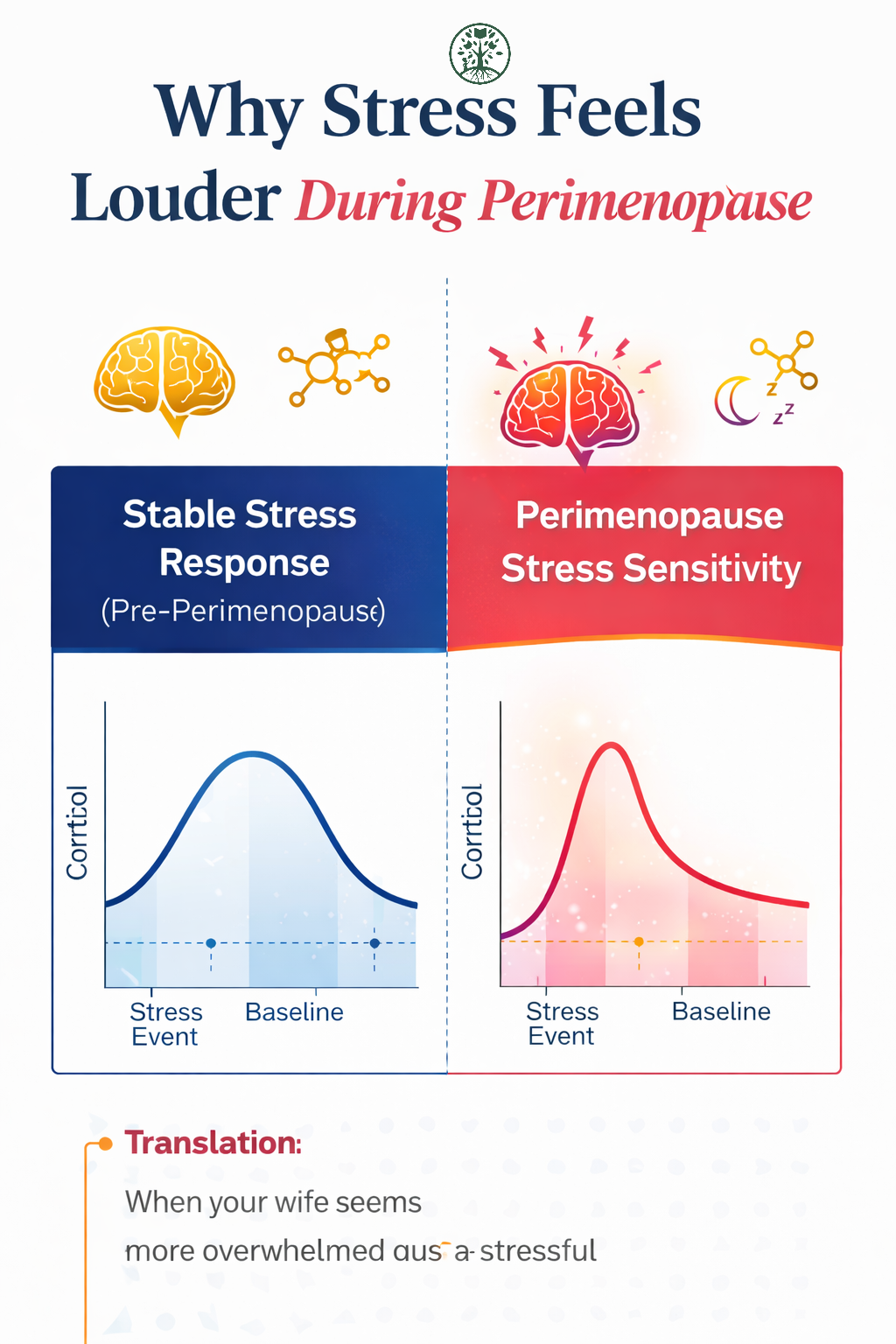
Did you know that during perimenopause a woman’s stress response system becomes more sensitive, meaning the same everyday stressors can trigger a stronger cortisol response than they did in earlier years? Fluctuating estrogen and declining progesterone influence the hypothalamic-pituitary-adrenal (HPA) axis—the brain’s central stress control system—making the nervous system react more quickly to emotional, environmental, or relational stress.
This is one reason small misunderstandings or tense conversations can suddenly feel much more intense during perimenopause. The brain is processing signals through a more reactive stress pathway, which can amplify emotional sensitivity, anxiety, sleep disruption, and irritability.
👉🏾 Translation: When your wife seems more overwhelmed during a stressful conversation, it’s not simply “being dramatic.” Her nervous system is working harder to regulate stress hormones like cortisol and adrenaline while hormones fluctuate. In Functional Diagnostic Nutrition® language, this can become part of a Metabolic Chaos® loop, where stress hormones influence sleep, mood, blood sugar, gut health, and hormone balance all at the same time.
✨ Healing Opportunity: Calm environments and supportive communication can help regulate the nervous system. Simple habits such as slowing conversations during emotional moments, practicing deep breathing, walking together, prioritizing sleep, and reducing evening stress can help stabilize the stress response. Nutrient-dense meals, magnesium-rich foods, and calming herbal teas (like chamomile or lemon balm) can also support the nervous system during hormonal transitions.
✝️ Faith Element: Scripture reminds us that gentle responses carry real power. Practicing patience, kindness, and self-control during stressful moments reflects wisdom and stewardship of our relationships.
“A soft answer turneth away wrath: but grievous words stir up anger.”
— Proverbs 15:1
Choosing gentleness during tense moments can calm not only a conversation—but also the nervous system that’s working overtime during perimenopause. 🙏🏾
🫱🏾🫲🏼 What Actually Helps During Perimenopause
Support during this transition often looks surprisingly simple.
Small acts can create a sense of safety and partnership.
Helpful approaches include:
• lowering household stress where possible
• encouraging rest when fatigue is high
• helping with daily responsibilities
• being patient during mood shifts
• expressing appreciation for her efforts
Sometimes the most meaningful support is recognizing what she’s carrying.
Saying something like:
“I see how hard you’re trying.”
can mean more than solving the problem.
💔 When Perimenopause Creates Relationship Strain
Perimenopause doesn’t just affect individuals.
It affects marriages.
Sleep disruption, stress, emotional changes, and physical symptoms can create tension between partners.
Some couples experience:
• increased arguments
• emotional distance
• reduced intimacy
• misunderstandings about mood changes
These challenges don’t mean a relationship is failing.
Often they simply mean the couple is navigating a biological transition without a roadmap.
Which is exactly why this conversation matters.
👩🏾⚕️ When Therapy Can Be a Helpful Step
Seeking therapy isn’t a sign that something is broken.
It’s often a sign that people care enough to strengthen their relationship.
Individual therapy can help women process:
• anxiety
• depression
• emotional overwhelm
• identity shifts in midlife
Couples therapy can help partners learn how to:
• communicate more effectively
• understand hormonal changes
• navigate emotional stress together
Think of therapy as relationship coaching during a challenging season.
Many couples emerge stronger after learning new communication skills.
🌿 Remember the Bigger Picture
Perimenopause can last several years.
But it isn’t permanent.
With understanding, lifestyle support, and proper guidance, many women find their rhythm again.
In Functional Diagnostic Nutrition®, we often view symptoms not as enemies but as signals and healing opportunities.
This stage of life can become a period of deeper health awareness and stronger relationships.
🙏🏽 Faith Perspective: Honoring Your Wife in Difficult Seasons
Marriage includes seasons of ease and seasons of adjustment.
Scripture encourages husbands to lead with understanding and compassion.
Supporting your wife through perimenopause reflects patience, wisdom, and love in action.
Sometimes honoring your wife simply means standing beside her while she navigates something difficult.
And reminding her that she’s not alone.
➡️ Coming Next in This Series
In Part 3 of this guide, we’ll explore the practical side of supporting health during perimenopause.
We’ll discuss:
• nutrition that supports hormone balance
• functional testing and why “test, don’t guess” matters
• lifestyle strategies for better sleep and mood
• when hormone therapy may be worth discussing with a qualified practitioner
Because when you understand how the body works, you can support it more effectively.
📍 Ready to Look at the Bigger Health Picture?
If your wife is experiencing symptoms and you feel like something deeper may be contributing, functional testing can help uncover the root causes behind hormonal imbalance.
As a Traditional Naturopath and Functional Diagnostic Nutrition® Practitioner, I work with women to investigate underlying contributors such as stress, gut health, nutrient status, and hormone metabolism.
Instead of guessing…
We investigate.
Because perimenopause may be inevitable.
But suffering through it doesn’t have to be.
👉🏾 Learn more or schedule a consultation with Leaves from the Tree of Life LLC
Invest in your health, invest in you—because a healthier lifestyle is a luxury you deserve.
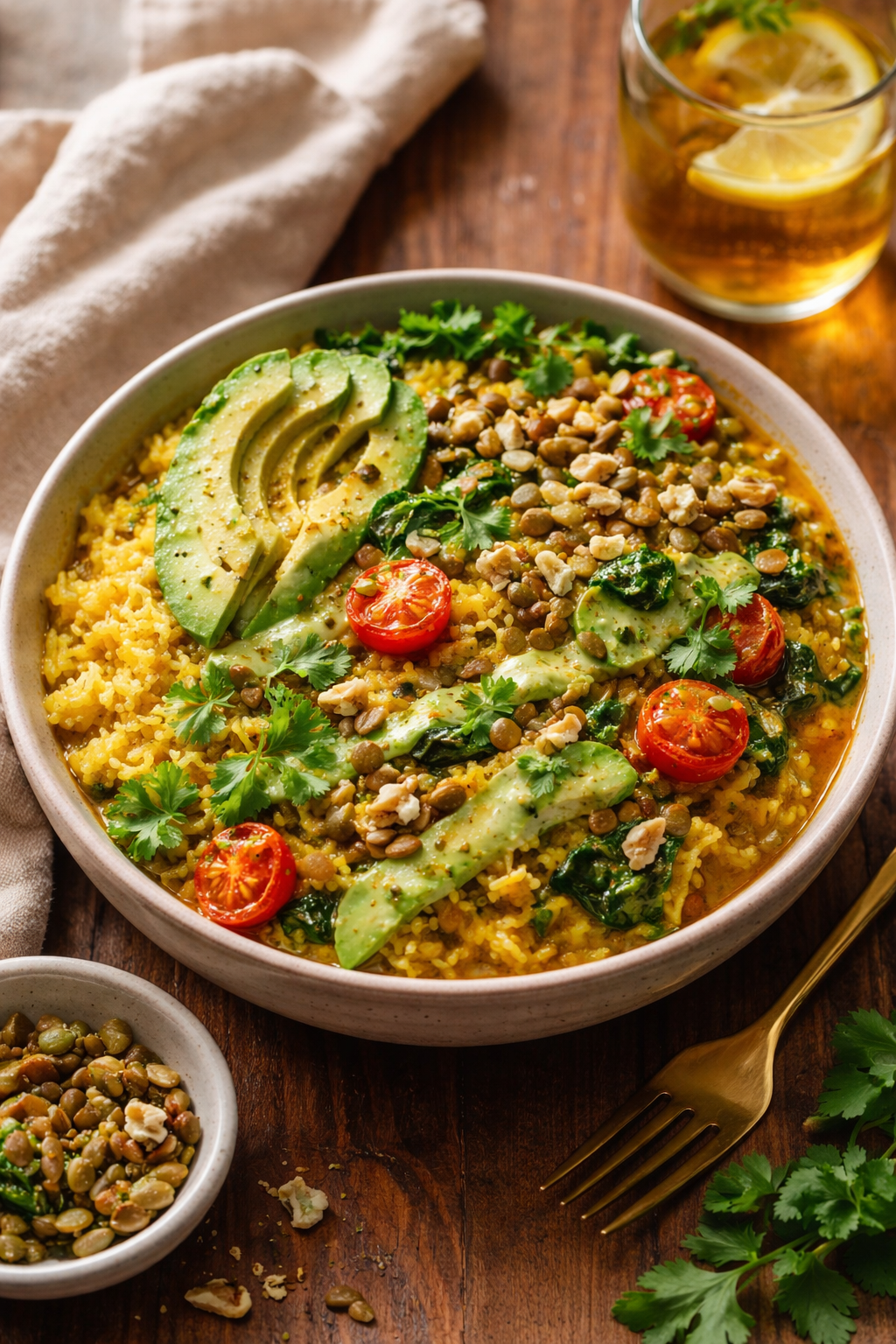
🌿🍲 Golden Comfort Lentil & Coconut Skillet
with Avocado-Lime Drizzle & Calm-Spice Rice
A warm, nourishing anti-inflammatory one-pan meal designed to support the nervous system, stabilize blood sugar, and provide mood-supportive nutrients during perimenopause.
It’s cozy, aromatic, colorful, and comforting—perfect for a supportive dinner after a long day.
Think: comfort food that stabilizes the brain instead of hijacking it.
⏱ Total Time: 35 minutes
🍽 Servings: 2–3
🛒 Ingredients
🍚 Calm-Spice Rice
• 1 cup basmati rice
• 2 cups filtered water
• ½ tsp turmeric
• pinch sea salt
• 1 tsp olive oil
🍲 Golden Lentil Coconut Skillet
• 1 cup cooked green or brown lentils
• 1 tbsp olive oil
• 1 small red onion, diced
• 2 garlic cloves, minced
• 1 tsp grated fresh ginger
• 1 cup diced zucchini
• 1 cup chopped spinach
• ½ cup cherry tomatoes
• ½ cup full-fat coconut milk
• 1 tsp turmeric
• ½ tsp cumin
• ½ tsp smoked paprika
• sea salt to taste
🥑 Avocado-Lime Calm Drizzle
• 1 ripe avocado
• juice of 1 lime
• 2 tbsp olive oil
• pinch sea salt
• 2 tbsp water
Blend until creamy.
🌰 Crunch Topping
• ¼ cup toasted pumpkin seeds
• ¼ cup chopped walnuts
• fresh cilantro or parsley
👩🏽🍳 Step-by-Step Instructions
1️⃣ Cook the calm rice
In a saucepan combine:
• rice
• water
• turmeric
• salt
• olive oil
Bring to a boil then simmer 15 minutes.
Fluff and set aside.
2️⃣ Start the golden skillet
Heat olive oil in a large skillet.
Sauté:
🧅 onion – 3 minutes
🧄 garlic + ginger – 1 minute
The kitchen should start smelling incredible.
3️⃣ Add vegetables
Add:
• zucchini
• tomatoes
• spinach
Cook 4–5 minutes until softened.
4️⃣ Add the spices and lentils
Stir in:
• turmeric
• cumin
• paprika
• lentils
Mix well so spices coat everything.
5️⃣ Add coconut milk
Pour in coconut milk and simmer 5–7 minutes.
The sauce will become creamy and golden.
6️⃣ Make the avocado drizzle
Blend:
🥑 avocado
🍋 lime juice
🫒 olive oil
💧 water
🧂 pinch sea salt
Blend until silky.
7️⃣ Assemble the dish
In a bowl:
🍚 spoon rice
🍲 add lentil coconut skillet
🥑 drizzle avocado sauce
🌰 sprinkle pumpkin seeds & walnuts
🌿 garnish herbs
Serve warm.
🧠 Why This Meal Supports Perimenopause
Each ingredient contributes to mood stability and nervous-system balance.
🫘 Lentils
Provide plant protein and fiber that stabilize blood sugar—preventing mood swings and energy crashes.
🥑 Avocado
Rich in monounsaturated fats that support hormone production and brain function.
🥥 Coconut Milk
Provides healthy fats that help maintain stable energy and satiety.
🌰 Pumpkin Seeds
Loaded with magnesium and zinc, key minerals for stress resilience and hormone balance.
🌰 Walnuts
Contain omega-3 fatty acids that support mood regulation and brain health.
🌿 Turmeric
A powerful anti-inflammatory compound that supports the brain and immune system.
🌱 Ginger
Supports digestion and circulation while reducing inflammation.
🔬 Functional Nutrition Insight
Meals like this help stabilize blood sugar, cortisol rhythms, and nervous-system signaling.
In Functional Diagnostic Nutrition® language, this kind of meal helps reduce Metabolic Chaos® by supporting:
• gut health
• stress resilience
• hormone metabolism
• steady energy production
Food can be a powerful ally in calming the biological storms of perimenopause.
🙏🏽 Faith Element
Cooking for someone you love can be an act of quiet service.
Sometimes care looks like listening.
Sometimes it looks like making dinner.
“Let all that you do be done with love.”
— 1 Corinthians 16:14
A warm meal shared together can become a moment of peace in the middle of a stressful day.
📚 References
🌸 Perimenopause / Menopause, Mood & Emotional Changes
The menopause
Beverley N. Ayers, Mark J. Forshaw and Myra S. Hunter look at lessons learned from a global outlook.
👉🏾 https://www.bps.org.uk/psychologist/menopause
NICE CKS — Management of menopause/perimenopause (clinical guidance on symptoms, emotional wellbeing, and lifestyle strategies)
👉🏾 https://www.nice.org.uk/guidance/ng23/chapter/recommendations
How menopause affects your mental health and wellbeing
By Dr Wendy MolefiGP and Menopause Specialist
👉🏾 https://www.spirehealthcare.com/health-hub/specialties/mental-health/how-menopause-affects-your-mental-health-and-wellbeing/
North American Menopause Society (NAMS) — Mood and Cognitive Changes During Menopause
👉🏾 https://menopause.org/press-releases/how-menopause-restructures-a-womans-brain
🧠 Hormones, Stress Response & the Nervous System
McEwen & Milner, 2017 — Understanding the broad influence of sex hormones on brain function (estrogen influence on stress and emotional regulation)
👉🏾 https://pubmed.ncbi.nlm.nih.gov/27870427/
NIH — Autonomic nervous system and stress response
👉🏾 https://www.ncbi.nlm.nih.gov/books/NBK539845/
Harvard Health Publishing — Perimenopause: Rocky road to menopause (sleep changes, emotional sensitivity and stress response changes)
👉🏾 https://www.health.harvard.edu/womens-health/perimenopause-rocky-road-to-menopause
💬 Communication, Relationships & Emotional Regulation
Gottman Institute — Research on emotional validation and relationship stability
👉🏾 https://www.gottman.com/blog/lack-of-emotional-connection-in-relationships-signs-of-emotional-disconnection/
American Psychological Association — Stress in America: The impact of stress on relationships
👉🏾 https://www.apa.org/news/press/releases/stress
NIH — Emotion regulation and mental health
👉🏾 https://www.ncbi.nlm.nih.gov/pmc/articles/PMC5579396/
😴 Sleep, Mood & Stress Resilience
Scott et al., 2021 — Improving sleep quality leads to better mental health outcomes
👉🏾 https://www.sciencedirect.com/science/article/pii/S1087079221001416
National Institute on Aging — Menopause and sleep problems
👉🏾 https://www.nia.nih.gov/health/menopause/menopause-and-sleep-problems
🙏🏽🌿 Lifestyle Medicine & Stress Regulation
Harvard T.H. Chan School of Public Health — Lifestyle medicine and stress regulation
👉🏾 https://www.hsph.harvard.edu/lifestylemedicine/
Adventist Health Studies — Lifestyle patterns, stress resilience and longevity
👉🏾 https://adventisthealthstudy.org/studies
Blog Disclaimer
The health information on this blog is for general educational purposes only and is not intended to diagnose, treat, cure, or prevent any disease. It should not be used as a substitute for professional medical advice. Always consult a qualified healthcare provider before making any health-related decisions
This blog may contain affiliate links, meaning Leaves from the Tree of Life LLC may earn a small commission if you purchase a product or service through these links—at no additional cost to you. Your support helps us continue to provide valuable content. Thank you!
