
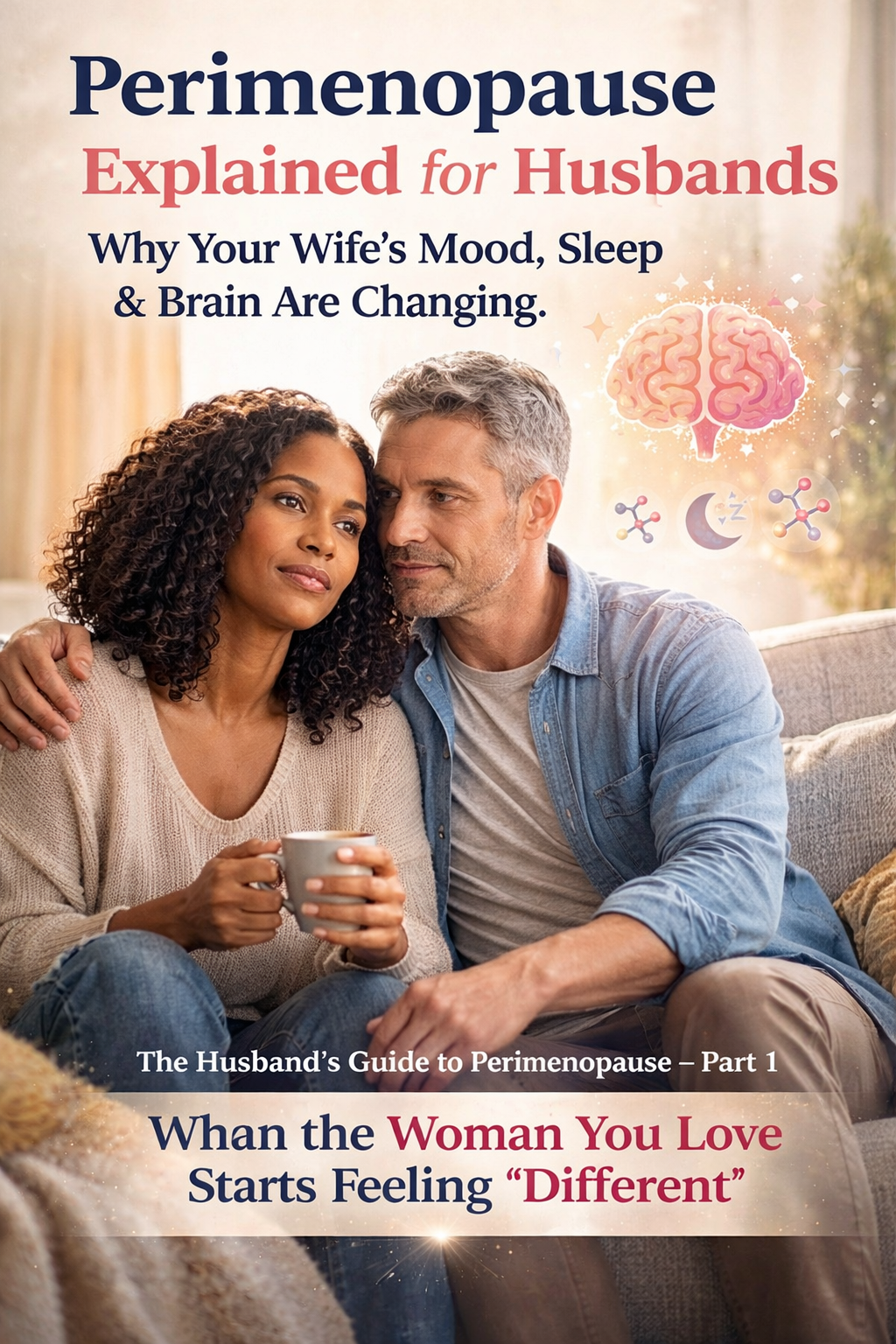
Perimenopause Explained for Husbands: Why Your Wife’s Mood, Sleep & Brain Are Changing
The Husband’s Guide to Perimenopause — Part 1
What’s Happening to Your Wife’s Brain, Mood & Body
✨ When the Woman You Love Starts Feeling “Different”
If you’re reading this, chances are something in your household has shifted.
Maybe your wife isn’t sleeping like she used to.
Maybe she wakes up at 2 or 3 AM wide awake and exhausted the next day.
Maybe she’s more anxious than she used to be.
Maybe she says quietly:
“I just don’t feel like myself anymore.”
You’ve likely tried to understand it.
You’ve Googled.
You’ve searched DuckDuckGo.
You’ve watched videos.
You’ve scrolled social media threads trying to connect the dots.
And yet something still feels missing.
Here’s the truth many couples don’t hear explained clearly:
Perimenopause is one of the most biologically complex transitions a woman experiences.
And it often begins 10–15 years before menopause itself.
That means the woman you married may be navigating major hormonal shifts long before anyone calls it “menopause.”
Scripture actually anticipated the need for wisdom in marriage during difficult seasons.
“Likewise, ye husbands, dwell with them according to knowledge, giving honour unto the wife…”
— 1 Peter 3:7 KJV
Notice the instruction.
According to knowledge.
Understanding what your wife’s body is going through is one of the greatest ways you can honor her during this season.
🧠 The Perimenopause Brain: Why Mood and Emotions Change
Most people think menopause is just about reproductive hormones.
But the brain is actually one of the organs most affected by hormonal changes.
Estrogen interacts with key neurotransmitters that regulate mood and mental clarity.
These include:
• Serotonin – helps stabilize mood
• Dopamine – influences motivation and pleasure
• GABA – helps calm the nervous system
When estrogen begins fluctuating during perimenopause, these systems temporarily lose stability.
The result?
Many women experience symptoms that feel sudden and confusing:
• anxiety that appears out of nowhere
• irritability or emotional sensitivity
• brain fog or forgetfulness
• mood swings
• difficulty concentrating
Some women describe it this way:
"It feels like my brain changed overnight."
They’re not imagining it.
The female brain is actively adapting to a new hormonal environment.
📊 The Mental Health Reality of Perimenopause
Perimenopause isn’t just uncomfortable.
For some women, it can be emotionally vulnerable.
Research shows that women are two to four times more likely to experience depression during the perimenopause transition compared with earlier reproductive years.
Studies also show an increase in suicide risk among women aged 45–54, which corresponds closely with the menopausal transition.
At the same time, many marriages experience tension during midlife as couples navigate stress, aging parents, career changes, and hormonal shifts.
It’s not surprising that divorce rates tend to peak during midlife years.
Now pause for a moment.
Those statistics aren’t meant to scare you.
They highlight something important:
This season requires understanding, patience, and compassion.
When women feel dismissed or misunderstood during this time, emotional isolation can deepen.
But when husbands respond with curiosity and care, relationships often grow stronger.
🌿 Why Perimenopause Feels So Chaotic
One of the biggest misconceptions about menopause is that hormones simply decline gradually.
In reality, perimenopause is more like hormonal turbulence.
One month estrogen may spike.
The next month it may drop dramatically.
Progesterone often declines earlier in the process, which can contribute to:
• anxiety
• sleep disturbances
• irritability
When multiple body systems begin interacting under stress, Functional Diagnostic Nutrition® calls this Metabolic Chaos®.
This simply means several systems are influencing each other at the same time.
For example:
Hormones affect the nervous system.
The nervous system affects sleep.
Sleep affects blood sugar.
Blood sugar affects mood.
Mood affects stress hormones.
Round and round it goes.
Symptoms are often the body’s way of pointing toward healing opportunities.
🔬Fun Fact Science Bar+
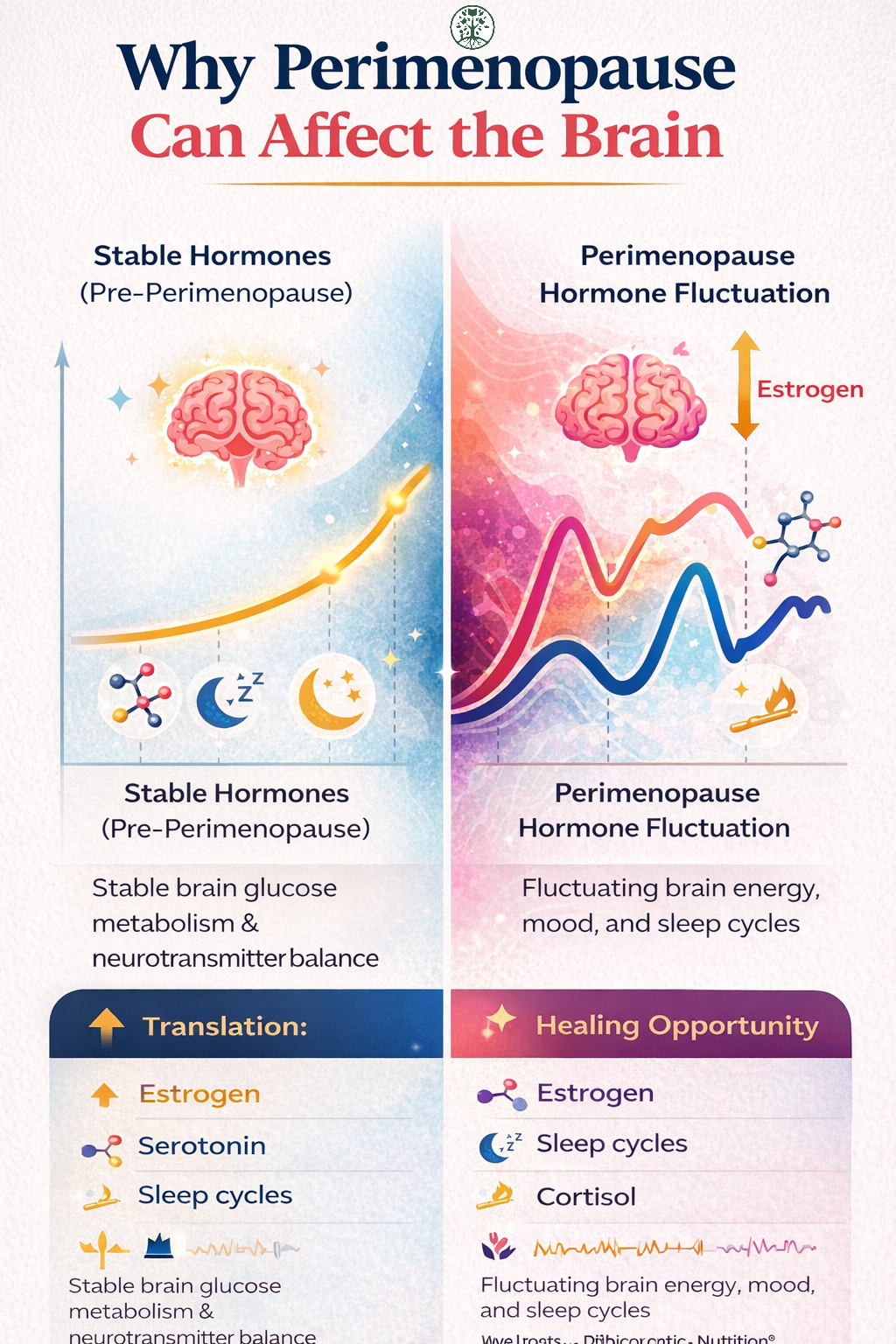
Did you know that a woman’s brain can use up to 20% of the body’s total energy, and estrogen plays a key role in how efficiently that brain energy system works? During perimenopause, fluctuating estrogen can temporarily change how the brain processes glucose (its main fuel), which may contribute to symptoms like brain fog, forgetfulness, anxiety, and sudden mood shifts.
Brain imaging studies have shown that during the menopausal transition, some regions of the brain—particularly those responsible for memory, emotional regulation, and sleep—show temporary metabolic changes as the brain adapts to new hormone levels.
👉🏾 Translation: When your wife says “my brain feels different,” she’s not being dramatic. Her brain is literally recalibrating its fuel system while hormones fluctuate. In Functional Diagnostic Nutrition® language, this is another layer of Metabolic Chaos®, where hormone shifts ripple into brain chemistry, sleep cycles, stress hormones, and mood regulation.
✨ Healing Opportunity: Supporting stable brain energy during perimenopause can make a meaningful difference. Focus on meals that include healthy fats (avocado, olive oil, nuts), high-quality protein, fiber-rich vegetables, and steady blood sugar support. Prioritizing restorative sleep, gentle movement, and stress reduction also helps stabilize the brain’s metabolic rhythm during this transition.
✝️ Faith Element: Scripture reminds us that the body is a temple (1 Corinthians 6:19–20). Caring for brain health through nourishing foods, rest, and peaceful rhythms is an act of stewardship. Taking moments throughout the day to pause, breathe, and invite God’s peace into stressful moments can help calm both the mind and nervous system.🙏🏾
😴 Why Sleep Becomes a Battle
One of the most common perimenopause symptoms husbands notice first is sleep disruption.
Many women wake consistently between 1–4 AM.
This can happen for several reasons:
• cortisol rhythm changes
• declining progesterone
• night sweats or temperature regulation changes
• blood sugar fluctuations
Lack of sleep then amplifies other symptoms like irritability, anxiety, and fatigue.
So if your wife seems exhausted yet restless, there’s often a biological explanation behind it.
💔 Why Libido and Emotional Sensitivity May Change
Hormonal shifts can also influence intimacy and emotional connection.
Lower progesterone and fluctuating estrogen can affect:
• sexual desire
• mood stability
• emotional sensitivity
This doesn’t mean attraction has disappeared.
Often it means the body is under physiological stress.
Pressure or misunderstanding during this time can unintentionally create more tension.
Patience and emotional safety often help restore connection.
🫱🏾🫲🏼 The Power of a Husband Who Understands
Many husbands feel helpless during this season because they don’t know what to do.
The truth is, the most powerful thing you can bring into this season is understanding.
Simple shifts can make a huge difference:
Believe her when she says she’s tired.
Avoid minimizing symptoms with phrases like
“everyone goes through that.”
Recognize that hormonal shifts can affect emotional resilience.
Sometimes the most supportive words are the simplest ones.
"I believe you."
"We’ll figure this out together."
🌱 Faith, Health, and the Body’s Design
The Seventh-day Adventist health message has long emphasized lifestyle principles that modern science continues to confirm.
Healthy food.
Rest.
Fresh air.
Sunlight.
Movement.
Stress reduction.
These simple foundations create an environment where the body can adapt during hormonal transitions.
God designed the body with an extraordinary ability to heal.
Often the goal is simply to remove the obstacles and support the process.
🌸 A Note to Husbands Reading This
If your wife feels different…
If she seems overwhelmed in ways that surprise both of you…
If the woman you love sometimes says she doesn’t recognize herself anymore…
You’re not imagining things.
And neither is she.
Perimenopause is real.
It affects the brain, emotions, metabolism, and overall health.
But understanding what’s happening is the first step toward navigating it well.
➡️ Coming Next in This Series
In Part 2 of this guide, we’ll talk about something every husband wants to know:
How to support your wife during perimenopause without accidentally making things worse.
We’ll cover:
• how to communicate when emotions are high
• what NOT to say during hormonal mood shifts
• how husbands can help regulate stress in the home
• when therapy can be helpful for individuals and couples
Because knowledge is good.
But wise action is even better.
📍 If You Want Help Understanding the Bigger Picture
If your wife is struggling with symptoms and you both feel like something deeper is happening, functional testing can help uncover the root causes behind the symptoms.
As a Traditional Naturopath and Functional Diagnostic Nutrition® Practitioner, I help women investigate the underlying drivers of hormonal imbalance using comprehensive testing and personalized wellness strategies.
Instead of guessing…
We investigate.
Because perimenopause may be inevitable.
But unnecessary suffering doesn’t have to be.
👉🏾 Learn more or schedule a consultation with Leaves from the Tree of Life LLC
Invest in your health, invest in you—because a healthier lifestyle is a luxury you deserve.
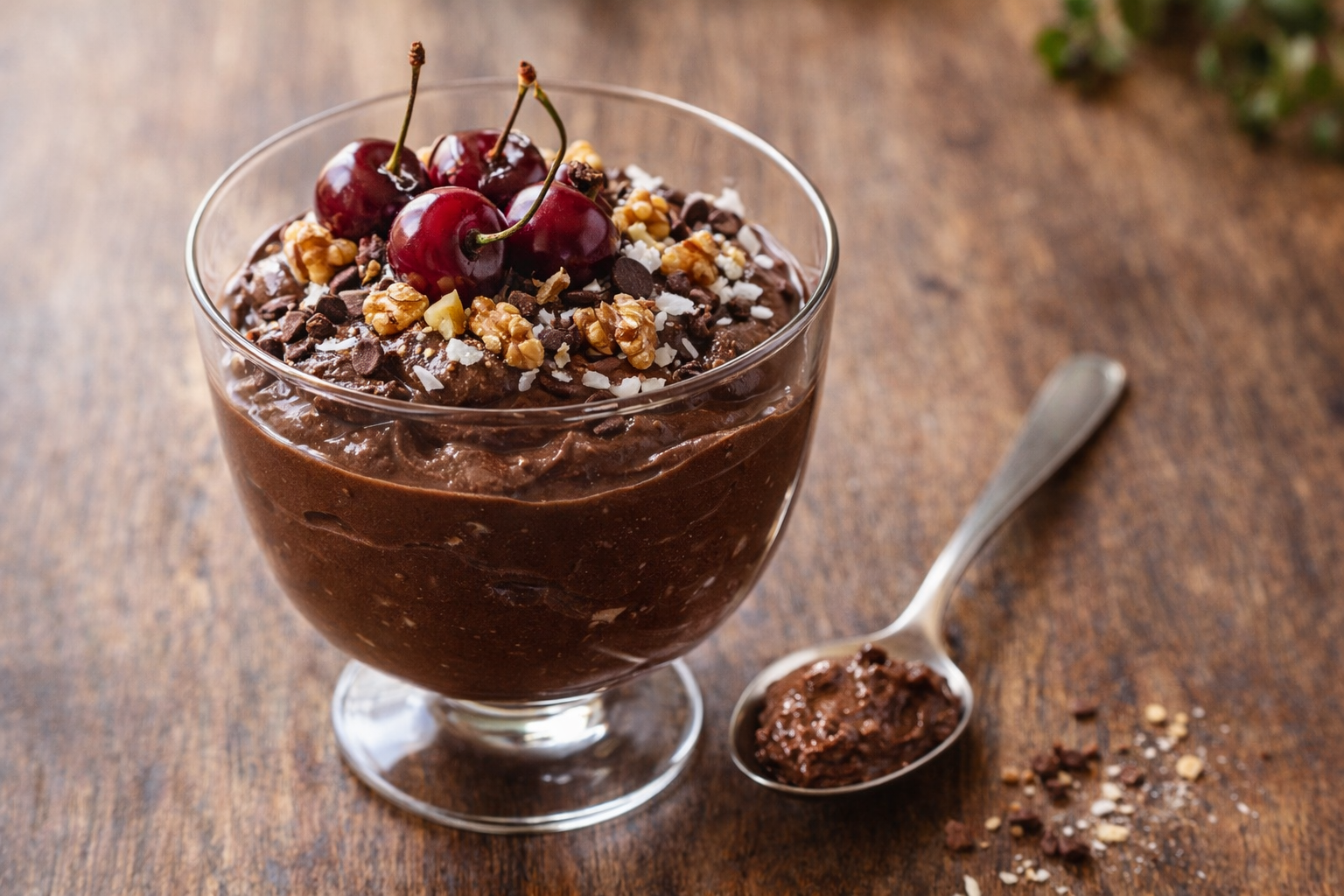
🍫🥑Loving Chocolate Avocado Mousse
with Carob Chips, Cherries & Toasted Nut Crumble
A silky, rich chocolate mousse made with avocado for brain-supporting fats, lightly sweetened and topped with cherries and crunchy nuts for texture and mood-supporting nutrients.
It tastes like dessert.
Your nervous system thinks it’s medicine.
⏱ Prep Time: 10 minutes
⏱ Chill Time: 30 minutes
🍽 Servings: 2–3
🛒 Ingredients
🍫 Mousse Base
• 2 ripe avocados
• ¼ cup raw cacao powder or high-quality cocoa powder
• 3 tbsp maple syrup or date syrup
• ¼ cup unsweetened almond milk (or coconut milk)
• 1 tsp vanilla extract
• pinch sea salt
• ¼ tsp cinnamon (optional)
🍒 Toppings
• 2 tbsp carob chips
• ½ cup fresh or thawed cherries
• ¼ cup chopped walnuts or pecans
• 1 tbsp cacao nibs (optional)
• sprinkle shredded coconut (optional)
👩🏽🍳 Step-by-Step Instructions
1️⃣ Prepare the avocado base
Cut the avocados in half and remove the pits.
Scoop the flesh into a high-speed blender or food processor.
2️⃣ Add mousse ingredients
Add to the blender:
• cacao powder
• maple syrup
• almond milk
• vanilla extract
• sea salt
• cinnamon
Blend until completely smooth and creamy.
The texture should look like thick chocolate pudding.
If needed add 1–2 tablespoons almond milk to reach a silky consistency.
3️⃣ Taste and adjust
Taste the mousse.
Adjust sweetness with a little more maple syrup if desired.
4️⃣ Chill the mousse
Transfer mousse to serving glasses or bowls.
Refrigerate 30 minutes to firm slightly and deepen the flavor.
5️⃣ Add the toppings
Just before serving sprinkle:
🍒 cherries
🌰 chopped walnuts or pecans
🍫 carob chips
🥥 optional coconut flakes
🍫 cacao nibs
The contrast of creamy + crunchy + tart is heavenly.
🧠 Why This Dessert Supports Perimenopause
This isn’t just indulgence—it’s brain nutrition disguised as dessert.
🥑 Avocado
Loaded with monounsaturated fats that support brain function and hormone production. Also rich in potassium and fiber for blood sugar balance.
🍫 Cacao
High in magnesium, a mineral that supports relaxation, mood regulation, and nervous system health.
Magnesium deficiency is common during perimenopause.
🍒 Cherries
Contain natural melatonin precursors and antioxidants that support sleep and inflammation reduction.
🌰 Walnuts / Pecans
Provide omega-3 fatty acids, which help support brain health and mood stability.
🍫 Carob Chips
A naturally sweet chocolate alternative that contains polyphenols and fiber while being gentler for people sensitive to caffeine.
🔬 Functional Nutrition Insight
Desserts that combine healthy fats + fiber + minerals help prevent the blood sugar spikes that can worsen mood swings and fatigue.
In Functional Diagnostic Nutrition® terms, this kind of dessert supports the body in reducing Metabolic Chaos® by stabilizing energy rather than disrupting it.
Translation:
Your sweet tooth gets satisfied.
Your nervous system doesn’t pay the price.
🙏🏽 Faith Element
Even dessert can be a small act of gratitude.
Taking time to enjoy nourishing food with thankfulness shifts eating from mindless habit to mindful stewardship.
“Taste and see that the Lord is good.”
— Psalm 34:8
Sometimes wisdom is as simple as choosing nourishment over excess.
📚 References
🌸 Perimenopause / Menopause Overview & Symptoms
British Menopause Society — What is the Menopause? (includes mood, sleep, anxiety, and cognitive symptoms during the menopausal transition)
👉🏾 https://thebms.org.uk/education/principles-practice-of-menopause-care/bms-ppmc-resources-toolkit/what-is-the-menopause/
NICE CKS — Management of menopause/perimenopause (symptoms, diagnosis, and lifestyle approaches)
👉🏾 https://cks.nice.org.uk/topics/menopause/management/management-of-menopause-perimenopause-or-premature-ovarian-insufficiency/
Women’s Health Concern (patient arm of the British Menopause Society) — Menopause and Wellbeing (psychological and physical symptoms during the menopausal transition)
👉🏾 https://thebms.org.uk/wp-content/uploads/2023/01/BMS-Infographics-JANUARY-2023-WomansRelationshipwithMenopause.pdf
North American Menopause Society (NAMS) — Menopause 101: A Primer for the Perimenopausal Transition
👉🏾 https://www.menopause.org/patient-education/menopause-topics
🧠 Female Brain & Hormonal Changes in Perimenopause
Mosconi et al., 2021 — Perimenopause and brain metabolic changes (brain imaging research showing neurological adaptation during menopause transition)
👉🏾 https://www.nature.com/articles/s41598-021-90084-y
Harvard Health Publishing — Perimenopause: Rocky road to menopause (brain fog, mood changes, sleep disturbance explained)
👉🏾 https://www.health.harvard.edu/womens-health/perimenopause-rocky-road-to-menopause
Prog Neurobiol. 2016 — Estrogen regulation of brain function and neuroprotection
👉🏾https://pmc.ncbi.nlm.nih.gov/articles/PMC4985492/
📊 Depression, Mental Health & Midlife Risk
Freeman et al., 2014 — Depression risk during the menopausal transition (longitudinal study showing increased depression risk during perimenopause)
👉🏾 https://jamanetwork.com/journals/jamapsychiatry/fullarticle/1772342
Bromberger et al., 2015 — Major depression during and after the menopausal transition (SWAN study findings)
👉🏾 https://jamanetwork.com/journals/jamapsychiatry/fullarticle/210819
Self-harm in women in midlife: rates, precipitating problems…..
👉🏾 https://www.cambridge.org/core/journals/the-british-journal-of-psychiatry/article/selfharm-in-women-in-midlife-rates-precipitating-problems-and-outcomes-following-hospital-presentations-in-the-multicentre-study-of-selfharm-in-england/D75F0892CEEAF8E82A0E2C675724DD40
😴 Sleep Disruption, Hormones & Stress Response
National Institute on Aging — Menopause and sleep problems
👉🏾 https://www.nia.nih.gov/health/menopause/menopause-and-sleep-problems
Sleep Disturbance in Perimenopausal Women. Kyung Mee Park
👉🏾 https://www.chronobiologyinmedicine.org/journal/view.php?doi=10.33069%2Fcim.2024.0027
Sleep and Hormones. By Dr. Liji Thomas, MD
👉🏾 https://www.news-medical.net/health/Sleep-and-Hormones.aspx
🧬 Hormones, Stress & the Nervous System
McEwen & Milner, 2017 — Estrogen effects on the brain and stress response
👉🏾 https://www.researchgate.net/publication/221790537_Estrogen_Effects_on_the_Brain_Actions_Beyond_the_Hypothalamus_Via_Novel_Mechanisms
NIH — Autonomic nervous system and stress physiology
👉🏾 https://www.ncbi.nlm.nih.gov/books/NBK539845/
🙏🏽🌿 Lifestyle Medicine & Faith-Based Health Principles
Harvard T.H. Chan School of Public Health — Lifestyle medicine and chronic disease prevention
👉🏾 https://www.hsph.harvard.edu/lifestylemedicine/
Adventist Health Studies — Lifestyle patterns and longevity research
👉🏾 https://adventisthealthstudy.org/studies
Blog Disclaimer
The health information on this blog is for general educational purposes only and is not intended to diagnose, treat, cure, or prevent any disease. It should not be used as a substitute for professional medical advice. Always consult a qualified healthcare provider before making any health-related decisions
This blog may contain affiliate links, meaning Leaves from the Tree of Life LLC may earn a small commission if you purchase a product or service through these links—at no additional cost to you. Your support helps us continue to provide valuable content. Thank you!
