
Body Fat Distribution in Perimenopause & Menopause: What It Means + Functional Testing Solutions
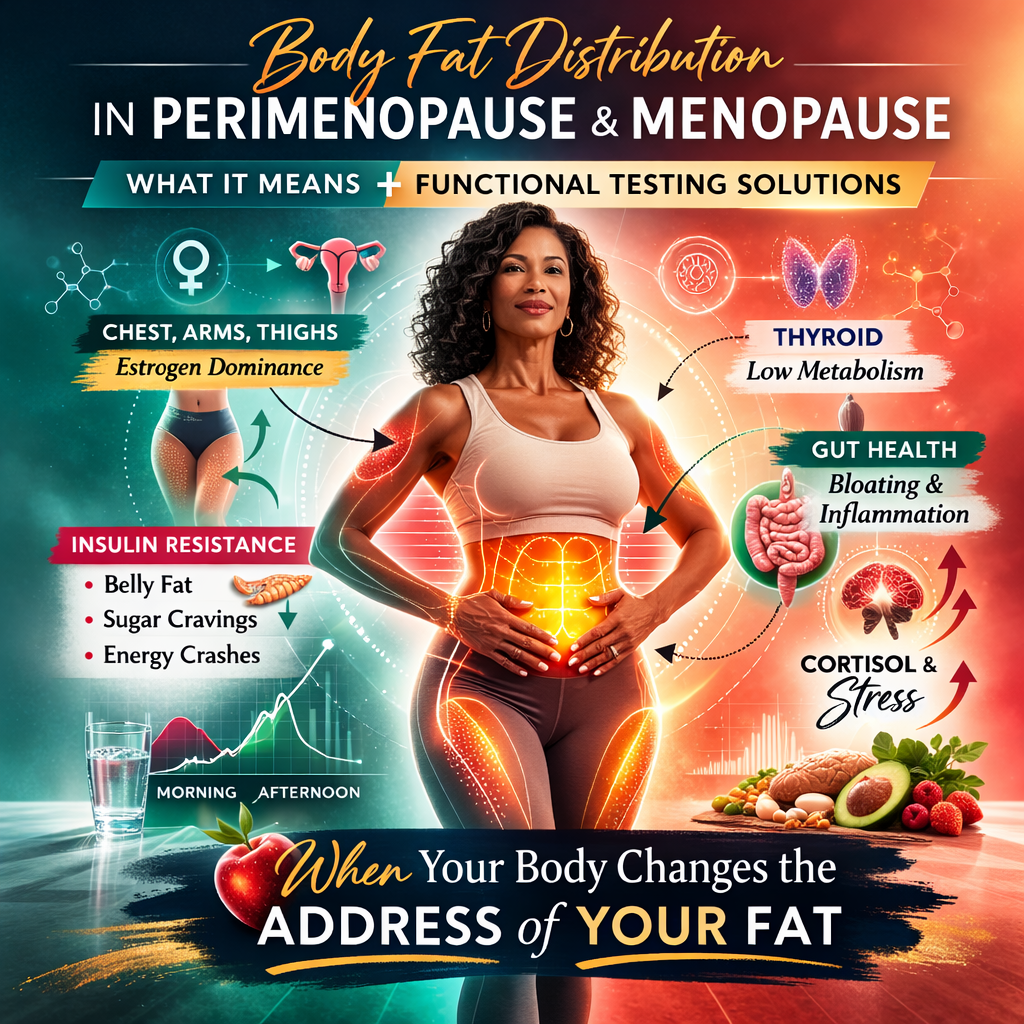
🍎 When Your Body Changes the Address of Your Fat
You didn’t suddenly lose discipline.
You didn’t forget how to eat well.
And no, you are not imagining that your fat seems to have… relocated.
In perimenopause and menopause, fat distribution shifts are biologically real. As estrogen fluctuates and progesterone declines, insulin sensitivity changes, thyroid conversion can slow, cortisol patterns shift, and the gut microbiome evolves.
From a Traditional Naturopathic, and Functional Diagnostic Nutrition® perspective, these changes are not random.
They are metabolic signals.
If you’ve been Googling, scrolling, and quietly thinking, “Something feels off — but I can’t quite name it,” you’re not crazy.
You’re perceptive.
Let’s decode what your body may be communicating.
🔬 The Biology Behind Midlife Fat Redistribution
Estrogen is not just a “reproductive hormone.” It influences:
• Insulin sensitivity
• Fat storage patterns
• Thyroid function
• Cortisol regulation
• Inflammation
During reproductive years, estrogen tends to favor gluteofemoral fat storage (hips and thighs). As estrogen fluctuates and trends downward in perimenopause, fat distribution shifts toward a more visceral pattern — meaning more storage around the abdomen and internal organs.
Visceral fat is metabolically active. It secretes inflammatory cytokines (chemical messengers that increase inflammation) and can worsen insulin resistance.
Now layer in:
• Progesterone decline → sleep disruption → higher cortisol
• Cortisol dysregulation → central fat storage
• Insulin resistance → easier fat gain
• Thyroid slow-down → reduced metabolic output
• Gut dysbiosis → increased inflammation and altered estrogen recycling
This is what we call Metabolic Chaos® — multiple systems subtly influencing each other until weight gain feels confusing and stubborn.
Your body is not failing. It’s adapting to shifting inputs.
📍 What Different Fat Patterns May Signal
These are not diagnoses. They are investigative clues.
👚 Fat on Chest, Back of Arms, Inner Thighs
Possible Pattern: Estrogen Dominance
If you notice increased fullness in the chest, bra-line, back of arms, or inner thighs — especially alongside PMS, fibroids, heavy bleeding, or water retention — this may reflect relative estrogen dominance.
In perimenopause, estrogen can fluctuate high relative to dropping progesterone. That imbalance can promote fat storage and fluid retention.
Contributors may include: • Impaired liver detox
• Poor estrogen clearance via the gut
• Elevated beta-glucuronidase
• Chronic stress patterns
Functional testing helps clarify whether estrogen metabolism pathways are congested.
🧣 Mid-Back Roll Around the Bra Line
Possible Pattern: Estrogen + Insulin Crosstalk
A persistent mid-back roll can reflect the combined effect of estrogen dominance and insulin dysregulation.
Insulin is a storage hormone. When elevated — even subtly — it signals the body to store energy centrally.
Many women have normal glucose for years while fasting insulin remains elevated.
Testing matters.
👖 Lower Body Weight Gain Only
Possible Pattern: Thyroid Imbalance
If weight gain is primarily hips and thighs, combined with fatigue, cold intolerance, dry skin, hair thinning, or constipation — thyroid conversion deserves evaluation.
TSH alone is not sufficient. A full panel includes: • TSH
• Free T3
• Free T4
• Thyroid antibodies
Subclinical hypothyroid patterns are frequently missed.
🍞 Formerly Flat Tummy, Now Abdominal Gain
Possible Pattern: Insulin Resistance
As estrogen declines, insulin sensitivity decreases. The body shifts toward abdominal storage.
Look for: • Energy crashes after meals
• Sugar cravings
• Increased waist circumference
• Elevated triglycerides
Fasting insulin is one of the most under-ordered but valuable markers in midlife women.
🌅 Flat in the Morning, Bloated by Evening
Possible Pattern: Gut Microbiome or Food Sensitivity
If you wake up flat but bloat progressively throughout the day, this is often digestive — not fat gain.
Possible contributors: • Dysbiosis
• SIBO tendencies
• Food sensitivities
• Sluggish digestive enzymes
GI-MAP and MRT food sensitivity testing can illuminate the root cause.
Bloating is not “just aging.” It’s feedback.
🧪 Testing, Not Guessing: The Functional Approach
If you’re reading this, you likely already tried “eat less, move more.” That model does not account for physiology.
A root-cause approach looks deeper.
🩸 Functional Blood Chemistry Analysis
Not just “normal range,” but optimal trends. We assess: • Fasting insulin
• HbA1c
• Thyroid markers (TSH, Free T3, Free T4, antibodies)
• Inflammatory markers
• Liver enzymes
• Lipids
Patterns here often explain why weight loss has stalled.
💎 HTMA (Hair Tissue Mineral Analysis)
Minerals regulate metabolism.
Calcium-magnesium balance, sodium-potassium ratios, and adrenal patterns can reveal stress adaptation and metabolic rate clues.
🧬 DNA Hormones
Genetic polymorphisms affecting: • Estrogen detox pathways
• COMT function
• Cortisol metabolism
• Insulin sensitivity
This shows predispositions — not destiny — but helps personalize strategy.
🦠 GI-MAP / Comprehensive Gut Testing
The gut influences: • Estrogen recycling (via beta-glucuronidase activity)
• Inflammation
• Nutrient absorption
• Insulin signaling
Gut dysfunction can absolutely contribute to stubborn fat storage.
🍽 MRT Food Sensitivity Testing
Chronic immune reactivity increases systemic inflammation. Even “healthy foods” can create metabolic friction in sensitive individuals.
When you combine these assessments, you move from random advice to informed strategy. You see the bigger picture.
Testing gives clarity. Clarity creates targeted healing opportunities.
🔬Fun Fact Science Bar+
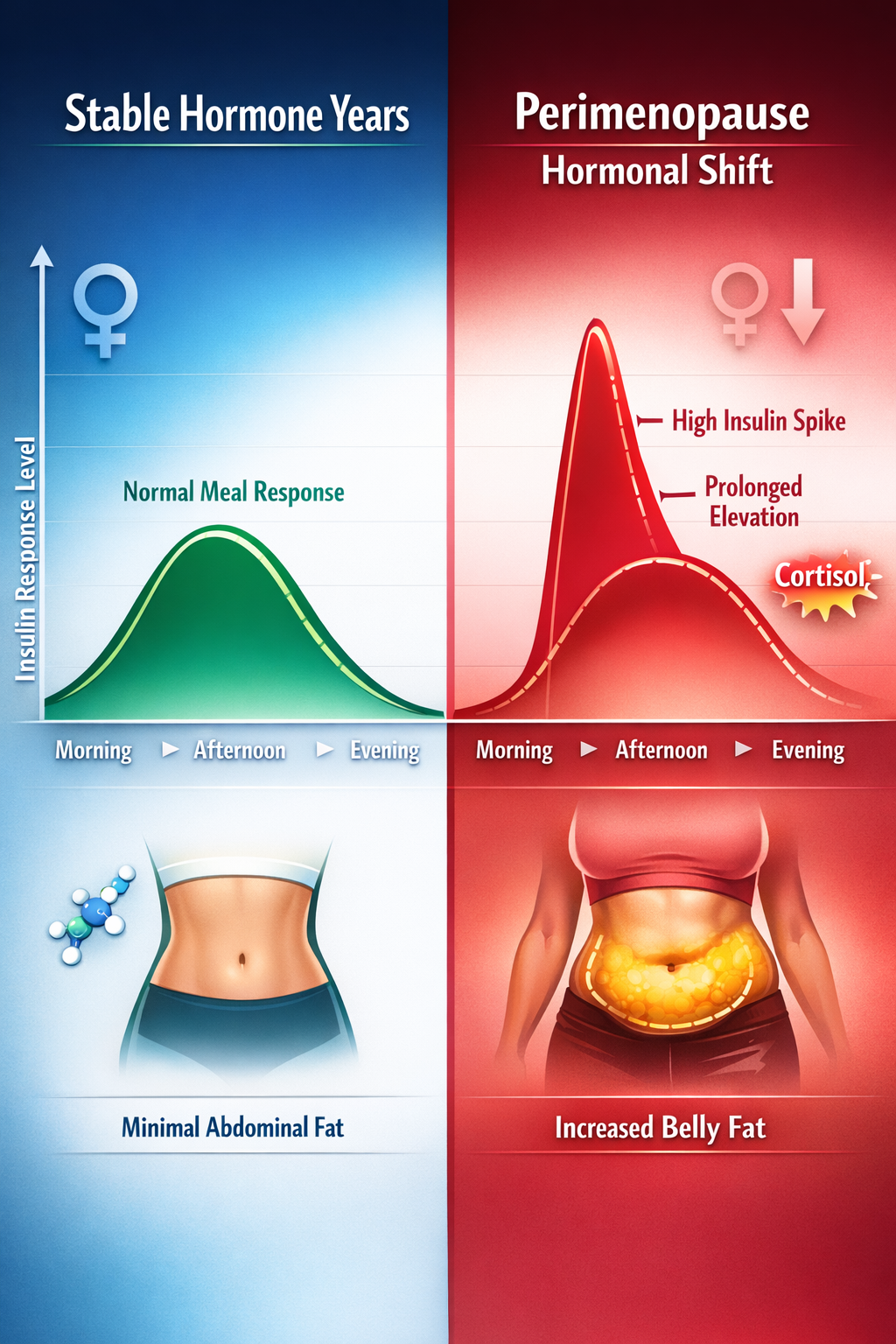
Did you know that during perimenopause, declining estrogen can reduce insulin sensitivity and shift fat storage toward the abdomen — even if your diet hasn’t dramatically changed? Estrogen helps regulate where fat is stored and how efficiently cells respond to insulin. As levels fluctuate, the body becomes more likely to store energy centrally (visceral fat), especially when stress and poor sleep are layered in.
👉🏾 Translation: That “why is this weight going straight to my stomach?” moment isn’t random or a lack of willpower. It’s your hormones, insulin, cortisol, and nervous system recalibrating in real time. In Functional Diagnostic Nutrition® language, this can create a Metabolic Chaos® loop — where blood sugar instability aggravates estrogen imbalance, which increases visceral fat storage, which worsens inflammation… and around we go.
✨ Healing Opportunity: Stabilize insulin first. Anchor every meal with protein (25–35g), add fiber-rich vegetables before starches, strength train to improve glucose uptake, and prioritize sleep to reduce cortisol-driven fat storage. Small metabolic corrections compound beautifully over time.
✝️ Faith Element: Remember temperance isn’t restriction — it’s wisdom. Stewardship of your body-temple includes honoring rhythms of nourishment, rest, and movement. A brief prayer before meals can shift you from reactive eating to intentional fueling. Order in the spirit often creates order in the metabolism. 🙏🏾
📊 What to Track at Home
While pursuing testing, track:
• Waist circumference (more predictive than scale alone)
• Sleep quality
• Cycle changes
• Mood and anxiety shifts
• Energy dips (especially after meals)
• Blood pressure
• Resting heart rate
Patterns tell stories.
🩺 Advocating With Your GP (US & UK)
Midlife weight gain is often dismissed as “just aging.” Advocate respectfully and clearly.
In the US: Ask for a full thyroid panel, fasting insulin, and inflammatory markers — not just TSH and glucose.
In the UK (NHS): Request symptom documentation and ask for thyroid antibodies and metabolic screening if you have central weight gain, fatigue, and cycle changes.
Use language like: “My symptoms have changed significantly in midlife. I’d like a more comprehensive evaluation of metabolic and hormonal contributors.”
You are not being dramatic. You are being informed.
🥗 A General Protocol (Not Personalized Medical Advice)
Love this direction. When D.R.E.S.S. and A NEW START are blended properly, they don’t compete — they complete each other. One gives clinical structure, the other gives philosophical depth.
Here’s a seamless, non-overlapping combined section you can drop into the blog.
🥗 Diet + Nutrition
(FDN’s “D” meets A NEW START’s “N”)
Food is metabolic information. It signals insulin, estrogen detox pathways, thyroid conversion, and inflammation.
Midlife fat redistribution often improves when: • Protein intake is sufficient (25–35g per meal) • Fiber intake supports estrogen clearance • Ultra-processed carbohydrates are reduced • Meals are eaten in a calm state (digestion is nervous-system driven)
Nutrition is not about punishment. It’s about hormonal communication.
🛌 Rest
(D.R.E.S.S. “R” + A NEW START “Rest”)
Sleep is metabolic currency.
Poor sleep increases: • Ghrelin (hunger hormone) • Insulin resistance • Cortisol • Abdominal fat storage
Protect: • A consistent sleep window • A dark, cool room • Screen-free wind-down time
Midlife metabolism repairs at night.
🏋🏾♀️ Exercise + Sunlight + Air
(D.R.E.S.S. “E” integrated with A NEW START elements)
Movement improves insulin sensitivity and mitochondrial function. Sunlight calibrates circadian rhythm. Fresh air supports oxygen delivery and nervous system regulation.
Practical rhythm: • Resistance training 2–4x weekly (muscle equals metabolic flexibility) • Daily walks — ideally outdoors • Morning light exposure within an hour of waking • Nasal breathing to support vagal tone
Exercise should build resilience, not drain reserves.
💆🏾♀️ Stress Reduction + Attitude + Trust in God
(D.R.E.S.S. “S” woven into the heart of A NEW START)
Chronic stress drives central fat storage through cortisol elevation.
But stress is not just external pressure. It’s internal interpretation.
Attitude matters physiologically.
Practical regulation: • Begin the day grounded, not scrolling • Journal gratitude instead of catastrophizing • Incorporate prayer or devotional time • Observe Sabbath rest intentionally
Faith stabilizes perspective. Perspective stabilizes physiology.
The nervous system listens to your thoughts.
💧 Water + Temperance
(A NEW START supporting metabolic balance)
Hydration supports: • Detoxification • Lymphatic flow • Thyroid signaling • Cellular metabolism
Temperance reminds us that excess — even healthy excess — creates stress.
Practical alignment: • Hydrate consistently, not all at once • Moderate alcohol (which impairs estrogen detox) • Avoid late-night eating • Be mindful with stimulants if cortisol is already high
Discipline isn’t restriction. It’s direction.
💊 Supplements (Strategic, Not Random)
Supplements belong at the end — not the beginning.
They support: • Blood sugar stability • Mineral balance • Liver detox pathways • Gut repair • Adrenal resilience
But they should follow testing.
Otherwise, you’re throwing darts in the dark.
✨ Why Professional Guidance Matters
You can gather information online for months. But interpretation requires training.
A Functional Diagnostic Nutrition® Practitioner can:
• Connect symptom patterns
• Interpret labs functionally
• Build personalized D.R.E.S.S.-based protocols
• Identify hidden contributors to Metabolic Chaos®
A Functional Medicine physician can:
• Assess hormone therapy appropriateness
• Order advanced labs
• Evaluate medical risks
Together, this team approach transforms confusion into clarity.
🌸 Final Word: You’re Not “Just Getting Older”
Midlife fat gain is information.
Hormones matter.
Minerals matter.
Gut health matters.
Stress patterns matter.
Layered issues require layered insight.
If you’ve been searching and sensing that something deeper is going on, you’re right.
Your body isn’t dramatic.
It’s data-rich.
When we listen carefully — with science, discernment, lifestyle wisdom, and faith — we uncover powerful healing opportunities.
If you’re ready to stop guessing and start understanding your unique physiology, consider working with me a Functional Diagnostic Nutrition® Practitioner and a Traditional Naturopath experienced in hormonal weight gain.
Because investing in your health is investing in you.
And a healthier lifestyle is not vanity.
It’s stewardship.
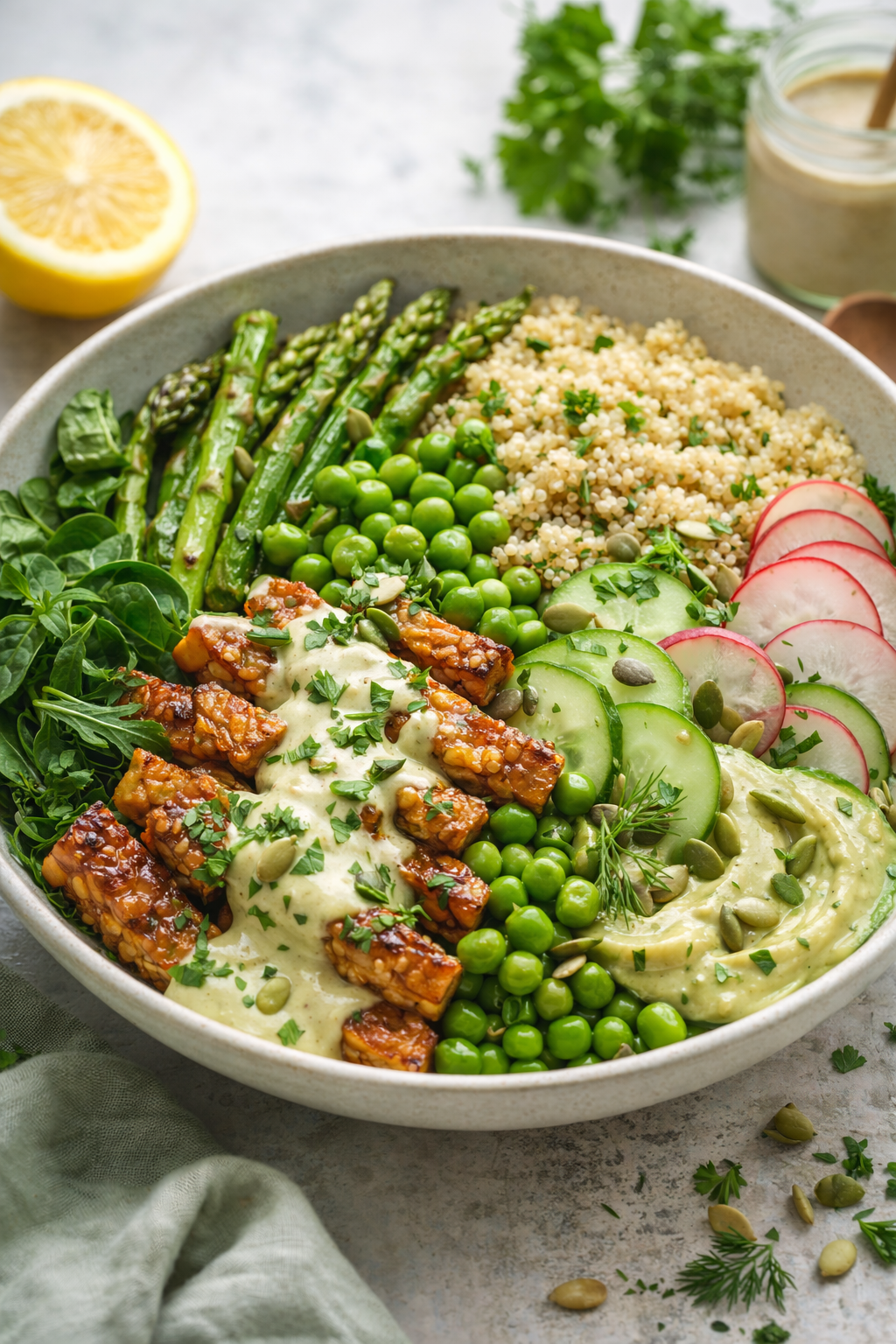
🌸 Spring Reset Power Bowl: Lemon-Herb Tempeh + Asparagus + Quinoa + Creamy Avocado-Tahini (Savoury + Mouthwatering)
This is the kind of meal that says: “I’m supporting hormones, not arguing with them.”
Balanced for midlife metabolism: protein + fiber-rich carbs + healthy fats (hello insulin stability + estrogen clearance support).
Time: 35–40 minutes
Serves: 2 hearty portions (or 3 lighter portions)
Style: Plant-based, savoury, spring-fresh, meal-prep friendly
🛒 Ingredients
Protein (Tempeh)
200–250g tempeh, sliced into strips or cubes
1 tbsp olive oil (or avocado oil)
1 tbsp tamari (gluten-free soy sauce)
1 tbsp fresh lemon juice
1 tsp Dijon mustard
1 tsp maple syrup (optional, tiny amount for balance)
2 cloves garlic, minced
1 tsp dried oregano (or Italian herbs)
½ tsp smoked paprika
Cayenne pepper to taste
Carbs + Fiber (Quinoa Base)
¾ cup dry quinoa (makes ~2¼ cups cooked)
1½ cups water or veggie broth
Pinch of salt
Spring Veg (Fiber + Liver Support)
1 bunch asparagus, trimmed
2 cups baby spinach or arugula
1 cup peas (fresh or frozen)
1 small cucumber, sliced
1 radish, thinly sliced (optional but very springy 🌱)
Healthy Fats + Creamy Sauce
1 ripe avocado
1½ tbsp tahini
1 tbsp lemon juice
2–4 tbsp water (to thin)
½ tsp sea salt
Optional: pinch of chili flakes or cracked black pepper
Crunch + Extras
2 tbsp pumpkin seeds (pepitas)
Fresh herbs: parsley, dill, or mint (choose one or mix)
Optional: sauerkraut or fermented veg (1–2 tbsp per bowl)
👩🏽🍳 Step-by-Step Instructions
1) Cook the quinoa (15 minutes)
Rinse quinoa well (reduces bitterness).
Add quinoa + water/broth + pinch of salt to a pot.
Bring to a boil, reduce to low, cover, and simmer 12–15 min.
Turn off heat, fluff with fork, let sit uncovered 5 min.
2) Marinate the tempeh (while quinoa cooks)
In a bowl, whisk: olive oil, tamari, lemon juice, Dijon, garlic, oregano, paprika, pepper, (optional maple).
Toss tempeh in marinade and let it soak 10 minutes (even 5 helps).
3) Cook the tempeh (10–12 minutes)
Heat a pan on medium.
Add tempeh and cook 4–6 minutes per side until golden and slightly crisp.
Pour any leftover marinade into the pan for the last minute so it caramelizes lightly.
4) Sauté spring veg (5–7 minutes)
In the same pan (or a new one), add a tiny splash of oil or water.
Add asparagus + peas. Sauté 4–6 minutes until bright green and tender-crisp.
Stir in spinach/arugula at the end just to wilt (30–60 seconds).
5) Blend the sauce (2 minutes)
Mash or blend avocado + tahini + lemon + salt.
Add water gradually until drizzle-able and creamy.
6) Build the bowls (1 minute)
Layer:
Quinoa
Wilted greens + peas + asparagus
Tempeh
Cucumber + radish
Avocado-tahini drizzle
Pumpkin seeds + fresh herbs
Optional fermented veg on the side
😋 Why This Meal “Fits” the Blog (Functional + Hormone-Friendly)
This bowl supports the big three midlife goals: insulin stability, estrogen clearance, and inflammation control—aka reducing Metabolic Chaos® and creating healing opportunities.
🧬 Health Benefits of Each Ingredient (Functional POV)
Tempeh
✅ Complete-ish plant protein + fermented = easier digestion for many
✅ Supports muscle maintenance (key for midlife insulin sensitivity)
Quinoa
✅ Fiber + slow carbs = steadier glucose curve
✅ Magnesium for nervous system + metabolism support
Asparagus
✅ Prebiotic fiber = feeds good gut microbes
✅ Supports digestion + regularity (important for estrogen clearance)
Spinach / Arugula
✅ Folate + antioxidants
✅ Bitter greens support bile flow and liver pathways (helpful for hormone metabolism)
Peas
✅ Extra plant protein + fiber
✅ Supports satiety and blood sugar balance
Avocado
✅ Monounsaturated fats for hormone-building and inflammation balance
✅ Helps keep meals satisfying (less snacky chaos later)
Tahini (sesame)
✅ Healthy fats + minerals like calcium and magnesium
✅ Supports steady energy and satiety
Pumpkin seeds
✅ Zinc + magnesium (metabolism, mood, skin, immune support)
✅ Crunch factor = satisfaction (yes, that matters!)
Lemon + herbs
✅ Supports digestion and flavour without sugar
✅ Fresh herbs add polyphenols (plant compounds linked to lower inflammation)
Fermented veg (optional)
✅ Microbiome support (gut and estrogen metabolism are connected)
🌿 Spring Prep Tip
Make extra quinoa + tempeh. Keep sauce separate.
You’ll have a 2-day “metabolism-friendly” lunch that still tastes fresh.
If you want, I can also create a “Perimenopause Portions Guide” for this bowl (hand-size serving visuals) so your readers don’t have to guess what “balanced” means.
📚 References
🌸 Perimenopause, Hormones & Metabolic Changes
British Menopause Society — What is the Menopause?
(Overview of hormonal shifts, body composition changes, sleep, and mood symptoms)
👉🏾 https://thebms.org.uk/wp-content/uploads/2026/01/17-NEW-BMS-TfC-What-is-the-menopause-JAN2026-A.pdf
NICE CKS — Management of menopause/perimenopause
(Lifestyle approaches including exercise, weight management, sleep and stress)
👉🏾 https://cks.nice.org.uk/topics/menopause/management/management-of-menopause-perimenopause-or-premature-ovarian-insufficiency/
The North American Menopause Society (NAMS) — 2022 Hormone Therapy Position Statement
(Body composition, metabolic shifts, and hormonal therapy considerations)
👉🏾 https://www.thelancet.com/journals/landia/article/PIIS2213-8587(22)00285-6/abstract
🔥 Abdominal Fat, Visceral Fat & Insulin Resistance
Harvard Health Publishing — Abdominal fat and what to do about it
(Explains visceral fat, inflammation, and cardiometabolic risk)
👉🏾 https://www.health.harvard.edu/staying-healthy/abdominal-fat-and-what-to-do-about-it
Cleveland Clinic— Insulin Resistance
(Overview of mechanisms, risk factors, and metabolic consequences)
👉🏾 https://my.clevelandclinic.org/health/diseases/22206-insulin-resistance
Després, 2012 — Body fat distribution and risk of cardiovascular disease
(Nature Reviews Cardiology – visceral fat as metabolically active tissue)
👉🏾 https://www.scirp.org/reference/referencespapers?referenceid=4101792
🧣 Thyroid Function & Metabolism
National Institute of Diabetes and Digestive and Kidney Diseases (NIDDK) — Hypothyroidism
(Thyroid hormone effects on metabolism and weight)
👉🏾 https://www.niddk.nih.gov/
British Thyroid Foundation — Thyroid and Weight
(Explains realistic expectations regarding thyroid-related weight gain)
👉🏾 https://www.btf-thyroid.org/thyroid-and-weight-the-science
🦠 Gut Microbiome, Estrogen & Bloating
NIH / PubMed Central — The Estrobolome and Estrogen Metabolism
(How gut bacteria influence estrogen recycling and systemic balance)
👉🏾 https://pubmed.ncbi.nlm.nih.gov/40177842/
Harvard Health Publishing — The Gut-Brain Connection
(Gut microbiome, inflammation, and systemic effects)
👉🏾 https://www.health.harvard.edu/diseases-and-conditions/the-gut-brain-connection
🧠 Cortisol, Stress & Central Fat Storage
NIH Bookshelf — Physiology, Cortisol
(Overview of cortisol’s metabolic effects and stress response)
👉🏾 https://www.ncbi.nlm.nih.gov/books/NBK538239/
Mayo Clinic — Stress symptoms and cortisol effects
(Explains stress physiology and body impact)
👉🏾 https://www.mayoclinic.org/healthy-lifestyle/stress-management/in-depth/stress/art-20046037
🏋🏽♀️ Exercise, Muscle & Midlife Metabolism
Harvard Health — Strength training builds more than muscles
(Resistance training and metabolic health benefits)
👉🏾 https://www.health.harvard.edu/staying-healthy/strength-training-builds-more-than-muscles
Westcott, 2012 — Resistance training is medicine
(Current Sports Medicine Reports – muscle, insulin sensitivity, metabolic health)
👉🏾 https://pubmed.ncbi.nlm.nih.gov/22777332/
😴 Sleep & Metabolic Regulation
NIH — Sleep Deprivation and Insulin Resistance
(Sleep impact on glucose metabolism and appetite hormones)
👉🏾 https://www.ncbi.nlm.nih.gov/pmc/articles/PMC5449130/
CDC — Sleep and Chronic Disease
(Link between sleep, obesity, and metabolic health)
👉🏾 https://www.cdc.gov/pcd/issues/2023/23_0197.htm
🙏🏽🌿 Lifestyle Medicine & Longevity
Harvard T.H. Chan — Lifestyle Medicine
(Lifestyle interventions and chronic disease prevention)
👉🏾 https://learn.hms.harvard.edu/lifestylemedicine
Adventist Health Studies — Lifestyle & Longevity Research
(Long-term data on plant-based diet, stress, faith, and longevity outcomes)
👉🏾 https://adventisthealthstudy.org/studies
Blog Disclaimer
The health information on this blog is for general educational purposes only and is not intended to diagnose, treat, cure, or prevent any disease. It should not be used as a substitute for professional medical advice. Always consult a qualified healthcare provider before making any health-related decisions
This blog may contain affiliate links, meaning Leaves from the Tree of Life LLC may earn a small commission if you purchase a product or service through these links—at no additional cost to you. Your support helps us continue to provide valuable content. Thank you!
