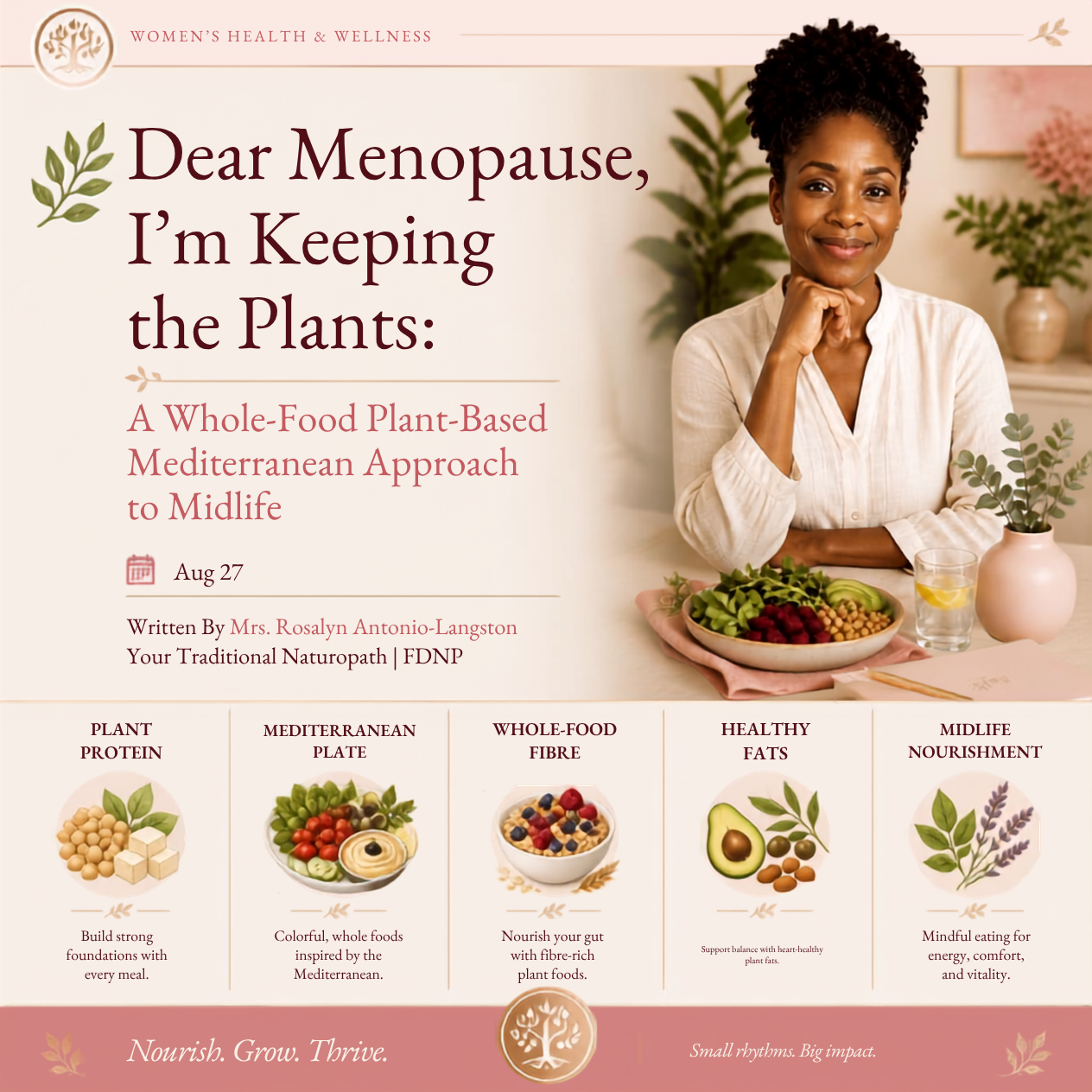
🌿 Dear Menopause, I’m Keeping the Plants: A Whole-Food Plant-Based Mediterranean Approach to Midlife
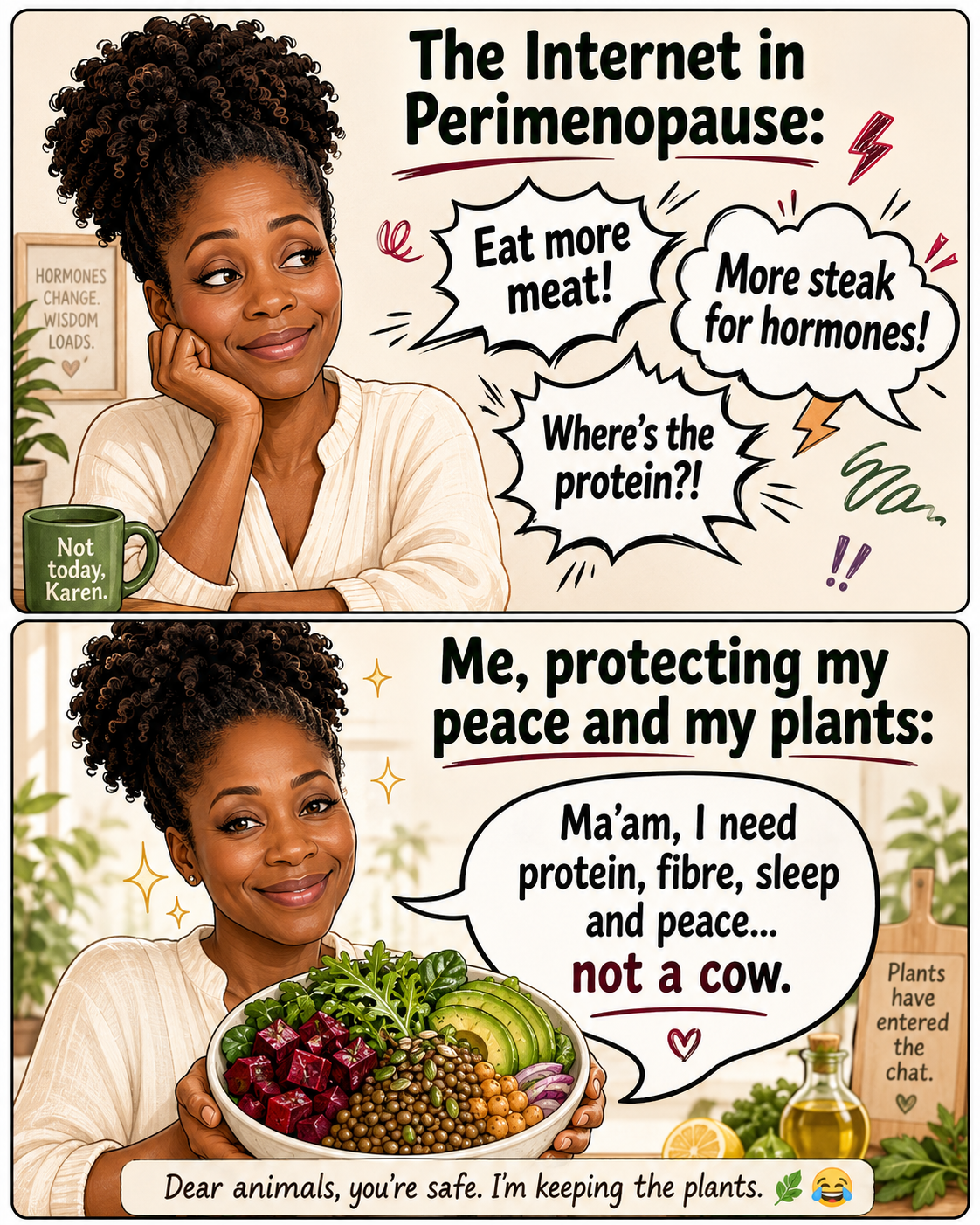
🌸 Welcome to Midlife—Where Everyone Suddenly Has an Opinion About Your Protein
One minute you are happily eating lentils, berries and avocado.
The next, social media is telling you that every woman over 40 needs steak for breakfast, eggs at lunch and enough animal protein at dinner to feed a small village.
Dear animals… apparently menopause has entered the chat. 🤷🏾♀️
Yes, nutritional needs deserve greater attention during perimenopause and menopause.
Estrogen and progesterone fluctuations interact with ageing, sleep, stress, insulin sensitivity, muscle mass, bone turnover, cardiovascular health and body composition. That can contribute to everything from belly-fat changes and cravings to brain fog, disrupted sleep and declining strength.
But here is an important distinction:
Women need nutrients. Women do not biologically require meat to obtain those nutrients.
A thoughtfully planned whole-food plant-based Mediterranean-style diet can provide an excellent nutritional foundation during midlife.
Mediterranean dietary patterns are associated with favourable cardiovascular, metabolic and healthy-ageing outcomes, and intervention research in menopausal women has reported improvements in areas such as blood pressure, triglycerides, total cholesterol and LDL cholesterol.
The operative words, however, are thoughtfully planned.
Vegan biscuits, chips and oat-milk lattes may technically be plant-based.
That is not what we are talking about. 😏
🫒 So What Is a Whole-Food Plant-Based Mediterranean Diet?
The traditional Mediterranean diet is not vegan. It may contain fish, dairy, eggs and smaller quantities of meat.
A whole-food plant-based Mediterranean approach simply takes its strongest plant-centred characteristics and builds the plate primarily around beans, lentils, peas, tofu, tempeh, whole grains, vegetables, fruit, berries, nuts, seeds, olives, avocado, tahini, herbs and spices.
If you include extracted oils, extra-virgin olive oil fits naturally within a Mediterranean pattern. A stricter whole-food plant-based approach may obtain more fat from olives, nuts, seeds, avocado and tahini instead.
The NHS confirms that a varied and appropriately planned vegan diet can provide the nutrients the body needs, although particular attention should be given to nutrients including vitamin B12, iron, calcium, iodine, selenium and vitamin D.
So the conversation should not be:
“Where is the meat?”
It should be:
“Is this woman actually meeting her nutritional needs?”
Huge difference.
🔬 Why Perimenopause Can Feel Like Metabolic Chaos®
Perimenopause is not simply “estrogen going down.”
Hormones can fluctuate considerably before settling into the consistently lower estrogen environment of postmenopause.
At the same time, some women experience changes in insulin sensitivity, cholesterol, fat distribution, muscle mass, bone turnover, appetite, sleep and stress tolerance.
Welcome to what I call Metabolic Chaos®.
Not because your body has forgotten how to function.
Several systems are simply adapting at once.
And symptoms can become healing opportunities—clues telling us where to investigate rather than reasons to dismiss everything with:
“Well, you are getting older.”
No ma’am.
We investigate. 🔎
💪🏾 Protein Matters. Meat Is Optional.
Midlife is absolutely not the time to become protein deficient.
Skeletal muscle is metabolic currency. It supports glucose regulation, mobility, bone, balance, strength and healthy ageing.
But plant-based women can meet their protein needs through foods such as lentils, beans, chickpeas, tofu, tempeh, edamame, split peas, quinoa, soy foods, hemp seeds, pumpkin seeds, nuts and appropriately selected plant proteins when needed.
The bigger mistake is eating a beautiful salad topped with six chickpeas and calling that adequate protein.
Your muscles deserve more than garnish. 😅
Pair adequate protein with progressive resistance training and you have a far stronger strategy for preserving muscle than simply arguing over whether the protein came from a cow or a soybean.
🫀 Why Plants Make Sense for the Midlife Heart
Menopause marks an important transition for cardiovascular health.
Blood pressure, cholesterol, insulin sensitivity and visceral fat can shift in an unfavourable direction for some women.
Mediterranean-style eating provides plenty of fibre, polyphenols, potassium, magnesium, complex carbohydrates and predominantly unsaturated fats, while naturally encouraging fewer heavily processed foods.
The European Menopause and Andropause Society recognises Mediterranean eating as a useful dietary pattern for cardiovascular and metabolic health through menopause.
This is also where carbohydrates need defending.
A lentil and roasted sweet potato bowl is not metabolically equivalent to a doughnut.
Whole-food carbohydrates come packaged with fibre, minerals and phytochemicals.
Your pancreas knows the difference, even if Instagram does not. 😏
🦠 Your Gut Has Joined the Hormone Meeting
The estrobolome describes microbial genes involved in estrogen metabolism, including bacterial enzymes capable of influencing the deconjugation and recycling of estrogen metabolites.
That makes the gut-estrogen relationship genuinely fascinating.
But we need scientific humility.
We do not currently have one established “perfect menopause microbiome,” and microbiome research remains an evolving field.
What we do know is that plant diversity supplies fermentable fibres and phytochemicals that interact with gut microbes.
So rotate your beans, grains, vegetables, fruit, nuts, seeds, herbs and spices.
Your microbiome would rather have variety than the same wellness smoothie every morning for six months. 🌈
🌱 And No, Soy Is Not Secretly Taking Over Your Estrogen Receptors
Whole soy foods contain isoflavones, compounds classified as phytoestrogens.
Phytoestrogens do not behave identically to human estradiol.
Research examining soy and menopausal symptoms has been mixed, although some intervention trials using soy within plant-based dietary patterns have reported meaningful reductions in hot flushes.
That does not make tofu a menopause medication.
It does mean women do not need to fear reasonable amounts of whole soy foods such as organic tofu, tempeh, edamame, unsweetened soy milk and soy yoghurt simply because someone online shouted “ESTROGEN!” in capital letters.
🔬Fun Fact Science Bar+
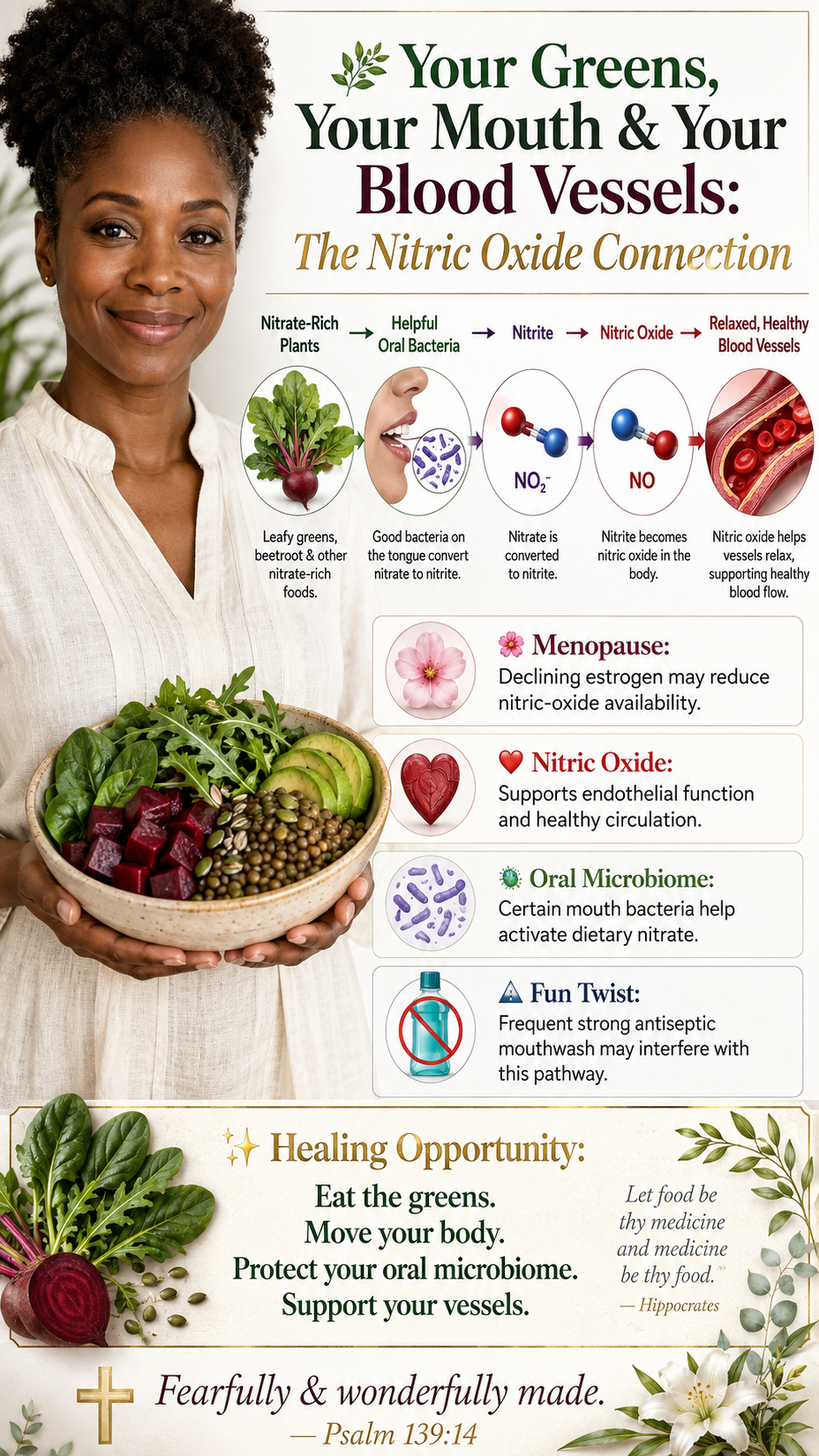
Did you know your leafy greens may be talking to your blood vessels through the bacteria in your mouth? 🤯
Beetroot, rocket/arugula, spinach, celery and leafy greens contain natural dietary nitrates. Helpful oral bacteria convert nitrate → nitrite → nitric oxide (NO), a signalling molecule that helps blood vessels relax and supports healthy circulation. This becomes especially interesting after menopause because declining estrogen is associated with reduced nitric-oxide availability and changes in endothelial function.
👉🏾 Translation: Your Mediterranean bowl of greens and beetroot is doing more than supplying vitamins. Recent trials in postmenopausal women found that nitrate-rich beetroot supplementation improved measures of blood-vessel function and microcirculation.
✨ Healing Opportunity: Regularly rotate nitrate-rich whole foods such as beetroot, rocket, spinach, lettuce and celery alongside exercise, sleep and good cardiometabolic nutrition. And fun fact within the fun fact: strong antiseptic mouthwashes can temporarily interfere with nitrate-reducing oral bacteria—another reminder that your oral microbiome is part of whole-body health.
✝️ Faith Element: God designed the body as an interconnected whole—from the microbes in our mouths to the vessels carrying blood throughout our bodies. Sometimes the humble leafy green really does have more going on than meets the eye. 🌿🙏🏾
🦴 Build Bone—and Pick Up Something Heavy
Lower estrogen increases bone turnover, so plant-based midlife nutrition must intentionally support bone health.
Useful foods include calcium-set tofu, fortified plant milks, tahini, sesame seeds, pulses, broccoli, cabbage and other calcium-rich greens. Vitamin D status also matters.
But nutrition is only half the conversation.
Your bones and muscles need mechanical stimulus.
Think resistance training, walking, weight-bearing movement and balance work according to your ability and medical circumstances.
Eat the broccoli.
Then pick up something heavier than the broccoli. 💪🏾😂
🧠 Feed the Brain Too
Brain fog, reduced concentration and changes in memory can occur during the menopausal transition, but hormones are not the only contributors.
Sleep quality, glucose regulation, cardiovascular health, stress, nutrient status and mood can all affect cognition.
That is why brain health is better supported through an entire lifestyle pattern: colourful plants, omega-3 fats, movement, good blood pressure, adequate sleep, learning, social connection and spiritual wellbeing.
Not one £79 mushroom powder with a very convincing label.
🌳 This Plant-Based Conversation Is Older Than TikTok
For those of us who view health through both physiology and faith, the biblical foundation is beautiful.
Genesis 1:29 describes God's original provision as seed-bearing plants and fruit-producing trees.
And Ellen G. White later wrote:
“Grains, fruits, nuts, and vegetables constitute the diet chosen for us by our Creator.”
Her broader health message was not merely “do not eat meat.” It incorporated nutrition, exercise, fresh air, sunlight, water, rest, temperance and trust in God.
In other words?
Lifestyle medicine before lifestyle medicine had branding.
And the intention was not deprivation.
It was health, usefulness and longevity.
🌿 Adventists, Plants & Longevity
The Adventist Health Studies provide an especially interesting intersection between faith, nutrition and modern epidemiology.
Adventist Health Study-1 found that women in the study lived an estimated 4.4 years longer than other California women, while vegetarian Adventist women had an estimated 6.1-year longevity advantage compared with California women.
Researchers also identified vegetarian eating, regular exercise, healthy body weight, avoiding smoking and frequent nut consumption among important longevity-associated lifestyle factors.
That does not prove vegetables magically add exactly six years to your life.
Adventist longevity reflects an entire lifestyle.
And perhaps that is exactly the point.
Health was never supposed to depend upon one superfood.
🧪 Healthy Diet… So Why Test?
Because two women can eat virtually identical diets and have completely different physiology.
One may have iron deficiency.
Another may have excellent ferritin but struggling glucose regulation.
Another has debilitating bloating.
Another barely sleeps.
Another has thyroid dysfunction masquerading as “menopause.”
This is why I love the principle:
Test. Don’t Guess.
But testing should answer a question—not become a scavenger hunt.
Conventional blood work may include CBC, full iron studies and ferritin, B12, folate, vitamin D, glucose, HbA1c, lipids, thyroid markers, liver and kidney markers and other tests based upon symptoms.
Functional Blood Chemistry Analysis (FBCA) may add another way of examining patterns within conventional blood results.
DUTCH Complete™ or DUTCH Plus™ may provide additional information about sex-hormone metabolites and cortisol patterns in selected cases. However, DUTCH is not required to diagnose typical perimenopause. NICE guidance generally recommends a clinical diagnosis in otherwise healthy women aged 45 and older who have appropriate symptoms.
Depending upon the question, I may also consider DNAlife® DNA Hormones, DNA Mind and DNA Diet to examine genetic variants relating to hormone metabolism, neurological pathways and nutrition. Genes identify tendencies—not destiny.
For persistent gastrointestinal concerns, GI-MAP® may offer additional information about selected organisms and gastrointestinal markers when used in the appropriate clinical context.
MRT® may sometimes be incorporated into food-response work, although its evidence base is more limited and it should not be confused with validated IgE allergy testing.
Testing should give us context.
Not another label to fear.
🍽️ What Should You Actually Eat?
Keep it simple.
At most meals, include a substantial plant protein, plenty of colourful vegetables, an intact carbohydrate such as quinoa, oats, buckwheat, potatoes, sweet potato or brown rice, and a nourishing fat such as tahini, walnuts, chia, flax, pumpkin seeds, avocado or olives.
Then season your food.
Garlic. Fresh herbs. Lemon. Cayenne. Cumin. Ginger. Smoked paprika.
Healthy food is allowed to have flavour.
Nobody receives extra holiness points for eating dry lentils. 😂
🌙 Food + Muscle + Sleep = The Midlife Trio
Food cannot compensate for five hours of sleep and zero movement.
Aim for progressive resistance training two or three times weekly when appropriate, regular walking and aerobic activity, plus mobility and balance work.
For sleep, prioritise morning light, consistent sleep and wake times, a cool bedroom, reduced late-night stimulation and an evening wind-down routine.
Prayer, quiet Bible meditation or reading a calming book can also help shift the nervous system out of “businesswoman still answering emails at midnight” mode.
Sometimes the most sophisticated hormone support is simply:
Ma'am. Go to bed. 💁🏾♀️
💊 Supplements: Tools, Not Tiny Edible Miracles
A well-planned plant-based woman should pay particular attention to vitamin B12, because reliable natural vegan food sources are limited; vitamin D, particularly when sun exposure is inadequate; iron and ferritin, especially with heavy menstrual bleeding; calcium when dietary intake is insufficient; iodine and selenium, without assuming more is better; magnesium where intake or individual need warrants it; and algae-derived EPA/DHA for women wanting a direct plant-compatible source of long-chain omega-3 fatty acids.
Creatine monohydrate may also be worth considering alongside resistance training as part of an individualised healthy-ageing strategy.
And then there is one particularly interesting newcomer…
🧬 Fatty15® & C15:0: Interesting Midlife Science—Without the Fairy Dust
Fatty15® provides pentadecanoic acid, or C15:0, an odd-chain saturated fatty acid.
Common dietary sources of C15:0 include dairy fat, making direct dietary intake lower for many women following vegan diets. Fatty15® currently provides a vegan-friendly purified C15:0 supplement.
Why is C15:0 interesting during perimenopause?
Because this is a life stage where cellular ageing, insulin sensitivity, cardiovascular health, liver health, inflammation and mitochondrial function become increasingly relevant.
Higher circulating C15:0 has been associated with favourable cardiometabolic outcomes, while laboratory research suggests potential effects involving AMPK, PPAR signalling, mitochondrial function and cellular membrane stability.
Human supplementation research is still young. A 2024 randomised controlled trial gave 200 mg of C15:0 daily for 12 weeks to 30 young adults with overweight or obesity. Supplementation significantly increased circulating C15:0 and was well tolerated, with some potentially favourable clinical signals that require further research. Importantly, this was not a perimenopause study.
There is also ongoing debate over whether C15:0 should officially be considered an essential fatty acid. A 2024 independent review concluded that the possibility is intriguing but not yet conclusively established.
So could Fatty15® be considered as part of a midlife healthy-ageing strategy?
Possibly.
But I would not market it as something that balances estrogen, stops hot flushes or “treats menopause.”
I also would not automatically replace algae-derived EPA/DHA with it. C15:0 and omega-3 fatty acids are different nutrients with different evidence bases.
Think of Fatty15® as an emerging nutritional tool—not hormonal fairy dust. 🧚🏾♀️
Where to Buy Fatty15® C15:0
🚨 And Please Don't Restrict Yourself Into Malnutrition
Whole-food plant-based eating should create more dietary diversity, not less.
If you have removed gluten, soy, beans, grains, nuts, seeds, nightshades, fruit, histamine foods, oxalates and FODMAPs and are now living on courgette and emotional distress…
We need another plan. 🤷🏾♀️
Therapeutic elimination diets sometimes have their place.
Permanent food fear does not.
🌺 Menopause Is Not the End—It Is a New Chapter
Perhaps your body does not respond exactly as it did at 25.
That does not mean it has betrayed you.
You have lived.
Learned.
Built.
Survived.
Changed.
And now your physiology is changing with you.
Perimenopause can become a tremendous healing opportunity to finally address the blood sugar swings, nutrient deficiencies, chronic stress, poor sleep, gut dysfunction and loss of muscle that may have quietly accumulated for years.
Menopause is not femininity leaving the building.
It is not an expiration date on beauty, intelligence, sensuality, ambition, strength or purpose.
It is another season.
And you are allowed to enter it strong.
🙏🏾 Stewardship Over Perfection
Scripture reminds us:
“Know ye not that your body is the temple of the Holy Ghost… therefore glorify God in your body.” — 1 Corinthians 6:19–20, KJV
Health is not salvation.
Eating perfectly does not make anyone more righteous.
But caring for the body God has entrusted to us is stewardship.
Sometimes stewardship looks like lentils.
Sometimes resistance training.
Sometimes sleep.
Sometimes prayer.
And sometimes it means recognising that prayer and broccoli are wonderful—but you still need to call your GP. 😉
Faith and appropriate healthcare were never required to be enemies.
👑 Ready to Turn Metabolic Chaos® Into Clarity?
At Leaves from the Tree of Life LLC, we help Businesswomen who are Hormonal, Anxious, and Bloated through Functional Nutrition Coaching + Labs.
Instead of chasing every new menopause diet, supplement or social-media hormone trend, we look at your symptoms, history, nutrition, lifestyle and appropriate laboratory data to identify patterns and uncover potential healing opportunities.
Depending upon your needs, this may include DUTCH testing, DNAlife® Hormones, Mind and Diet, Functional Blood Chemistry Analysis, GI-MAP®, MRT® and other targeted assessments.
Because your menopause plan should not be based on somebody else's TikTok algorithm.
Perimenopause is not the end.
It may simply be the chapter where you stop surviving your health and start intentionally investing in it.
🌿 Invest in your health. Invest in you.
👉🏾 Click Here to Jump on a Discovery Call
Leaves from the Tree of Life LLC
Traditional Naturopathy | Functional Diagnostic Nutrition®
Helping Businesswomen who are Hormonal, Anxious, and Bloated through Functional Nutrition Coaching + Labs.
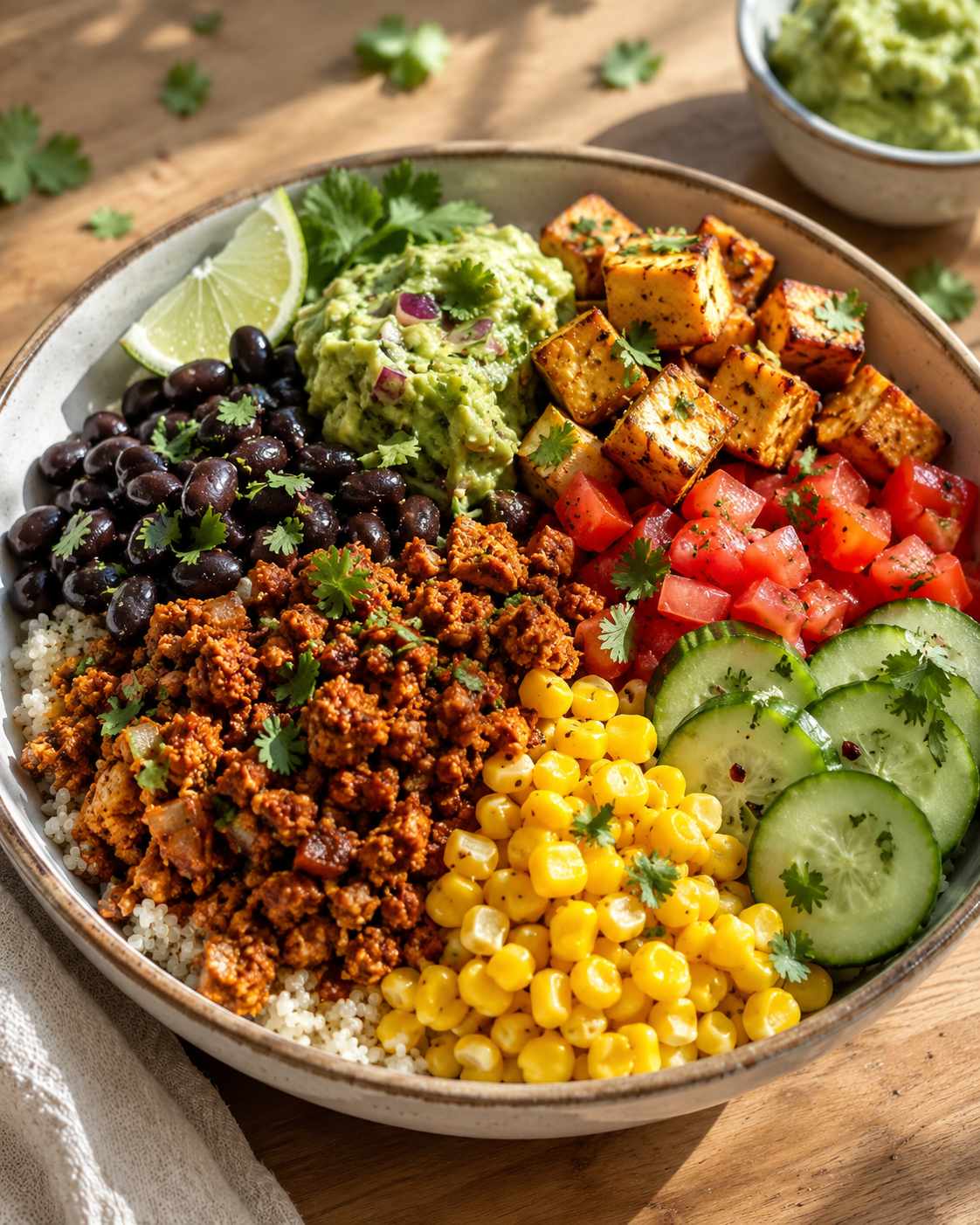
🌯🔥Better-Than-Chipotle High-Protein Burrito Bowl
With Smoky Tofu Sofritas, Black Beans & Avocado-Lime Crema
Think Chipotle, but fresher, more colourful, whole-food plant-based and absolutely loaded with plants. Inspired by your bowls, this version keeps the black beans, sweetcorn, fresh vegetables and seasoned tofu, then upgrades everything with quinoa, avocado, pumpkin seeds and a creamy lime dressing.
⏱ Prep: 15 minutes
🔥 Cook: 25 minutes
⏰ Total: 40 minutes
🍽 Serves: 4
💪🏾 Protein: approximately 25–30g per generous bowl, depending on portions
🛒 Organic Ingredients
🌾 Cilantro-Lime Quinoa
2 cups cooked quinoa
Juice of ½ lime
2 tbsp fresh chopped cilantro
Pinch of pink Himalayan or sea salt
🌶️ Smoky Tofu Sofritas
450–500g extra-firm organic tofu, pressed
1 tbsp tomato paste
1 tsp smoked paprika
1 tsp ground cumin
½ tsp garlic powder
½ tsp onion powder
¼ tsp cayenne pepper, or to taste
1 tsp dried oregano
Juice of ½ lime
2–3 tbsp vegetable broth
Sea salt to taste
🫘 Seasoned Black Beans
2 cups cooked black beans, rinsed
½ tsp cumin
½ tsp smoked paprika
¼ tsp garlic powder
2 tbsp vegetable broth
Squeeze of lime
🌽 Fresh Bowl Fixings
1½ cups sweetcorn
1 large cucumber, chopped
2 tomatoes, diced
1 red bell pepper, diced
1 cup shredded romaine lettuce
¼ red onion, finely diced
Fresh cilantro
Lime wedges
¼ cup pumpkin seeds
🥑 Avocado-Lime Crema
1 large ripe avocado
Juice of 1 lime
¼ cup fresh cilantro
1 small garlic clove
3–5 tbsp water
Pinch of sea salt
👩🏾🍳 Step-by-Step
1. 🌾 Flavour the quinoa.
Toss warm cooked quinoa with lime juice, cilantro and a small pinch of salt. Set aside.
2. 🌶️ Make the tofu sofritas.
Crumble the tofu into bite-sized rustic pieces. Add to a hot skillet with vegetable broth, tomato paste, smoked paprika, cumin, garlic, onion, oregano and cayenne. Cook for 8–10 minutes, stirring occasionally, until browned around the edges. Finish with fresh lime juice.
3. 🫘 Warm the beans.
Add black beans, broth and seasonings to a small saucepan. Simmer for 5–7 minutes until hot and flavourful. Add a squeeze of lime.
4. 🌽 Prepare the veggies.
Warm the corn briefly or lightly char it in a dry skillet. Chop the cucumber, tomato, pepper, lettuce and red onion.
5. 🥑 Whip up the crema.
Blend avocado, lime, cilantro, garlic, salt and enough water to create a smooth, pourable sauce.
6. 🌯 Build that bowl!
Start with cilantro-lime quinoa, then arrange the black beans, smoky tofu, corn, cucumber, tomatoes, peppers and lettuce in colourful sections. Drizzle generously with avocado-lime crema and finish with pumpkin seeds, cilantro and fresh lime.
🌿 Why Your Body Will Love It
🫘 Black beans: Bring plant protein plus soluble and insoluble fibre to support bowel regularity, satiety and beneficial gut microbes.
🌱 Organic tofu: Provides complete plant protein, iron, calcium when calcium-set, magnesium and naturally occurring soy isoflavones.
🌾 Quinoa: Adds additional complete protein, fibre, magnesium and slow-digesting carbohydrates for a more balanced meal.
🥑 Avocado: Supplies monounsaturated fats, fibre, potassium and vitamin E while making the bowl luxuriously creamy without dairy.
🎃 Pumpkin seeds: A little nutritional powerhouse providing protein, magnesium, zinc, iron and healthy unsaturated fats.
🌽 Sweetcorn: Adds fibre, carotenoids and naturally sweet crunch without needing processed tortilla chips.
🥒 Cucumber: Adds hydration, freshness and volume without making the meal overly heavy.
🍅 Tomatoes: Provide vitamin C, potassium and lycopene—and that vitamin C pairs beautifully with the plant-based iron in the beans, tofu and pumpkin seeds.
🫑 Red bell pepper: Exceptionally rich in vitamin C and adds sweetness and crunch.
🌿 Cilantro + lime: Add huge flavour without needing bottled sauces loaded with excess sodium, oils or added sugar.
💚 The Healthy Chipotle Upgrade
You still get the smoky protein, beans, corn, creamy avocado, fresh salsa and satisfying grain base—but this bowl skips the cheese, sour cream, heavily refined oils and ultra-processed extras.
And unlike a sad little “healthy bowl,” this one is big, colourful, creamy, smoky and filling. Because healthy food has absolutely no business tasting like punishment. 😏🌯🥑
📚 Selected References
🌿 Menopause & Mediterranean/Plant-Forward Nutrition
Cano A, et al. The Mediterranean diet and menopausal health: An EMAS position statement. Maturitas. 2020;139:90–97.
Gonçalves C, Moreira H, Santos R. Systematic review of Mediterranean diet interventions in menopausal women. AIMS Public Health. 2024;11(1):110–129.
🌸 Menopause Guidance
NICE. Menopause: identification and management (NG23). Last updated 15 April 2026.
🥬 Vegan Nutrition
NHS. The vegan diet. Last reviewed 5 June 2026.
🌱 Lifestyle & Longevity
Fraser GE, Shavlik DJ. Ten Years of Life: Is It a Matter of Choice? Archives of Internal Medicine. 2001;161(13):1645–1652.
🙏🏾 Faith & Lifestyle Perspective
Ellen G. White. The Ministry of Healing.
Ellen G. White. Counsels on Diet and Foods.
🧬 Pentadecanoic Acid (C15:0) — Emerging Research
Robinson MK, et al. Pentadecanoic Acid Supplementation in Young Adults with Overweight and Obesity: A Randomized Controlled Trial. Journal of Nutrition. 2024;154(9):2763–2771.
Ciesielski V, Legrand P, Blat S, Rioux V. New insights on pentadecanoic acid with special focus on its controversial essentiality: A mini-review. Biochimie. 2024;227(Pt B):123–129.
Note: Research on pentadecanoic acid (C15:0) is still emerging. Its classification as an essential fatty acid remains debated, and current evidence does not establish a specific requirement for C15:0 supplementation in perimenopausal or menopausal women.
Blog Disclaimer
The health information on this blog is for general educational purposes only and is not intended to diagnose, treat, cure, or prevent any disease. It should not be used as a substitute for professional medical advice. Always consult a qualified healthcare provider before making any health-related decisions
This blog may contain affiliate links, meaning Leaves from the Tree of Life LLC may earn a small commission if you purchase a product or service through these links—at no additional cost to you. Your support helps us continue to provide valuable content. Thank you!
