
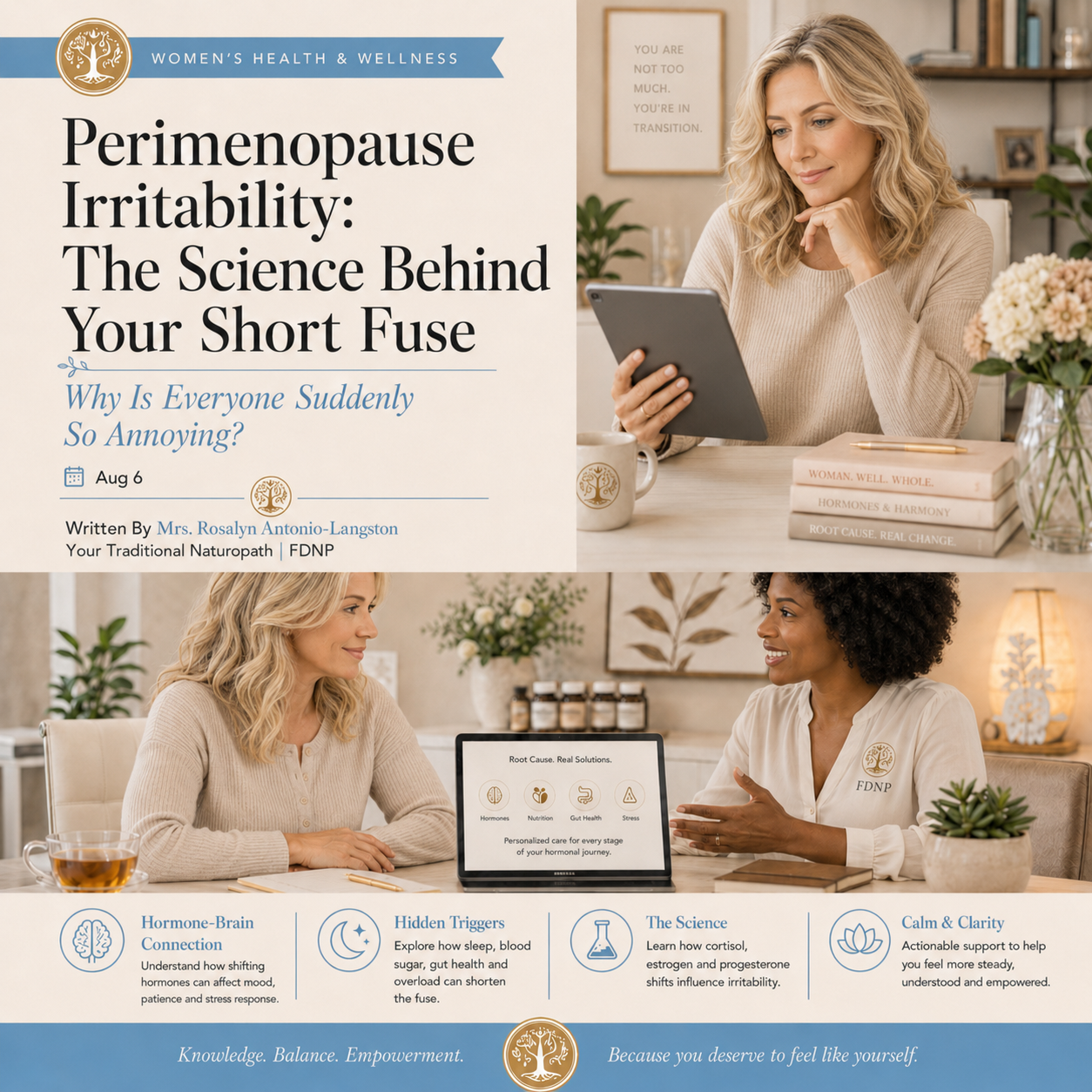
Perimenopause Irritability: The Science Behind Your Short Fuse
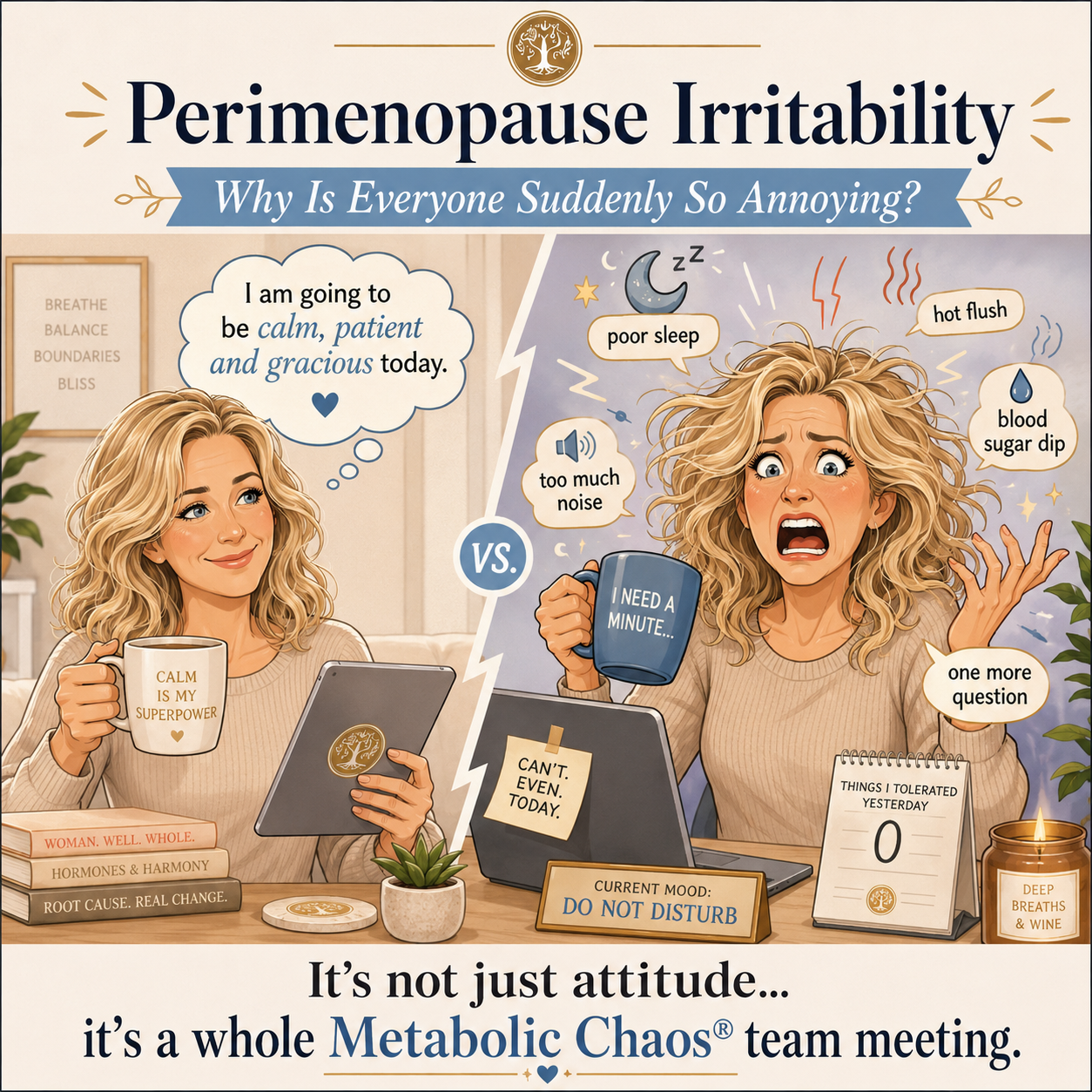
Why Is Everyone Suddenly So Annoying?
The Science of Irritability in Perimenopause & Menopause
🌋 When Your Patience Quietly Leaves the Group Chat
One minute, you are calmly leading a meeting, answering emails and handling responsibilities like the capable woman you are.
The next minute, someone is chewing too loudly, asking a question you already answered or standing in the kitchen breathing with unnecessary enthusiasm—and your nervous system is officially done.
You may wonder:
“Why am I so irritated?”
“Why does everything feel louder, harder and more overwhelming?”
“Am I becoming an angry person?”
No, you have not suddenly developed a terrible personality.
Irritability during perimenopause and menopause can be influenced by hormonal fluctuations, disrupted sleep, vasomotor symptoms, changing stress responses, blood-sugar instability, nutrient deficiencies, pain, thyroid dysfunction and the sheer weight of midlife responsibilities.
And while hormones may be part of the story, they are rarely the entire story.
This is where we begin looking for Metabolic Chaos®, hidden stressors and genuine healing opportunities—rather than blaming your character or handing you a random bottle of “hormone balance” capsules.
Because sometimes the problem is not that you need to calm down.
Sometimes your body is trying to tell you that it needs better support.
🧠 What Irritability Actually Means
Irritability is a reduced threshold for frustration.
Your brain may react more quickly or more intensely to stimulation that you could previously tolerate. Noise, interruptions, uncomfortable clothing, traffic, work demands, hunger, heat, clutter or emotional pressure may suddenly feel like too much.
You may notice:
A shorter temper
Less patience with colleagues or family
Feeling easily overstimulated
Anger that rises quickly
Crying immediately after feeling angry
Difficulty filtering noise or interruptions
Feeling “touched out” or socially depleted
Resenting demands you once managed easily
Feeling guilty after snapping
Wanting everyone to leave you alone—but also wanting someone to understand
Menopause-related mood changes are recognised by NICE and The Menopause Society. However, the transition does not affect every woman in the same way, and irritability is not inevitable.
🎢 The Hormonal Rollercoaster Is Not Simply “Low Oestrogen”
One of the most important things to understand about perimenopause is that hormones do not always decline in a neat, peaceful little line.
They fluctuate.
Oestradiol may rise sharply, fall quickly and behave differently from one cycle to the next. Ovulation may become less predictable, which also changes progesterone exposure.
Research has associated greater oestradiol variability and cycles without progesterone levels consistent with ovulation with increased depressive symptoms in susceptible perimenopausal women. Other research suggests that oestradiol fluctuations may increase emotional sensitivity to stressful events, particularly interpersonal rejection or conflict.
This means the issue may not simply be that your oestrogen is “too low.”
Your brain may be trying to adapt to rapidly changing hormonal signals while you are still expected to run meetings, manage deadlines, remember passwords and respond politely to emails that could have been answered by reading the previous email.
That is a lot of neurological multitasking.
🧬 Oestrogen Has Business in the Brain
Oestrogen receptors are found throughout the brain, including areas involved in mood, memory, temperature regulation and stress processing.
Oestradiol also interacts with neurotransmitter systems involving serotonin, dopamine and glutamate. These chemical messengers influence emotional regulation, motivation, reward, concentration and how strongly we respond to stress.
When hormonal signalling becomes unpredictable, some women may experience:
Increased anxiety
Reduced stress tolerance
Low motivation
Emotional sensitivity
Brain fog
Poor concentration
Irritability or agitation
A strange combination of feeling exhausted and wired
The precise biology is complex. It would be inaccurate to say that falling oestrogen simply “causes low serotonin.” Hormones, neurotransmitters, sleep, inflammation, stress history, genetics and present-day circumstances interact with one another.
In other words, the brain is not a light switch.
It is more like an executive board—and during perimenopause, several members may be sending contradictory emails.
🧘🏾♀️ Progesterone, Allopregnanolone & the Brain’s Braking System
Progesterone can be converted into a neuroactive steroid called allopregnanolone.
Allopregnanolone interacts with GABA-A receptors. GABA is one of the brain’s major inhibitory signalling systems—essentially part of its braking mechanism.
However, the relationship is not as simple as “more progesterone equals calm.” Some women appear more sensitive to changes in progesterone and allopregnanolone than others. Research into reproductive mood disorders suggests that vulnerability may involve the brain’s response to hormonal change, not merely an abnormal hormone level.
This may help explain why one woman moves through perimenopause with relatively mild symptoms while another feels anxious, irritable, sleepless and emotionally unlike herself.
Your symptoms are real.
But your laboratory number alone cannot explain your entire experience.
🚨 Cortisol: When the Alarm System Becomes Overenthusiastic
Cortisol is not a “bad hormone.”
You need it to wake up, maintain blood pressure, mobilise energy, respond to danger and manage inflammation.
The problem occurs when your stress-response system is repeatedly activated without sufficient recovery.
During perimenopause, hormonal variability may influence emotional sensitivity to stress. Chronic work pressure, caregiving, financial strain, grief, illness, relationship stress, overtraining, under-eating and inadequate sleep can all add further demands.
Then a relatively small inconvenience may become the final straw.
Not because the inconvenience was enormous—but because your nervous system was already carrying twelve other straws, a laptop, two deadlines and everyone else’s emotional baggage.
Before assuming your irritability is purely hormonal, ask:
Am I resting—or merely collapsing at night?
Am I eating enough nourishing food?
Am I constantly available to everyone?
Am I relying on caffeine to override exhaustion?
Am I exercising appropriately—or punishing an already depleted body?
Do I have space to process grief, disappointment or resentment?
Does my life contain regular periods of genuine recovery?
Sometimes the healing opportunity is not another supplement.
Sometimes it is a boundary.
🌙 Poor Sleep Can Turn the Brain’s Smoke Alarm Up
Sleep disturbance is one of the most common and disruptive symptoms associated with the menopause transition.
Women may experience frequent awakenings, night sweats, temperature changes, restless legs, pain, nocturia, anxiety or difficulty returning to sleep. Sleep problems can occur with or without hot flushes.
Sleep loss affects the connection between the amygdala—the brain’s threat-detection centre—and areas of the prefrontal cortex involved in judgement and emotional regulation. Experimental research consistently links sleep loss with greater irritability, emotional volatility and negative emotional reactivity.
This is why broken sleep can make:
A normal request sound like criticism
A minor delay feel personal
Noise feel unbearable
Decision-making feel exhausting
Emotional recovery take longer
You are not weak.
You may be neurologically sleep-deprived.
🍠 Blood Sugar: Is It Rage—or Is It Lunchtime?
True hypoglycaemia is most commonly associated with diabetes or glucose-lowering medication, but some people also experience reactive drops in glucose after meals.
Irritability, anxiety, shakiness, sweating, dizziness and difficulty concentrating can accompany low blood glucose.
Even without clinical hypoglycaemia, irregular eating, under-eating, highly refined meals or long gaps between meals may leave some women feeling jittery, depleted or emotionally reactive.
Notice whether irritability tends to appear:
Before lunch or dinner
After a sugary breakfast
Following several cups of coffee
During aggressive fasting
After exercising without adequate food
When meals contain carbohydrates but little protein, fat or fibre
The answer is not constant snacking for everyone.
It is learning your pattern and building meals that provide steady nourishment.
🦋 Not Every Short Fuse Is Menopause
In women over 45 with typical symptoms, perimenopause is usually identified through menstrual and symptom history rather than a single hormone test. Hormones fluctuate too widely for one result to confirm or exclude the transition reliably.
However, testing may be important when symptoms suggest additional contributors.
Possible overlapping issues include:
Thyroid dysfunction
Iron deficiency or anaemia
Vitamin B12 or folate deficiency
Vitamin D deficiency
Blood-glucose dysregulation
Medication side effects
Chronic pain
Sleep apnoea
Restless legs syndrome
Depression, anxiety, PMDD or unresolved trauma
Excessive training or inadequate calorie intake
Gastrointestinal disorders affecting nutrient absorption
Significant life stress or burnout
NICE specifically warns that thyroid dysfunction can be mistaken for menopause. Current European endocrine guidance also supports assessing general health through appropriate blood work, including complete blood count, glucose, kidney and liver function, lipids, and thyroid or vitamin D testing when indicated.
🔬 Test—But Test With a Question
I believe in testing, not guessing.
However, responsible testing does not mean ordering every available panel and blaming every flagged marker for your mood.
A test should answer a specific question.
🩸 Functional Blood Chemistry Analysis—FBCA
FBCA examines patterns across standard blood markers alongside symptoms, medical history and lifestyle factors.
Depending on the woman, useful testing may include:
Full blood count
Ferritin and iron studies
Vitamin B12 and folate
Vitamin D
Fasting glucose and HbA1c
Liver and kidney markers
Lipid profile
Thyroid markers
Inflammatory markers when clinically appropriate
FBCA may reveal healing opportunities involving anaemia, glucose regulation, thyroid function, liver health, inflammation or nutrient status.
However, “optimal” functional ranges should be treated as pattern-recognition tools—not as independent diagnoses. Clinical reference ranges, symptoms, trends, medications and medical history all matter.
🧪 DUTCH Complete, DUTCH Plus or Cycle Mapping
DUTCH testing measures urinary sex hormones, hormone metabolites and cortisol patterns. Depending on the panel, it may also include the cortisol awakening response, melatonin and selected organic-acid markers.
This may help a trained practitioner explore:
Cortisol rhythm
Cortisol metabolism
Oestrogen metabolites
Progesterone and androgen patterns
DHEA patterns
Hormone-metabolism pathways
Cycle-related hormone changes
But DUTCH testing is not required to diagnose perimenopause, and it should not be used by itself to prescribe or adjust hormone therapy.
In women over 45, the clinical history remains central. Specialty testing is best used as an adjunct when it answers a targeted question.
🧬 DNAlife DNA Hormones & DNA Mind
DNA Hormones examines genetic variants involved in sex-hormone production, transport, metabolism, detoxification and clotting-related pathways.
DNA Mind examines variants associated with biological pathways involving neurotransmitters, inflammation and methylation.
These tests do not diagnose irritability, anxiety or menopause.
Your genes are not your destiny.
They may help identify areas where an individual could be more vulnerable under certain environmental, nutritional or hormonal conditions. The value is in using genetic information alongside the woman’s lived experience—not frightening her with a list of theoretical risks.
🦠 GI-MAP
The GI-MAP uses quantitative PCR technology to measure microbial DNA and selected gastrointestinal markers in a stool sample.
It may be appropriate when irritability occurs alongside:
Persistent bloating
Constipation or diarrhoea
Reflux
Abdominal pain
Food reactions
Poor nutrient status
A history suggesting gastrointestinal dysfunction
The gut and brain communicate through neural, immune, metabolic and hormonal pathways. However, finding a microorganism in a stool result does not automatically prove that it caused a mood symptom.
The test must be interpreted in context.
🍓 MRT
The Mediator Release Test measures changes associated with mediator release from white blood cells after exposure to tested foods and food chemicals. It is marketed for identifying non-IgE-mediated food sensitivity patterns.
MRT is not a menopause test and is not a conventional food-allergy test.
It may be considered when a detailed history suggests reproducible food-related symptoms. Any elimination plan should be structured, nutritionally adequate and followed by careful reintroduction—not turned into a permanent diet of six “safe” foods and sadness.
The Bottom Line on Testing
Testing is most useful when it helps us distinguish between:
Hormonal transition
Nutrient depletion
Blood-sugar dysregulation
Thyroid patterns
Gastrointestinal dysfunction
Stress-response disruption
Medication effects
Mental-health conditions
Or several of these occurring together
That cluster is what I often call Metabolic Chaos®.
The goal is not to chase every imperfect number.
The goal is to identify the most meaningful healing opportunities.
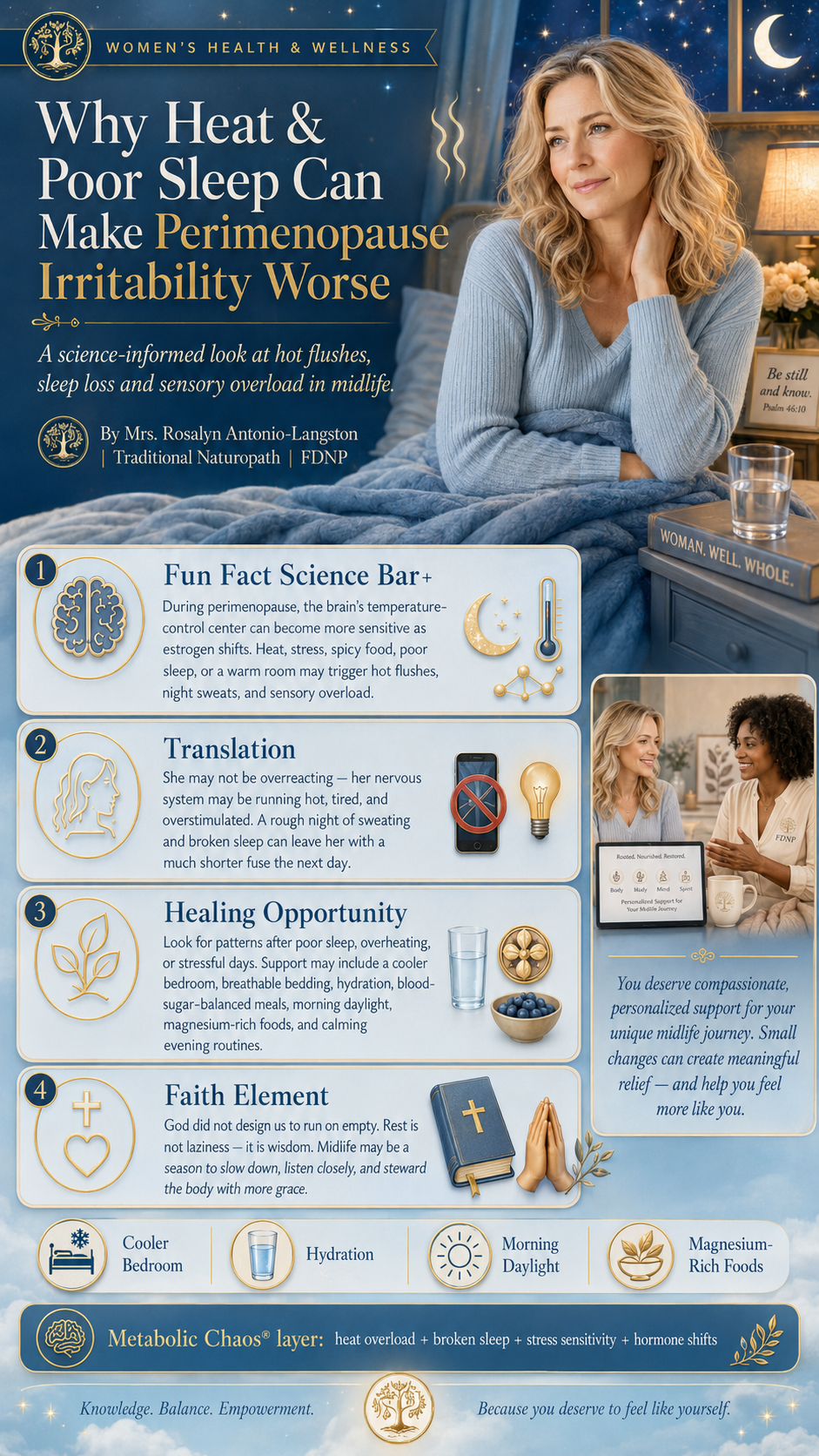
🔬Fun Fact Science Bar+
Did you know that during perimenopause, the brain’s temperature-control center can become more sensitive as estrogen shifts? That means heat, stress, spicy food, poor sleep, or even a warm room may trigger hot flushes, night sweats, and sensory overload. And when the body is overheated and under-rested, irritability often shows up faster.
👉🏾 Translation:
She may not be “overreacting” — her nervous system may be running hot, tired, and overstimulated. A bad night of sweating, waking, tossing, and reheating like a human toaster can leave her with a much shorter fuse the next day. 😅 In Functional Diagnostic Nutrition® language, this can feed a Metabolic Chaos® pattern where sleep loss, stress, and hormone shifts all pile on at once.
✨ Healing Opportunity:
Look for patterns: Does irritability spike after a poor night’s sleep, a hot flush, overheating, or a stressful day? Helpful support may include a cooler bedroom, breathable bedding, hydration, blood-sugar-balanced meals, morning daylight, magnesium-rich foods, and calming evening routines. Sometimes protecting her peace and helping her cool down is part of the protocol too.
✝️ Faith Element:
God did not design us to run on empty. Rest is not laziness — it is wisdom. Midlife may be a season to slow down, listen closely, and steward the body with more grace. 🌿🙏🏾
🕵🏾♀️ Become an Irritability Detective
Before trying to suppress the feeling, learn what tends to precede it.
For two to four weeks, track:
Menstrual-cycle day
Sleep length and awakenings
Night sweats or hot flushes
Meal timing
Caffeine intake
Workload
Pain
Bowel symptoms
Exercise intensity
Supplements and medications
Social overstimulation
The situation that triggered the reaction
What the emotion was protecting
Ask yourself:
“Was I angry—or was I hungry, exhausted, hot, overwhelmed, hurt or ignored?”
“Does this happen before my period?”
“Does it happen after poor sleep?”
“Does it appear after caffeine or long gaps without food?”
“Am I irritated by the present situation—or by a pattern I have tolerated for years?”
Your irritability may contain useful information.
It simply should not be allowed to drive the car without adult supervision.
⏸️ Use the P.A.U.S.E. Method
When you feel the temperature rising, try this:
P — Pause before speaking
Give yourself 60 to 90 seconds before sending the email, replying to the message or announcing that everyone in the building is incompetent.
A — Assess your body
Are you hungry, overheated, overstimulated, in pain, sleep-deprived or having a hot flush?
U — Understand the pattern
Does this happen at a particular time, cycle phase, after a certain meal or during high-pressure work?
S — Step away and slow the exhale
Breathe in gently through your nose and allow the exhale to be slightly longer. Walk outside, wash your face or sit somewhere quiet.
E — Express the real need
Try:
“I need ten minutes before I can respond well.”
“I am overstimulated and need some quiet.”
“I can discuss this, but not while I am this activated.”
“That request cannot be completed today. Let us prioritise.”
Calm communication is not passive.
It is regulated assertiveness.
🥗 Eat to Support the Brain—Not Punish the Body
A whole-food, plant-forward eating pattern can provide fibre, polyphenols, minerals and healthy fats while supporting cardiometabolic health.
Mediterranean-style dietary patterns—which can be adapted to be fully plant-based—have shown potential benefits for menopausal health and mood, although nutritional interventions are supportive tools rather than guaranteed treatments.
Build meals around:
Beans, lentils, chickpeas, tofu, tempeh or edamame
Colourful vegetables
Berries and whole fruits
Oats, quinoa, buckwheat, brown rice or sweet potatoes
Ground flaxseed, chia seeds, hemp seeds and walnuts
Leafy greens
Herbs and spices
Adequate water
Sea salt or pink Himalayan salt according to individual needs
Aim to combine protein + fibre-rich carbohydrate + healthy fat at meals.
For example:
A bowl of oats alone may not hold you for long.
Oats with ground flaxseed, chia seeds, soy yoghurt, berries and walnuts may provide more sustained nourishment.
Avoid severe restriction unless medically necessary. Under-eating is not a hormone-balancing strategy.
And temperance matters. If caffeine makes you shaky, anxious, sweaty or argumentative before 9:00 AM, it may not be functioning as a beverage anymore. It may be functioning as a personality transplant.
🏋🏾♀️ Move the Stress Through—But Do Not Outrun Exhaustion
Exercise supports cardiovascular health, insulin sensitivity, muscle, bone and mental wellbeing.
Research suggests physical activity can reduce depressive symptoms in menopausal women, and one randomised trial found aerobic training improved mood swings and irritability.
A balanced plan may include:
Resistance training two or three times weekly
Brisk walking, cycling or swimming
Short walks after meals
Mobility and stretching
Restorative movement on depleted days
Outdoor movement for daylight exposure
More exercise is not always better.
If intense training leaves you wired at night, exhausted the next day, ravenously hungry or increasingly irritable, your body may need recovery—not another challenge.
😴 Protect Sleep Like It Is Part of the Protocol—Because It Is
Helpful sleep strategies include:
Keeping a consistent waking time
Getting outdoor light in the morning
Keeping the bedroom cool
Using breathable bedding
Reducing stimulating content before bed
Addressing night sweats, reflux, pain or nocturia
Avoiding late caffeine
Creating a predictable wind-down routine
Seeking assessment for loud snoring, gasping or severe daytime sleepiness
NICE recommends considering menopause-specific psychological support for sleep problems associated with vasomotor symptoms, alongside other appropriate treatment options.
For the faith-centred woman, winding down may include prayer, slow breathing, gratitude, Scripture meditation or reading a favourite calming book.
“Come ye yourselves apart into a desert place, and rest a while.”
—Mark 6:31, KJV
God designed the body with rhythms of labour and rest.
Sabbath is a beautiful weekly reminder that productivity is not our identity and that the world can continue turning without our constant supervision.
💊 Supplements: Supportive Tools, Not Tiny Edible Miracles
Supplements should be selected according to the woman’s symptoms, medications, diet, health history and laboratory findings.
Possibilities may include:
Magnesium
Magnesium may be considered when intake is low or when a woman needs support with muscle tension, constipation or sleep. Evidence specifically for menopause-related irritability remains limited, so it should not be presented as a guaranteed cure.
Vitamin D
Vitamin D should be assessed and supplemented appropriately when deficient. More is not always better, and very high doses should not be used indefinitely without monitoring.
Vitamin B12, Folate & Iron
These nutrients are best supplemented according to need. Fatigue, breathlessness, brain fog, restless legs or irritability may worsen when anaemia or deficiency is present.
Iron should not be taken blindly.
Algae-Derived EPA & DHA
Omega-3 fats support general neurological and cardiovascular health. However, trials examining omega-3 supplements for menopausal mood and vasomotor symptoms have produced mixed results, including studies showing no significant mood benefit.
Soy Foods & Isoflavones
Organic tofu, tempeh, edamame and unsweetened soy milk may be useful components of a whole-food dietary pattern. Evidence regarding isolated phytoestrogen supplements is less consistent, so food-first support may be a reasonable starting point for many women.
Probiotics & Gut Support
Probiotics may be helpful in selected gastrointestinal patterns, but there is no universal probiotic prescription for irritability.
Please be cautious with large supplement stacks. Herbs and nutrients can interact with antidepressants, anticoagulants, thyroid medication, blood-pressure medication, diabetes medication and BHRT.
Even “natural” products have chemistry.
Where to Buy Professional-Grade Supplements
🇺🇸 United States: Click here
🇬🇧 United Kingdom: Click here Code: KXCTGG
🩺 When Lifestyle Support Is Not Enough
Lifestyle care is foundational, but it is not a moral test.
A woman has not failed because she needs medical support.
Depending on her symptoms and health history, appropriate care may include:
Counselling or psychotherapy
Menopause-specific psychological support
Bioidentical Hormone Replacement Therapy (BHRT)
Treatment for thyroid dysfunction, anaemia or sleep disorders
Workplace adjustments
Mental-health support
These decisions should be made through an individualised discussion with a qualified medical professional.
Seek medical support when irritability:
Persists most days
Is worsening
Interferes with work or relationships
Comes with prolonged low mood or hopelessness
Is accompanied by panic attacks
Causes frightening rage or aggressive behaviour
Appears after starting a medication, supplement or hormone
Comes with unusually high energy and very little need for sleep
Is accompanied by confusion, paranoia or major behavioural change
Seek urgent help if you feel at risk of harming yourself or someone else.
You deserve care before the situation becomes a crisis.
🌱 This Is a New Chapter—Not the End of Your Story
Perimenopause is not the end of your usefulness, femininity, intelligence, leadership or purpose.
It is a transition.
A new season often requires new strategies.
The routines that carried you through your thirties may not adequately support your nervous system, metabolism, sleep or recovery in your forties and fifties.
That does not mean your body has betrayed you.
It may be asking you to listen more closely.
This chapter can become an opportunity to:
Stop abandoning your own needs
Establish stronger boundaries
Nourish your body consistently
Address hidden deficiencies
Understand your hormone patterns
Improve your sleep
Rebuild strength
Deepen your faith
Create a healthier relationship with rest
Receive support instead of carrying everything alone
Your irritability may be uncomfortable, but it may also be a messenger.
Let us find out what it is trying to say.
💚 Ready to Investigate the Root Causes?
At Leaves from the Tree of Life LLC, we help Businesswomen who are Hormonal, Anxious, and Bloated through Functional Nutrition Coaching + Labs.
As a Traditional Naturopath and Functional Diagnostic Nutrition Practitioner, I look beyond isolated symptoms to investigate the patterns that may be contributing to your Metabolic Chaos®.
Depending on your needs, this may include functional blood chemistry analysis, DUTCH testing, DNAlife DNA Hormones or DNA Mind, GI-MAP, MRT and other personalised assessments.
Together, we look for healing opportunities involving hormones, stress physiology, nutrition, gut health, sleep, blood sugar and lifestyle—without reducing you to a diagnosis or handing you a generic protocol.
You are not “too emotional.”
You are not broken.
And you do not have to white-knuckle your way through this season alone.
Click here to jump on a Discovery Call.
Let us turn confusion into clarity and help you enter this new chapter feeling informed, supported and empowered.
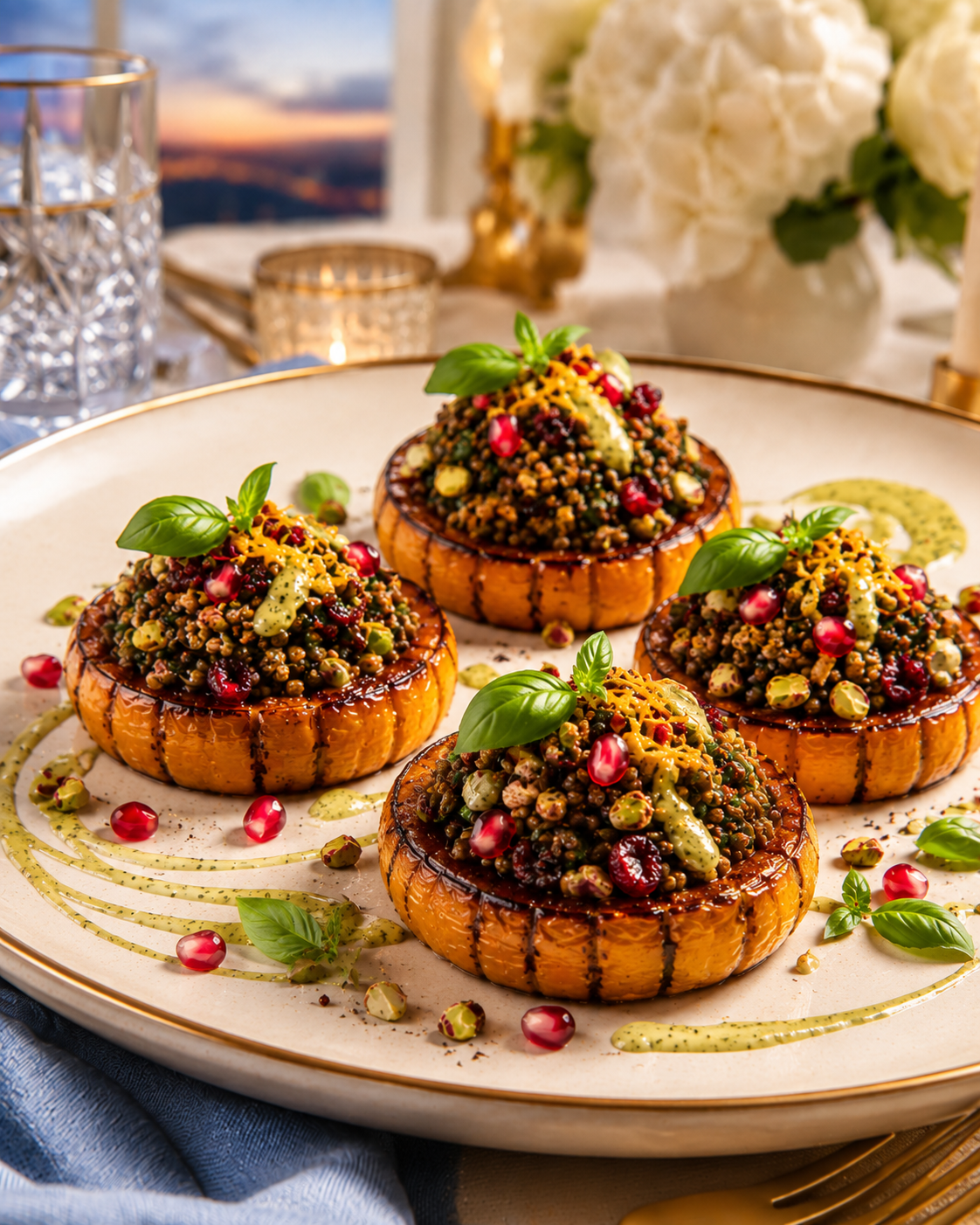
🌙Blue-Hour Delicata Crowns
With Saffron Lentil Jewels & Lemon-Basil Cashew Silk
This original whole-food, plant-based recipe was created specifically for this blog—far removed from the usual baked sweet potato and tahini routine.
These beautiful delicata squash crowns are warm, savoury, slightly sweet, creamy and satisfyingly crunchy. Caramelised squash rings are filled with a jewel-toned lentil and quinoa pilaf, dotted with tart cherries and pistachios, then finished with a silky lemon-saffron cashew sauce.
In other words, it is nervous-system nourishment that does not taste like a wellness assignment. 😌✨
Prep time: 20 minutes
Cooking time: 35 minutes
Total time: 55 minutes
Serves: 4
🛒 Organic Ingredients
For the Delicata Crowns
2 medium delicata squashes
2 tablespoons fresh orange juice
1 tablespoon pure maple syrup
½ teaspoon smoked paprika
⅛ teaspoon cayenne pepper, or to taste
¼ teaspoon pink Himalayan salt
For the Saffron Lentil Jewels
1 cup cooked black or green lentils
1 cup cooked quinoa
1 small shallot, finely diced
2 garlic cloves, minced
2 cups baby spinach, roughly chopped
⅓ cup unsweetened dried tart cherries, chopped
⅓ cup shelled pistachios, roughly chopped
2 tablespoons pumpkin seeds
1 tablespoon freshly ground flaxseed
Zest and juice of ½ orange
½ teaspoon ground cumin
¼ teaspoon ground cinnamon
⅛ teaspoon cayenne pepper
Pink Himalayan salt, to taste
3–4 tablespoons vegetable broth or water
For the Lemon-Basil Cashew Silk
¾ cup raw cashews, soaked for at least 2 hours
½ cup water, plus more as needed
Juice of 1 lemon
½ cup fresh basil leaves
1 small garlic clove
1 generous pinch saffron threads, soaked in 1 tablespoon warm water
⅛ teaspoon cayenne pepper
¼ teaspoon pink Himalayan salt
To Finish
¼ cup pomegranate arils
Fresh basil leaves
Extra chopped pistachios
Fresh orange zest
👩🏾🍳 Step-by-Step Instructions
1. 🔥 Roast the Delicata Crowns
Preheat the oven to 205°C/400°F and line a baking tray with unbleached parchment paper.
Slice each delicata squash into rings approximately 2.5 cm or 1 inch thick. Scoop out the seeds while keeping the circular shape intact.
Whisk together the orange juice, maple syrup, smoked paprika, cayenne pepper and pink Himalayan salt.
Brush the mixture over both sides of the squash rings. Arrange them on the prepared baking tray and roast for 25–30 minutes, turning halfway through, until tender with beautifully caramelised edges.
2. 💎 Prepare the Saffron Lentil Jewels
Warm the vegetable broth in a large pan over medium heat. Add the shallot and cook for 3–4 minutes, until softened.
Add the garlic, cumin, cinnamon and cayenne pepper. Stir for approximately 30 seconds, until fragrant.
Fold in the lentils, quinoa, spinach, tart cherries, orange zest and orange juice. Cook for another 3–4 minutes, allowing the spinach to wilt and the flavours to mingle.
Remove the pan from the heat. Stir in the pistachios, pumpkin seeds and ground flaxseed. Season lightly with pink Himalayan salt.
The filling should be fluffy, savoury and citrusy, with little bursts of sweet-tart flavour.
3. 🍋 Blend the Cashew Silk
Drain and rinse the soaked cashews.
Add them to a high-speed blender with the water, lemon juice, basil, garlic, saffron and its soaking water, cayenne pepper and pink Himalayan salt.
Blend until completely smooth and velvety. Add another tablespoon or two of water as needed. The consistency should be pourable but luxurious—similar to a fine restaurant sauce.
4. 👑 Build the Crowns
Arrange two or three roasted squash rings on each plate.
Spoon the warm lentil and quinoa filling generously into the centre of each ring, allowing a little to tumble naturally onto the plate.
Drizzle with the lemon-basil cashew silk.
5. ✨ Add the Finishing Sparkle
Scatter the pomegranate arils, fresh basil, chopped pistachios and delicate curls of orange zest over the crowns.
Serve warm while the squash edges are caramelised, the filling is fragrant and the sauce is silky.
🌿 Why Each Ingredient Earns Its Place
Delicata squash: Provides fibre, carotenoids and complex carbohydrates while bringing comforting natural sweetness.
Lentils: Supply plant protein, iron, folate and soluble fibre to create a satisfying, balanced meal.
Quinoa: Adds plant protein, magnesium and slowly digested carbohydrates for steadier nourishment.
Spinach: Contributes folate, magnesium, vitamin K and antioxidant plant compounds.
Tart cherries: Bring colourful polyphenols and a sharp-sweet contrast without relying on refined sugar.
Pistachios: Provide plant protein, fibre, vitamin B6 and a satisfying crunch.
Pumpkin seeds: Offer magnesium, zinc, iron, plant protein and nourishing fats.
Ground flaxseed: Supplies fibre, lignans and the plant-based omega-3 fatty acid ALA.
Cashews: Create dairy-free creaminess while contributing magnesium, copper and nourishing fats.
Pomegranate: Adds fibre, vitamin C and colourful polyphenols.
Orange: Brightens the dish while providing vitamin C, which supports the absorption of non-haem iron from plant foods.
Lemon: Adds acidity and vitamin C while balancing the richness of the cashew sauce.
Basil: Provides aromatic plant compounds and keeps the sauce tasting fresh rather than heavy.
Shallot: Adds gentle sweetness and prebiotic fibres that help nourish beneficial gut microorganisms.
Garlic: Provides deep flavour and prebiotic compounds without requiring excessive salt.
Saffron: Adds an elegant floral aroma, beautiful golden colour and antioxidant plant compounds in a culinary amount.
Cumin: Brings warmth and depth while contributing small amounts of iron and phytonutrients.
Cinnamon: Enhances the natural sweetness of the squash without additional refined sugar.
Cayenne pepper: Adds a gentle warming kick. Use less or leave it out if spicy food tends to trigger hot flushes.
Smoked paprika: Delivers smoky depth and carotenoid pigments without black pepper.
Maple syrup: A small amount encourages caramelisation and balances the citrus and spices.
Pink Himalayan salt: Enhances the flavours of the dish; use according to your individual sodium needs.
This meal combines plant protein, fibre-rich carbohydrates and nourishing fats, which may support steadier energy and help prevent the “I skipped lunch, and now everyone is irritating me” situation. 😅
Food can be wonderfully supportive, but persistent, severe or sudden mood changes still deserve personalised assessment and appropriate professional care.
References
🌸 Perimenopause, Menopause & Irritability
NICE. Menopause: identification and management (NG23). https://www.nice.org.uk/guidance/ng23 [1]
NHS. Symptoms of menopause and perimenopause. https://www.nhs.uk/conditions/menopause-and-perimenopause/symptoms/ [2]
British Menopause Society. Menopause Practice Standards—June 2026. https://thebms.org.uk/wp-content/uploads/2026/06/NEW-BMS-Menopause-Practice-Standards-JUNE2026-B.pdf [3]
The Menopause Society. Mental Health and the Menopause Transition. https://menopause.org/patient-education/menopause-topics/mental-health [4]
🧠 Hormones, the Brain & Mood Regulation
Fidecicchi et al. Neuroendocrine mechanisms of mood disorders during the menopause transition. PubMed. https://pubmed.ncbi.nlm.nih.gov/39111089/ [5]
Gordon et al. Impact of Estradiol Variability and Progesterone on Mood in Perimenopausal Women. Journal of Clinical Endocrinology & Metabolism. https://academic.oup.com/jcem/article/105/3/e642/5613975 [6]
Bäckström et al. GABA-A modulators, neurosteroids and negative mood symptoms. PubMed. https://pubmed.ncbi.nlm.nih.gov/21600269/ [7]
🌙 Sleep, Stress, Cortisol & Blood Sugar
Palmer et al. Sleep Loss and Emotion: A Systematic Review and Meta-Analysis. PubMed. https://pubmed.ncbi.nlm.nih.gov/38127505/ [8]
Grant et al. Effects of Sleep Fragmentation and Estradiol Decline on Cortisol. PMC. https://pmc.ncbi.nlm.nih.gov/articles/PMC10584010/ [9]
NHS. Low blood sugar: symptoms including anxiety and irritability. https://www.nhs.uk/conditions/low-blood-sugar-hypoglycaemia/ [10]
🥗 Food, Exercise & Nutrient Support
Moilanen et al. Effect of Aerobic Training on Menopausal Symptoms: Randomised Controlled Trial. PubMed. https://pubmed.ncbi.nlm.nih.gov/22334056/ [11]
Fan et al. Mediterranean Diet and Depression Risk in Postmenopausal Women. PubMed. https://pubmed.ncbi.nlm.nih.gov/41850610/ [12]
Iqbal et al. Omega-3 Intake, Sleep and Depression in Postmenopausal Women: Systematic Review. PubMed. https://pubmed.ncbi.nlm.nih.gov/37836515/ [13]
NIH Office of Dietary Supplements. Magnesium, Vitamin D, Vitamin B12 and Iron Fact Sheets. https://ods.od.nih.gov/factsheets/list-all/ [14]
🔬 Functional Testing & Personalised Investigation
Precision Analytical. DUTCH Complete—Sex Hormones, Metabolites and Cortisol Patterns. https://dutchtest.com/dutch-complete [15]
DNAlife. DNA Hormones. https://www.dnalife.healthcare/products/dna/dna-hormones [16]
DNAlife. DNA Mind. https://www.dnalife.healthcare/products/dna/dna-mind [17]
Diagnostic Solutions Laboratory. GI-MAP Microbial Assay Plus. https://www.diagnosticsolutionslab.com/tests/gi-map [18]
Oxford Biomedical Technologies. Mediator Release Test—MRT. https://www.nowleap.com/the-patented-mediator-release-test/ [19]
Blog Disclaimer
The health information on this blog is for general educational purposes only and is not intended to diagnose, treat, cure, or prevent any disease. It should not be used as a substitute for professional medical advice. Always consult a qualified healthcare provider before making any health-related decisions
This blog may contain affiliate links, meaning Leaves from the Tree of Life LLC may earn a small commission if you purchase a product or service through these links—at no additional cost to you. Your support helps us continue to provide valuable content. Thank you!
