
Let Food Be Thy Medicine: Why Your Appetite Is Out of Balance
🍎 Let Food Be Thy Medicine—But First, Find Out Why Your Appetite Is Out of Balance
Healthy eating is not complicated in principle.
Eat mostly whole foods. Include plenty of plants. Drink water. Avoid living on ultra-processed convenience food. Eat enough to nourish the body, but not so frequently that the digestive system is never given a break.
Simple advice.
Yet putting it into practice can become difficult when your hormones are fluctuating, your sleep is poor, your digestive system is protesting, your blood sugar is unstable and your stress response has been running the company without supervision.
This is where the standard instruction to “just eat less” or “use more willpower” falls apart.
Appetite is not merely a behavioural choice.
It is a biological process influenced by the brain, nervous system, digestive tract, hormones, blood glucose, sleep, emotions, medications, environment and learned habits.
When several of these systems become dysregulated at the same time, the result can look like:
Constant hunger
Little or no appetite
Evening cravings
Stress eating
Skipping meals and overeating later
Persistent snacking
Early fullness
Feeling hungry shortly after eating
Reaching for sugar despite eating enough
Feeling too nauseated, anxious or exhausted to eat
That is not automatically a lack of discipline.
It may be Metabolic Chaos®.
The goal is not to make excuses for unhealthy habits. The goal is to identify what is driving those habits so that responsibility can be paired with the right strategy.
Because determination matters—but determination without information can have you working very hard on the wrong problem.

🥦 Healthy Eating Is a Daily Practice—not a Temporary Performance
Healthy eating is a consistent pattern that supports energy, digestion, metabolic function, emotional well-being and long-term health.
For most people, the foundation should include:
Vegetables
Fruits
Beans and lentils
Whole grains
Nuts and seeds
Appropriate protein sources
Healthy fats
Adequate water
Mostly whole or minimally processed foods
It also involves:
Eating at generally consistent times
Allowing time between meals
Eating slowly enough to recognise satisfaction
Chewing thoroughly
Limiting distracted eating
Distinguishing physical hunger from emotional urgency
Building meals substantial enough to sustain you
Healthy eating is not perfection.
But neither is it a vague “everything in moderation” slogan used to justify eating anything, at any time, in any amount.
It requires balance, planning, temperance and self-awareness.
“And every man that striveth for the mastery is temperate in all things.”
— 1 Corinthians 9:25, KJV
Biblical temperance is not extreme restriction. It is Spirit-led self-government.
That means neither gluttony nor starvation.
Neither obsessive food rules nor careless eating.
Neither worshipping food nor ignoring the body God entrusted to your care.
🧠 Appetite Is Controlled by More Than Your Stomach
Hunger does not begin simply because your stomach is empty.
The brain continuously receives information about:
Energy availability
Blood-glucose levels
Nutrient intake
Stomach expansion
Digestive activity
Hormone production
Stored body fat
Stress
Sleep
Food availability
Smell, taste and visual food cues
The hypothalamus helps integrate many of these signals. Hormones and peptides such as ghrelin, leptin, insulin, GLP-1, peptide YY and cholecystokinin contribute to hunger, satisfaction and longer-term energy regulation.
These signals do not work independently. They interact with reward centres, emotions, memory and environmental cues. Appetite is therefore regulated by both metabolic need and the brain’s response to rewarding food.
This is why you can be physically full but still interested in dessert.
It is also why a person can require nourishment yet have no desire to eat.
Appetite regulation is not one switch. It is an entire control panel.
🚨 Stress Does Not Always Make You Eat—Sometimes It Shuts Eating Down
Stress can affect appetite in opposite directions.
During acute stress, adrenaline and sympathetic nervous-system activity may temporarily suppress digestion and hunger. Some people cannot eat before a major presentation, during conflict or after receiving distressing news.
Others experience increased cravings, particularly when stress becomes chronic.
Long-term stress may influence:
Cortisol signalling
Blood-glucose regulation
Sleep quality
Emotional regulation
Food-reward pathways
Impulse control
Meal planning
Energy levels
A systematic review and meta-analysis involving more than 119,000 adults found that stress was associated, on average, with a small increase in overall food intake, increased consumption of less nutritious foods and reduced consumption of healthier foods. However, there was substantial variation between individuals.
That variation matters.
One woman responds to stress by eating continuously.
Another skips breakfast and lunch, then wonders why she is raiding the kitchen at 9 p.m.
Another loses her appetite completely.
Another eats normally until her workday ends, then uses food to come down from the emotional intensity of the day.
These are different patterns. They should not receive identical advice.
“Try harder” is not a clinical strategy.
🔬 Science Breakdown: Three Ways Stress Can Disrupt Eating
1. The stress-response system
The hypothalamic-pituitary-adrenal axis helps coordinate the body’s response to stress.
Cortisol assists with energy mobilisation, alertness and survival. It is not a “bad” hormone.
However, chronic stress, irregular schedules and disturbed sleep can affect the timing and pattern of cortisol production.
That may influence when a person feels energised, anxious, tired or driven to seek quick energy.
2. Emotional coping and reward
Highly palatable foods can provide temporary comfort or distraction.
That relief is real—but temporary.
When food repeatedly becomes the primary response to frustration, loneliness, anxiety, boredom or exhaustion, the behaviour can become conditioned.
The brain learns:
Stress arrives. Food follows. Relief appears.
That loop must be interrupted intentionally. It will not disappear because someone printed a motivational quote and placed it on the refrigerator.
3. Reduced executive function
Chronic stress can make planning, decision-making and self-regulation more difficult.
A stressed brain is less interested in soaking lentils, chopping vegetables and preparing tomorrow’s lunch.
It wants the easiest available source of energy.
This is why a successful nutrition strategy must account for the person’s workload and environment—not merely hand her an ideal menu and expect everything else to fall into place.
🌙 Poor Sleep Can Quietly Undermine Your Nutrition Plan
Sleep deprivation affects much more than energy.
It can alter:
Food-reward responses
Decision-making
Insulin sensitivity
Meal timing
Energy expenditure
Late-night eating opportunities
Motivation to prepare food
Preference for quick-energy foods
It is often claimed that insufficient sleep simply raises ghrelin and lowers leptin. The current evidence is more complicated.
A 2026 review of human randomised controlled trials found that sleep restriction frequently increased dietary intake, but changes in reported appetite and appetite-related hormones were inconsistent. In other words, people may eat more after poor sleep even when measurable hunger signals do not fully explain the increase.
More waking hours create more opportunities to eat.
Fatigue reduces the desire to cook.
A tired brain becomes more responsive to immediate reward.
And when 3 p.m. arrives after five hours of sleep, the bowl of chickpeas may not seem nearly as persuasive as the pastry sitting beside the till.
Sleep is not separate from nutrition.
Sleep is part of the nutrition plan.
🌸 Perimenopause Can Add Fuel to Metabolic Chaos®
Midlife women are often told that their changing appetite, body composition, fatigue and sleep disruption are simply the consequences of getting older.
That is lazy thinking.
Perimenopause can involve substantial fluctuations in oestrogen and progesterone before hormone production eventually settles at lower postmenopausal levels.
These changes may occur alongside:
Poor sleep
Night sweats
Increased anxiety
Lower stress tolerance
Changes in insulin sensitivity
Reduced muscle mass
Altered body-fat distribution
Greater fatigue
Mood changes
Increased cravings
Reduced motivation to prepare food
Oestrogen participates in energy homeostasis and metabolic regulation throughout the brain and body. Declining oestrogen signalling during the menopausal transition has been linked with changes in metabolic health, although ageing, lifestyle, sleep and body composition also contribute.
This does not mean every craving is caused by oestrogen.
It means hormone changes must be considered within the complete clinical picture.
A businesswoman managing deadlines, poor sleep, heavy bleeding, iron depletion, digestive symptoms and fluctuating hormones does not need a generic weight-loss plan.
She needs someone to assess the pattern.
🩸 Blood Sugar May Be Driving the Afternoon Drama
Blood glucose naturally rises after eating and falls as glucose is used or stored.
Problems may arise when meals are:
Too small
Low in fibre
Low in protein
Dominated by refined carbohydrates
Eaten irregularly
Replaced with coffee
Followed by constant snacking
A breakfast of coffee and determination is not a balanced meal.
Neither is a decorative salad consisting of lettuce, three tomato slices and optimism.
When meals do not provide sufficient fibre, protein, healthy fats and overall energy, hunger may return quickly.
Some people then interpret the resulting shakiness, fatigue, irritability or cravings as a character problem when the meal itself was inadequate.
On the other hand, persistent hunger, excessive thirst, frequent urination, unexplained weight changes or unusual fatigue may warrant conventional medical testing for blood-glucose disorders.
This is why appetite concerns should not be managed by guesswork alone.
🦠 The Gut and Brain Are in Constant Communication
The digestive system does far more than break down food.
It sends mechanical, hormonal and neurological information to the brain through several pathways, including the vagus nerve.
As food moves through the stomach and intestines, signals contribute to:
Hunger
Fullness
Nausea
Food tolerance
Meal termination
Digestive comfort
Bowel motility
Gut dysfunction may reduce appetite when eating produces:
Bloating
Reflux
Nausea
Pain
Constipation
Diarrhoea
Early fullness
Vomiting
Excessive fermentation
It may also indirectly increase cravings when poor digestion, irregular bowel movements, inadequate intake and restricted diets contribute to unstable energy or nutrient insufficiency.
The microbiome may interact with metabolic and appetite-related pathways, but this area of research is still developing.
It is not scientifically responsible to blame one bacterial species for every craving, mood change or extra inch around the waist.
Microbiome data require context.
A stool report is not a personality profile.
🍟 Ultra-Processed Food Is Not Metabolically Neutral
Food processing exists on a spectrum.
Frozen vegetables, tinned beans and rolled oats have been processed, but they still closely resemble their original food structure.
Ultra-processed products are different. They are often engineered to be easy to chew, quick to consume and highly rewarding.
In a controlled inpatient trial, participants consumed approximately 508 more calories per day while eating an ultra-processed diet than when eating a minimally processed diet. They gained weight during the ultra-processed phase and lost weight during the unprocessed phase, even though the diets were designed to be similar in presented calories, macronutrients, sugar, sodium and fibre.
This does not mean one biscuit causes metabolic disease.
It means the food environment matters.
Eating behaviour is affected by:
Texture
Eating speed
Energy density
Convenience
Palatability
Portion size
Food availability
Willpower is useful, but it is much easier to exercise when the kitchen is not stocked like a petrol-station snack aisle.
🎪 Let Us Retire a Few Nutrition Myths
“Everyone needs six small meals a day.”
No.
There is no high-quality evidence showing that six small meals are universally superior for weight or cardiometabolic health.
A systematic review of randomised trials found no clear advantage of higher- or lower-frequency eating patterns for cardiometabolic outcomes. The certainty of the evidence was also very low.
Some people need smaller, more frequent meals because of specific medical, digestive, pregnancy, medication or athletic considerations.
That does not make six meals a universal prescription.
“Frequent snacking boosts metabolism.”
Constant grazing is not a metabolic hack.
Increasing the number of eating occasions can increase total energy intake when the additional food is not compensated for elsewhere. A systematic review of controlled feeding trials found that greater eating frequency was associated with higher daily energy intake, although longer-term effects on body weight remain uncertain.
A planned snack may be useful.
Eating every time you pass the kitchen is something else.
“Extreme diets reset the body.”
Severe restriction may produce short-term changes because it removes large amounts of food or energy.
That does not mean it has “reset” anything.
Unsupervised detoxes, prolonged fasting and highly restrictive elimination diets can:
Reduce dietary variety
Increase food preoccupation
Create nutrient gaps
Worsen constipation
Damage a person’s relationship with food
Mask rather than identify the actual problem
An elimination diet without a clear rationale and reintroduction plan is unfinished work—not personalised nutrition.
“One diet works for everyone.”
Human physiology has shared foundations, but people differ in:
Medical history
Culture
Genetics
Medications
Activity
Hormonal stage
Digestive function
Food access
Nutrient requirements
Personal preferences
The principles may remain consistent.
The application must be personalised.
⏰ Your Digestive System Needs Both Labour and Rest
Within the Seventh-day Adventist health message, regularity and temperance have long been emphasised.
“The stomach must have its regular periods for labor and rest.”
That principle should not be turned into rigid food legalism.
However, it does challenge the modern habit of eating from morning until bedtime without any clear distinction between meals, snacks, boredom and stress relief.
For many adults, two or three balanced meals may provide a practical rhythm.
For others, a different pattern may be clinically appropriate.
The important questions are:
Are the meals nutritionally complete?
Are you eating enough?
Are you eating primarily because of physical hunger?
Are you constantly grazing?
Are you leaving enough time to recognise genuine hunger?
Does your current meal pattern support your health condition and medication needs?
Regularity creates useful data.
When meal timing changes every day, it becomes harder to identify whether symptoms are related to food quantity, food composition, stress, sleep or digestive function.
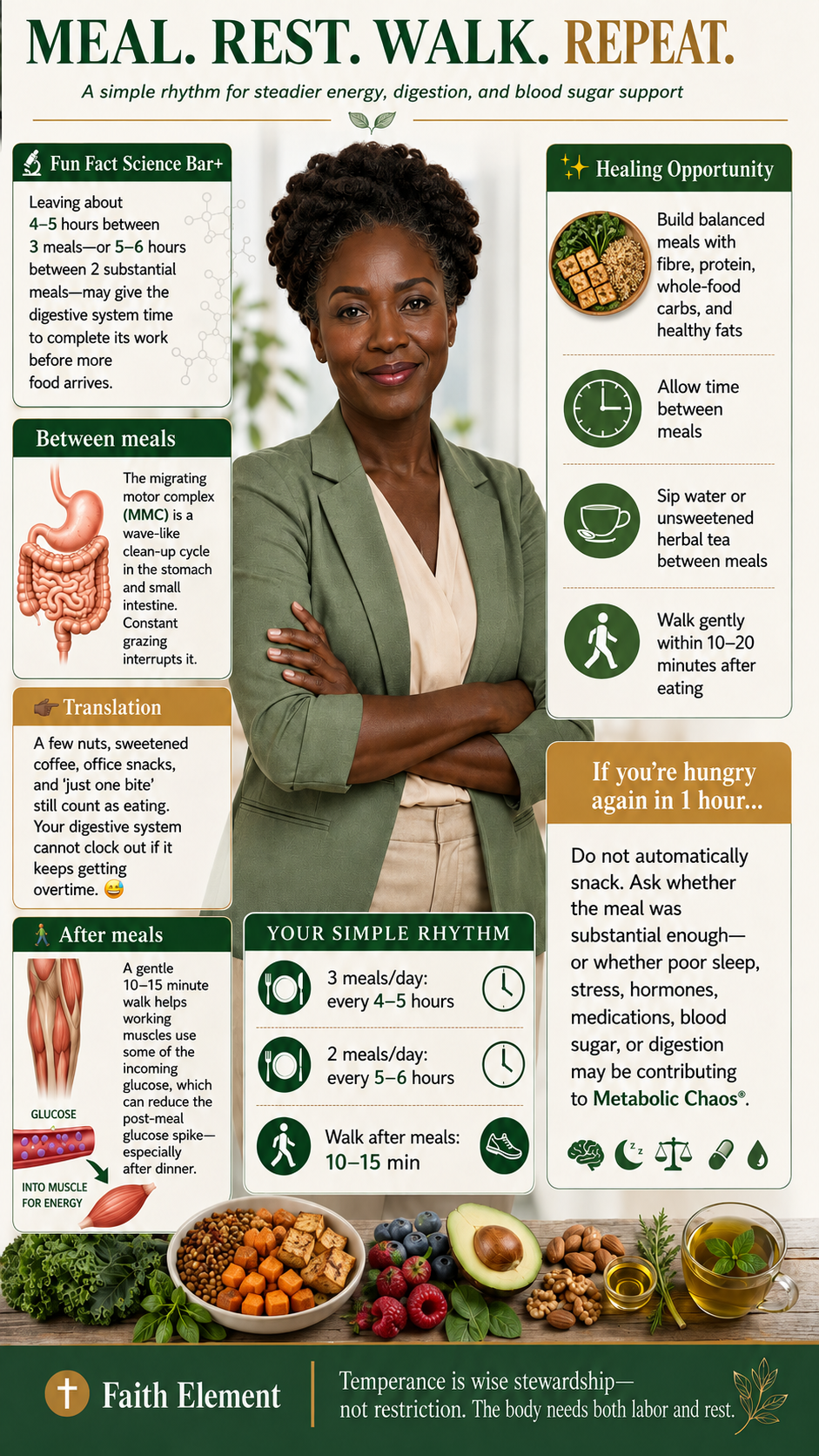
🔬 Fun Fact Science Bar+
Did you know that leaving approximately four to five hours between three meals—or five to six hours between two substantial meals—may give the digestive system time to complete its work before more food arrives?
Between meals, the stomach and small intestine activate the migrating motor complex, or MMC—a wave-like “clean-up cycle” that helps move leftover food particles and digestive contents through the upper gastrointestinal tract. Constant grazing interrupts this fasting-phase activity.
👉🏾 Translation: A few nuts, sweetened coffee, office snacks and “just one bite” while cooking still count as eating. Your digestive system cannot clock out when you keep giving it overtime. 😅
A 10- to 15-minute gentle walk after meals can also help working muscles take up glucose from the bloodstream, reducing the size of the post-meal glucose rise. Walking after dinner may be especially helpful when the meal is followed by hours of sitting.
✨ Healing Opportunity: Build meals with fibre-rich plants, protein, whole-food carbohydrates and healthy fats. Then allow time between meals, sip water or unsweetened herbal tea, and take a gentle digestive walk within 10–20 minutes of eating.
If you are hungry again one hour later, do not automatically reach for a snack. Ask whether the meal was substantial enough—or whether poor sleep, stress, hormones, medications, blood-sugar dysregulation or digestive dysfunction may be contributing to Metabolic Chaos®.
✝️ Faith Element:
“The stomach must have its regular periods for labor and rest.”
Temperance is not undereating or rigid restriction. It is wise stewardship—nourishing the body adequately, allowing it time to work and rest, and using movement as part of God’s natural plan for health.
🧪 Test, Don’t Guess—but Do Not Test Blindly
Functional testing should answer a specific question.
It should not become a shopping spree.
A laboratory panel is useful when it helps clarify a clinical pattern, identify a referral need, guide nutrition or evaluate whether an intervention is working.
A result without context is simply expensive data.
No single test can tell you why you are overeating or why you have no appetite.
Testing must be interpreted alongside:
Symptoms
Medical history
Medications
Menstrual or menopausal status
Food intake
Sleep
Stress
Bowel habits
Movement
Conventional medical investigations
Here are several tests that may provide useful pieces of the puzzle.
🌙 DUTCH Complete™ and DUTCH Plus™
The DUTCH Complete measures dried urinary sex hormones, adrenal hormones, hormone metabolites and the diurnal pattern of free cortisol.
The DUTCH Plus includes the same core assessment while adding salivary measurements of the Cortisol Awakening Response—the natural change in cortisol that occurs after waking.
This may provide context when appetite disruption occurs alongside:
Perimenopause
Poor sleep
Evening alertness
Morning exhaustion
High stress
Irregular energy
Changes in menstrual cycles
BHRT use
Anxiety or reduced stress resilience
A DUTCH test does not diagnose the cause of overeating.
It may help determine whether hormone metabolism, cortisol rhythm and sleep-related patterns should be considered as part of the wider picture.
The correct question is not:
“Is my cortisol bad?”
It is:
“Does my cortisol pattern make sense alongside my symptoms, sleep, medications, cycle stage and conventional blood work?”
🧬 DNAlife® DNA Diet and DNA Mind
DNA Diet examines selected gene variants associated with areas such as weight management, dietary response and metabolic tendencies.
DNA Mind reports variants involved in pathways related to serotonin, dopamine, inflammation, methylation and other aspects of neurological and mental-health biology.
These reports may help explore:
Taste preferences
Food-reward tendencies
Carbohydrate and fat responses
Insulin-related pathways
Caffeine metabolism
Stress resilience
Neurotransmitter-related tendencies
Behavioural patterns that may influence eating
But genetics must be kept in its proper place.
A genetic variant is not a diagnosis.
It does not prove that a particular pathway is impaired.
It does not dictate one perfect diet.
And it certainly does not excuse every behaviour.
Genetic testing is most useful when it explains why one person may require a different level of support from another.
Predisposition is information—not destiny.
🩸 Functional Blood Chemistry Analysis
Functional Blood Chemistry Analysis uses conventional blood-test results while examining relationships and patterns across several markers.
Depending on symptoms and medical oversight, relevant testing may include:
Full blood count
Ferritin and complete iron studies
Vitamin B12 and folate
Vitamin D
Fasting glucose
HbA1c
Fasting insulin when appropriate
Thyroid-stimulating hormone
Free thyroid hormones when indicated
Thyroid antibodies when appropriate
Liver and kidney markers
Lipids
Inflammatory markers
Why does this matter?
Because excessive hunger, low appetite, fatigue and food cravings may occur alongside:
Iron deficiency
Anaemia
Thyroid disorders
Blood-glucose dysregulation
Nutrient insufficiency
Inflammation
Liver dysfunction
Medication effects
Inadequate food intake
Functional interpretation does not replace conventional medical ranges or diagnosis.
It adds context.
Persistent loss of appetite or unintentional weight loss should be medically investigated. The NHS advises seeing a GP when weight continues to fall without intentional changes to diet or exercise.
A supplement protocol should not be used to delay necessary medical care.
🦠 GI-MAP®
GI-MAP is a stool test that uses quantitative polymerase chain reaction—qPCR—to detect DNA from selected bacteria, parasites, viruses, fungi and Helicobacter pylori.
It also includes markers related to digestion, inflammation, immune activity and pancreatic function.
It may provide useful information when appetite changes occur alongside:
Bloating
Reflux
Constipation
Diarrhoea
Abdominal discomfort
Nausea
Early fullness
Malabsorption concerns
Unexplained digestive symptoms
However, detecting microbial DNA does not automatically prove that the organism is causing the symptoms.
The amount detected, the organism involved, symptoms, medical history and other investigations all matter.
Not every “high” organism needs to be attacked.
Not every “low” organism needs a probiotic.
The objective is not to sterilise the gut.
The objective is to identify clinically relevant healing opportunities while protecting microbial diversity and digestive function.
🍓 MRT®: Use With Clear Limits
The Mediator Release Test is marketed as a blood test that measures cellular-volume changes following exposure to selected foods and food chemicals.
Some functional practitioners use the results to help structure a temporary elimination and reintroduction programme.
However, MRT is not an IgE food-allergy test and should never be presented as one.
More broadly, the British Society for Allergy and Clinical Immunology does not recognise leucocyte cytotoxic testing as a valid diagnostic method for food allergy. It warns that unproven tests can lead to incorrect labels, unnecessary restriction and nutritional deficiencies.
Therefore:
MRT should not diagnose food allergy.
It should not replace an allergist.
It should not justify permanent removal of numerous foods.
Results should be compared with symptoms and dietary history.
Any elimination phase should include a structured reintroduction process.
Testing should expand understanding.
It should not leave someone frightened of everything in the supermarket.
🔍 Testing Must Lead to Action
Testing is only valuable when the information changes the plan.
A useful assessment should help determine:
What requires medical referral
What requires nutritional support
What requires behavioural change
What requires hormone evaluation
What requires digestive investigation
What requires stress-management support
What requires improved sleep
What requires no intervention at all
Not every abnormal marker needs a supplement.
Not every symptom needs another test.
Not every craving is hormonal.
Not every loss of appetite is psychological.
Good functional work requires discernment.
Test, don’t guess—but do not test without a clear clinical question.

🌱 Practical Healing Opportunities
1. Establish a meal rhythm
Choose generally consistent meal times that suit your medical needs and daily schedule.
Irregular eating produces irregular information.
A steady rhythm makes it easier to identify true hunger, cravings and symptom patterns.
2. Eat complete meals
A proper meal should provide enough energy and nutrients to sustain you.
Build it around:
Fibre-rich plants
An appropriate protein source
A whole-food carbohydrate
Healthy fats
Herbs and spices
Adequate portions
A handful of crackers is not lunch.
Coffee is not breakfast.
And eating half a salad to “be good” only to finish the evening standing over the kitchen counter is not balance.
3. Reduce unnecessary grazing
You do not need to eat simply because food is visible.
Pause and assess:
Am I hungry?
Am I tired?
Am I anxious?
Am I thirsty?
Am I procrastinating?
Did I eat enough at my last meal?
Awareness is not coddling.
It is accountability.
4. Prepare the environment
Keep practical, nourishing food available.
Prepare beans, lentils, whole grains, vegetables, fruit and dressings in advance.
A health plan that requires heroic effort at every meal will eventually fail.
Make the healthy choice the easier choice.
5. Protect sleep
Set a realistic bedtime.
Reduce unnecessary late-night stimulation.
Get morning light.
Address night sweats, pain, anxiety, breathing problems or other symptoms that repeatedly disrupt sleep.
You cannot out-supplement chronic sleep deprivation.
6. Address stress directly
Food cannot fix:
An unsustainable workload
Poor boundaries
An unhealthy relationship
Persistent anxiety
Grief
Loneliness
Spiritual exhaustion
Prayer matters.
So do rest, counsel, boundaries, movement, community, appropriate professional support and practical changes.
Faith does not require pretending that stress is not affecting the body.
7. Track the pattern before changing everything
For seven to fourteen days, record:
Meal times
Hunger before meals
Fullness after meals
Cravings
Sleep quality
Stress level
Digestive symptoms
Menstrual-cycle stage
Medication and supplement timing
Patterns become easier to see when they are written down.
8. Know when nutrition coaching is not enough
Seek medical assessment for:
Persistent appetite loss
Unintentional weight loss
Recurrent vomiting
Difficulty swallowing
Severe abdominal pain
Blood in vomit or stool
Black stools
Persistent early fullness
Dehydration
Significant weakness
Inability to maintain nutrition
New or worsening digestive symptoms
Responsible naturopathy includes appropriate referral.
A green powder is not the answer to every red flag.
🙏🏾 Temperance, Stewardship and Responsibility
The body has an innate ability to repair, regulate and adapt when it is given the correct conditions.
But innate healing does not mean passive healing.
You cannot repeatedly deprive the body of sleep, movement, nourishing food and digestive rest while expecting supplements to undo the consequences.
You also cannot punish the body into wellness.
True health reform requires intelligent cooperation with God’s laws of health.
That means:
Nourishing the body
Exercising self-control
Rejecting extremes
Addressing causes
Using sound evidence
Seeking appropriate care
Being honest about habits
Making changes consistently
Food can support healing.
But food should not be expected to perform the work of sleep, stress management, medical care, emotional healing, hormone balance and spiritual restoration all by itself.
Let food be thy medicine—but first understand the person eating it.
💼 Stop Guessing About Your Appetite
If you are constantly hungry, never hungry, grazing all day, crashing in the afternoon or losing control around food at night, do not settle for another generic meal plan.
The question is not simply:
“What should I eat?”
The more useful questions are:
What is affecting my hunger and satisfaction signals?
Are hormones or poor sleep contributing?
Is blood-glucose regulation part of the pattern?
Are digestive symptoms interfering with intake?
Am I eating enough at meals?
Is chronic stress driving the behaviour?
Which tests would provide meaningful information?
Where are the actual healing opportunities?
At Leaves from the Tree of Life LLC, we help Businesswomen who are Hormonal, Anxious, and Bloated through Functional Nutrition Coaching + Labs.
Through comprehensive history-taking, functional nutrition, appropriate laboratory testing and personalised coaching, we identify patterns, challenge unhelpful habits and build strategies that can be applied in real life.
No fads.
No miracle claims.
No random supplement stacking.
No pretending that every woman needs the same diet.
🌿 Ready to test instead of guess?
👉🏾 CLICK HERE to jump on a Discovery Call
Let us identify what is contributing to your Metabolic Chaos® and turn those findings into practical, sustainable healing opportunities.
Invest in your health, invest in you, because a healthier lifestyle is a luxury you deserve!
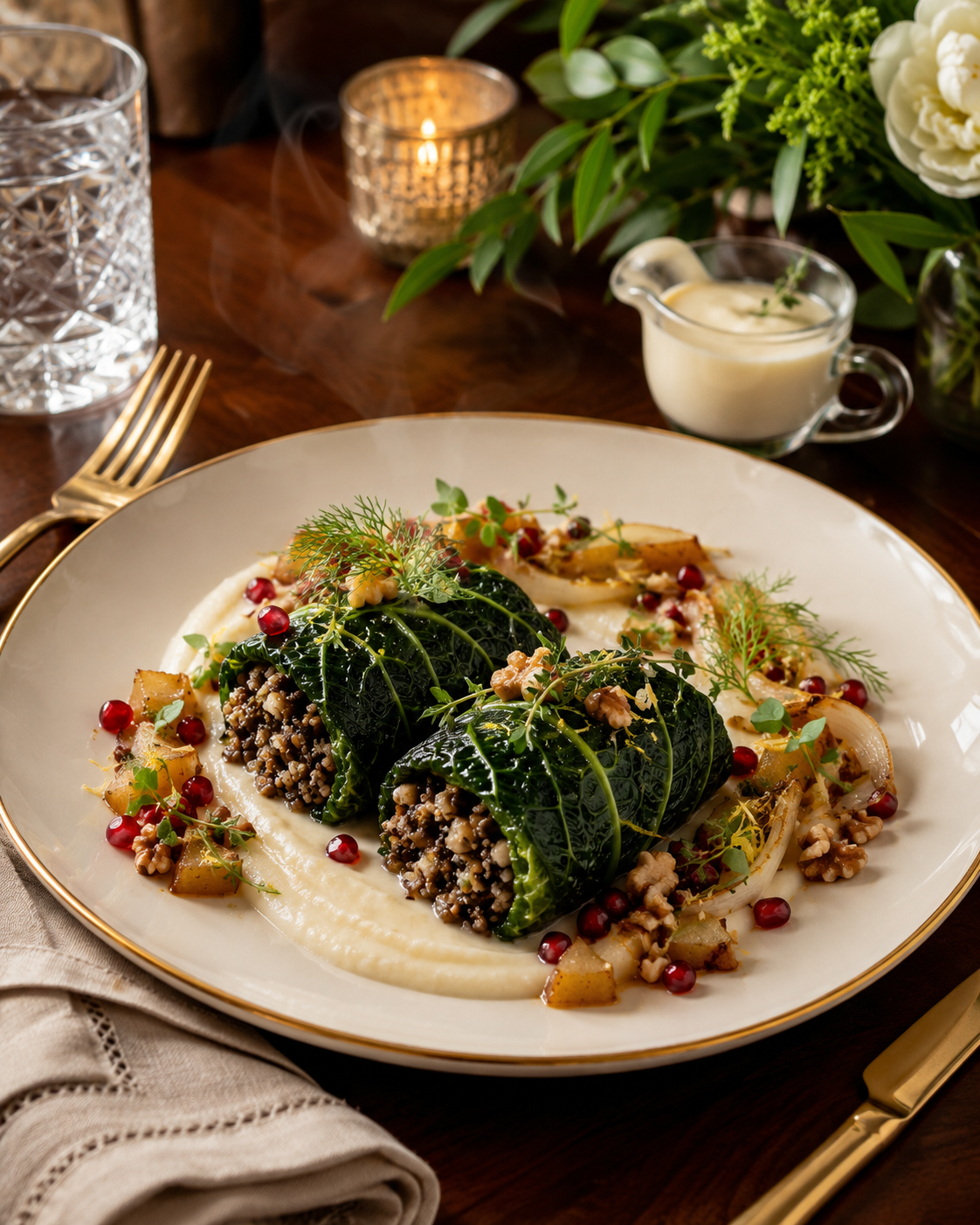
🌿The Emerald Supper Parcels
Savoy Cabbage Parcels with Lemony Lentil–Quinoa Filling, Cannellini-Parsnip Silk & Roasted Pear-Fennel Relish
This is a fresh, original recipe concept created for this blog—elegant enough for a dinner party, substantial enough to support a sensible meal rhythm, and far more exciting than another bowl of leaves pretending to be dinner. 😅
Tender Savoy cabbage leaves are wrapped around a deeply savoury filling of lentils, quinoa, mushrooms and walnuts. The parcels are served over a velvety white-bean and parsnip cream, then finished with caramelised pear, roasted fennel, pomegranate and fresh thyme.
It is creamy, savoury, slightly sweet, gently smoky and beautifully balanced.
Serves: 4
Preparation: 20 minutes
Cooking: 40 minutes
Total time: Approximately 1 hour
Diet: Whole-food plant-based, gluten-free and oil-free
🛒 Organic Ingredients
🌱 For the Emerald Parcels
8 large organic Savoy cabbage leaves
1 cup cooked organic green or brown lentils
1 cup cooked organic quinoa
1½ cups organic chestnut mushrooms, finely chopped
⅓ cup organic walnuts, finely chopped
1 small organic shallot, finely diced
2 organic garlic cloves, minced
3 tablespoons low-sodium vegetable stock
1 tablespoon organic low-sodium tamari
1 teaspoon smoked paprika
1 teaspoon dried thyme
¼ teaspoon cayenne pepper, or to taste
Zest of ½ organic lemon
2 tablespoons chopped organic parsley
Pink Himalayan salt or sea salt, to taste
🤍 For the Cannellini-Parsnip Silk
1½ cups cooked organic cannellini beans, rinsed
1 cup organic parsnip, peeled, cubed and steamed
2 tablespoons organic tahini
2 tablespoons fresh organic lemon juice
1 small roasted organic garlic clove
3–5 tablespoons warm water
Pinch of pink Himalayan salt or sea salt
Pinch of cayenne pepper
🍐 For the Roasted Pear-Fennel Relish
1 medium organic fennel bulb, finely diced
1 firm organic pear, finely diced
1 tablespoon organic balsamic vinegar
1 teaspoon fresh organic thyme leaves
¼ cup organic pomegranate arils
1 tablespoon chopped organic parsley
Pinch of pink Himalayan salt or sea salt
✨ Elegant Finishing Touches
Fresh microgreens
Finely grated organic lemon zest
2 tablespoons toasted chopped walnuts
Reserved fennel fronds
Additional pomegranate arils
👩🏾🍳 Step-by-Step Instructions
1. Prepare the cabbage leaves
Preheat the oven to 200°C/180°C fan/400°F.
Bring a wide pan of water to a gentle boil. Add the Savoy cabbage leaves and blanch for approximately two minutes, until softened but still bright green.
Transfer them immediately to a bowl of cold water. Drain and pat dry.
Carefully trim down any thick central stems without cutting through the leaves.
2. Build the savoury filling
Place the shallot, garlic and vegetable stock in a large frying pan over medium heat.
Cook for two to three minutes before adding the chopped mushrooms.
Continue cooking until the mushrooms release their moisture and begin to brown.
Stir in the smoked paprika, thyme, cayenne pepper and tamari. Add the cooked lentils, quinoa and walnuts.
Cook for another three to four minutes, stirring until the filling is fragrant and well combined.
Remove from the heat and fold in the lemon zest and parsley. Taste and adjust the salt and cayenne.
The filling should be savoury, smoky and slightly citrusy—not dry or bland.
3. Roll the parcels
Lay one cabbage leaf flat on a clean surface.
Place approximately ⅓ cup of filling near the base of the leaf. Fold the sides inward and roll it firmly, as you would a burrito.
Place the parcel seam-side down in a baking dish.
Repeat with the remaining leaves and filling.
Add two tablespoons of vegetable stock to the bottom of the dish. Cover loosely with baking parchment and foil, then bake for 20 minutes.
Remove the covering and bake for another five to eight minutes, allowing the tops to become lightly bronzed.
4. Roast the pear and fennel
While the parcels bake, spread the diced fennel and pear onto a parchment-lined baking tray.
Drizzle with the balsamic vinegar and sprinkle with thyme and a small pinch of salt.
Roast for approximately 18–20 minutes, stirring halfway through, until the fennel is tender and the pear edges are caramelised.
Allow the mixture to cool slightly before folding in the pomegranate arils and parsley.
5. Create the cannellini-parsnip silk
Add the cannellini beans, steamed parsnip, tahini, lemon juice, roasted garlic, salt and cayenne to a high-speed blender.
Blend while gradually adding the warm water until the mixture becomes exceptionally smooth and creamy.
It should resemble a silky restaurant-style purée rather than thick hummus.
Taste and adjust the lemon or salt.
6. Plate it like the reservation required a dress code
Spread a generous swoosh of cannellini-parsnip silk across each plate.
Arrange two cabbage parcels slightly overlapping on top.
Spoon the roasted pear-fennel relish around and over the parcels.
Finish with toasted walnuts, microgreens, lemon zest, pomegranate arils and delicate fennel fronds.
Serve immediately while the parcels are warm and the purée is silky.
🌟 Why These Ingredients Earned Their Place
🥬 Savoy cabbage
Provides fibre, vitamin C, vitamin K and glucosinolate compounds. Its sturdy leaves also create a satisfying whole-food alternative to pastry or refined wraps.
🌱 Lentils
Supply plant protein, iron, folate, resistant starch and soluble fibre. Their protein-and-fibre combination helps make the meal more sustaining.
🌾 Quinoa
Provides complex carbohydrates, fibre, magnesium and all nine essential amino acids. It adds structure without making the filling heavy.
🍄 Chestnut mushrooms
Contribute savoury umami flavour along with B vitamins, copper and antioxidant compounds. They make the filling taste rich without meat.
🌰 Walnuts
Provide healthy fats, plant-based omega-3 alpha-linolenic acid, copper and polyphenols. The fat and texture increase satisfaction between meals.
🧅 Shallot
Contains prebiotic fibres and sulphur-containing plant compounds while adding mild natural sweetness.
🧄 Garlic
Provides sulphur compounds and bold flavour, allowing the recipe to taste satisfying without excessive salt.
🌶️ Cayenne pepper
Adds warmth and contains capsaicin. It replaces black pepper while giving the parcels a gentle smoky kick.
🍋 Lemon
Provides vitamin C and bright acidity, helping balance the earthy lentils, beans and mushrooms.
🌿 Parsley and thyme
Contribute flavour, vitamin K and an assortment of protective plant compounds without requiring sugary sauces.
🤍 Cannellini beans
Provide fibre, plant protein, folate, potassium and resistant starch. They create a luxuriously creamy sauce without dairy.
🥕 Parsnip
Adds natural sweetness, fibre, potassium and vitamin C while giving the bean purée a smooth, velvety finish.
🥄 Tahini
Provides healthy fats, calcium, copper and sesame lignans. It makes the purée richer and helps the meal remain satisfying.
🌱 Fennel
Provides fibre, vitamin C and aromatic plant compounds. Roasting softens its flavour and brings out its natural sweetness.
🍐 Pear
Adds soluble fibre and gentle sweetness, allowing the relish to feel decadent without refined sugar.
❤️ Pomegranate
Contributes vibrant colour, vitamin C, fibre and polyphenols. Its tart flavour cuts through the creamy purée beautifully.
🍎 Balsamic vinegar
Adds concentrated acidity and sweetness, helping caramelise the relish without requiring syrup or added sugar.
⏰ Meal-Rhythm Tip
This is a complete meal containing fibre-rich plants, plant protein, complex carbohydrates and healthy fats.
Eat slowly, chew thoroughly and give yourself time to recognise satisfaction. When practical, follow the meal with a gentle 10- to 15-minute digestive walk rather than immediately becoming one with the sofa.
That is meal, rest, walk and repeat in real life. 🚶🏾♀️🌿
References
🥗 Healthy Eating, Meal Frequency & Ultra-Processed Foods
GOV.UK. The Eatwell Guide. https://www.gov.uk/government/publications/the-eatwell-guide
Hall KD, et al. Ultra-Processed Diets Cause Excess Calorie Intake and Weight Gain: An Inpatient Randomised Controlled Trial. PubMed. https://pubmed.ncbi.nlm.nih.gov/31105044/
Blazey P, et al. Eating Frequency, Body Composition and Cardiometabolic Health: Systematic Review and Meta-Analysis. PubMed. https://pubmed.ncbi.nlm.nih.gov/37964316/
🧠 Stress, Emotional Eating & Sleep
Hill D, et al. Stress and Eating Behaviours in Healthy Adults: Systematic Review and Meta-Analysis. PubMed. https://pubmed.ncbi.nlm.nih.gov/33913377/
Mendia J, et al. Emotional Dysregulation and Emotional Eating: Meta-Analysis. PubMed. https://pubmed.ncbi.nlm.nih.gov/41643943/
Tan SY, et al. Sleep Curtailment, Appetite, Motivation to Eat and Dietary Intake. PubMed. https://pubmed.ncbi.nlm.nih.gov/42200369/
🌸 Perimenopause, Oestrogen & Metabolic Health
Camon C, et al. Effects of Oestrogen Deficiency and Ageing on Homeostasis During Menopause. PubMed. https://pubmed.ncbi.nlm.nih.gov/39672893/
Marcantei C, et al. Energy Expenditure and Substrate Oxidation During Menopause. PubMed. https://pubmed.ncbi.nlm.nih.gov/41860241/
⏰ Meal Spacing, Digestion & the Migrating Motor Complex
Madsen JL, Dahl K. Human Migrating Myoelectric Complex in Relation to Gastrointestinal Transit of a Meal. PubMed. https://pubmed.ncbi.nlm.nih.gov/2210443/
Dooley CP, et al. Variability of the Migrating Motor Complex in Humans. PubMed. https://pubmed.ncbi.nlm.nih.gov/1563314/
🚶🏾♀️ Post-Meal Walking, Glucose & Insulin
Borror AC, et al. Acute Postprandial Exercise and Glucose Control in Type 2 Diabetes: Systematic Review and Meta-Analysis. PubMed. https://pubmed.ncbi.nlm.nih.gov/29396781/
Bravo-Garcia AP, et al. Time-Restricted Eating and Post-Meal Walking in Type 2 Diabetes: The TREx Randomised Trial. PubMed. https://pubmed.ncbi.nlm.nih.gov/40064299/
🧪 Functional Testing, Blood Chemistry & Gut Health
NHS. Blood Tests: Full Blood Count, Glucose, Lipids and Thyroid Testing. https://www.nhs.uk/tests-and-treatments/blood-tests/
DUTCH Test. DUTCH Complete™ and DUTCH Plus™. https://shop.dutchtest.com/info-dutch-complete/
DNAlife®. DNA Diet®. https://www.dnalife.healthcare/products/dna/dna-diet
DNAlife®. DNA Mind. https://www.dnalife.healthcare/products/dna/dna-mind
Diagnostic Solutions Laboratory. GI-MAP® Patient Information. https://www.diagnosticsolutionslab.com/gi-map-patient-information
Oxford Biomedical Technologies. Mediator Release Test—MRT®. https://www.nowleap.com/the-patented-mediator-release-test/
British Society for Allergy & Clinical Immunology. Choosing Wisely: Alternative Food Allergy and Intolerance Tests. https://www.bsaci.org/wp-content/uploads/2020/02/Choosing-wisely-ALTERNATIVE-TESTS.pdf
NHS. Unintentional Weight Loss: Causes and When to Seek Medical Assessment. https://www.nhs.uk/symptoms/unintentional-weight-loss/
🌱 Faith-Aligned Rhythm, Temperance & Whole-Person Health
Ellen G. White Writings. Counsels on Diet and Foods—Chapter 9: Regularity in Eating. https://m.egwwritings.org/en/book/384.1381
NEWSTART®. Nutrition, Exercise, Water, Sunlight, Temperance, Air, Rest and Trust in God. https://newstart.com/about/
Blog Disclaimer
The health information on this blog is for general educational purposes only and is not intended to diagnose, treat, cure, or prevent any disease. It should not be used as a substitute for professional medical advice. Always consult a qualified healthcare provider before making any health-related decisions
This blog may contain affiliate links, meaning Leaves from the Tree of Life LLC may earn a small commission if you purchase a product or service through these links—at no additional cost to you. Your support helps us continue to provide valuable content. Thank you!
