
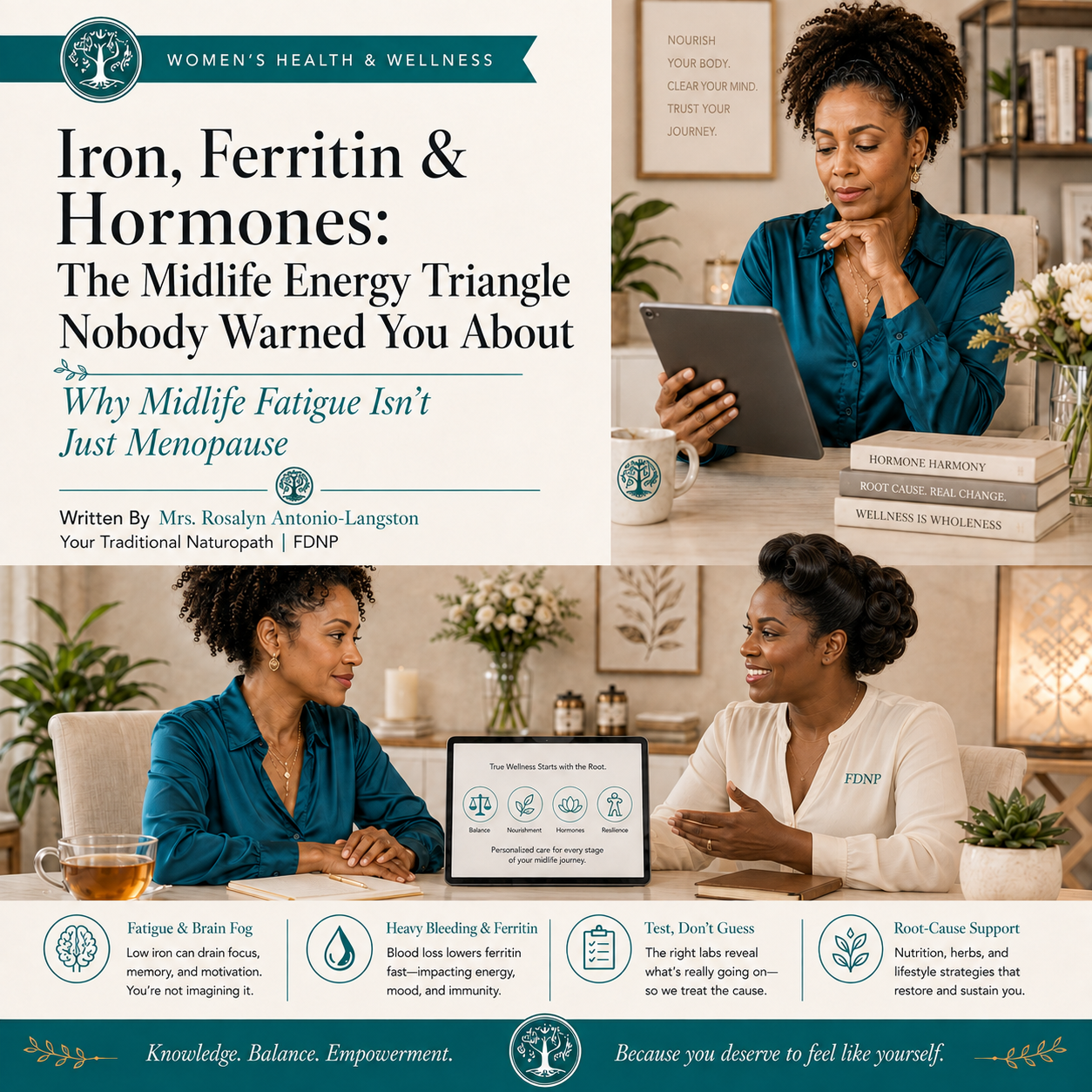
🩸 Iron, Ferritin & Hormones: The Midlife Energy Triangle Nobody Warned You About
🩸 Iron, Ferritin & Hormones: The Midlife Energy Triangle Nobody Warned You About
🌸 Is It Your Hormones, Your Iron… or Both?
You are exhausted.
Not “I stayed up too late scrolling” exhausted.
I mean the kind of tired where your body wakes up at 30% battery and somehow expects you to run meetings, answer emails, exercise, cook dinner and still remember why you walked into the kitchen.
Then your hair starts shedding.
Your concentration disappears.
You feel cold.
Your workouts suddenly feel harder.
Maybe there are headaches, restless legs, breathlessness or heart palpitations.
And because you are somewhere in the wonderfully unpredictable world of perimenopause, everyone immediately points at your hormones.
And yes—your hormones may absolutely be involved.
But so might low iron and low ferritin.
And sometimes the answer is:
Both.
Heavy menstrual bleeding is a recognised cause of iron deficiency, and perimenopause can bring significant changes in bleeding patterns.
So before we throw every symptom into the “just menopause” basket, we need to understand another important midlife relationship:
Hormones + iron + ferritin.
Because your body is not malfunctioning randomly.
It is communicating.
And those symptoms may be giving us valuable healing opportunities.
🧬 First Things First: Iron and Ferritin Are NOT the Same Thing
This distinction causes plenty of confusion.
🩸 Iron
Iron is an essential mineral your body uses to make haemoglobin, the protein inside red blood cells that transports oxygen.
Iron also contributes to energy production, neurological function and numerous enzyme systems.
Think of iron as the cargo your body needs delivered.
🚚 Transferrin
Transferrin is one of the proteins that transports iron through the bloodstream.
Transferrin saturation, or TSAT, helps tell us how much of that transport capacity is actually carrying iron.
🏦 Ferritin
Ferritin is primarily an iron-storage protein.
Think of ferritin as your iron savings account.
You can therefore have haemoglobin that has not yet dropped into an anaemic range while your iron reserves are already becoming depleted.
That is why someone may experience iron-related symptoms before developing full iron-deficiency anaemia.
But ferritin comes with a plot twist.
Ferritin is also affected by inflammation and infection. It can rise when the immune system is activated, meaning a normal or elevated ferritin does not always guarantee that iron is readily available to the body. WHO recommends interpreting ferritin alongside the inflammatory picture when inflammation or infection is present.
Which brings us to one of my favourite sayings:
Never marry one laboratory marker.
We look at the whole pattern. 😏
🚦 Meet Hepcidin: Your Iron Traffic Controller
Now we need to talk about a fascinating little hormone called hepcidin.
Hepcidin is produced primarily by the liver and plays a major role in regulating how much iron enters and circulates through your bloodstream.
When hepcidin rises, it reduces the activity of ferroportin, the protein that helps move iron out of intestinal cells and storage cells into circulation.
In simple English:
Higher hepcidin:
🚫 “Hold the iron.”
Lower hepcidin:
✅ “Release the iron.”
Chronic inflammation can raise hepcidin, making iron less available even when stored iron is present. This is sometimes called functional iron deficiency or iron restriction.
And yes…
Your reproductive hormones interact with this system too.
🎢 Estrogen, Progesterone & Iron: Midlife Gets Interesting
Estradiol appears to influence iron regulation partly through its relationship with hepcidin.
Human research has demonstrated reductions in circulating hepcidin when endogenous estrogen rises substantially, which provides one potential mechanism connecting reproductive hormones and iron availability.
But—and this is important—the relationship between ovarian hormones and iron is more complicated than:
“Estrogen good for iron. Progesterone bad for iron.”
The menstrual cycle affects iron physiology through several overlapping mechanisms, including hormonal fluctuations, hepcidin regulation and—most importantly—actual menstrual blood loss.
So I would not start timing your entire iron strategy around your luteal phase because somebody made a colourful Instagram graphic about progesterone. 😏
Perimenopause adds even more variability because ovulation may become inconsistent and estrogen and progesterone patterns become less predictable.
Then comes the really important piece…
🩸 The Perimenopause Iron Drain: Heavy Bleeding
For many women, the strongest relationship between perimenopause and low iron has nothing mysterious about it.
She is losing blood.
During the menopause transition, cycles may become:
heavier
longer
shorter
closer together
more unpredictable
occasionally prolonged
Conditions such as uterine fibroids, adenomyosis and endometrial polyps can also contribute to heavy menstrual bleeding.
And blood contains iron.
If you repeatedly lose more iron than you are replacing, ferritin can gradually drop.
NICE recommends assessing women with heavy menstrual bleeding according to their bleeding pattern, symptoms and possible underlying uterine causes.
This is why simply telling a woman with heavy periods to:
“Take some iron.”
may only address half the problem.
If the drain is open, we need to find out why.
🕵🏾♀️ Low Iron & Low Ferritin: What Else Could Be Behind It?
Heavy periods are common.
They are not the only cause.
When ferritin repeatedly drops despite supplementation or an iron-rich diet, I want to widen the investigation.
🩸 Chronic Blood Loss
Iron can be lost through:
heavy menstrual bleeding
gastrointestinal bleeding
stomach or intestinal ulcers
inflammatory bowel disease
haemorrhoids
some gastrointestinal conditions
frequent blood donation
surgery or significant previous blood loss
After menopause, unexplained iron-deficiency anaemia becomes particularly important to investigate because monthly menstrual blood loss is no longer the obvious explanation.
🥗 Not Getting Enough Iron
Low intake may occur with:
chronic dieting
under-eating
poor appetite
very restrictive eating patterns
limited food variety
poorly planned plant-based diets
A well-planned whole-food, plant-based diet can absolutely provide iron.
But simply being plant-based does not automatically make the diet nutritionally complete.
Plant-forward needs to be plant-smart.
🌾 Poor Absorption
Sometimes there is enough iron coming in.
The gut simply is not absorbing it well.
Potential contributors include:
coeliac disease
inflammatory bowel disease
intestinal disease
previous gastrointestinal or bariatric surgery
reduced stomach acidity
certain long-term medications
Gastroenterology guidelines specifically recognise dietary insufficiency, malabsorption and gastrointestinal pathology among causes of iron-deficiency anaemia.
🦠 H. pylori
Helicobacter pylori, a bacterium that colonises the stomach, has also been associated with iron deficiency and iron-deficiency anaemia in some people.
It may influence iron status through chronic gastritis, altered stomach physiology, impaired absorption or gastrointestinal blood loss.
A 2024 study involving women found an association between H. pylori infection and both iron deficiency and iron-deficiency anaemia, although finding H. pylori does not automatically prove that it caused someone's low ferritin.
🪱 Parasitic Infections
And yes—parasites belong on the list when the exposure history and symptoms make sense.
Hookworm is a classic example.
Hookworms attach to the intestinal lining and feed on blood. More substantial infections can produce chronic intestinal blood loss, leading to iron loss and anaemia.
This becomes more relevant when there is a history of travel or residence in endemic areas, exposure to contaminated soil, persistent gastrointestinal symptoms, unexplained eosinophilia or recurrent unexplained iron deficiency.
But low ferritin does not automatically equal parasites.
Please don't see ferritin of 20 and immediately order wormwood, clove and black walnut. 😂
Test, don't guess.
🔥 Chronic Inflammation & Infection
Here is an important distinction:
Inflammation does not necessarily make ferritin low.
It may do the opposite.
Inflammation can increase hepcidin and trap iron inside storage cells while simultaneously pushing ferritin upward.
That means someone can have poor iron availability with ferritin that looks perfectly respectable—or even high.
That is one reason ferritin should never be interpreted alone.
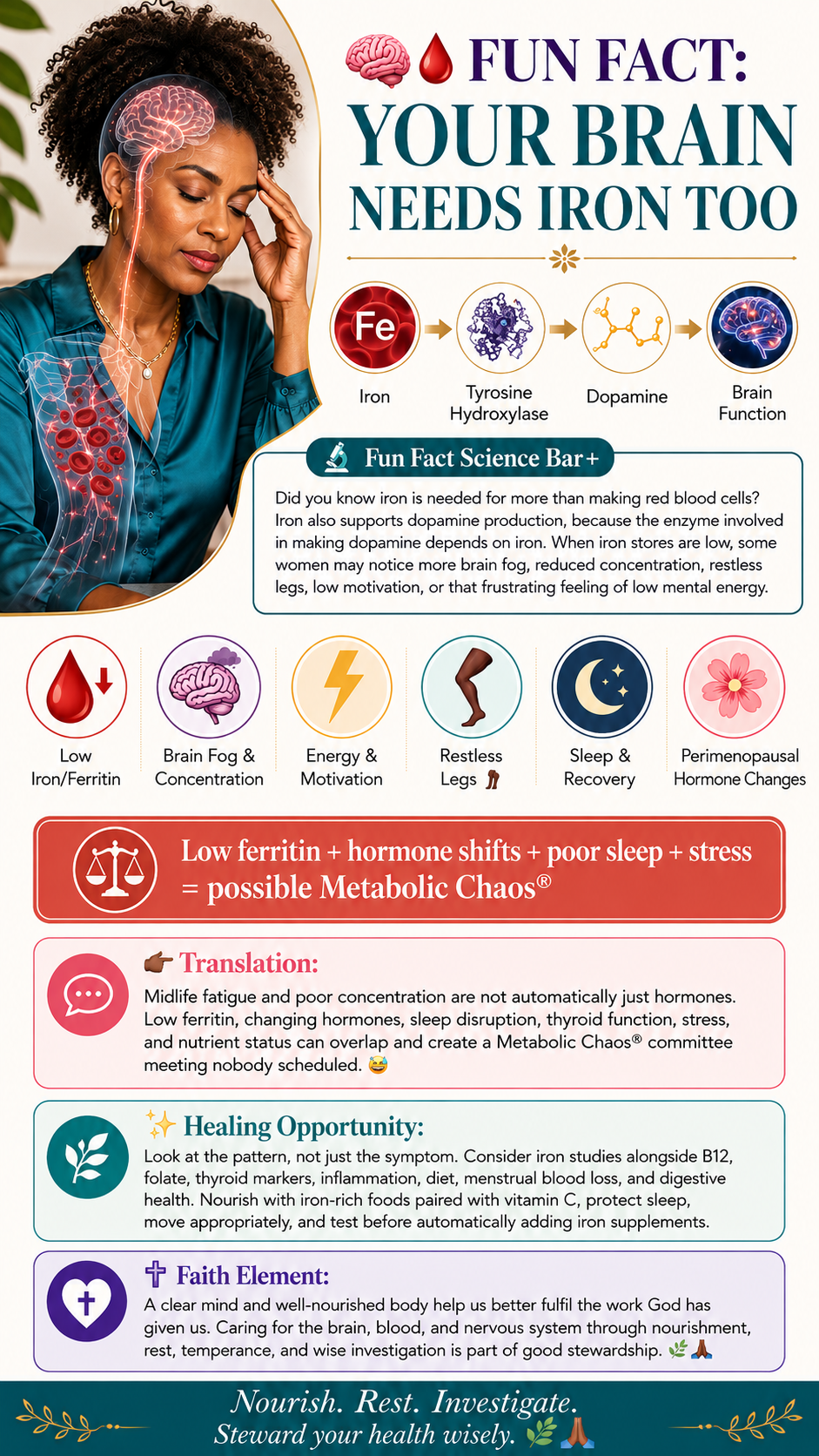
🔬Fun Fact Science Bar+
Did you know iron is needed for more than making red blood cells? Iron also supports dopamine production, because the enzyme involved in making dopamine depends on iron. When iron stores are low, some women may notice more brain fog, reduced concentration, restless legs, low motivation or that frustrating “my brain knows what it wants to do, but apparently nobody told my energy levels” feeling. 🧠🩸
👉🏾 Translation: Midlife fatigue and poor concentration are not automatically “just hormones.” Low ferritin, changing hormones, sleep disruption, thyroid function, stress and nutrient status can overlap and create a lovely little Metabolic Chaos® committee meeting nobody scheduled. 😅
✨ Healing Opportunity: Instead of chasing symptoms, look at the pattern. Consider iron studies alongside B12, folate, thyroid markers, inflammation, diet, menstrual blood loss and digestive health. Nourish with iron-rich foods paired with vitamin C, protect sleep, move appropriately and test before automatically adding iron supplements.
✝️ Faith Element: A clear mind and well-nourished body help us better fulfil the work God has given us. Caring for the brain, blood and nervous system through nourishment, rest, temperance and wise investigation is part of good stewardship. 🌿🙏🏾
😵💫 “But Those Symptoms Sound Exactly Like Perimenopause!”
They certainly can.
Iron deficiency may contribute to:
fatigue
weakness
reduced exercise tolerance
breathlessness
headaches
heart palpitations
hair shedding
restless legs
difficulty concentrating
feeling unusually cold
Several of those overlap beautifully—or rather, annoyingly—with perimenopause.
So imagine a woman experiencing:
Hormonal fluctuations.
Poor sleep.
Heavy menstrual bleeding.
Low ferritin.
Blood-sugar instability.
Stress.
Digestive dysfunction.
And now perhaps thyroid changes too.
One symptom may have several contributing mechanisms.
That is what I call Metabolic Chaos®.
Everyone keeps arguing over which symptom belongs to which box…
while your body is standing there saying:
“Excuse me, we are all connected.”
🔄 Then Menopause Changes the Iron Story Again
Here is something women are rarely told.
Once menstruation permanently ends, monthly iron loss stops.
Iron status may subsequently begin moving in the opposite direction.
A 2025 longitudinal study following 1,885 women through natural menopause found increases in ferritin, serum iron and transferrin saturation around the final menstrual period, with ferritin continuing to increase afterward.
That means our concern can gradually shift from:
“Why is she losing so much iron?”
during menstruating perimenopause…
to:
“Why is her ferritin increasing?”
after menopause.
But again:
High ferritin does not automatically mean iron overload.
Ferritin can also rise alongside inflammation, metabolic dysfunction and liver abnormalities. WHO likewise cautions that elevated ferritin requires interpretation in context rather than being treated as a stand-alone measure of iron stores.
So:
Low ferritin deserves investigation.
High ferritin deserves investigation.
And even “normal” ferritin deserves context.
🧪 Test, Don't Guess: The Laboratory Puzzle
If a woman is experiencing fatigue, hair shedding, heavy bleeding, restless legs, palpitations or reduced exercise tolerance, the starting point is generally conventional blood chemistry.
Depending on the clinical picture, that may include:
full blood count/CBC
haemoglobin
haematocrit
MCV
MCH
RDW
ferritin
serum iron
transferrin or TIBC
transferrin saturation
CRP or other inflammatory markers where appropriate
vitamin B12
folate
thyroid markers
liver and kidney chemistry
Ferritin is particularly useful for identifying depleted iron stores, but when inflammation is present, additional iron indices become increasingly important.
And then we ask:
What caused the pattern?
This is where targeted functional testing may sometimes add useful context.
🔬 Where Functional Testing Can Fit
Functional testing should complement good clinical assessment—not replace it.
🧬 DUTCH
DUTCH can provide information about sex hormones and their metabolites as well as cortisol and related adrenal hormone patterns.
It does not diagnose iron deficiency, but it may help us understand the hormonal terrain surrounding symptoms such as menstrual changes, poor sleep, stress or other midlife complaints.
🧬 DNAlife Hormones & DNA Mind
Genetic testing such as DNAlife Hormones and DNA Mind can provide another layer of information about inherited tendencies involving hormone metabolism and neurological or nutrient-related pathways.
But genes are tendencies.
They are not current hormone levels.
And they are certainly not your destiny.
🩸 Functional Blood Chemistry Analysis — FBCA
This is where looking at conventional blood work as a pattern can become particularly useful.
Instead of staring at ferritin by itself, we can consider iron indices alongside:
red-cell markers
thyroid patterns
glucose regulation
inflammation
liver function
nutrient status
Now we are looking at the orchestra rather than blaming the flute. 🎻
🦠 GI-MAP
When persistent bloating, altered bowel movements, digestive complaints or suspected gastrointestinal contributors are part of the picture, GI-MAP may provide additional information about selected organisms, including H. pylori, bacteria and certain parasites, as well as digestive and inflammatory markers.
However, no single stool panel identifies every possible parasite or gastrointestinal disease.
When a true infection, bleeding disorder, coeliac disease or other pathology is suspected, conventional medical testing may still be needed.
🍽️ MRT
In selected cases, MRT may form part of a structured nutrition strategy when food-related symptoms are being investigated.
But MRT does not diagnose iron deficiency and should never become an explanation for low ferritin without investigating the established causes first.
That is the difference between:
Testing everything because we can
and
Testing strategically because we have a question.
That is test, don't guess.
🌸 And About Hormone Testing During Perimenopause…
Here is another important distinction.
Women over 45 do not usually need standard hormone blood testing simply to prove that they are in perimenopause.
Current NICE guidance recommends identifying perimenopause in otherwise healthy women aged 45 or older primarily through symptoms and menstrual-cycle changes rather than routinely using tests such as estradiol to diagnose the transition.
That does not mean laboratory information is useless.
It means we ask:
What clinical question are we trying to answer?
Hormone testing for additional context?
Iron testing for suspected deficiency?
GI testing for digestive complaints?
Blood chemistry to investigate fatigue?
Different question.
Different tool.
🥗 Feed the Iron Factory
Food matters, particularly when rebuilding or protecting iron stores.
For a whole-food, plant-forward approach, regularly include foods such as:
🌱 lentils
🌱 black beans
🌱 chickpeas
🌱 tofu and tempeh
🌱 pumpkin seeds
🌱 sesame and tahini
🌱 quinoa and amaranth
🌱 leafy green vegetables
🌱 iron-fortified foods where appropriate
Pair plant iron with vitamin C-rich foods such as peppers, citrus, kiwi, berries, tomatoes or broccoli to help improve non-haem iron absorption.
Tea and coffee can reduce iron absorption when taken close to iron-rich meals or supplements, so timing may matter when someone is actively trying to rebuild depleted stores.
And remember:
If you are bleeding heavily or failing to absorb iron, no amount of spinach deserves responsibility for fixing the entire situation.
Food supports the body.
Root causes still matter.
🏋🏾♀️ Exercise: Strong, Not Depleted
Movement is still one of our greatest midlife allies.
Think:
💪🏾 resistance training
🚶🏾♀️ walking
❤️ appropriate cardiovascular exercise
🤸🏾♀️ mobility and recovery work
But exercise should match the woman standing in front of us.
If you suddenly cannot complete workouts that previously felt manageable, your heart rate feels unusually high, you are breathless, dizzy or profoundly fatigued, that deserves investigation.
The answer is not always:
“Push harder.”
Sometimes the body is asking:
“Could we perhaps have some oxygen first?” 😏
😴 Sleep: Your Body Does Repair Work Here
Sleep will not magically increase ferritin.
But inadequate sleep can amplify many symptoms that already overlap with iron deficiency and perimenopause:
fatigue
brain fog
irritability
cravings
poor recovery
anxiety
difficulty regulating appetite
Protect your evening routine.
Get daylight in the morning.
Allow time for rest.
Keep your room cool and dark.
Meditate on Scripture or read something calming rather than giving your nervous system another three hours of doom-scrolling.
Midlife is not the season to brag about functioning on four hours of sleep.
Your nervous system would like to unsubscribe.
💊 Supplements: Please Don't Throw Iron at Every Tired Woman
Iron supplementation can be extremely useful when iron deficiency is established.
But iron is not a casual “just in case” supplement.
The appropriate form, amount and duration depend on:
your laboratory results
severity of deficiency
menstrual blood loss
absorption
gastrointestinal tolerance
medications
medical history
why the deficiency developed
Some women tolerate forms such as iron bisglycinate better than traditional iron salts, while others may require different approaches.
Vitamin C-rich foods can help support non-haem iron absorption.
And depending on testing, nutrients such as B12, folate, vitamin D or magnesium may need individual attention—but they cannot substitute for treating genuine iron deficiency.
Most importantly:
Do not keep increasing iron indefinitely because ferritin refuses to stay up.
That is when the question changes from:
“How much more iron do I need?”
to:
“Why am I not keeping it?”
There may be another healing opportunity hiding underneath the number.
Where to Buy Professional-Grade Supplements
🇺🇸 United States: Click here
🇬🇧 United Kingdom: Click here CODE: KXCTGG
🚫 Three Midlife Iron Myths We Can Retire
❌ “My haemoglobin is normal, so my iron must be fine.”
Not necessarily.
Iron stores can become depleted before anaemia develops.
❌ “My ferritin is high, so I definitely have plenty of available iron.”
Not necessarily.
Inflammation and infection can raise ferritin and alter iron availability.
❌ “I'm in perimenopause, so all these symptoms are hormonal.”
Maybe some are.
But menopause does not receive custody of every symptom after age 40. 😂
🚨 When the Bigger Picture Needs Medical Investigation
Some patterns should not simply be managed nutritionally.
These include:
very heavy or prolonged menstrual bleeding
new bleeding after menopause
recurrent or unexplained iron-deficiency anaemia
black or bloody stools
significant breathlessness
fainting
chest pain
rapidly worsening palpitations
unexplained weight loss
persistent vomiting
significant or persistent gastrointestinal symptoms
In particular, unexplained iron-deficiency anaemia after menopause deserves investigation because gastrointestinal blood loss and gastrointestinal disease become important considerations.
Root-cause care includes knowing when another professional needs to join the team.
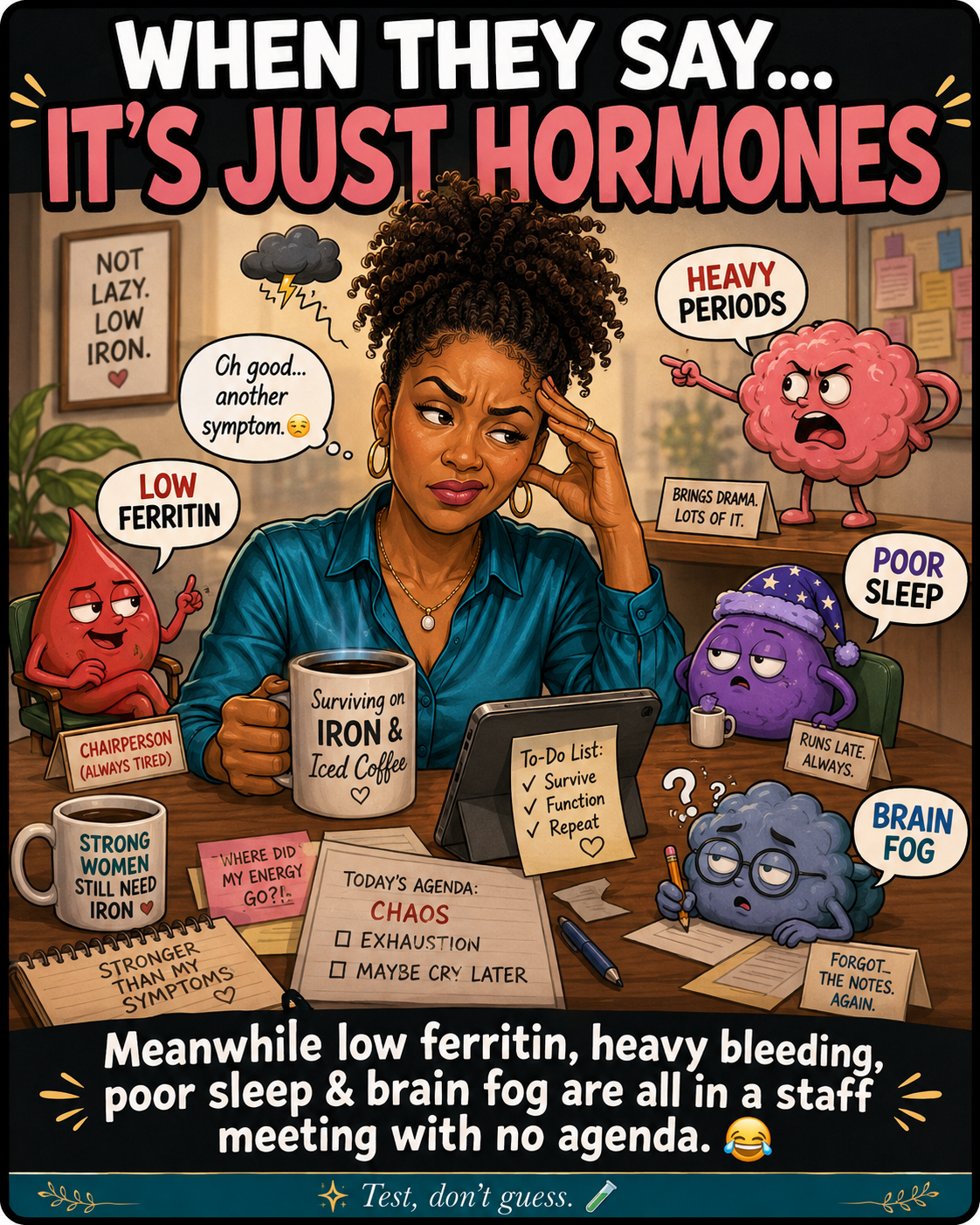
🌿 From Metabolic Chaos® to Healing Opportunities
This is the part of functional health that I love.
Your body is not a collection of unrelated organs.
Your gut influences nutrient absorption.
Your liver produces hepcidin.
Your blood transports oxygen.
Your ovaries produce hormones.
Your thyroid influences metabolism.
Your nervous system influences sleep and stress.
Your nutritional status influences all of them.
So one woman may have:
heavy bleeding → depleted ferritin → fatigue
while another has:
gut dysfunction → poor absorption → low iron
another:
inflammation → elevated hepcidin → poor iron availability
and another:
perimenopause + low iron + poor sleep + blood-sugar instability
Same complaint.
Different pattern.
Different healing opportunities.
That is why personalised naturopathy and functional nutrition should never be:
“You are tired? Take these twelve supplements.”
We investigate.
We connect the dots.
We support what actually needs supporting.
✝️ Midlife Is a New Chapter—Not the Last Chapter
Perimenopause can make you wonder when your body changed the passwords without telling you.
But this transition is not the end of your vitality, femininity, usefulness or purpose.
It is a new season.
And new seasons sometimes require a different way of caring for ourselves.
There is beautiful wisdom in many of the foundational principles that have long been part of the Adventist health message:
🌱 nourishing food
🚶🏾♀️ movement
☀️ appropriate sunlight
💧 hydration
🌿 temperance
😴 restorative rest
🙏🏾 trust in God
Simple does not mean insignificant.
And science continues to show us how beautifully interconnected the systems of the human body really are.
You are not finished because your hormones are changing.
Your body may simply require different support than it did at 25.
There is still strength to build.
Health to steward.
Wisdom to gain.
Purpose to fulfil.
And plenty of life left in this chapter. 🌸
🌺 Ready to Find Out What YOUR Pattern Is?
At Leaves from the Tree of Life LLC, we help Businesswomen who are Hormonal, Anxious, and Bloated through Functional Nutrition Coaching + Labs.
Rather than treating every midlife woman as though she has the same hormonal problem, we look at the bigger picture:
🩸 blood chemistry
🌸 hormone patterns
🦠 gastrointestinal health
🥗 nutritional status
🔥 metabolic health
😴 sleep
🧠 stress physiology
🧬 genetic tendencies
🌿 lifestyle
When appropriate, that may include conventional laboratory testing alongside tools such as DUTCH, DNAlife Hormones, DNA Mind, Functional Blood Chemistry Analysis, GI-MAP, MRT and other targeted functional labs.
Because sometimes the healing opportunity is hormonal.
Sometimes it is iron.
Sometimes it is gastrointestinal.
Sometimes it is metabolic.
And sometimes several systems have decided to hold a committee meeting at the same time. 😏
That is where we start connecting the dots.
Test. Don't guess.
✨ Click here to jump on a Discovery Call.
Invest in your health, invest in you, because a healthier lifestyle is a luxury you deserve!
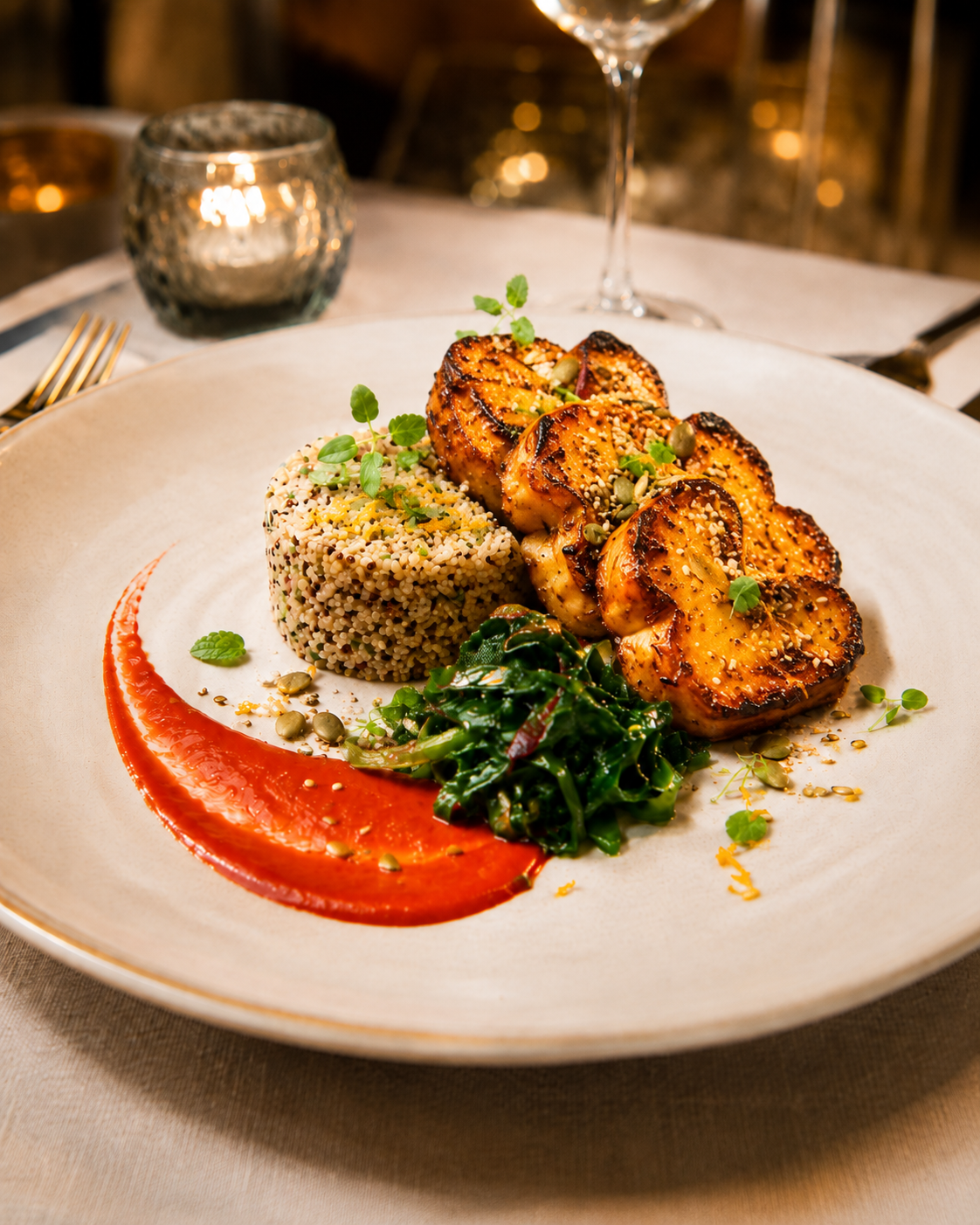
🌅Saffron Ember Tofu Blossoms
With Citrus Quinoa, Red Pepper Coulis, Chard & Pumpkin-Sesame Dukkah
Golden saffron-glazed tofu blossoms are paired with fluffy citrus quinoa, tender Swiss chard and a silky roasted red pepper coulis, then finished with crunchy pumpkin-sesame dukkah.
Elegant, vibrant and iron-supportive without turning dinner into a supplement bottle. 😏✨
⏰ Time
Prep: 15 minutes
Cook: 30 minutes
Total: 45 minutes
Serves: 4
🛒 Organic Ingredients
🌸 Tofu Blossoms
14–16 oz extra-firm tofu, pressed
2 tbsp fresh orange juice
1 tbsp garlic-infused olive oil
1 tsp maple syrup
1 tsp sumac
½ tsp cumin
¼ tsp coriander
Pinch saffron
Pinch cayenne
½ tsp pink Himalayan salt or sea salt
🍊 Citrus Quinoa
¾ cup quinoa, rinsed
1½ cups water or garlic/onion-free vegetable broth
1 tsp grated ginger
1 tsp orange zest
2 tbsp parsley
1 tbsp mint
1 tsp olive oil
Pinch salt
🌶️ Red Pepper Coulis
1 roasted red bell pepper
2 tbsp orange juice
1 tsp lemon juice
1 tsp olive oil
Pinch saffron, sumac and cayenne
Salt to taste
🌿 Chard
1 small bunch Swiss chard
1 tsp garlic-infused olive oil
1 tsp lemon juice
Pinch salt
🎃 Pumpkin-Sesame Dukkah
3 tbsp pumpkin seeds
1 tbsp sesame seeds
½ tsp cumin seeds
½ tsp coriander seeds
½ tsp orange zest
Pinch salt
👩🏾🍳 Instructions
1️⃣ Marinate the Tofu
Bloom saffron in 1 tablespoon warm water for 5 minutes.
Mix with orange juice, garlic-infused oil, maple syrup, sumac, cumin, coriander, cayenne and salt.
Cut the tofu into thick rounds and shape the edges into simple flower-like medallions. Coat with the marinade.
2️⃣ Cook the Quinoa
Combine quinoa, water or broth and ginger. Simmer covered for about 15 minutes.
Rest for 5 minutes, fluff, then fold in orange zest, parsley, mint, olive oil and salt.
3️⃣ Make the Coulis
Blend roasted red pepper, orange juice, lemon juice, olive oil and seasonings until silky smooth. Warm gently.
4️⃣ Make the Dukkah
Toast pumpkin seeds, sesame, cumin and coriander for 2–3 minutes. Roughly crush, then mix with orange zest and salt.
5️⃣ Cook the Chard
Slice into ribbons and sauté in garlic-infused olive oil for 2–3 minutes. Finish with lemon juice and salt.
6️⃣ Sear the Tofu
Cook the tofu over medium heat for 3–4 minutes per side until deeply golden and caramelised. Brush with extra marinade while cooking.
🍽️ Restaurant-Style Plating
Swipe the red pepper coulis across one side of a large cream plate.
Form the quinoa into a neat mound.
Arrange 2–3 tofu blossoms elegantly beside it, add a small nest of chard and lightly sprinkle with dukkah.
Finish with microgreens, mint, pumpkin seeds and orange zest.
Pretty, purposeful and definitely not a sad tofu bowl. 😂
🌿 Nutritional Highlights
🟨 Tofu: plant protein and iron
🌾 Quinoa: protein, fibre, iron and magnesium
🌿 Swiss chard: folate, magnesium and phytonutrients
🎃 Pumpkin seeds: iron, magnesium and zinc
⚪ Sesame seeds: iron, calcium and healthy fats
🌶️ Red pepper: rich in vitamin C
🍊 Orange + lemon: vitamin C helps support non-heme iron absorption
🫚 Ginger: aromatic digestive-friendly flavour
🌿 Parsley + mint: freshness and phytonutrients
✨ Saffron + sumac: luxurious flavour without heaviness
🩸 Why It Fits the Blog
This meal pairs plant-based iron with vitamin C, protein, magnesium and whole-food phytonutrients while keeping the ingredient combination relatively simple for a more comfortable midlife meal.
Iron-supportive nourishment can be beautiful, delicious and sophisticated too. 🌿🩸✨
References
🌸 Perimenopause, Menopause & Heavy Bleeding
NICE. Menopause: identification and management (NG23) — updated April 2026.
https://www.nice.org.uk/guidance/ng23 [1]
NICE. Heavy menstrual bleeding: assessment and management (NG88) — updated July 2026.
https://www.nice.org.uk/guidance/ng88 [2]
The Menopause Society. Abnormal uterine bleeding and fatigue during the menopause transition.
https://menopause.org/press-releases/are-you-just-tired-or-are-you-menopause-tired [3]
🩸 Iron, Ferritin & Iron-Deficiency Anaemia
World Health Organization. Use of ferritin concentrations to assess iron status in individuals and populations.
https://www.who.int/publications/i/item/9789240000124 [4]
British Society of Gastroenterology. Guidelines for the management of iron deficiency anaemia in adults. Gut.
https://gut.bmj.com/content/70/11/2030 [5]
NHS. Iron deficiency anaemia: symptoms, causes, testing and treatment.
https://www.nhs.uk/conditions/iron-deficiency-anaemia/ [6]
NIH Office of Dietary Supplements. Iron: Fact Sheet for Health Professionals.
https://ods.od.nih.gov/factsheets/Iron-HealthProfessional/ [7]
🧬 Estrogen, Hepcidin & the Menstrual Cycle
Lehtihet M, et al. Circulating Hepcidin-25 Is Reduced by Endogenous Estrogen in Humans. PLOS ONE.
https://pubmed.ncbi.nlm.nih.gov/26866603/ [8]
Angeli A, et al. Joint Model of Iron and Hepcidin During the Menstrual Cycle in Healthy Women. AAPS Journal.
https://pmc.ncbi.nlm.nih.gov/articles/PMC4779110/ [9]
🔄 Ferritin & the Menopause Transition
Kim M, et al. Accelerated increase in ferritin levels during menopausal transition as a marker of metabolic health. Scientific Reports. 2025.
https://www.nature.com/articles/s41598-025-14295-3 [10]
🦠 Gut Health, H. pylori & Parasites
American College of Gastroenterology. 2024 ACG Clinical Guideline: Treatment of Helicobacter pylori Infection — includes unexplained iron-deficiency anaemia among indications for H. pylori testing.
https://gi.org/journals-publications/ebgi/schoenfeld_sep2024/ [11]
CDC. Hookworm: infection, intestinal blood loss and anaemia.
https://www.cdc.gov/sth/about/hookworm.html [12]
💊 Iron Absorption, Supplements & Exercise
Stoffel NU, et al. Iron absorption from oral iron supplements given on consecutive versus alternate days. Lancet Haematology.
https://pubmed.ncbi.nlm.nih.gov/29032957/ [13]
Fensham NC, et al. Factors Influencing the Hepcidin Response to Exercise: An Individual Participant Data Meta-analysis. Sports Medicine.
https://pubmed.ncbi.nlm.nih.gov/37347443/ [14]
🧪 Functional & Specialty Testing Resources
DUTCH / Precision Analytical. DUTCH Complete — sex hormones, metabolites and cortisol patterns.
https://dutchtest.com/dutch-complete [15]
DNAlife. DNA Hormones — nutrigenetic assessment of sex-hormone metabolism and biotransformation.
https://www.dnalife.healthcare/products/dna/dna-hormones [16]
DNAlife. DNA Mind — genetic pathways involving neurotransmitters, inflammation and methylation.
https://www.dnalife.healthcare/products/dna/dna-mind [17]
Diagnostic Solutions Laboratory. GI-MAP — qPCR stool testing including H. pylori and selected parasites.
https://www.diagnosticsolutionslab.com/tests/gi-map [18]
Oxford Biomedical Technologies. Mediator Release Test (MRT).
https://www.nowleap.com/the-patented-mediator-release-test/ [19]
Blog Disclaimer
The health information on this blog is for general educational purposes only and is not intended to diagnose, treat, cure, or prevent any disease. It should not be used as a substitute for professional medical advice. Always consult a qualified healthcare provider before making any health-related decisions
This blog may contain affiliate links, meaning Leaves from the Tree of Life LLC may earn a small commission if you purchase a product or service through these links—at no additional cost to you. Your support helps us continue to provide valuable content. Thank you!
