
Perimenopause Anxiety: Hormones Beyond Estrogen, BHRT Clues & DUTCH Testing (Test, Don’t Guess)
😵💫 “Why Am I Suddenly Anxious… When Nothing Is ‘Wrong’?”
If you’ve been Googling “perimenopause anxiety,” trying supplements, tweaking caffeine, doing the deep breathing… and still feel like your nervous system is auditioning for a thriller movie—welcome. You’re not weak. You’re not “too much.” You’re likely in a very real midlife physiology shift.
Anxiety is widely recognized as a common symptom during the menopause transition.
And the reason you may feel like something is missing in the usual advice is simple: perimenopause anxiety is rarely one single cause. It’s often a stack—hormones, sleep, thyroid, nutrient status, blood sugar, stress load—creating Metabolic Chaos®… and inside that chaos are very real healing opportunities.
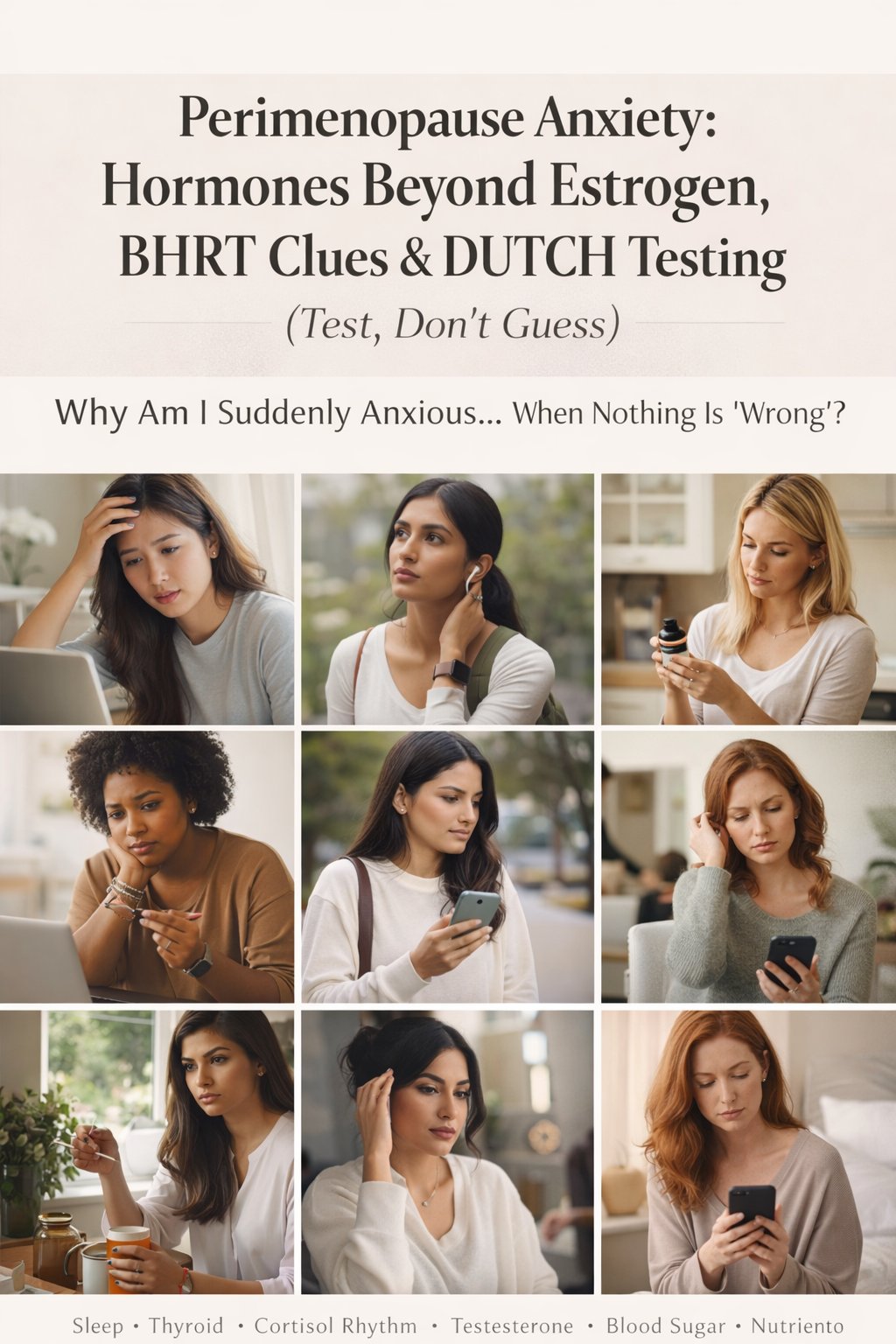
🎛️ Not Just Estrogen + Progesterone: The Full Hormone Orchestra
Let’s lovingly retire the idea that women only run on two hormones and vibes.
Yes—estrogen and progesterone matter. But so can:
Testosterone (confidence, energy, drive, cognition—not just libido)
Cortisol rhythm (that “wired-tired,” 3 a.m. mind-racing feeling)
Thyroid hormones (can mimic anxiety with palpitations, heat, insomnia)
Insulin/blood sugar swings (shaky, irritable, adrenaline-y “fake anxiety”)
Sleep hormones and circadian disruption (which amplify everything)
Dr. Carrie Jones explains it in a way many women instantly recognize: when progesterone declines, anxiety/insomnia can increase; when testosterone declines, confidence/energy can dip.
😴 Sleep Debt: The Anxiety Amplifier You Can’t “Mindset” Away
If your sleep is broken, your brain becomes more threat-sensitive. Full stop.
A meta-analysis found acute sleep deprivation significantly increases state anxiety.
And NICE’s menopause management advice includes the basics that actually matter: adequate sleep, regular physical activity, and relaxation techniques for low mood/anxiety.
Perimenopause-proof sleep supports:
morning daylight + a short walk (even 10–15 minutes)
caffeine boundary (try none after noon)
cooler room + breathable bedding
a consistent wind-down routine (boring = nervous system friendly)
🦋 Thyroid: The “Anxiety Look-Alike” That Deserves a Proper Check
When anxiety feels intensely physical—racing heart, sweating, tremor, insomnia—thyroid needs to be on the list.
The American Thyroid Association lists anxiety/nervousness/irritability among hyperthyroid symptoms.
Mayo Clinic also notes thyroid disease can affect mood (including anxiety).
🥗 “Malnourished in a Well-Fed World” (Mood Can Be a Nutrient Clue)
You can eat “healthy” and still be under-resourced—especially with heavy/irregular cycles, gut issues, high stress, or restrictive dieting.
Example: the NHS lists psychological symptoms (including anxiety) as possible features of vitamin B12 deficiency.
(And yes—iron status, vitamin D, folate, magnesium, and protein intake can matter too, depending on your story.)
🏃🏽♀️ Exercise: Yes… But the Right Dose for Your Nervous System
Movement is one of the most evidence-friendly ways to support mood in this season—when it’s matched to your capacity.
NICE specifically includes regular physical activity as supportive for menopause-related low mood/anxiety.
A perimenopause-smart baseline:
walking most days
strength training 2–3x/week
1–2 restorative sessions (mobility, stretching, breath-focused work)
If workouts leave you jittery, inflamed, or sleepless, that’s not laziness—it’s feedback.
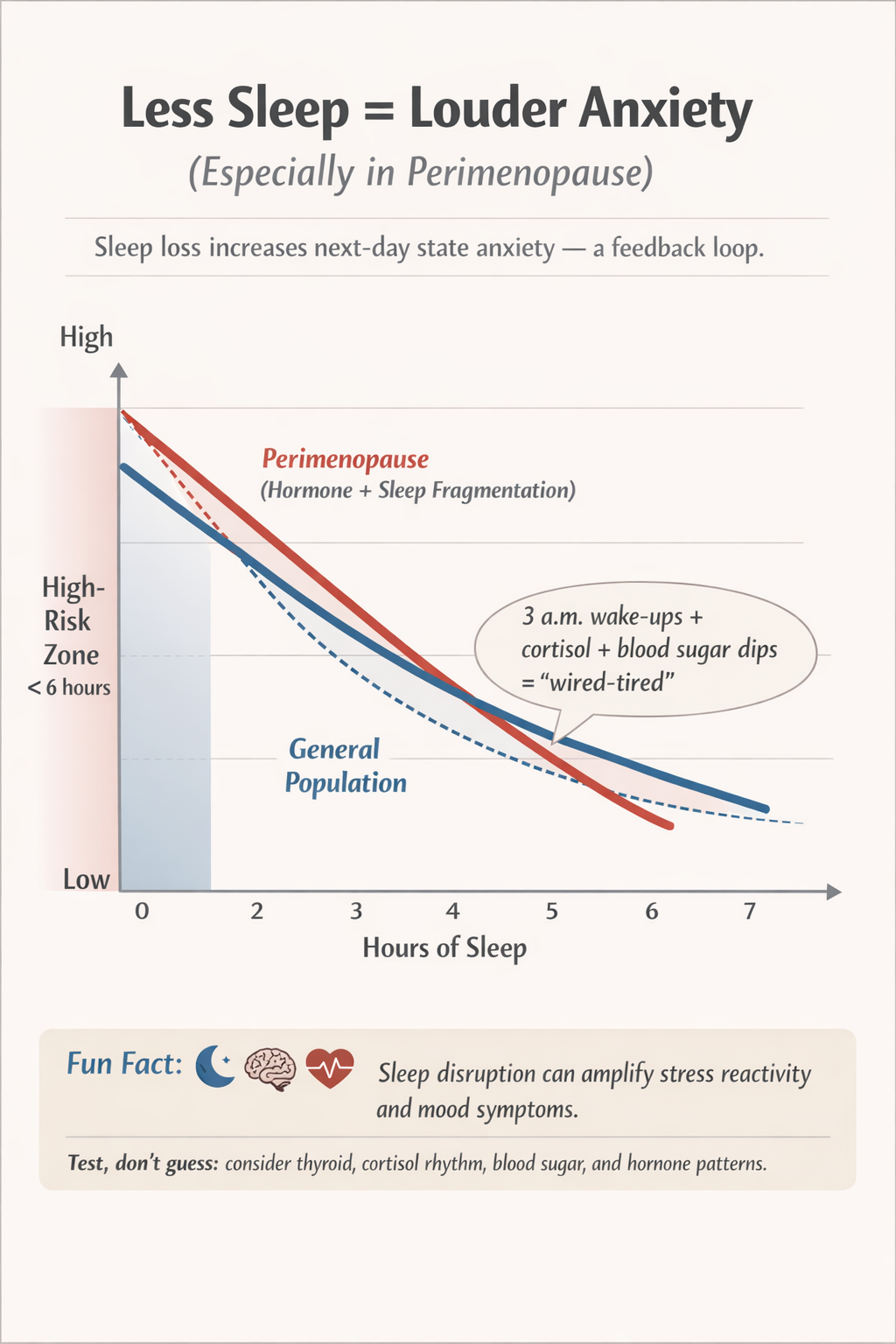
🔬Fun Fact Science Bar+
Did you know that one night of poor sleep can increase next-day anxiety and make your stress response feel “louder”—especially in perimenopause, when fluctuating hormones already make sleep lighter and more fragmented? Research has found that acute sleep deprivation significantly increases state anxiety, and many women notice the combo of wake-ups + night sweats + early-morning rumination creates a feedback loop: less sleep → more anxiety → even less sleep.
👉🏾 Translation: That “why am I panicky at 3:17 a.m.?” feeling isn’t random. It’s your nervous system, cortisol rhythm, blood sugar stability, and hormone shifts all trying to regulate at once. In Functional Diagnostic Nutrition® language, this is a Metabolic Chaos® loop—where sleep disruption aggravates mood, which aggravates stress hormones, which then disrupts sleep again.
✨ Healing Opportunity: Build a sleep-protective nervous system routine:
get morning daylight + a short walk (10–15 min)
set a caffeine curfew (none after noon)
front-load dinner with protein + fiber (to prevent 2–4 a.m. blood sugar dips)
keep the room cool/dark and aim for a consistent wind-down
if you wake up: breathe slow, keep lights low, and don’t negotiate with your thoughts at midnight 😅
✝️ Faith Element: Practice rest as stewardship—a quiet act of trust, not laziness. When your mind is loud, anchor your body and spirit with: “Be anxious for nothing…” (Philippians 4:6–7). Peace doesn’t replace physiology—it steadies you while you care for it.
🧪 Test, Don’t Guess: The Missing Piece for Women Who’ve “Tried Everything”
This is where functional-minded clinicians tend to go beyond the usual “your labs are normal” loop: we look for patterns and context.
🔬 Functional Blood Chemistry Analysis (FBCA)
A practitioner-level read of “normal” labs through a functional lens—often including:
CBC, ferritin/iron studies
fasting glucose, insulin, HbA1c
CMP, lipids, inflammation markers
B12/folate status
full thyroid panel (and antibodies when indicated)
🧾 Functional testing (chosen based on your symptom story)
This can include hormone metabolism testing, gut testing, and stress-axis patterns—because history + data beats guessing.
🧠 Why history matters as much as labs
A thorough lifestyle/medical history often reveals the why:
Is anxiety cycle-linked?
Did it start with insomnia/night sweats?
Is it “hangry” anxiety?
Is there gut inflammation, grief load, or chronic overdoing?
Labs give receipts. History gives context. Together, they reveal the best healing opportunities.
💛 BHRT + DUTCH: Making the “Who & When” Conversation More Precise (Without Overpromising)
Hormone therapy (including BHRT) can be genuinely helpful for the right woman, at the right time, with the right dose/route and proper follow-up—but it’s not DIY, and it’s not a cure-all.
✅ What BHRT may help (sometimes): mood, sleep, and anxiety symptoms—especially when appropriately prescribed in perimenopause or early postmenopause. The Menopause Society (formerly NAMS) summarizes that hormone therapy may or may not help anxiety, depending on factors like stage, dose, and route.
⚠️ What BHRT won’t replace: thyroid support, correcting nutrient depletion, stabilizing blood sugar, nervous system overload work, or paying off sleep debt. Think: one tool in the toolbox, not the whole toolbox.
🧪 Where Precision Analytical’s DUTCH helps: it can keep the BHRT conversation more individualized and precise, especially when symptoms don’t match a single snapshot lab. Their DUTCH Interpretive Guide explicitly includes (B)HRT monitoring and cortisol context, plus real-world collection/timing considerations.
🧠 Voices That Help Women Feel Less Crazy (And More Informed)
A handful of educators have helped shift the menopause conversation from dismissal to clarity:
Dr. Carrie Jones — clear education on how progesterone/testosterone shifts can influence anxiety, sleep, and confidence
Dr. Jordan Emont — menopause-focused OB-GYN care and education
Dr. Louise Newson — UK menopause education and awareness building
Dr. Kelly Casperson — hormones/sexual medicine education, including thoughtful testosterone discussions
Tamsen Fadal — advocacy and visibility for the real-life midlife experience
Their shared theme: listen to women, personalize care, and stop minimizing symptoms.
🙏🏽 Faith-Rooted Nervous System Reset: Peace Practice (No Guilt, Just Grace)
I don’t separate faith from physiology. Scripture calls us to peace—and a weekly set-apart rest practice calls us back to rhythm.
Sometimes the most spiritual thing you can do is restore the basics:
a weekly set-apart rest day (body + mind + worship + nature)
sunlight + fresh air + hydration
simple whole foods
“temperance” with stimulants (yes, caffeine counts 😅)
prayer + Scripture as nervous-system anchors
“Be anxious for nothing… and the peace of God… shall guard your hearts and minds.” (Philippians 4:6–7)
That peace doesn’t replace physiology—it steadies you while you address it.
✅ Ready to Move From Metabolic Chaos® to a Clear Plan?
If you’re done guessing and ready for a personalized, root-cause approach—labs + history + lifestyle mapping—I can help you turn symptoms into strategy.
Work with me (Leaves from the Tree of Life LLC):
1-hour consult: Once booked, you’ll receive an assessment to complete beforehand so we can connect dots quickly and choose the most appropriate testing path.
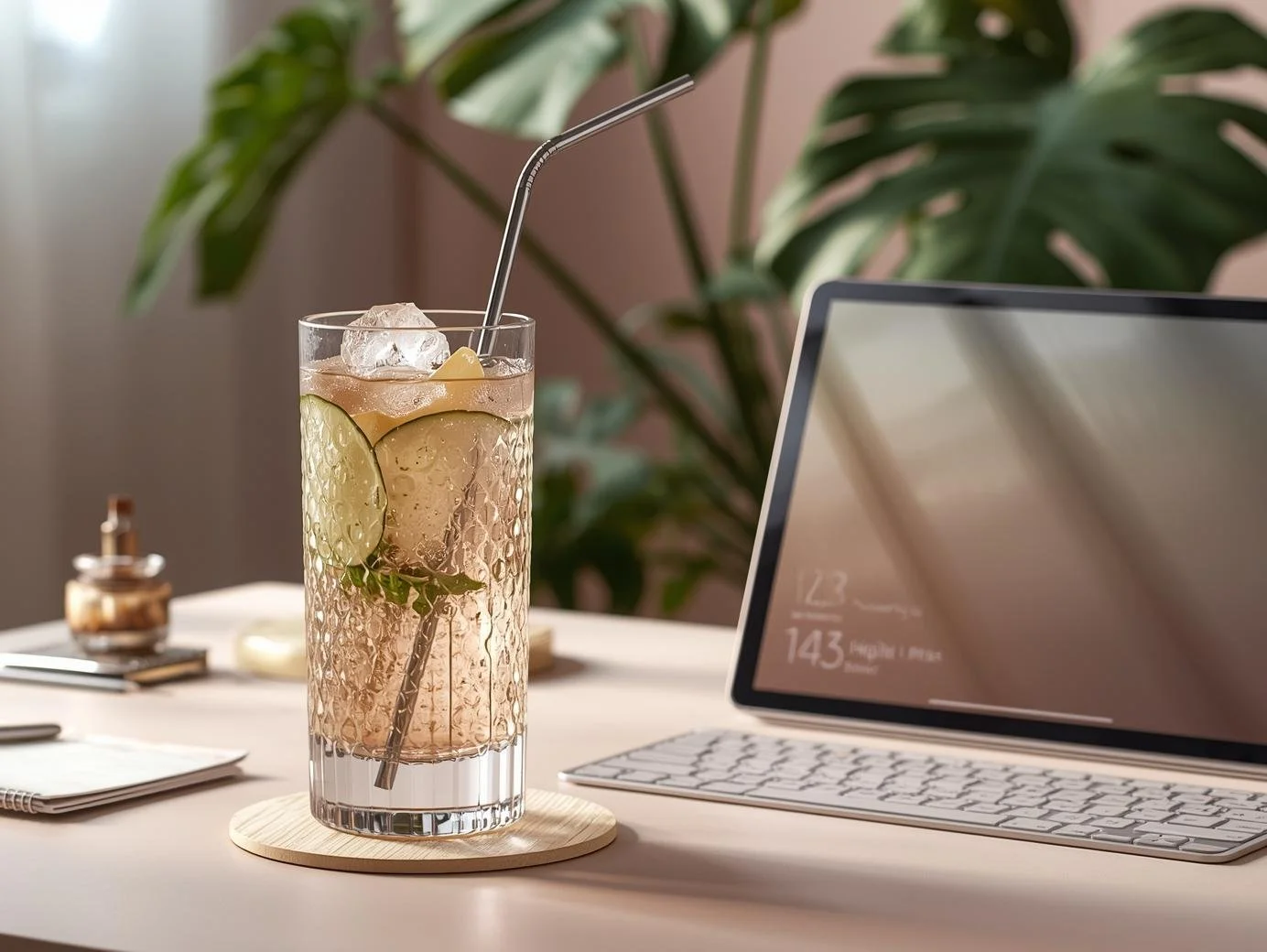
🥒🌿 Nervous-System Nectar (a month-water “calm + clear” infusion)
A refreshing, hydrating daily sip designed for those “I’m doing everything right but still anxious” perimenopause days—supporting hydration, digestion, and that frazzled, wired-tired vibe (without being sugary or sleepy).
Time to make: 10 minutes prep
Infuse: 4–12 hours (best overnight)
Makes: ~2 liters (about 6–8 cups)
🧾 Ingredients
💧 2 liters filtered water
🥒 ½ cucumber, thinly sliced
🍐 ½ pear, thinly sliced (or 1 small pear)
🌿 1 small handful fresh lemon balm (about 10–15 leaves) or 2 lemon balm tea bags
🌱 1 small handful fresh holy basil (tulsi) or 2 tulsi tea bags
🍋 ½ lemon, thinly sliced (optional but bright)
🧂 Pinch of mineral salt (¼ tsp or less) or a splash (1 tsp) mineral drops
🫚 2–3 thin slices fresh ginger (optional if tolerated)
Optional “sparkle serve”: top your glass with a splash of sparkling water right before drinking ✨
👩🏽🍳 Step-by-Step Instructions
🫙 Wash & slice cucumber, pear, and lemon.
🌿 Add everything to a 2-liter glass jar or pitcher.
💧 Pour in water. Stir gently.
❄️ Cover and refrigerate for 4–12 hours (overnight = best flavor).
🥤 Pour into a glass over ice if you like.
♻️ Refill once: You can add 1 more liter of water to the same ingredients and infuse another 4–6 hours (flavor will be lighter).
🗑️ Discard fruit/herbs after 24 hours for freshness/food safety.
💛 Why These Ingredients (Benefits + “Peri-Anxiety” Relevance)
💧 Water: Hydration supports circulation, energy, and reduces “false alarm” sensations (headache, dizziness, fatigue can mimic anxiety).
🥒 Cucumber: High-water + soothing, refreshing—great when stress makes you feel “heated” or puffy.
🍐 Pear: Gentle natural sweetness + fiber—helps steady digestion and keeps this drink enjoyable without a sugar rush.
🌿 Lemon Balm: Traditionally used for calm, tension, and restlessness—perfect for that “wired but tired” mood.
🌱 Tulsi (Holy Basil): Traditionally used as an adaptogenic herb—supportive during periods of stress and overwhelm.
🍋 Lemon: Bright flavor + supports hydration habits (people drink more when it tastes good).
🧂 Mineral salt/mineral drops: Helps with hydration by supporting electrolyte balance—especially helpful if you’re peeing more, sweating at night, or doing lots of walking/exercise.
🫚 Ginger (optional): Warming digestive support (skip if you’re very reflux-prone).
🕰️ How to Use It (Simple Routine)
Morning: 1 cup to start your day hydrated
Afternoon: 1 cup when cravings/anxiety rise
Evening: 1 cup with dinner (then stop ~2 hours before bed to avoid night bathroom trips)
⚠️ Quick Safety Notes
If you’re pregnant, on thyroid meds, blood pressure meds, or have hormone-sensitive conditions, check herbs with your clinician first.
If you’re sensitive to citrus or reflux, skip lemon/ginger.
📚 References
🌸 Perimenopause/Menopause & Anxiety (Symptoms + Management)
British Menopause Society — What is the Menopause? (includes anxiety as a symptom)
👉🏾 https://thebms.org.uk/wp-content/uploads/2023/08/17-BMS-TfC-What-is-the-menopause-AUGUST2023-A.pdfNICE CKS — Management of menopause/perimenopause (sleep, exercise, relaxation for low mood/anxiety)
👉🏾 https://cks.nice.org.uk/topics/menopause/management/management-of-menopause-perimenopause-or-premature-ovarian-insufficiency/British Menopause Society — Non-hormonal-based treatments for menopausal symptoms (CBT, sleep, wellbeing)
👉🏾 https://thebms.org.uk/wp-content/uploads/2025/11/04-BMS-ConsensusStatement-Non-hormonal-based-treatments-for-menopausal-symptoms-NOV2025-C.pdfWomen’s Health Concern (BMS patient arm) — CBT for menopausal symptoms
👉🏾 https://www.womens-health-concern.org/wp-content/uploads/2023/02/02-WHC-FACTSHEET-CBT-WOMEN-FEB-2023-A.pdf
😴 Sleep Loss ↔ Next-Day Anxiety
Scott et al., 2021 — Improving sleep quality leads to better mental health (incl. anxiety)
👉🏾 https://www.sciencedirect.com/science/article/pii/S1087079221001416Shah, 2025 — Effects of Sleep Deprivation on Physical and Mental Health (review; anxiety impact)
👉🏾 https://pmc.ncbi.nlm.nih.gov/articles/PMC12116485/
🦋 Thyroid “Anxiety Look-Alikes”
American Thyroid Association — Hyperthyroidism (anxiety, palpitations, insomnia)
👉🏾 https://www.thyroid.org/hyperthyroidism/Mayo Clinic — Thyroid disease and mood (anxiety with hyperthyroidism)
👉🏾 https://www.mayoclinic.org/diseases-conditions/hyperthyroidism/expert-answers/thyroid-disease/faq-20058228
🩸 Blood Sugar Swings That Feel Like Anxiety
NHS — Low blood sugar (hypoglycaemia) (anxiety/irritability, shaking, palpitations)
👉🏾 https://www.nhs.uk/conditions/low-blood-sugar-hypoglycaemia/
🥗 Nutrient Depletion & Mood Symptoms
NHS — Vitamin B12 deficiency symptoms (can include anxiety)
👉🏾 https://www.nhs.uk/conditions/vitamin-b12-or-folate-deficiency-anaemia/symptoms/NIH Office of Dietary Supplements — Vitamin B12: Health Professional Fact Sheet
👉🏾 https://ods.od.nih.gov/factsheets/VitaminB12-HealthProfessional/NHS — Iron deficiency anaemia (fatigue, palpitations—can mimic “anxiety”)
👉🏾 https://www.nhs.uk/conditions/iron-deficiency-anaemia/NIH Office of Dietary Supplements — Iron: Health Professional Fact Sheet
👉🏾 https://ods.od.nih.gov/factsheets/Iron-HealthProfessional/
🏃🏽♀️ Exercise & Anxiety (Evidence Base)
Singh et al., 2023 (BJSM) — Physical activity beneficial for anxiety across adult populations
👉🏾 https://bjsm.bmj.com/content/57/18/1203McDowell et al., 2019 — Physical Activity and Anxiety: Systematic Review
👉🏾 https://pubmed.ncbi.nlm.nih.gov/31542132/
💛 BHRT/Hormone Therapy & Anxiety (Balanced View)
The Menopause Society — Hormone therapy may or may not help anxiety (press release summary of systematic review)
👉🏾 https://menopause.org/press-releases/feeling-anxious-during-menopause-hormone-therapy-may-or-may-not-helpThe Menopause Society — 2022 Hormone Therapy Position Statement (Menopause journal)
👉🏾 https://journals.lww.com/menopausejournal/fulltext/2022/07000/the_2022_hormone_therapy_position_statement_of_the.4.aspx
🧪 Precision Analytical / DUTCH (Who/When + Monitoring Context)
DUTCH Test — DUTCH Interpretive Guide (includes (B)HRT monitoring + cortisol context)
👉🏾 https://dutchtest.com/resources/dutch-interpretive-guideDUTCH Test — Which DUTCH panel is right for me? (incl. Cycle Mapping)
👉🏾 https://dutchtest.com/blog/which-dutch-test-is-right-for-meDUTCH Test — Cycle Mapping Provider Info (PDF) (esp. for irregular cycles)
👉🏾 https://dutchtest.com/api/files/file/Dutch-Cycle-Mapping-Provider-Information-Ref012921.pdf
Blog Disclaimer
The health information on this blog is for general educational purposes only and is not intended to diagnose, treat, cure, or prevent any disease. It should not be used as a substitute for professional medical advice. Always consult a qualified healthcare provider before making any health-related decisions
This blog may contain affiliate links, meaning Leaves from the Tree of Life LLC may earn a small commission if you purchase a product or service through these links—at no additional cost to you. Your support helps us continue to provide valuable content. Thank you!
