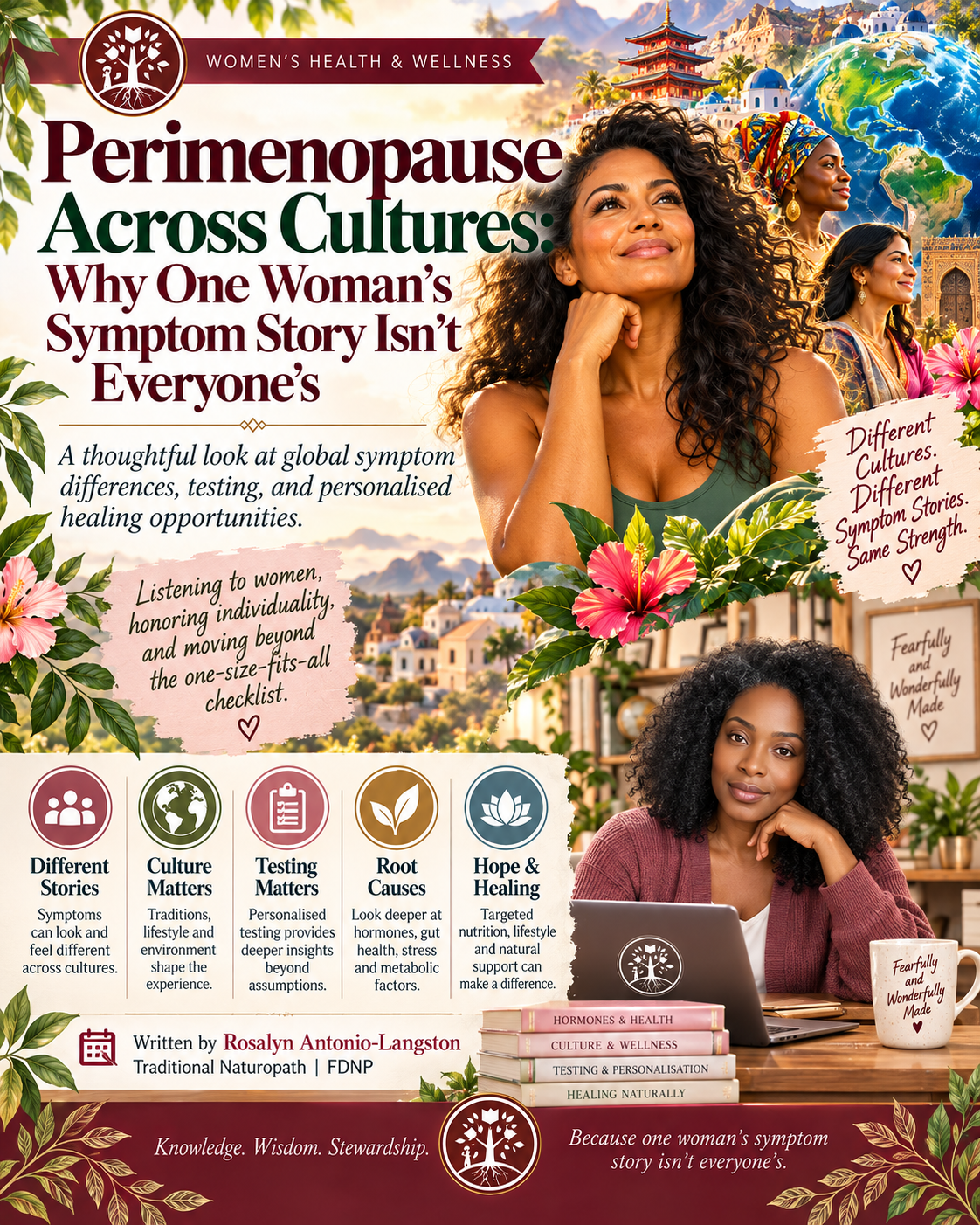
🌍Perimenopause Across Cultures: Why One Woman’s Symptom Story Isn’t Everyone’s
🌺 Perimenopause Has a Passport—and She Does Not Pack the Same Symptoms for Everyone
Ask ten women what perimenopause feels like and you may get ten completely different answers.
One woman is waking up drenched at 2:00 AM.
Another has never had a hot flush but suddenly cannot tolerate anyone chewing too loudly. 😅
Another is struggling with bloating, constipation, anxiety, migraines, brain fog or exhaustion while trying to run a company, manage a household and remember why she walked into the kitchen.
And another woman may barely notice the transition at all.
That is precisely why we need to stop treating perimenopause as though every woman receives the same laminated symptom checklist at age 45.
A major 2026 international study gives us a fascinating look at just how varied the experience can be.
Researchers using the Flo health app surveyed 17,494 women from 158 countries. Hot flushes were the symptom most commonly recognized as being associated with perimenopause, followed by sleep problems and weight gain.
Yet among the 12,681 women aged 35 and older, the symptoms most commonly experienced were:
Fatigue — approximately 83%
Physical and mental exhaustion — approximately 83%
Irritability — approximately 80%
Depressive mood — approximately 77%
Sleep problems — approximately 76%
Digestive issues — approximately 76%
Anxiety — approximately 75%
Hot flushes? About 50%.
That is quite a gap between what women are taught to expect and what many women are actually experiencing.
And frankly, that gap matters.
🗺️ Same Biological Transition. Different Lived Experiences.
The study found significant differences between countries.
Fatigue, exhaustion and irritability appeared among the most commonly reported symptoms in countries including the United Kingdom, United States, Canada, Australia, Brazil and Portugal.
But digestive issues appeared among the top three symptoms in countries including Argentina, Chile, Colombia, Mexico, South Africa, Nigeria, France and Ireland.
Depressive mood featured prominently in Germany, Spain, Venezuela and the Netherlands. Anxiety appeared among the top symptoms in India, while sleep problems were among the leading complaints reported in Nigeria.
Now—important distinction.
This research does not prove that culture itself caused those differences.
The study was cross-sectional, relied on self-reported information and involved women using a digital health application. Country differences can also reflect age, diet, healthcare access, education, socioeconomic conditions, lifestyle, language, symptom interpretation and many other factors.
But the finding raises an important question:
What happens when healthcare listens to the woman instead of trying to squeeze the woman into the checklist?
Another 2026 analysis of more than 12,000 women found that social determinants including healthcare access, income sufficiency and education were significantly associated with perimenopause symptom burden.
And a 2026 global scoping review found that menopause-awareness research itself remains unevenly distributed around the world, with several regions substantially underrepresented.
In other words:
Absence from the textbook does not mean absence from the woman.
👂🏾 Before We Correct Women, Perhaps We Should Hear Them
Culture influences how we describe discomfort.
Families influence what gets talked about.
Healthcare systems influence what gets diagnosed.
Food traditions influence nutritional patterns.
Work expectations influence stress and sleep.
Religious and community beliefs may influence how women interpret ageing, sexuality, emotional changes and seeking help.
Some women were raised hearing every detail about their mothers’ menopause.
Others heard absolutely nothing.
Some were taught that hot flushes equal menopause.
So when their first major complaints are palpitations, digestive trouble, anxiety, bladder changes or crushing fatigue, menopause may not even enter the conversation.
The World Health Organization has acknowledged that access to menopause information and services remains inadequate in many countries and that menopause may not be routinely discussed within families, communities, workplaces or healthcare systems.
That matters because women cannot advocate for what they have never been taught to recognise.
But there is another side to this.
We should not blame everything on perimenopause either.
Your ovaries are powerful, ladies—but they are not responsible for every strange thing happening in the building. 😏
🧩 Perimenopause Can Overlap With Other Healing Opportunities
Fatigue might accompany hormonal change.
It can also accompany iron deficiency.
Brain fog may occur during perimenopause.
It can also be influenced by poor sleep, nutrient deficiencies, thyroid dysfunction, unstable blood glucose, medication effects or overwhelming stress.
Bloating may become more noticeable during midlife.
But persistent gastrointestinal symptoms deserve their own investigation too.
That is where personalised assessment becomes valuable.
For women aged 45 and older with typical symptoms and menstrual changes, current NICE guidance generally identifies perimenopause clinically rather than through routine hormone testing because hormone concentrations fluctuate considerably during the transition.
So testing should not become:
“Let us order every lab known to mankind and hope something turns red.”
No ma’am.
Testing should answer a question.
Some foundational investigations may include, when appropriate:
Full blood count
Ferritin and iron studies
Thyroid markers
Vitamin B12 and folate
Vitamin D
Glucose and/or HbA1c
Lipid profile
Liver and kidney markers
Other investigations based on symptoms, medical history and menstrual patterns
These may help uncover conditions that can mimic, worsen or coexist with the menopausal transition.
And then, depending on the woman's history, symptoms and goals, we may decide there are additional healing opportunities worth investigating.
🧪 Test, Don’t Guess—But Know What the Test Can Actually Tell You
As a Traditional Naturopath and Functional Diagnostic Nutrition® Practitioner, I am interested in patterns.
Hormones do not operate in isolation.
Neither does your gut.
Neither does your nervous system.
Neither does your liver, thyroid, blood sugar, sleep or stress physiology.
This interconnected dysfunction is what we often describe in FDN as Metabolic Chaos®.
Functional testing may provide additional pieces of that puzzle—but each test has a specific role.
🌸 DUTCH Testing
DUTCH testing measures urinary reproductive hormone metabolites and may also assess cortisol and related patterns, depending on the panel selected.
Published research has demonstrated good analytical agreement between dried urine measurements and other urine collection methods for multiple reproductive hormone metabolites, with earlier research also showing useful correlation between selected urinary estrogen/progesterone metabolites and serum patterns.
I may use DUTCH to investigate hormone metabolism and stress-related patterns when clinically appropriate.
What it should not be used for: declaring from one result whether a woman “is” or “is not” in perimenopause.
Context still matters.
🧬 DNAlife DNA Hormones
DNAlife Hormones examines genetic variants involved in pathways such as steroid hormone metabolism, transport, detoxification and related biological processes.
Your DNA may help us understand predispositions.
It does not tell us your destiny.
Genes are the blueprint; environment, nutrition, lifestyle, age and countless other influences help determine what gets built.
That is why nutrigenomics becomes far more useful when combined with the woman sitting in front of us.
🩸 Functional Blood Chemistry Analysis—FBCA
Functional Blood Chemistry Analysis uses conventional bloodwork while looking at patterns across multiple markers.
It may help identify areas that deserve closer attention—such as glucose regulation, iron status, nutrient patterns, thyroid function, inflammation or metabolic health.
It is not a substitute for medical diagnosis or standard laboratory interpretation.
It is another lens.
🦠 GI-MAP
For a woman whose story includes persistent bloating, constipation, diarrhoea or other significant digestive symptoms, stool testing may sometimes offer additional information regarding microorganisms and selected gastrointestinal markers.
But microbiome and commercial stool-test interpretation is still an evolving field. Results need context, and a stool report should never become a diagnosis all by itself.
Interestingly, digestive issues ranked among the most frequently reported symptoms in the 2026 global perimenopause study.
So maybe the gut deserves a seat at the midlife table after all.
🍽️ MRT
Mediator Release Testing may occasionally be incorporated as an adjunct when investigating possible food-related symptom patterns.
However, it should not be confused with validated testing for IgE-mediated food allergy, and the evidence base for food-sensitivity testing remains more limited than for conventional allergy testing.
Translation?
We investigate intelligently.
We do not allow an impressive-looking laboratory report to bully common sense out of the room.
🔬Fun Fact Science Bar+
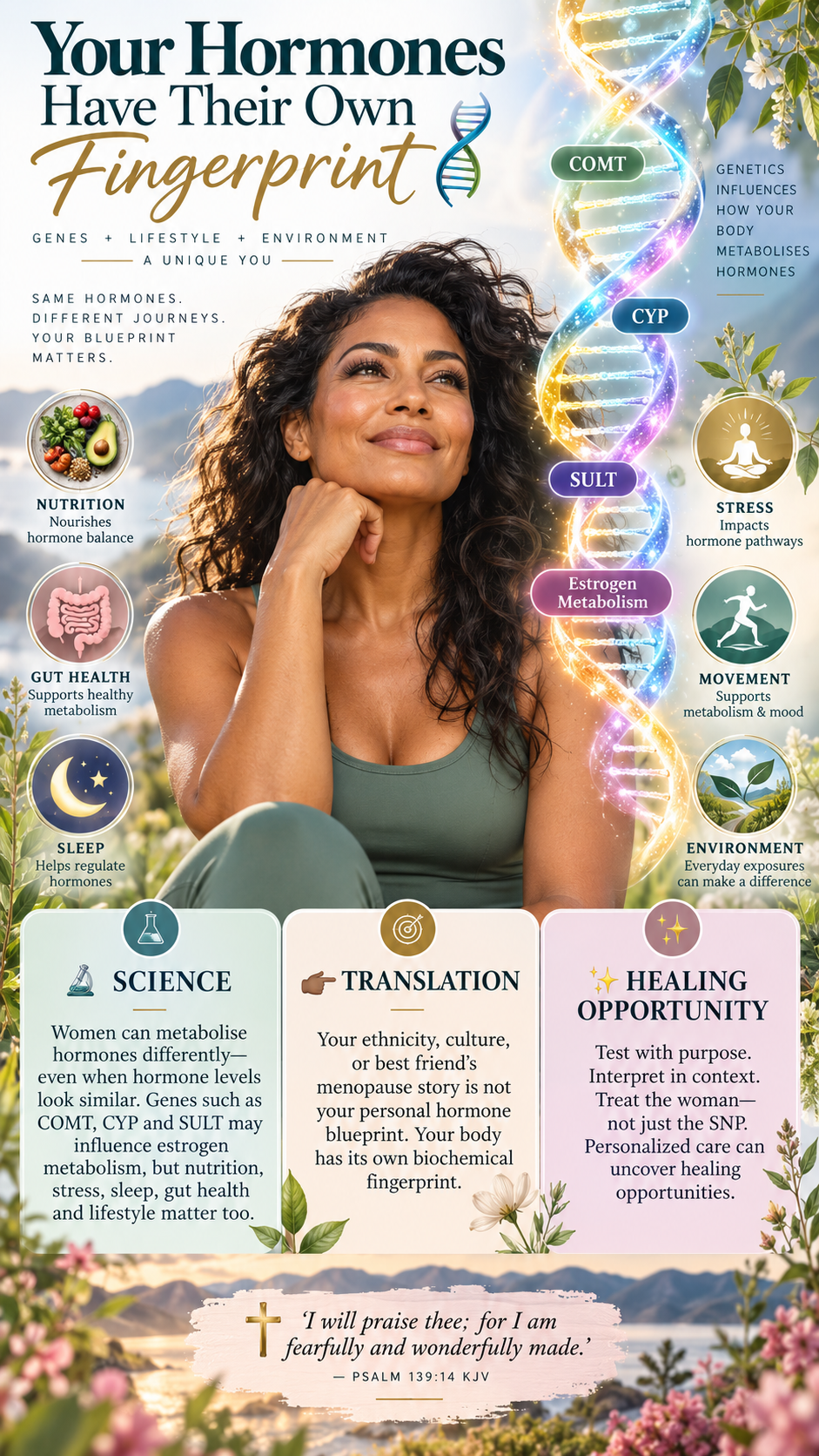
Did you know two women can have similar hormone levels yet process those hormones differently? Genes involved in estrogen metabolism—such as COMT, CYP and SULT pathways—can vary from woman to woman and may influence how hormones are metabolised. But genes are only part of the story: nutrition, stress, sleep, gut health, environment and lifestyle also matter.
👉🏾 Translation: Your culture, ethnicity—or your best friend’s menopause story—is not your personal hormone blueprint. Your body has its own biochemical fingerprint. 🧬✨ This is one reason personalised assessment can be more useful than handing every midlife woman the same protocol.
✨ Healing Opportunity: Combine your symptom story with foundational labs, nutrition, lifestyle and—when appropriate—tools such as nutrigenomics. Test with purpose, interpret in context, and treat the woman…not just the SNP. 😉
✝️ Faith Element: “I will praise thee; for I am fearfully and wonderfully made.” — Psalm 139:14 KJV. Individuality is not a flaw in the design. It is part of the design. 🌿
🌿 When A.N.E.W.S.T.A.R.T. Meets D.R.E.S.S.
Testing gives us information.
Lifestyle gives us somewhere to apply it.
I like bringing together two whole-person philosophies: an A.N.E.W.S.T.A.R.T. approach inspired by the familiar Adventist NEWSTART principles, alongside FDN's D.R.E.S.S. for Health Success® framework.
Traditional NEWSTART emphasises Nutrition, Exercise, Water, Sunlight, Temperance, Air, Rest and Trust in God.
My A.N.E.W.S.T.A.R.T. approach begins one step earlier—with Attitude—because the way we approach our health matters too.
FDN's D.R.E.S.S. framework stands for Diet, Rest, Exercise, Stress Reduction and Supplementation.
Put them together and we get something beautifully practical:
🧠 A — Attitude + Stress Reduction
Pay attention to what your nervous system is carrying.
Build moments of quiet into the day. Pray. Journal. Breathe slowly. Set boundaries. Stop making your body pay the invoice for everybody else's emergencies.
🥬 N — Nutrition + Diet
Build meals around nourishing whole foods, adequate protein, fibre, colourful plants and healthy fats according to your individual needs.
And please—honour culture.
A culturally appropriate diet does not need to disappear because someone on Instagram discovered quinoa last Tuesday.
African, Caribbean, Asian, Latin American, Mediterranean, European and Indigenous food traditions can all contain beautiful whole-food foundations.
Personalise the plate instead of erasing the woman.
🏋🏾♀️ E — Exercise
Include resistance training alongside movement you actually enjoy.
Muscle becomes increasingly important for metabolic health, strength and healthy ageing, and NICE specifically recommends maintaining muscle mass and strength through physical activity during the menopause transition.
💧 W — Water
Hydration affects far more than thirst.
Build regular water intake into your day rather than suddenly remembering at 7:43 PM that you have consumed two coffees and approximately three molecules of water.
☀️ S — Sunshine
Morning outdoor light can help anchor circadian rhythm.
Enjoy sensible sunlight exposure according to your skin, location, season and individual needs while practising appropriate sun safety.
⚖️ T — Temperance
More is not always better.
That applies to food.
Work.
Exercise.
Caffeine.
Supplements.
Fasting.
And yes—even “healthy” things.
A body already under tremendous stress may not appreciate another extreme protocol.
🌬️ A — Air
Go outside.
Walk.
Breathe.
Open the window.
Spend some time around trees instead of fluorescent lighting.
Simple does not mean insignificant.
😴 R — Rest
Sleep deserves investigation, not guilt.
Address bedtime routines, night sweats, caffeine timing, stress, snoring, pain, reflux, nocturia and anything else repeatedly stealing restorative sleep.
And sometimes rest needs to be more than eight theoretical hours squeezed between obligations.
🙏🏾 T — Trust in God
Spiritual health belongs in whole-person health.
Prayer.
Scripture.
Gratitude.
Community.
And Sabbath rest.
There is something wonderfully countercultural about God commanding His people to stop.
You are allowed to put the laptop down.
The world will survive until Sunday. 😉
“I will praise thee; for I am fearfully and wonderfully made.” —Psalm 139:14, KJV
Your body was designed with extraordinary wisdom.
The goal is not to obsess over every biological fluctuation.
It is to learn to listen.
💊 + D.R.E.S.S. Supplementation
Supplements can be useful—but they should complement the foundations rather than replace them.
The goal is not:
“Which 17 bottles does TikTok say every menopausal woman needs?”
The better questions are:
What does this woman need?
What medications is she taking?
What does her diet provide?
What deficiencies have actually been identified?
What do her symptoms and laboratory findings suggest?
What is unnecessary?
That is personalised wellness.
✅ Five Things You Can Start This Week
1. Track your own pattern
For several weeks, document menstrual changes, sleep, energy, mood, digestion, headaches, bladder symptoms, hot flushes, cravings, stress and anything else unusual.
Patterns beat assumptions.
2. Stop comparing your menopause to another woman's
Your friend may have hot flushes.
Your mother may have had none.
Your colleague may be struggling with anxiety.
Your experience does not have to match theirs to be worthy of attention.
3. Investigate persistent symptoms
Do not automatically assume everything is hormonal.
Consider whether appropriate medical or laboratory evaluation is needed for thyroid dysfunction, anaemia, nutrient deficiencies, glucose dysregulation, sleep disorders, gastrointestinal conditions or other health issues.
4. Build foundations before chasing hacks
Eat well.
Move.
Hydrate.
Sleep.
Get outside.
Reduce unnecessary stressors.
Practise temperance.
Use targeted supplementation where appropriate.
And give yourself permission to rest.
5. Bring your culture into the conversation
Tell your practitioner what you actually eat.
Explain how your family thinks about menopause.
Describe your work demands.
Talk about your faith.
Mention financial or healthcare barriers.
Explain what wellness realistically looks like in your life.
Personalisation requires knowing the person.
🚨 And Please Don't Let “It's Probably Perimenopause” Dismiss a Red Flag
Perimenopause can produce a surprisingly broad collection of symptoms, but new, severe or rapidly worsening symptoms still deserve appropriate medical assessment.
Seek medical care for concerns such as very heavy or unusual bleeding, bleeding after menopause, chest pain, fainting, new neurological symptoms, severe unexplained pain or other symptoms that feel markedly different from your usual pattern.
Hormonal transition and medical disease can coexist.
We should be curious enough to consider both.
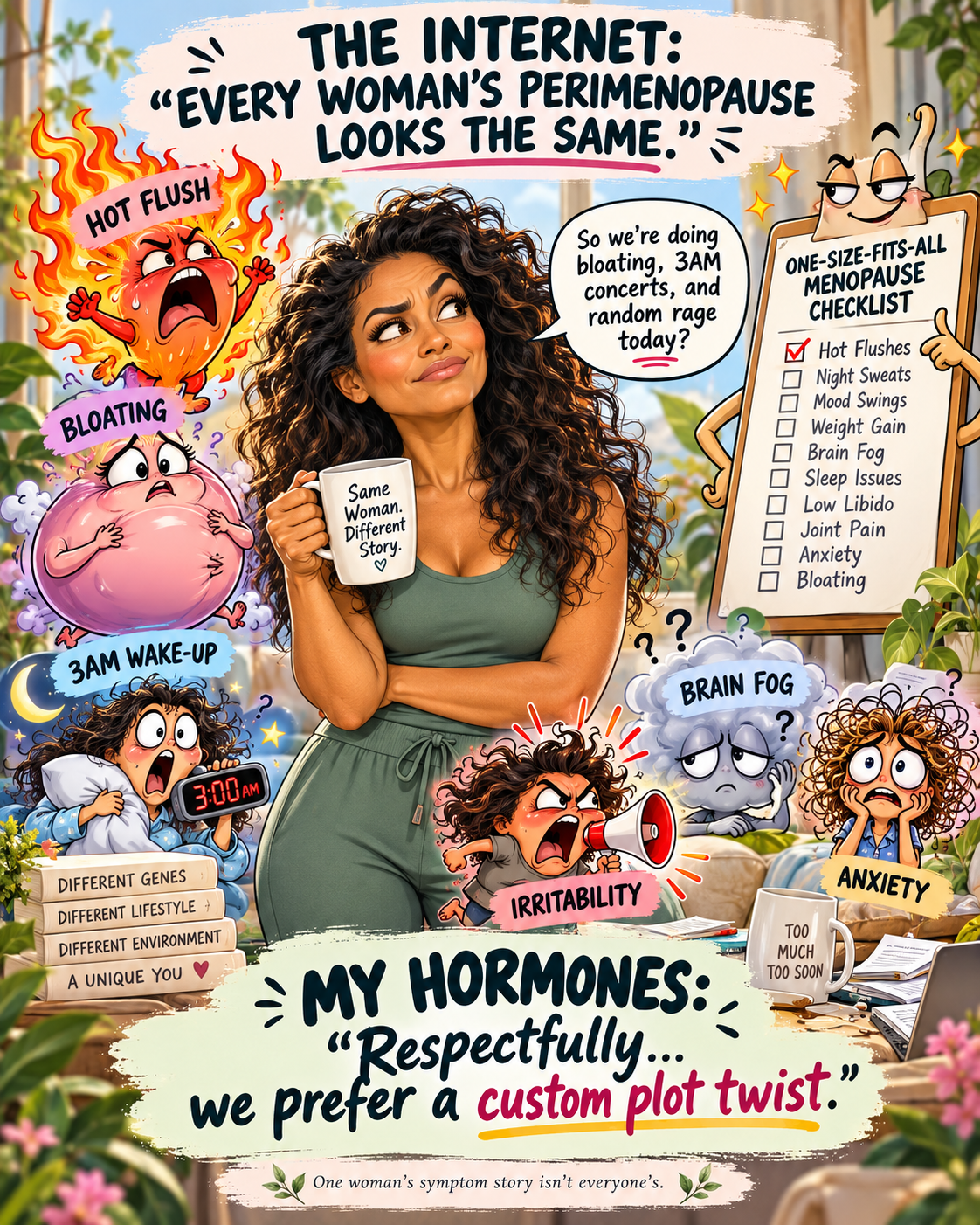
🌳 Your Story Is Data Too
The biggest lesson from this emerging global research is not that Nigerian women have one version of menopause while British, Indian or Brazilian women have another.
It is much more interesting than that.
It reminds us that women's lived experiences contain information.
Biology matters.
Culture matters.
Nutrition matters.
Sleep matters.
Stress matters.
Healthcare access matters.
Socioeconomic circumstances matter.
Genetics matter.
The gut may matter.
And the individual woman absolutely matters.
You are more than an estrogen level.
You are more than a symptom questionnaire.
You are more than the average participant in a research study.
When hormones, digestion, stress physiology, nutrition and lifestyle begin colliding, the result can feel like Metabolic Chaos®.
But chaos does not mean hopelessness.
Sometimes it simply means there are several healing opportunities waiting to be identified.
💚 Ready to Stop Comparing—and Start Investigating YOUR Story?
At Leaves from the Tree of Life LLC, we help Businesswomen who are Hormonal, Anxious, and Bloated through Functional Nutrition Coaching + Labs.
As a Traditional Naturopath and Functional Diagnostic Nutrition® Practitioner, I take a whole-person, faith-aligned approach to helping women explore the patterns behind their symptoms.
Depending on your individual needs, that may include tools such as:
DUTCH • DNAlife Hormones • Functional Blood Chemistry Analysis • GI-MAP • MRT • Nutrigenomics • Lifestyle and symptom assessment
Not because every woman needs every test.
She absolutely does not.
We use testing strategically to help turn noise into useful information and identify personalised healing opportunities involving nutrition, hormones, digestion, stress, sleep and metabolic health.
✨ You do not need somebody else's perimenopause protocol.
You need someone willing to listen to your story.
👉🏾 Click here to jump on a Discovery Call.
Book Your Discovery Call
Invest in your health, invest in you, because a healthier lifestyle is a luxury you deserve!
💊 Where to Buy Professional-Grade Supplements
Supplements should be personalised according to health history, medications, diet, symptoms and appropriate testing—not purchased simply because something is trending.
🇺🇸 United States: Click here to shop the LTL Get Healthy Store
🇬🇧 United Kingdom: Click here to shop Amrita Nutrition
Practitioner Code: KXCTGG
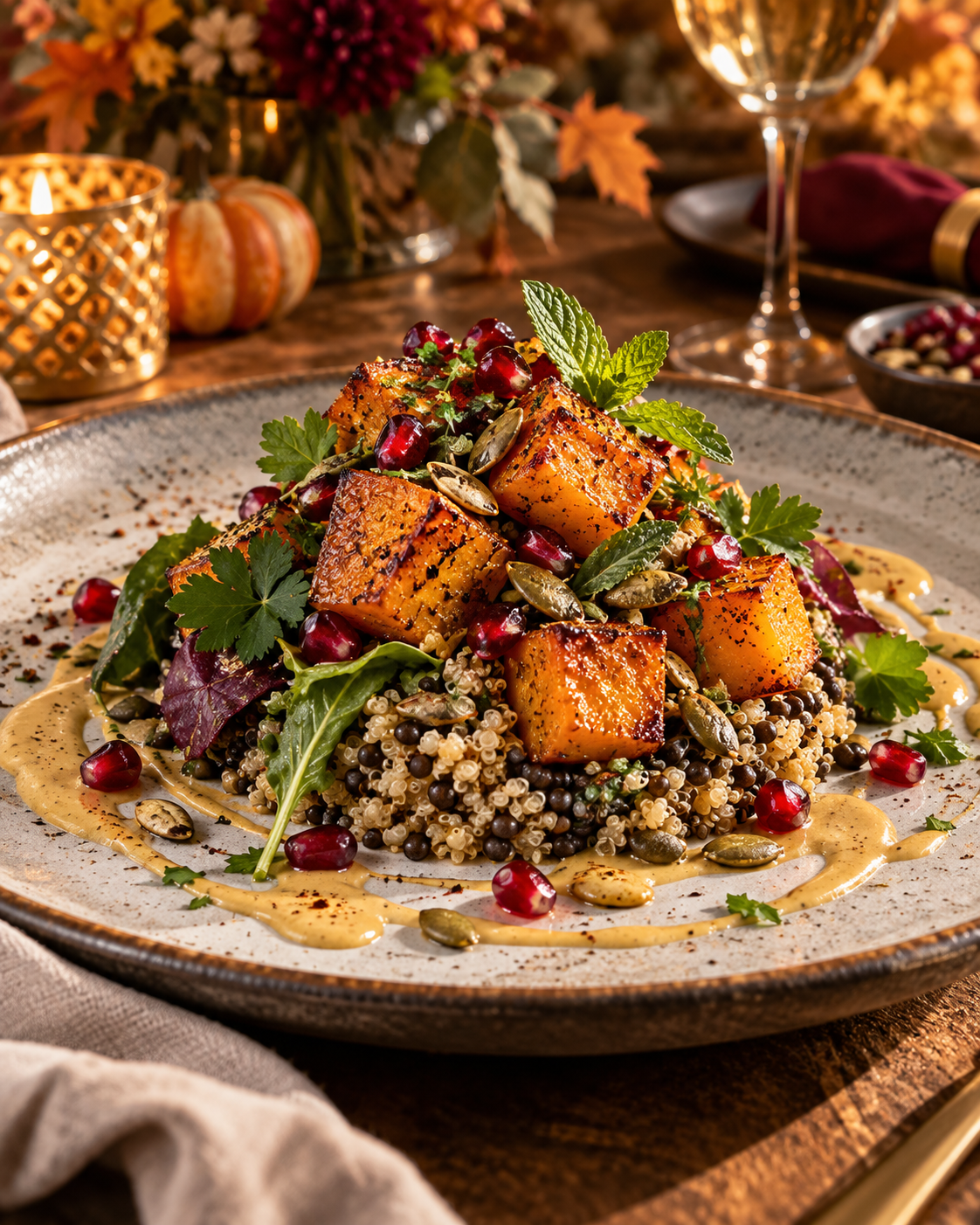
🍂🌍 The Global Glow Harvest Bowl
Miso-Tahini Lentils, Moroccan-Spiced Squash & Pomegranate Herb Quinoa
A cosy autumn fusion bowl with caramelised butternut squash, earthy lentils, fluffy quinoa, juicy pomegranate, crunchy pumpkin seeds, fresh herbs and a creamy miso-tahini drizzle. It brings together flavours inspired by North Africa, the Mediterranean, the Middle East and Japan—because nourishment does not have to be one-size-fits-all either. 😉
Prep Time: 15 minutes
Cook Time: 30 minutes
Total Time: 45 minutes
Serves: 4
🛒 Ingredients
Moroccan-Inspired Squash
1 medium organic butternut squash, peeled and cubed
1 tsp ground cumin
1 tsp smoked paprika
½ tsp turmeric
½ tsp cinnamon
Freshly ground black pepper
1–2 tbsp fresh orange juice
1 Medjool date, finely mashed
Herbed Quinoa & Lentils
1 cup cooked organic quinoa
1½ cups cooked black or green lentils
2 large handfuls organic baby spinach or rocket
½ cup fresh parsley, chopped
¼ cup fresh mint, chopped
½ cup pomegranate arils
¼ cup toasted pumpkin seeds
Creamy Miso-Tahini Dressing
3 tbsp tahini
1 tbsp white miso
Juice of 1 lemon
1 tsp freshly grated ginger
1 small Medjool date
3–5 tbsp warm water
Pinch of cayenne, optional
👩🏾🍳 Instructions
1. Roast the Squash 🍠
Preheat the oven to 200°C / 400°F.
Toss the butternut squash with cumin, smoked paprika, turmeric, cinnamon and black pepper.
Mix the orange juice with the mashed Medjool date and lightly coat the squash.
Roast for 25–30 minutes, turning once, until soft in the centre and beautifully caramelised around the edges.
2. Make the Herby Base 🌿
Gently combine the warm quinoa and lentils with the parsley, mint and baby spinach or rocket.
The warmth should lightly soften the greens while keeping everything fresh and vibrant.
3. Whisk the Dressing 🥣
Blend or whisk together the tahini, miso, lemon juice, ginger, Medjool date and enough warm water to create a silky, pourable sauce.
Add a pinch of cayenne if you want a little extra warmth.
4. Plate It Like a Restaurant ✨
Spoon the quinoa and lentil mixture onto a wide shallow plate.
Layer the roasted squash over the top.
Drizzle generously with the creamy miso-tahini sauce.
Finish with pomegranate arils, toasted pumpkin seeds, parsley and fresh mint.
For extra autumn flair, add a tiny dusting of smoked paprika around the plate.
🌿 Health Benefits
🎃 Butternut Squash
Provides beta-carotene, potassium, vitamin C and carotenoids while adding natural autumn sweetness.
🫘 Lentils
Rich in plant protein, fibre, folate, iron, magnesium and resistant starch to support satiety, digestion and metabolic health.
🌾 Quinoa
Provides fibre, magnesium, complex carbohydrates and all nine essential amino acids.
🌱 Pumpkin Seeds
Contain magnesium, zinc, iron, plant protein and healthy fats.
❤️ Pomegranate
Provides polyphenols and anthocyanins along with a bright tart-sweet flavour.
🥬 Leafy Greens
Offer folate, magnesium, vitamin K, carotenoids and protective plant compounds.
🌿 Parsley & Mint
Add freshness, antioxidants and phytonutrients without relying on excessive salt.
🫚 Ginger
Provides warming flavour and bioactive gingerols.
🟡 Turmeric
Contains curcuminoids and adds a beautiful golden colour.
🥄 Tahini
Provides calcium, magnesium, sesame lignans and healthy unsaturated fats.
🍋 Lemon
Adds vitamin C, which also helps support absorption of plant-based iron from the lentils and seeds.
🧬 Miso
Adds deep savoury umami so the bowl tastes rich and satisfying without dairy.
💡 Midlife Nutrition Tip
Rather than searching for one magical “menopause food,” aim to build meals around:
Plants + Fibre + Protein + Healthy Fats + Colourful Phytonutrients
Different cultures have nourished women beautifully for generations using completely different foods.
There is more than one road to a nourishing plate. 🌍💚
📚 References
Hedges MS, Hewings-Martin Y, Karam J, Castaneda R, Cunningham AC, Xu Y, Zhaunova L, Faubion SS, Shufelt CL. Global perspectives on perimenopause: a digital survey of knowledge and symptoms using the Flo application. Menopause. 2026;33(7):789–798. doi:10.1097/GME.0000000000002730.
Hewings-Martin Y, Karam J, Cunningham AC, Hedges MS, Castaneda R, Zhaunova L, Faubion SS, Shufelt CL. Impact of social determinants of health on perimenopause symptom burden: insights from the Flo app. Climacteric. 2026:1–8. doi:10.1080/13697137.2026.2682228.
Williams E, Terry L, Lindeman M, Wright ME. Menopause symptom awareness research across the globe: a scoping review. Frontiers in Global Women’s Health. 2026;7:1829378. doi:10.3389/fgwh.2026.1829378.
Eleje GU, Umeoranefo IC, Ezenkwele EP, et al.; MARiE Collaborative. Contextualising menopause in Nigeria: a qualitative analysis from the MARiE Project. BJOG: An International Journal of Obstetrics & Gynaecology. 2026;133(6):1227–1240. doi:10.1111/1471-0528.70167.
Matina SS, Mendenhall E, Cohen E. Women’s experiences of menopause: a qualitative study among women in Soweto, South Africa. Global Public Health. 2024;19(1):2326013. doi:10.1080/17441692.2024.2326013.
Thakur R, Dhall M. Transitions in silence: menopause and well-being among midlife women. Journal of Mid-life Health. 2025;16(4):416–424. doi:10.4103/jmh.jmh_41_25.
AlSwayied G, Frost R, Hamilton FL. Menopause knowledge, attitudes and experiences of women in Saudi Arabia: a qualitative study. BMC Women’s Health. 2024;24:624. doi:10.1186/s12905-024-03456-7.
Arab Borzu Z, Karimy M, Leitão M, Pimenta F, Albergaria R, Khoshnazar Z, Hosseini Koukamari P. Validation of the menopause representation questionnaire (MenoSentations-Q) among Iranian women and cross-cultural comparison with Portuguese women. BMC Women’s Health. 2025;25:87. doi:10.1186/s12905-025-03606-5.
Sayakhot P, Vincent A, Teede H. Cross-cultural study: experience, understanding of menopause, and related therapies in Australian and Laotian women. Menopause. 2012;19(12):1300–1308. doi:10.1097/GME.0b013e31825fd14e.
Anderson D, Yoshizawa T, Gollschewski S, Atogami F, Courtney M. Menopause in Australia and Japan: effects of country of residence on menopausal status and menopausal symptoms. Climacteric. 2004;7(2):165–174. doi:10.1080/13697130410001713760.
Todorova L, Bonassi R, Guerrero Carreño FJ, Hirschberg AL, Yuksel N, Rea C, Scrine L, Kim JS. Prevalence and impact of vasomotor symptoms due to menopause among women in Brazil, Canada, Mexico, and Nordic Europe: a cross-sectional survey. Menopause. 2023;30(12):1179–1189. doi:10.1097/GME.0000000000002265.
World Health Organization. Menopause. WHO Fact Sheet. Updated October 16, 2024.
National Institute for Health and Care Excellence. Menopause: identification and management. NICE Guideline NG23. Published November 12, 2015. Updated April 15, 2026.
Newman MS, Pratt SM, Curran DA, Stanczyk FZ. Evaluating urinary estrogen and progesterone metabolites using dried filter paper samples and gas chromatography with tandem mass spectrometry (GC-MS/MS). BMC Chemistry. 2019;13:20. doi:10.1186/s13065-019-0539-1.
Newman MS, Curran DA. Reliability of a dried urine test for comprehensive assessment of urine hormones and metabolites. BMC Chemistry. 2021;15:18. doi:10.1186/s13065-021-00744-3.
Blog Disclaimer
The health information on this blog is for general educational purposes only and is not intended to diagnose, treat, cure, or prevent any disease. It should not be used as a substitute for professional medical advice. Always consult a qualified healthcare provider before making any health-related decisions
This blog may contain affiliate links, meaning Leaves from the Tree of Life LLC may earn a small commission if you purchase a product or service through these links—at no additional cost to you. Your support helps us continue to provide valuable content. Thank you!
