
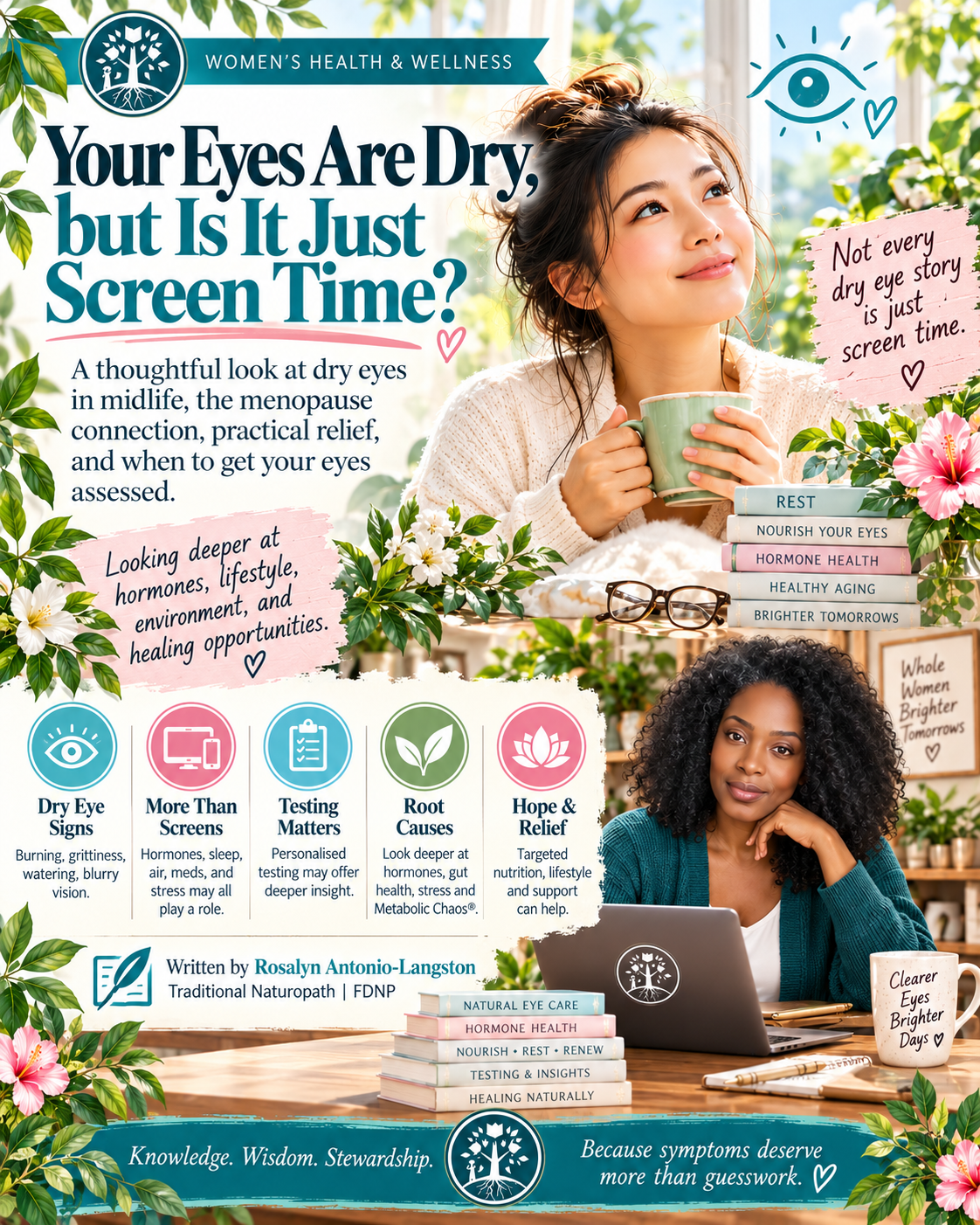
👁️ Your Eyes Are Dry, but Is It Just Screen Time?The Midlife Symptom Women in the US and UK May Be Overlooking
👀 “Why Do My Eyes Suddenly Hate Me?”
You shut the laptop.
You rub your eyes.
Maybe you blame the Zoom meetings, spreadsheets, scrolling, central heating, air conditioning—or the fact that apparently your eyeballs have now joined the long list of body parts with opinions about midlife. 😏
But what if it is not just screen time?
Dry, burning, gritty or watery eyes can absolutely be aggravated by hours of digital-device use. But during the perimenopause-to-menopause transition, there may be more going on beneath the surface.
Research presented at The Menopause Society’s 2025 Annual Meeting brought renewed attention to dry eye disease in midlife women. In a cross-sectional study involving 3,547 women, dry-eye symptoms measured using the Ocular Surface Disease Index were reported more frequently among women in the menopausal group compared with those who had not yet reached menopause—57.38% versus 53.22%.
Autoimmune disease and smoking were also associated with greater dry-eye risk.
Interesting?
Absolutely.
Proof that your estrogen dropped and therefore your eyes dried up?
Not so fast.
Dry eye is a multifactorial condition, and that distinction matters.
Whether you are a businesswoman in Atlanta, Los Angeles, London, Manchester or somewhere in between, your dry eyes deserve more than a quick “you’re probably staring at your screen too much.”
🔬 Dry Eye Is More Complicated Than “Not Enough Tears”
Dry eye disease happens when the tear film can no longer adequately maintain and protect the surface of the eye.
Sometimes the eyes do not produce enough tears.
Sometimes tears evaporate too quickly.
And many women have a mixture of both.
The meibomian glands, located along the eyelids, produce oils that help prevent tears from evaporating too rapidly. When these glands are not functioning optimally, you can have plenty of watery tears but still have an unstable tear film.
And here is one of those annoyingly quirky facts:
Dry eyes can actually make your eyes water.
Yes. Really.
When the surface of the eye becomes irritated, reflex tearing may occur. So the woman constantly wiping watery eyes may still have dry eye disease.
Because apparently midlife needed another contradiction. 😂
Symptoms may include:
🔥 Burning or stinging
🏖️ Gritty, sandy or “something is in my eye” sensations
👁️ Redness or irritation
🌫️ Blurry vision that temporarily improves after blinking
💻 Eye fatigue during computer work or reading
🌬️ Increased irritation around wind, fans, heating or air conditioning
👓 Difficulty tolerating contact lenses
😢 Excessive watering
🧵 Stringy mucus around the eyes
💡 Light sensitivity
😵 Eye discomfort after prolonged concentration
For women working long hours on laptops, phones and multiple screens, these symptoms can interfere with productivity, reading, driving and quality of life.
And no, that should not simply be dismissed as “getting older.”
🌸 Hormones and Your Eyes: Connected, but Let’s Not Blame Everything on Estrogen
Hormones may play a role in ocular health.
But they are not the entire story.
The ocular surface, lacrimal glands and meibomian glands are influenced by sex hormones, including androgens, estrogens and progesterone.
Research suggests that androgens may be particularly important for healthy lacrimal and meibomian gland function, while estrogen’s effects on the eye appear more complex and may vary according to tissue, receptor activity, hormone levels and individual physiology.
Translation?
The hormonal story is far more nuanced than “low estrogen causes dry eyes.”
That matters.
Women should not come away from a conversation about menopausal dry eye assuming that they simply need more estrogen.
Dry eye can have numerous contributing factors, and menopausal hormone therapy is not a universal treatment for dry eye disease.
This is precisely why personalised assessment beats guessing.
💻 Screen Time: Guilty…But Maybe Not Acting Alone
Yes, your laptop may be contributing.
When we concentrate intensely on screens, documents or phones, our blinking patterns may change.
We may blink less completely, and partial blinking can interfere with the normal spreading of the oily component of the tear film.
Long periods of:
💻 Laptop work
📱 Smartphone use
📊 Spreadsheet analysis
🎥 Video meetings
📚 Reading
🎮 Digital entertainment
may all contribute to eye discomfort in susceptible people.
But screen exposure may simply be one piece of a much bigger puzzle.
A woman may simultaneously be navigating:
Perimenopausal hormone fluctuations
Medication changes
Contact-lens use
Thyroid concerns
Autoimmune conditions
Poor sleep
High stress
Dry indoor air
Heating or air conditioning
Nutritional insufficiencies
Metabolic dysfunction
In other words:
Your computer may be guilty.
It just may not be acting alone. 😏
🕵🏾♀️ Meet the Other Dry-Eye Suspects
Dry eyes are certainly not exclusive to menopause.
💊 Medications
Some medications may contribute to dry-eye symptoms, including certain antihistamines, antidepressants, blood-pressure medications and other drugs.
Do not discontinue prescribed medication on your own.
In the US, speak with your prescribing clinician, pharmacist or primary care provider.
In the UK, speak with your GP, prescribing clinician or pharmacist.
Sometimes reviewing the medication picture reveals a healing opportunity that was hiding in plain sight.
🦋 Autoimmune Conditions
Conditions such as:
Sjögren syndrome
Rheumatoid arthritis
Lupus
may affect tear production.
Significant persistent dry eyes combined with dry mouth, joint symptoms, unexplained fatigue or other systemic symptoms deserve appropriate medical investigation.
🦋 Thyroid Health
Thyroid conditions may also be associated with eye and ocular-surface symptoms in some people.
If dry eyes are occurring alongside symptoms such as fatigue, temperature changes, hair changes, constipation, heart-rate changes or significant weight changes, thyroid assessment may be worth discussing with your healthcare professional.
👁️ Meibomian Gland Dysfunction
These little glands deserve more publicity.
They produce the oily layer of your tears.
When the glands become blocked or dysfunctional, tears may evaporate far too quickly—even when you are technically producing tears.
🌬️ Your Environment
Dry indoor environments can be brutal on the eyes.
In the US, forced-air heating and powerful air conditioning may contribute.
In the UK, central heating, cold winter air and long stretches indoors can aggravate symptoms.
Fans blowing directly across your face?
Also not helping.
👓 Contact Lenses
Contact lenses can worsen dry-eye symptoms in susceptible women.
If lenses suddenly feel intolerable when they never bothered you before, do not automatically assume you simply need a different brand.
Get your ocular surface evaluated.
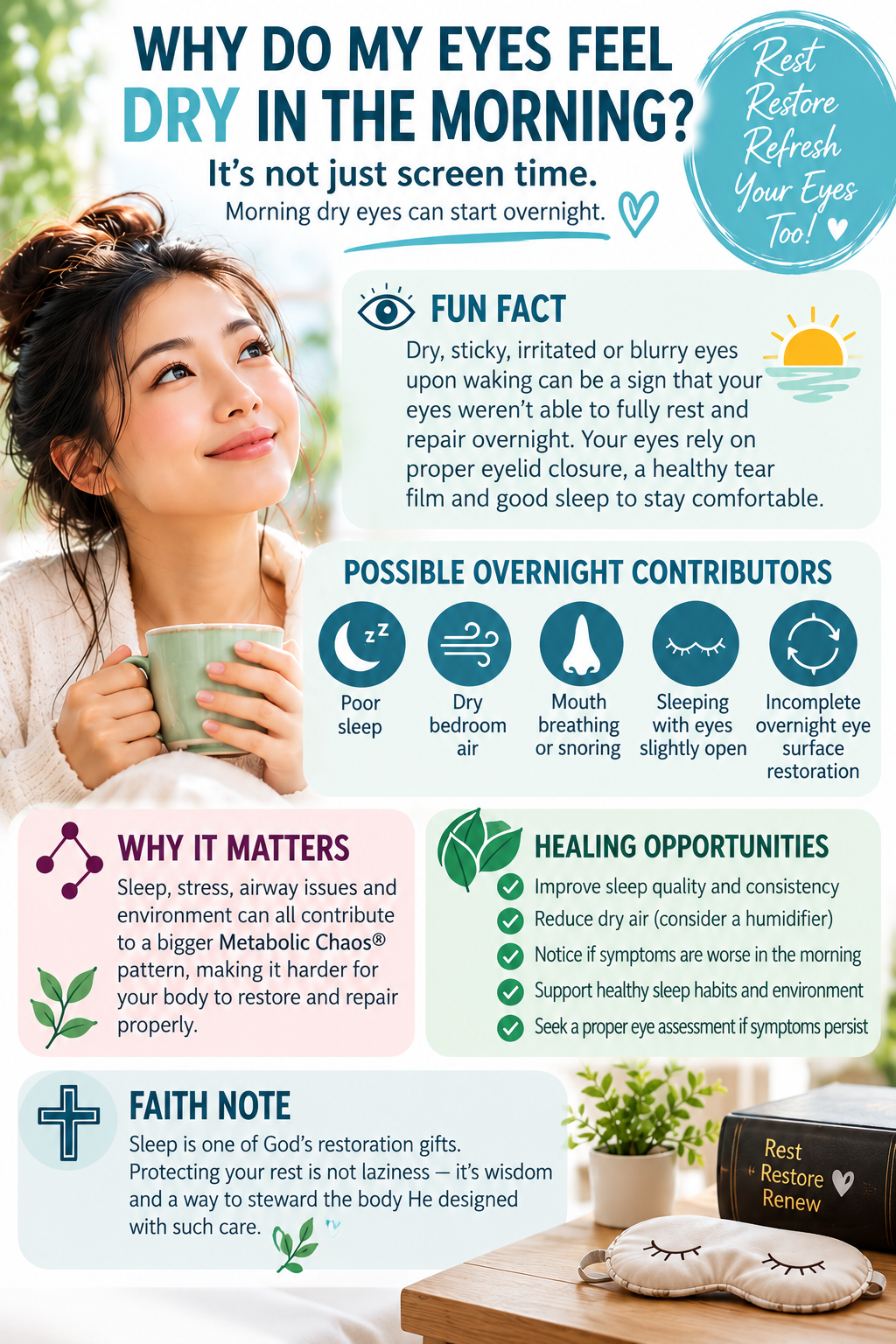
🔬 Fun Fact Science Bar+
Did you know that dry eyes can sometimes be worse first thing in the morning—not just at the end of the day? During sleep, the eyes rely on proper eyelid closure, a healthy tear film, and overnight surface repair. If a woman sleeps poorly, has dry indoor air, mouth-breathes, snores, or sleeps with her eyes slightly open, she may wake up with eyes that feel dry, irritated, sticky, or blurry. 👁️🌙
👉🏾 Translation: If her eyes feel scratchy or tired before she has even opened her laptop, it may not be “too much screen time” alone. Sometimes the issue starts overnight. In Functional Diagnostic Nutrition® language, poor sleep, stress, airway issues, and environmental irritation can all add to a Metabolic Chaos® pattern that leaves the body struggling to restore and repair well.
✨ Healing Opportunity: Notice the pattern. Are the eyes worse in the morning? Is sleep poor? Is there snoring, mouth breathing, a fan blowing nearby, or very dry indoor air? Supportive steps may include improving sleep habits, reducing bedroom dryness, using a humidifier if needed, and getting the eyes properly assessed if symptoms persist. Sometimes the clue is not what happens on the screen—but what happens on the pillow.
✝️ Faith Element: Sleep is one of God’s built-in restoration gifts. Rest is not laziness; it is wisdom. Protecting sleep, peace, and proper restoration is part of honoring the body God designed with such care. 🙏🏾🌿
🧪 Testing Matters—but Use the Right Test for the Right Question
As a Traditional Naturopath and Functional Diagnostic Nutrition Practitioner (FDNP) at Leaves from the Tree of Life LLC, I use functional laboratory testing as an investigative tool.
The goal is not to chase a symptom with a label.
It is to ask better questions.
What patterns are showing up? What systems appear stressed? What may be contributing to the client’s overall picture? And where are the healing opportunities?
Within Functional Diagnostic Nutrition, we look at this interconnected dysfunction through the lens of Metabolic Chaos®. This is our functional framework for recognising that seemingly unrelated symptoms may share underlying physiological stressors. It is not a conventional medical disease diagnosis.
So when a woman comes to me with dry eyes alongside changing cycles, disrupted sleep, anxiety, fatigue, bloating, blood-sugar swings or other midlife concerns, functional testing can help us investigate the terrain rather than simply chase individual symptoms.
At the same time, the eyes deserve their own appropriate assessment. An optometrist or ophthalmologist can examine the ocular surface, tear film, tear production and meibomian glands to determine what may be happening locally.
Functional testing then helps us zoom out and ask:
“What else may be happening within this woman’s overall physiology?”
That is where the investigation gets interesting. 🔎
🧬 DUTCH
DUTCH testing allows us to explore patterns involving estrogen, progesterone, androgens, cortisol and hormone metabolites.
For the midlife woman experiencing dry-eye symptoms alongside menstrual changes, hot flashes, sleep disruption, anxiety, fatigue or other signs of the menopause transition, this information may offer valuable insight into the broader hormonal and stress-response picture.
It gives us another piece of the puzzle so that recommendations can be more personalised instead of based on assumptions.
🧬 DNAlife Hormones
DNAlife Hormones gives us another investigative lens by examining genetic variants related to hormone production, transport, metabolism and detoxification pathways.
Genetics are not destiny.
But understanding certain inherited tendencies can help us appreciate why two women going through the same stage of life may experience it very differently.
The goal is to combine genetic information with the woman’s symptoms, history, lifestyle, environment and other laboratory findings to build a more complete picture.
🩸 Functional Blood Chemistry Analysis — FBCA
Functional Blood Chemistry Analysis allows us to look more closely at patterns within routine bloodwork.
Depending on the individual, we may explore areas such as:
Blood-glucose regulation
Thyroid patterns
Iron and ferritin status
B-vitamin status
Liver and kidney markers
Protein status
Inflammatory patterns
Broader metabolic health
Rather than focusing only on whether a result falls inside or outside a laboratory reference range, functional analysis can help us identify trends and potential healing opportunities that deserve closer attention.
🦠 GI-MAP
The gut does not live on a separate island from the rest of the body.
GI-MAP uses qPCR technology to investigate gastrointestinal microbial DNA alongside selected markers related to digestion, intestinal health and immune activity.
For a woman who is experiencing dry eyes plus bloating, constipation, diarrhoea/diarrhea, abdominal discomfort, food-related symptoms or other digestive changes, looking at the gastrointestinal environment may help us understand another part of her Metabolic Chaos® picture.
We are looking for patterns and relationships—not automatically assuming that one laboratory finding explains every symptom.
🍽️ MRT
MRT may be incorporated when food-related symptoms or immune-mediated food reactions are part of the broader clinical picture.
When used appropriately, it can help guide a more structured and individualised nutrition strategy rather than randomly removing foods or creating unnecessarily restrictive diets.
The purpose of testing should be to create clarity—not food fear.
🔎 Different Tests Answer Different Questions
Sometimes the most valuable next step is a functional laboratory.
Sometimes it is conventional bloodwork.
Sometimes it is an optometrist.
Sometimes it is a GP in the UK, a primary care provider in the US, or another appropriately qualified specialist.
And sometimes we need several pieces of information working together.
That is what personalised care should look like.
At Leaves from the Tree of Life LLC, functional testing helps us investigate patterns, uncover potential stressors and identify healing opportunities so that we can build a nutrition and lifestyle plan around the whole woman—not just one symptom.
Because testing should never be about ordering the biggest laboratory panel available.
Test with purpose. Investigate the patterns. Connect the dots. Then personalise the plan. 🌿
🌪️ When Dry Eyes Show Up Inside Metabolic Chaos®
Sometimes a woman does not walk into my virtual office saying only:
“My eyes are dry.”
She says:
“My eyes are dry.”
“My cycle has completely changed.”
“My stomach looks six months pregnant by 4 PM.”
“My sleep is awful.”
“My anxiety came out of nowhere.”
“My energy is gone.”
“My brain feels scrambled.”
“And I just do not feel like myself anymore.”
Now we have a different conversation.
In Functional Diagnostic Nutrition, we may describe this broader pattern as Metabolic Chaos®.
Metabolic Chaos® is not a disease diagnosis.
It is a way of recognising that multiple systems may be stressed or dysregulated simultaneously.
Instead of chasing symptoms around like a hormonal game of Whac-A-Mole, we ask better questions.
What is driving dysfunction?
What are the patterns?
What healing opportunities have been overlooked?
That is where testing can become incredibly useful.
🌿 A.N.E.W.S.T.A.R.T. + D.R.E.S.S.: Build the Foundation Before Chasing the Fancy Stuff
I love bringing these two systems together.
🌱 A.N.E.W.S.T.A.R.T.®
A.N.E.W.S.T.A.R.T. focuses on foundational lifestyle principles including:
Attitude • Nutrition • Exercise • Water • Sunshine • Temperance • Air • Rest • Trust in God
🧬 D.R.E.S.S. for Health Success®
The Functional Diagnostic Nutrition D.R.E.S.S. framework focuses on:
Diet • Rest • Exercise • Stress Reduction • Supplementation
Merge the two and you get a beautifully simple principle:
Build the foundations. Investigate what needs investigating. Personalise what comes next.
Because not every midlife woman needs seventeen supplements and a refrigerator that resembles a biochemical laboratory.
Sometimes there are very practical healing opportunities sitting right inside your daily routine.
✅ Your US + UK Midlife Eye-Comfort Action Plan
Here are some practical steps you can start implementing.
👁️ Blink Like You Mean It
During long periods of computer work, intentionally perform several slow, complete blinks.
Your eyelids actually have a job.
Let them clock in. 😂
⏰ Give Your Eyes Regular Breaks
Periodically look away from close-up work and focus farther into the distance.
You do not have to become obsessive about an exact timer.
The goal is simply to interrupt prolonged near-focus work.
💧 Consider Lubricating Eye Drops
In the US, speak with your optometrist, ophthalmologist or pharmacist about appropriate lubricating drops.
In the UK, your optometrist or pharmacist can advise you on suitable lubricating drops.
If you need drops frequently, ask whether a preservative-free formulation might be appropriate.
Persistent reliance on drops should prompt further assessment rather than endless self-treatment.
🔥 Ask About Warm Compresses
Warm compresses and eyelid hygiene may be useful when meibomian gland dysfunction is involved.
But first understand what type of dry eye you actually have.
Personalisation matters here too.
🌬️ Stop Air-Blasting Your Eyeballs
Move fans away from your face.
Avoid having air-conditioning vents blowing directly toward you.
If your indoor air is very dry, consider whether a humidifier may help improve comfort.
🥗 Feed the Whole Woman
Prioritise a colourful, predominantly whole-food, plant-based eating pattern rich in:
🥬 Leafy greens
🫐 Berries
🫘 Beans and lentils
🥦 Cruciferous vegetables
🌰 Nuts
🌱 Seeds
🌿 Herbs and spices
🥑 Whole-food healthy fats
Nutrition supports overall metabolic, cardiovascular and inflammatory balance.
There is no single magical food that moisturises your eyeballs.
Sorry. I know TikTok would prefer otherwise. 😏
💦 Hydrate Consistently
Water is one of our foundational A.N.E.W.S.T.A.R.T. principles.
Hydration will not magically cure clinically significant dry-eye disease, but consistently under-hydrating does not help overall physiology either.
🏃🏾♀️ Move Your Body
Regular movement supports:
Glucose regulation
Cardiovascular health
Stress resilience
Metabolic function
Healthy ageing
And bonus:
It forces you to step away from your laptop.
😴 Protect Your Sleep
Poor sleep and midlife frequently travel together.
Create a consistent bedtime routine.
Reduce unnecessary late-night stimulation.
Allow the body the time it needs for restoration.
🧘🏾♀️ Reduce the Stress Load You Can Control
We cannot eliminate every stressor.
But we can create intentional recovery.
Sometimes the nervous system needs fewer notifications, fewer commitments and a little more breathing room.
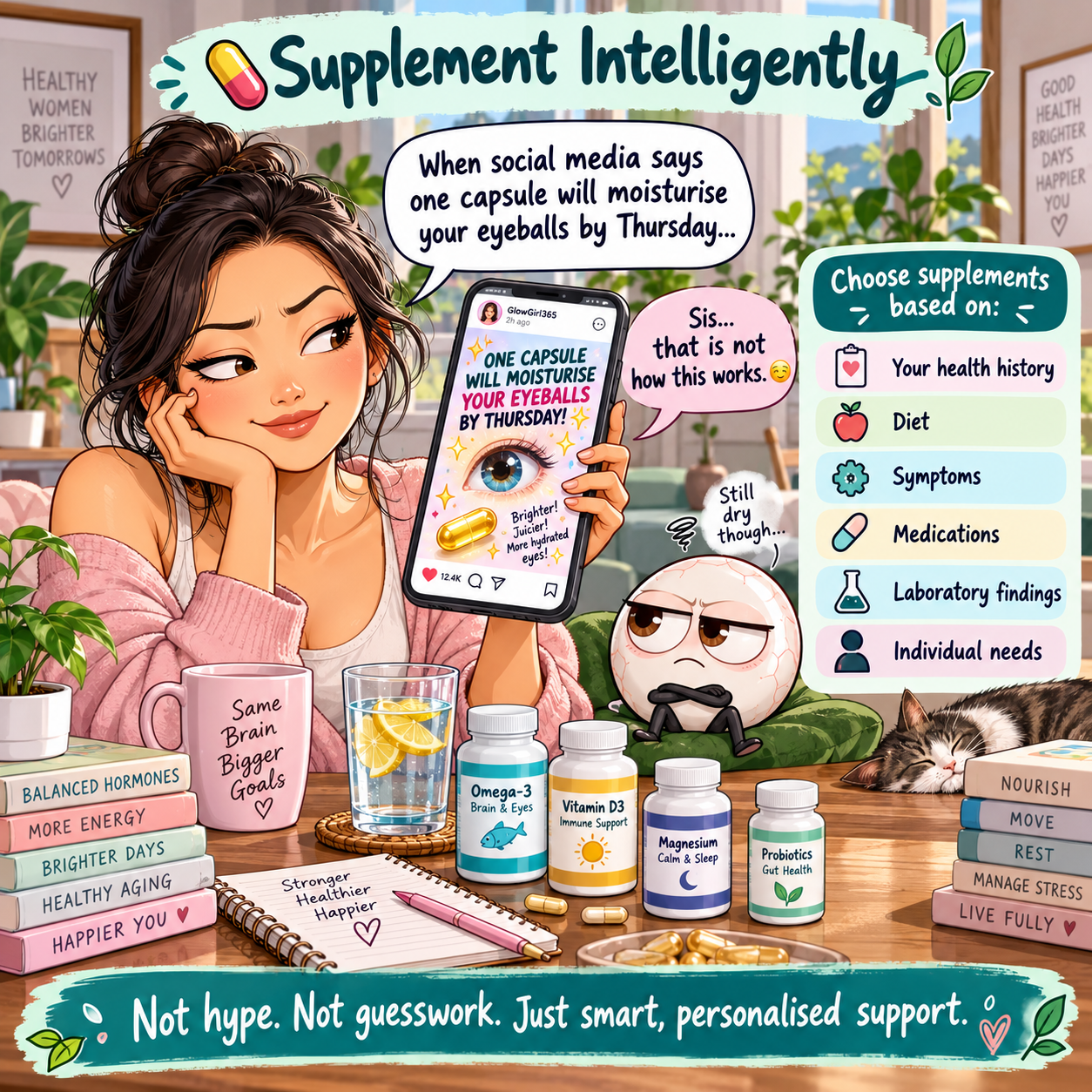
💊 Supplement Intelligently
Supplements should be selected according to:
Your health history
Diet
Symptoms
Medications (if taking any)
Laboratory findings
Individual needs
Not because somebody on social media said a capsule would moisturise your eyeballs by Thursday.
🛍️ Where to Buy Professional-Grade Supplements
🇺🇸 United States
Professional supplement store: https://leavesfromthetreeoflife.fdnstores.com/
🇬🇧 United Kingdom
Amrita Nutrition: https://www.amritanutrition.co.uk/ Practitioner Code: KXCTGG
🙏🏾 Your Eyes Need Rest Too
One of the beautiful principles found within the Seventh-day Adventist health message is the recognition that health is about much more than food.
There is:
🌿 Rest
☀️ Sunshine
💧 Water
🌬️ Fresh air
🏃🏾♀️ Movement
⚖️ Temperance
🙏🏾 Trust in God
Scripture reminds us:
“I will praise thee; for I am fearfully and wonderfully made.” — Psalm 139:14 KJV
We were wonderfully made.
But we were never designed to operate like machines.
And yes, I believe the Sabbath beautifully reinforces that principle.
Six days of striving followed by intentional sacred rest reminds us that our value is not measured by constant productivity.
Close the laptop.
Put down the phone.
Rest your mind.
Spend time with God.
Your nervous system may appreciate it.
Your eyes probably will too. 👀💜
🚩 When It Is Time to Stop Googling and Get Your Eyes Checked
Persistent dry-eye symptoms deserve proper evaluation.
🇺🇸 If You Are in the United States
Schedule an examination with an optometrist. Depending on your symptoms and findings, you may also need evaluation by an ophthalmologist or your primary care clinician.
🇬🇧 If You Are in the United Kingdom
An optometrist—often still called an optician conversationally—can assess many eye problems and refer you onward when needed.
Your GP, NHS eye service or ophthalmology team may become involved depending on the underlying concern and local referral pathways.
Seek professional assessment when symptoms:
Persist despite basic self-care
Frequently interfere with reading or computer work
Affect driving
Are worsening
Make contact lenses increasingly uncomfortable
Cause recurrent significant redness
Occur alongside significant dry mouth
Occur alongside other possible autoimmune symptoms
Involve unexplained vision changes
🚨 Some Eye Symptoms Are Urgent
Do not assume every painful or red eye is “menopause.”
Seek urgent medical or eye-care assessment for symptoms such as:
🚩 Sudden or significant loss of vision
🚩 Severe eye pain
🚩 Major new visual disturbance
🚩 Severe light sensitivity
🚩 A very painful red eye
🚩 Eye trauma
🚩 Chemical exposure
🚩 A foreign object lodged in the eye
🚩 Severe headache with nausea and a red eye
🚩 A painful red eye while wearing contact lenses
🇺🇸 United States
Contact your eye-care professional urgently, use urgent care or emergency services depending on the severity of symptoms.
🇬🇧 United Kingdom
Contact your optometrist, NHS urgent eye-care service, NHS 111 or emergency services depending on the severity and urgency of symptoms.
Do not treat major vision changes as a supplement deficiency until proven otherwise.
💜 Your Body Is Giving You Information—Let’s Learn How to Read It
Maybe your dry eyes really are mostly related to long days staring at a screen.
But perhaps your body is also saying:
“There is more going on here.”
Maybe you are navigating:
🌸 Hormonal changes
😰 Increased anxiety
🎈 Persistent bloating
😴 Poor sleep
🧠 Brain fog
🔥 Hot flashes
💩 Digestive changes
⚡ Energy crashes
You deserve better than being told:
“Well, you are getting older.”
You also deserve better than someone blaming every symptom on estrogen without investigating anything else.
There is a sensible middle ground.
At Leaves from the Tree of Life LLC, we help Businesswomen who are Hormonal, Anxious, and Bloated through Functional Nutrition Coaching + Labs.
We work with women in the United States and United Kingdom who are looking for a more personalised understanding of what may be happening beneath their symptoms.
We look for patterns.
We test when testing makes sense.
We investigate healing opportunities.
And we use functional laboratory data, nutrition, lifestyle foundations and personalised coaching to help you better understand the beautifully complex body God created.
🌿 Invest in your health, invest in you.

🌿 REST YOUR EYES HERBAL POULTICE
A Gentle Warm Poultice for Tired, Dry-Feeling Eyes 👁️✨
When your eyes feel dry, tired, gritty, or simply overworked, sometimes the simplest healing opportunity is warmth, rest, and a break from stimulation.
This gentle herbal poultice is designed for external use over closed eyelids only. It is not an eye drop and should never be placed directly into the eyes.
⏱️ Prep Time
8–10 minutes
👁️ How Long to Apply
5–10 minutes
🫙 Batch Size
Makes approximately 5 single-use herbal poultices
🌱 Ingredients
🌼 2 tablespoons organic dried calendula petals
Calendula contains naturally occurring flavonoids and carotenoids and has traditionally been used topically for its gentle, soothing properties.
🌿 2 tablespoons organic dried marshmallow root
Marshmallow root contains plant mucilage and has a long traditional history of use for soothing dry or irritated tissues.
🍃 1 tablespoon organic dried lemon balm
Lemon balm contains antioxidant plant compounds and has traditionally been used to encourage relaxation and calm.
💧 Clean warm water
Gentle warmth may help support eyelid comfort and the natural oils produced by the meibomian glands, which are an important part of a healthy tear film.
🧺 5 small clean cotton or muslin sachets
🥄 Step-by-Step Instructions
1️⃣ Blend the Herbs
In a clean bowl, combine:
🌼 2 tablespoons dried calendula
🌿 2 tablespoons dried marshmallow root
🍃 1 tablespoon dried lemon balm
Mix thoroughly.
2️⃣ Make Your Poultice Sachets
Divide the herbal mixture evenly between 5 clean cotton or muslin sachets.
Secure each sachet tightly so that the herbs cannot escape.
Store the unused dry sachets in a clean, airtight glass jar away from moisture.
3️⃣ Prepare One Poultice
When ready to use, take one sachet and lightly dampen it with clean warm water.
Gently squeeze away excess water.
The poultice should feel:
✅ Warm
✅ Soft
✅ Slightly damp
It should not be:
❌ Hot
❌ Dripping wet
❌ Leaking herbal material
4️⃣ Check the Temperature
Test the poultice against the inside of your wrist before placing it near your eyes.
If it feels too warm for your wrist, allow it to cool.
The skin around the eyes is delicate, so think comfortably warm—not steaming spa towel.
5️⃣ Rest Your Eyes 👁️
Lie back comfortably.
Close your eyes and gently place the poultice across your closed eyelids.
Leave it in place for:
5–10 minutes
Do not press, rub, or massage the eyes.
And yes, this is your permission to ignore your phone for ten minutes. Your eyeballs have officially clocked out. 😏
6️⃣ Remove and Refresh
Remove the poultice and gently pat the skin around the eyes dry with a clean, soft towel.
If an optometrist or ophthalmologist has recommended lubricating eye drops, use them separately according to their instructions.
7️⃣ Discard After Use
Use each dampened herbal poultice once only.
Do not refrigerate and reuse a wet herbal sachet. Moist botanical material can support microbial growth, and your eyes are not the place to experiment with leftovers.
✨ Healing Opportunities
Think of this poultice as a comfort ritual, not a cure for dry-eye disease.
While you rest, also consider the bigger picture:
👁️ Take regular breaks from prolonged screen work
💧 Stay adequately hydrated
🌬️ Avoid fans or air-conditioning blowing directly toward your eyes
🏡 Consider a humidifier when indoor air is very dry
😴 Prioritise restorative sleep
🧘🏾♀️ Reduce unnecessary stress and visual stimulation
🥗 Nourish the body with a colourful, whole-food, plant-based diet
🔎 Investigate persistent symptoms rather than repeatedly covering them up
Within an A.N.E.W.S.T.A.R.T. + D.R.E.S.S. approach, little daily habits can become powerful healing opportunities when they are consistently combined with individualised investigation.
🙏🏾 A Little Rest Is Good Medicine for the Soul
Sometimes our bodies are simply reminding us that we were not designed for nonstop screens, nonstop work, and nonstop stimulation.
“Come ye yourselves apart into a desert place, and rest a while.” — Mark 6:31 KJV
Rest your eyes.
Rest your mind.
Give your body room to restore. 🌿💜
⚠️ Eye-Safety Note
This poultice is for external use over closed eyelids only.
Do not place herbal teas, tinctures, essential oils, homemade eye drops, or herbal preparations directly into the eyes.
Do not use this poultice if you have an allergy to any ingredient.
Remove contact lenses before use.
Seek professional eye care for persistent or worsening symptoms, significant redness, discharge, severe pain, light sensitivity, sudden vision changes, an eye injury, or a painful red eye while wearing contact lenses.
Persistent dry-eye symptoms should be properly evaluated by an optometrist or ophthalmologist to investigate the underlying cause.
📚 References
Yankelevich D, Tutzer MI, Elizalde Cremonte A. Dry Eye Disease: An Unrecognized Problem in Clinical Practice. Abstract P-188. The Menopause Society 2025 Annual Meeting Oral and Poster Abstracts. 2025. Cross-sectional observational study of 3,547 women using the Ocular Surface Disease Index (OSDI).
The Menopause Society. Risk of Dry Eye Disease Increases During Menopause Transition. Press release. October 2025.
Gorimanipalli B, Khamar P, Sethu S, Shetty R. Hormones and dry eye disease. Indian Journal of Ophthalmology. 2023;71(4):1276–1284. doi:10.4103/IJO.IJO_2887_22.
Sullivan DA, Rocha EM, Aragona P, et al. TFOS DEWS II Sex, Gender, and Hormones Report. The Ocular Surface. 2017;15(3):284–333. doi:10.1016/j.jtos.2017.04.001.
Wolffsohn JS, Lingham G, Downie LE, et al. TFOS Lifestyle: Impact of the digital environment on the ocular surface. The Ocular Surface. 2023;28:213–252. doi:10.1016/j.jtos.2023.04.004.
Wolffsohn JS, Arita R, Chalmers R, et al. TFOS DEWS II Diagnostic Methodology Report. The Ocular Surface. 2017;15(3):539–574. doi:10.1016/j.jtos.2017.05.001.
Jones L, Downie LE, Korb D, et al. TFOS DEWS II Management and Therapy Report. The Ocular Surface. 2017;15(3):575–628. doi:10.1016/j.jtos.2017.05.006.
Willcox MDP, Argüeso P, Georgiev GA, et al. TFOS DEWS II Tear Film Report. The Ocular Surface. 2017;15(3):366–403. doi:10.1016/j.jtos.2017.03.006.
Schaumberg DA, Sullivan DA, Buring JE, Dana MR. Prevalence of dry eye syndrome among US women. American Journal of Ophthalmology. 2003;136(2):318–326. doi:10.1016/S0002-9394(03)00218-6.
Lin PY, Tsai SY, Cheng CY, Liu JH, Chou P, Hsu WM. Prevalence of dry eye among an elderly Chinese population in Taiwan: The Shihpai Eye Study. Ophthalmology. 2003;110(6):1096–1101. doi:10.1016/S0161-6420(03)00262-8.
McCarty CA, Bansal AK, Livingston PM, Stanislavsky YL, Taylor HR. The epidemiology of dry eye in Melbourne, Australia. Ophthalmology. 1998;105(6):1114–1119. doi:10.1016/S0161-6420(98)96016-X.
Versura P, Campos EC. Menopause and dry eye: A possible relationship. Gynecological Endocrinology. 2005;20(5):289–298. doi:10.1080/09513590400027257.
Peck T, Olsakovsky L, Aggarwal S. Dry Eye Syndrome in Menopause and Perimenopausal Age Group. Journal of Mid-life Health. 2017;8(2):51–54. doi:10.4103/jmh.JMH_41_17.
Zhu Y, Xie J, Shi X, Sun Y. Perfluorohexyloctane Eye Drops in Premenopausal and Postmenopausal Women with Dry Eye Disease Associated with Meibomian Gland Dysfunction: A Post Hoc Analysis of a Phase 3 Trial. Current Eye Research. 2026;51(1):9–15. doi:10.1080/02713683.2025.2549289.
George S, Baetje L, et al. Hormone replacement therapy for dry eye disease in postmenopausal women: a PRISMA-registered systematic review and meta-analysis of controlled studies. Expert Review of Ophthalmology. 2026;21(4):351–361. doi:10.1080/17469899.2026.2670017.
American Academy of Ophthalmology. What Is Dry Eye? Symptoms, Causes and Treatment. American Academy of Ophthalmology.
NHS. Dry eyes. Last reviewed January 6, 2025. NHS.
Blog Disclaimer
The health information on this blog is for general educational purposes only and is not intended to diagnose, treat, cure, or prevent any disease. It should not be used as a substitute for professional medical advice. Always consult a qualified healthcare provider before making any health-related decisions
This blog may contain affiliate links, meaning Leaves from the Tree of Life LLC may earn a small commission if you purchase a product or service through these links—at no additional cost to you. Your support helps us continue to provide valuable content. Thank you!
