
Fatty Liver in Perimenopause: Hormones, Weight Gain & What Women Need to Know
🍃 Fatty Liver in Perimenopause: The Missing Piece Behind Hormonal Weight Gain?
If you’ve been Googling, DuckDuckGo-ing, talking to ChatGPT, and scrolling social media trying to figure out why your body suddenly feels puffier, softer, heavier, more inflamed, and far less cooperative than it used to… welcome. You are in the right place.
And no, you are not lazy.
No, you are not broken.
And no, this is not always just about “eat less and move more.”
For many women in perimenopause, stubborn weight gain is not simply about calories, aging, or lack of willpower. Sometimes there is a deeper metabolic story unfolding in the background. One that involves hormones, blood sugar, inflammation, stress, digestion… and yes, the liver.
Specifically, fatty liver — now commonly called MASLD (metabolic dysfunction-associated steatotic liver disease).
That may sound clinical, but the concept is simple: when the liver starts storing excess fat, it can affect far more than liver health alone. It can influence insulin sensitivity, inflammation, hormone balance, weight regulation, energy, and even physical appearance. In other words, this is not just a “liver problem.” This can be part of a much bigger picture.
And if you’ve been feeling like something is missing from the mainstream conversation around perimenopause and weight gain… you may be right.

🔥 Your Liver Is Not Just a Detox Organ — It’s a Hormone and Metabolic Headquarters
In my earlier liver article, I described the liver as the Grand Central Station of health because it helps process nutrients, regulate metabolism, and support hormone balance. And that still stands. But when we zoom in on perimenopause, the picture gets even more interesting.
A lot of women hear the word liver and immediately think, “detox.” Now yes, the liver is involved in detoxification. But that is only one slice of the pie.
Your liver also helps:
regulate blood sugar
package, store, and export fats
process estrogen and other hormones
support bile flow and digestion
manage inflammation and oxidative stress
help determine whether your metabolism feels smooth… or personally offended by everything you eat
So when the liver becomes burdened or starts accumulating fat, it can contribute to a chain reaction of dysfunction. In FDN language, this is where Metabolic Chaos® can start showing itself more loudly.
That might look like:
stubborn abdominal weight gain
sluggish digestion
blood sugar swings
fatigue
puffiness
higher triglycerides
inflammation
hormone imbalance
skin changes
feeling like your body is no longer responding normally
This is why some women can be eating “pretty healthy,” trying to move more, and still feel like their body has entered a mysterious rebellion.
It is not always rebellion.
Sometimes it is physiology.
⚖️ Why Perimenopause Can Set the Stage for Fatty Liver
Perimenopause is not just a reproductive transition. It is a whole-body metabolic transition.
As estrogen fluctuates and gradually declines, several things can begin to shift:
insulin sensitivity may worsen
visceral fat may increase
muscle mass may decrease more easily
stress resilience may drop
sleep often becomes more fragile
inflammation can rise
fat distribution often shifts toward the abdomen
In plain language?
The body becomes more likely to store fat around the middle, and that fat is often more metabolically active and inflammatory than the fat women carried in earlier years.
This is one reason why women in perimenopause may notice:
a thicker waist
a “meno belly”
puffiness
more cellulite or softness around the midsection
fatigue that shows up in the face and body
cravings that feel louder
a general sense that body composition has changed even if scale changes are modest
And because the liver plays such a central role in fat handling, blood sugar regulation, and hormone metabolism, it can become one of the key organs involved in this process.
So no, the midlife body is not “betraying” you.
But it may be asking for a new level of investigation and support.
👀 How Fatty Liver Can Affect Hormones, Weight, and Physical Appearance
Let’s bring this down to real life.
Hormones
The liver helps process and clear hormones, including estrogen. When the liver is under stress, the body may not handle hormonal shifts as efficiently as we would like. This does not mean every hormone issue is caused by the liver — but it does mean the liver can be a meaningful part of the puzzle.
For women in perimenopause, this can overlap with:
bloating
breast tenderness
irregular cycles
heavier periods for some
worsening PMS-like symptoms
a general sense that hormones are louder and more chaotic
Weight
Fatty liver is strongly associated with insulin resistance and metabolic dysfunction. That means the body may become more prone to storing fat, especially around the abdomen.
This is where women often say things like:
“I’m gaining weight but not eating that differently.”
“Everything goes to my stomach now.”
“I feel inflamed all the time.”
“Nothing is working like it used to.”
And honestly? Those experiences deserve better than dismissal.
Physical Appearance
No, appearance is not the most important thing. But it is part of how women often first notice that something is off.
Possible clues may include:
thicker waistline
puffiness or water retention
a more inflamed look overall
skin tags
darker velvety patches around the neck or underarms in some cases
low-energy eyes/face
acne or skin congestion in some women
an “I just don’t look like myself” feeling
That does not mean every physical change equals fatty liver. But it may signal that the deeper metabolic terrain deserves attention.
🚩 What to Look Out For: Clues Your Body May Be Asking for a Deeper Workup
Fatty liver can be sneaky. Many women do not realize it is part of their picture until routine labs, imaging, or a broader workup raises the question.
Some clues that it may be worth investigating include:
unexplained abdominal weight gain
elevated liver enzymes
high triglycerides
insulin resistance or prediabetes
post-meal crashes
fatigue and brain fog
PCOS history
high blood pressure
cravings that feel difficult to regulate
constipation or sluggish digestion
sleep disruption
family history of diabetes or metabolic disease
feeling like your body is doing things that “don’t match” your effort
This is especially worth exploring if you are in perimenopause and feel like you’ve been told vague things without anyone really connecting the dots.
🔬 Fun Fact Science Bar+
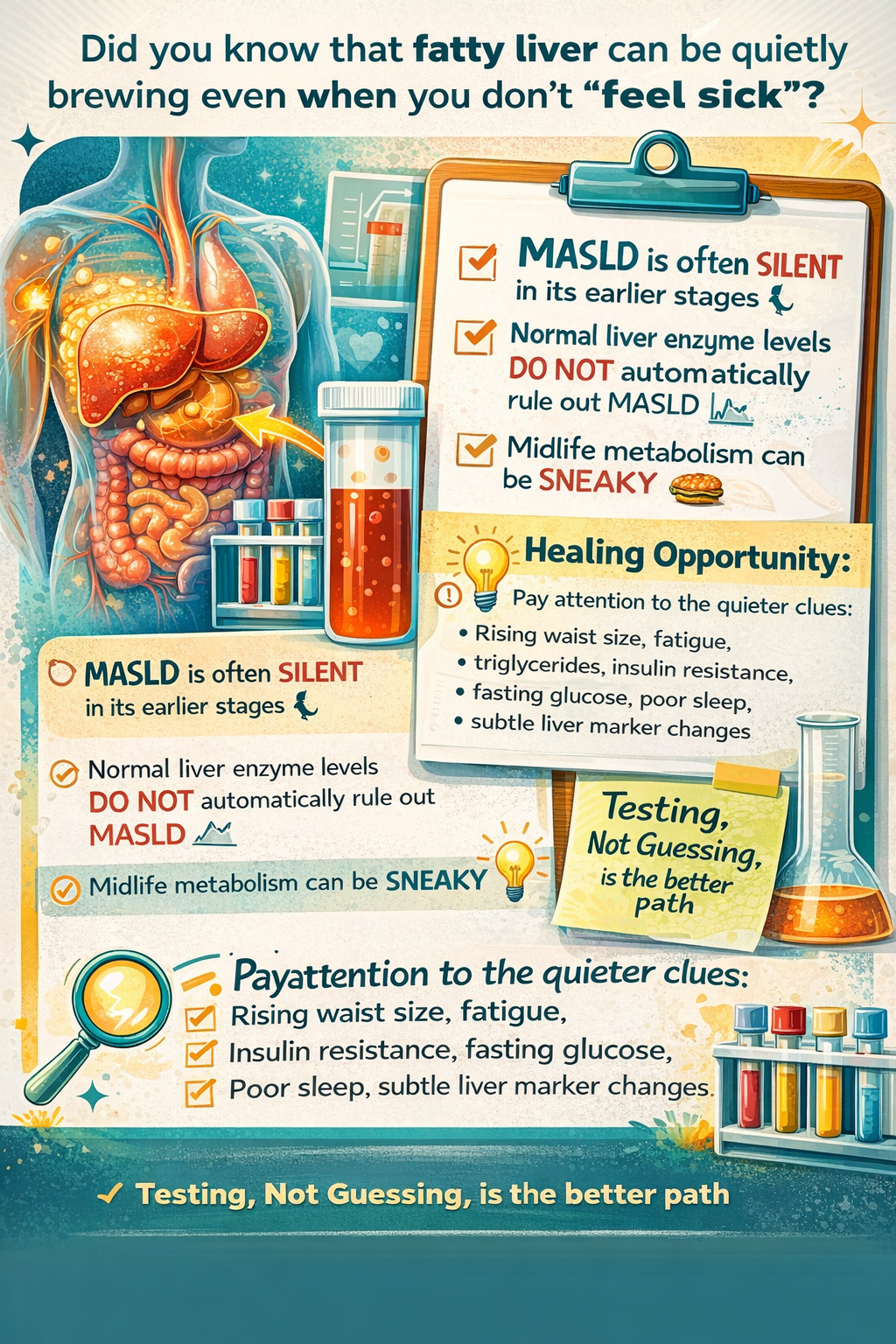
Did you know that fatty liver can be quietly brewing even when you do not “feel sick” — and even when basic liver blood tests are not dramatically abnormal?
MASLD is often silent in its earlier stages, and many people only find out they have it after routine blood work or imaging done for another reason. Even more interesting: normal liver enzyme levels do not automatically rule MASLD out.
👉🏽 Translation:**
So if you are in perimenopause, gaining weight around the middle, feeling puffy, tired, inflamed, or like your metabolism has become deeply uncooperative, do not assume “nothing is wrong” just because you are not having dramatic liver symptoms. Midlife metabolic issues can be subtle, sneaky, and easy to dismiss until the bigger picture is finally connected.
✨ Healing Opportunity:**
Do not wait for your body to stage a full protest. Pay attention to the quieter clues: rising waist circumference, post-meal crashes, triglycerides, fasting glucose or insulin trends, fatigue, blood pressure, poor sleep, and any liver-marker changes over time. This is exactly why testing, not guessing matters — because what is “quiet” is not always harmless.
🧪 Testing, Not Guessing: Why Functional Testing Helps You See the Bigger Picture
This is where I become lovingly firm.
If your body is waving flags, please do not reduce the conversation to random supplements and internet opinions alone.
This is the season for testing, not guessing.
As a Traditional Naturopath and Functional Diagnostic Nutrition Practitioner, I believe strongly in looking at the full terrain. Functional testing does not replace medical evaluation, but it can offer a much broader understanding of what may be driving the weight gain and metabolic dysfunction.
Functional Blood Chemistry Analysis
This is one of the most useful starting points because it helps us look at patterns involving:
liver enzymes
blood sugar markers
lipid markers
inflammatory markers
red blood cell patterns
thyroid-related clues
nutrient-related patterns
Sometimes the “normal” range is not the full story. Functional interpretation can help identify trends and stress patterns earlier.
HTMA
HTMA can offer insight into mineral status patterns, stress physiology, metabolic pace, and how the body may be adapting over time. It is not a stand-alone diagnostic tool for fatty liver, but it can provide very helpful context.
DNA Hormones, DNA Core, DNA Gut, DNA Health
These tests can help reveal susceptibilities related to:
estrogen metabolism
detoxification tendencies
inflammatory patterns
oxidative stress
blood sugar regulation
appetite tendencies
nutrient need patterns
gut-related vulnerabilities
Genes are not destiny, but they can help explain why one woman’s body seems more prone to hormonal weight gain and metabolic issues than another’s.
GI-MAP
The gut-liver connection matters. Dysbiosis, microbial imbalance, constipation, poor digestion, and inflammatory burden can all influence the liver and wider metabolic picture.
MRT Food Sensitivity Testing
For some women, hidden food-related inflammatory burden may be contributing to puffiness, immune stress, digestive symptoms, and difficulty making progress.
The goal here is not to make health feel complicated.
The goal is to stop playing whack-a-mole with symptoms and start understanding the pattern.
Because when we understand the pattern, we can uncover true healing opportunities.
🌿 What Can You Do While You’re Waiting for Professional Guidance?
Let’s keep this simple, supportive, and sane.
If you are waiting to hire a Traditional Naturopath, Functional Diagnostic Nutrition Practitioner, or functional medicine doctor, this is not the time to throw twenty supplements at your body and hope for a miracle. Midlife bodies usually do better with clarity, consistency, and a lower-chaos approach.
So rather than overwhelm you with a huge protocol, let’s focus on a few supportive tools that may help encourage better metabolic rhythm, liver support, energy production, detoxification, and overall resilience while you prepare for more personalized care.
💊 A More Focused Supportive Approach
CellCore GlyNACtive™
GlyNACtive™ is designed to support the body’s own glutathione production. That matters because glutathione plays a major role in antioxidant defense, detoxification, mitochondrial health, and cellular resilience.
For women in perimenopause dealing with fatigue, inflammation, sluggish recovery, blood sugar stress, or feeling like their body is carrying too much metabolic burden, this kind of foundational support may be appealing because it aims to support the terrain at a deeper cellular level rather than simply chasing symptoms.
In plain English: this is the kind of support that may be worth considering when the body seems inflamed, tired, overloaded, and not bouncing back the way it used to.
CellCore Metabolic Support Bundle
The Metabolic Support Bundle is designed to support the body more broadly in areas related to:
mitochondrial function
cellular metabolism
blood sugar support
drainage and detoxification
digestion
hormone function
whole-body foundational support
That broader support may be useful for women who feel like their weight gain is not just about food, but also about sluggish metabolism, poor detox capacity, inflammation, low energy, and the classic “something is off but I can’t quite put my finger on it” feeling.
And honestly, that is often the midlife story.
That said, even a supportive bundle should still be approached thoughtfully. More is not always better. Some women do well starting slowly and observing how their body responds rather than diving in aggressively.
☀️ Lifestyle Support That Does Not Require Perfection
Supplements can be supportive, yes. But the body also needs rhythm.
That is where these simple practices can be beautifully helpful:
Infrared support
Infrared support may be helpful for circulation, recovery, relaxation, and overall wellness support. It is not a substitute for good nutrition, sleep, or a proper workup, but it may be a meaningful adjunct for women trying to support the body more gently.
Rebounding
Rebounding can be a useful low-impact way to encourage movement, lymphatic flow, circulation, and consistency. It is especially appealing for women who find intense workouts too stressful, too draining, or just deeply annoying in this season.
Walking
Walking is one of the most underrated metabolic tools available.
A simple walk after meals may help support blood sugar handling, digestion, stress reduction, and overall daily movement without pushing the body into more stress chemistry. It is basic, yes. But basic does not mean ineffective.
Sun bathing / sunshine exposure
Wise sunshine exposure can support circadian rhythm, mood, sleep, and overall metabolic rhythm. In a world where many women are indoors, stressed, overstimulated, and disconnected from restorative rhythms, sunshine is one of those simple gifts from God that we should not underestimate.
This is where A NEW START® feels so fitting:
Attitude
Nutrition
Exercise
Water
Sunshine
Temperance
Air
Rest
Trust in God
Sometimes the body needs more than a protocol.
Sometimes it needs rhythm, light, breath, and rest too.
📝 A Gentle Word of Wisdom
Even with supportive products like GlyNACtive™ and the Metabolic Support Bundle, this is still not a replacement for individualized care.
Because the truth is, weight gain in perimenopause may involve:
fatty liver / MASLD
insulin resistance
gut dysfunction
thyroid issues
inflammation
stress overload
poor sleep
nutrient depletion
detoxification burden
hormone shifts happening all at once
That is why testing, not guessing still matters.
So if you choose to begin with a few foundational supports while you wait, let it be just that: a gentle starting point, not the final answer.
💛 A Simple “While You Wait” Starting Point
If you want to keep things calm and doable, your starting rhythm might look like this:
consider CellCore GlyNACtive™ as foundational antioxidant and glutathione support
consider the CellCore Metabolic Support Bundle as broader metabolic and drainage support
use infrared support as an adjunct, not the main strategy
do a little rebounding if tolerated
walk daily, especially after meals
get regular sunshine exposure
keep meals protein-forward and blood sugar conscious
gather your old labs, symptoms, and timeline so you are ready when you do work with a practitioner
That kind of approach is supportive without becoming chaotic.
And for many women, reducing chaos is half the battle.
🩺 How to Advocate for Yourself With Your GP or Primary Care Doctor
Many women get brushed off with one of these classic lines:
“Your labs are normal.”
“It’s just menopause.”
“Just lose weight.”
Deeply unsatisfying.
Here is a better approach.
If You’re in the UK
You can ask your GP for a deeper evaluation if you have central weight gain, abnormal liver markers, metabolic concerns, fatigue, or a family history that raises concern.
You may want to ask about:
liver function tests
HbA1c
fasting lipids
blood pressure and waist circumference review
possible fatty liver assessment
liver ultrasound if appropriate
further evaluation if the clinical picture suggests it
You can say something like:
“I’m in perimenopause, but I’m also concerned there may be a metabolic or liver component to my weight gain and symptoms. I’d like to investigate that rather than assume it is only age or hormones.”
Clear. Calm. Reasonable.
If You’re in the US
Ask your PCP, OB-GYN, internist, or appropriate clinician for a proper metabolic review if you are seeing:
rising abdominal weight
elevated triglycerides
blood sugar issues
fatigue
liver enzyme changes
strong family history
symptoms that do not match your effort
You can say:
“I’m concerned that my perimenopausal weight gain may have a metabolic component, including insulin resistance or possible fatty liver. I’d like a workup that looks beyond calories alone.
Again: not dramatic. Just informed.
🥗 A Generic Protocol for Weight Loss Support in Perimenopause With Fatty Liver Concerns
This is general education, not individualized care.
But broadly, supportive strategies often include:
Diet
Focus on:
protein-forward meals
high-fiber whole foods
blood sugar stability
reducing ultra-processed foods
reducing liquid sugars
consistent meal rhythm
enough nourishment, not chronic under-eating
Rest
Poor sleep can worsen insulin resistance, cravings, cortisol dysregulation, and weight loss resistance.
Exercise
Aim for a mix of:
walking
gentle daily movement
resistance training
supportive recovery work
Stress Reduction
A dysregulated nervous system can keep the body in a state of stress chemistry that makes healing and weight regulation harder.
Supplements
Supplements may be useful, but ideally they are chosen based on the woman, her symptoms, her tolerance, and her labs.
This is why D.R.E.S.S. matters so much:
Diet
Rest
Exercise
Stress Reduction
Supplements
And this is also why I appreciate A NEW START® so deeply:
Attitude
Nutrition
Exercise
Water
Sunshine
Temperance
Air
Rest
Trust in God
Midlife healing is rarely about one dramatic hack.
It is about restoring order to the terrain.
🌸 Why Hiring a Functional Diagnostic Nutrition Practitioner and/or Functional Medicine Doctor Can Help
Sometimes women need one. Sometimes they benefit from both.
A functional medicine doctor may be able to evaluate medical risk, order medical testing, assess medications, and address higher-level pathology.
A Traditional Naturopath or Functional Diagnostic Nutrition Practitioner can help connect the dots, review functional patterns, identify hidden stressors, and build a realistic lifestyle and supplement strategy.
That combination can be especially helpful when women are dealing with:
hormonal weight gain
suspected fatty liver
insulin resistance
thyroid overlap
gut dysfunction
stress burnout
supplement confusion
the feeling that “I’ve tried everything and something still isn’t being addressed”
Because sometimes the issue is not lack of effort.
It is lack of precision.
🙏🏽 A Gentle Faith Note for the Woman Who Feels Discouraged
Sometimes perimenopause can make a woman feel like her body has turned on her.
But I do not believe your body is your enemy.
I believe the body often whispers before it screams. I believe symptoms can be signals. I believe there are healing opportunities even in frustrating seasons. And with a slight Seventh-day Adventist lens, I also believe that God’s design for health is intelligent, practical, and deeply merciful.
Not punishment.
Not vanity.
Stewardship.
The body is not asking for shame.
It is asking for wisdom, rhythm, nourishment, rest, investigation, and grace.
💌 The Bottom Line: If Something Feels Missing, Don’t Ignore That Feeling
If you are in perimenopause, gaining weight around the middle, feeling hormonally chaotic, inflamed, puffy, tired, and like your body is no longer responding normally, fatty liver may be one piece of the puzzle worth exploring.
Not the only piece.
But a very relevant one.
And if you landed on this page because you’ve been searching for answers and thinking:
“I know this cannot just be me getting older.”
You may be right.
There may be deeper metabolic patterns at play. There may be liver involvement. There may be gut dysfunction, food reactivity, stress overload, mineral imbalances, blood sugar issues, poor sleep, thyroid overlap, or a need for more personalized support.
That is why this is not the season for guesswork.
🌿 Ready to Stop Guessing and Start Getting Answers?
If you are tired of being told everything is “normal” while your body is clearly waving a distress flag, this is where professional support can make all the difference.
Working with a qualified Traditional Naturopath, Functional Diagnostic Nutrition Practitioner, and/or Functional Medicine Doctor can help you:
identify root drivers of weight gain
understand the hormone-liver-metabolism connection
use functional testing strategically
build a personalized D.R.E.S.S. + A NEW START® framework
uncover true healing opportunities instead of chasing symptoms
Because “try harder” is not a strategy.
Testing. Pattern recognition. Skilled guidance. Lifestyle medicine. Faithful stewardship.
That is the better path.
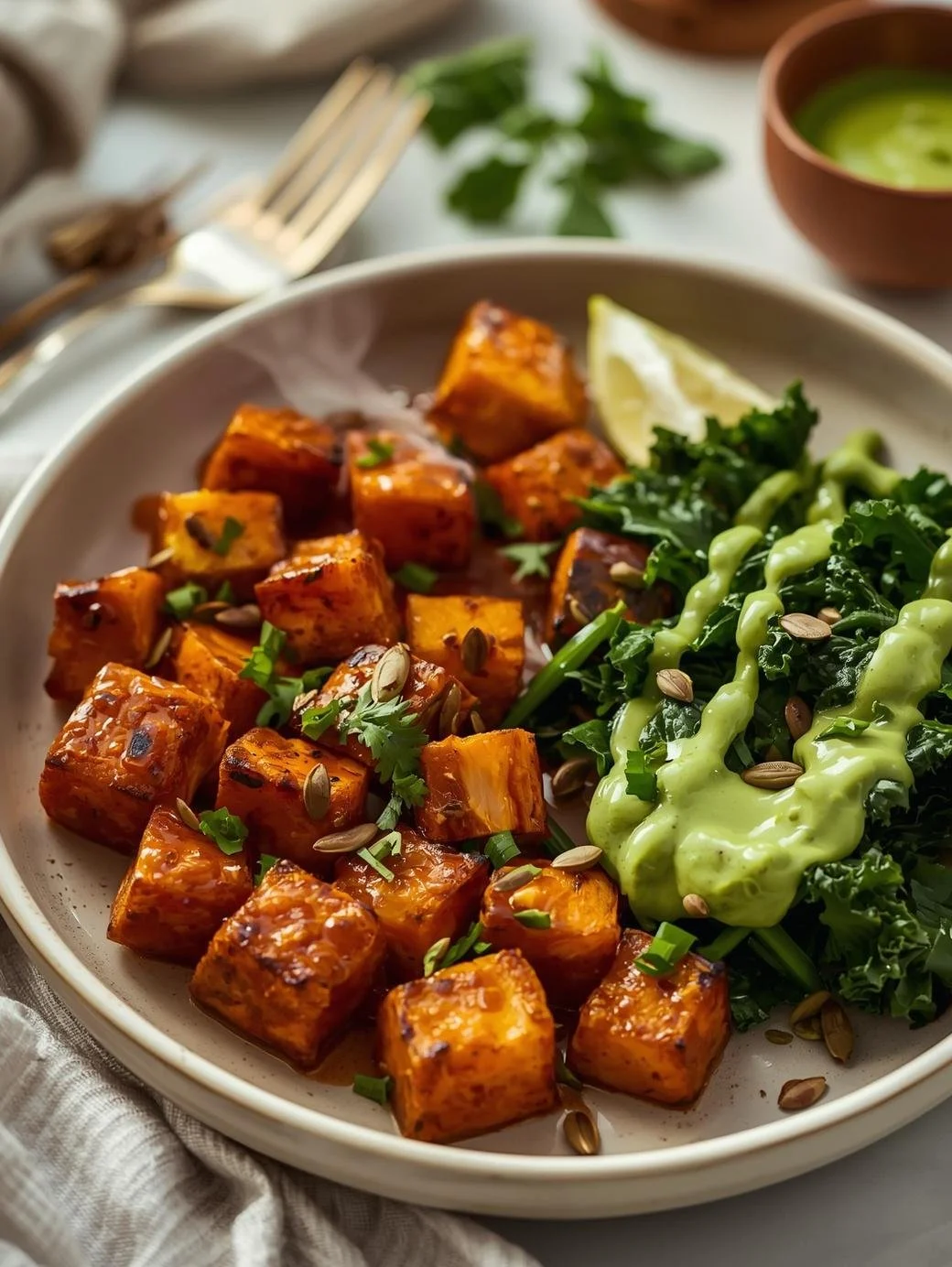
Sticky Ginger Chili Tofu with Roasted Sweet Potato, Garlicky Greens & Creamy Lime Avocado Drizzle
This Sticky Ginger Chili Tofu plate is the kind of meal that supports GLP-1-friendly goals without tasting like punishment. It is rich in protein, fiber, color, and flavor, with enough texture and satisfaction to help midlife women feel nourished, steady, and actually excited to eat what is on their plate.
Why it fits the theme
It gives you:
plant protein from tofu
fiber-rich smart carbs from sweet potato
healthy fats from avocado and pumpkin seeds
bitter/leafy green support from garlicky greens
bold, sticky, savory-sweet flavor so this feels satisfying and grounding, not like sad wellness food pretending to be dinner
🛒 Ingredients
For the tofu
1 block extra-firm tofu, pressed and cubed 🍱
1 tbsp coconut aminos or low-sodium tamari
1 tbsp fresh ginger, grated ✨
2 cloves garlic, minced 🧄
1 tsp lime juice 🍋
1 tsp olive oil
1 tsp chili flakes or mild chili paste 🌶️
1 tsp maple syrup (just enough for balance, not dessert behaviour) 🍁
1 tsp cornstarch or arrowroot for light crispness
For the roasted sweet potatoes
2 medium sweet potatoes, peeled and cubed 🍠
1 tbsp olive oil
1/2 tsp smoked paprika
1/2 tsp garlic powder
1/4 tsp cumin
pinch of sea salt and black pepper
For the garlicky greens
4 cups kale or Swiss chard, chopped 🥬
1 tsp olive oil
2 cloves garlic, sliced
pinch of sea salt
squeeze of lemon or lime
For the creamy lime avocado drizzle
1 ripe avocado 🥑
juice of 1 lime 🍋
2–3 tbsp water
1 tbsp fresh coriander/cilantro or parsley 🌿
1 small clove garlic
pinch of sea salt
For topping
2 tbsp pumpkin seeds 🎃
extra chopped herbs if desired 🌿
lime wedges for serving
⏰ Time
Prep: 15 minutes
Cook: 25 minutes
Total: about 40 minutes
👩🏽🍳 Step-by-step
1. Prep the sweet potatoes
Preheat the oven to 200°C / 400°F. Toss the sweet potato cubes with olive oil, smoked paprika, garlic powder, cumin, salt, and pepper. Spread on a baking tray and roast for 25 minutes, flipping halfway, until tender and caramelized at the edges.
2. Marinate the tofu
In a bowl, whisk together coconut aminos, ginger, garlic, lime juice, olive oil, chili, and maple syrup. Toss the tofu cubes in the mixture, then sprinkle with cornstarch and toss again lightly.
3. Cook the tofu
Pan-sear the tofu in a non-stick skillet over medium heat until golden and sticky on the edges, about 8–10 minutes, turning occasionally. You want it caramelized, savory, a little spicy, and highly snackable.
4. Sauté the greens
In another pan, warm olive oil and garlic. Add the kale or Swiss chard with a pinch of salt and sauté until softened and glossy. Finish with a squeeze of lemon or lime.
5. Blend the drizzle
Blend or mash together avocado, lime juice, water, herbs, garlic, and salt until smooth and creamy. Add a splash more water if needed to make it drizzle-friendly.
6. Build the plate
Pile the roasted sweet potatoes onto a plate or bowl, add the sticky tofu, tuck in the garlicky greens, and drizzle generously with the creamy lime avocado sauce.
7. Finish beautifully
Top with pumpkin seeds, extra herbs, and a squeeze of lime. Serve warm and prepare to feel very pleased with yourself.
🌿 Health benefits of the ingredients
🍱 Tofu
A wonderful plant protein that helps support satiety, blood sugar steadiness, and muscle maintenance — especially important in midlife when body composition can shift a little too enthusiastically.
🍠 Sweet potato
Provides fiber and slow-digesting carbohydrates that can feel far more grounding and blood-sugar-friendly than refined carbs, while still giving that comforting, satisfying texture.
🥬 Kale or Swiss chard
Rich in fiber, minerals, and bitter-green goodness that beautifully complements a hormone- and liver-conscious plate.
🧄 Garlic
Adds bold flavor while making the whole meal feel savory, robust, and alive.
🥑 Avocado
Provides healthy fats that help with satiety, texture, and keeping the meal satisfying enough that you are not rummaging through the kitchen 90 minutes later.
🎃 Pumpkin seeds
Add crunch, minerals, and a little extra protein and healthy fat — tiny but mighty.
✨ Ginger
Brings warmth, digestive support, and that lovely zing that makes the tofu taste far more exciting.
🌶️ Chili
Adds a gentle heat that makes the meal feel vibrant and craveable, which is very helpful when “healthy eating” has started to feel emotionally offensive.
🍋 Lime
Brightens everything and keeps the dish tasting fresh, springy, and lifted rather than heavy.
📚 References
🩺 Fatty Liver / MASLD Basics
AASLD — Clinical Assessment and Management of Metabolic Dysfunction-Associated Steatotic Liver Disease
👉🏾 https://www.aasld.org/practice-guidelines/clinical-assessment-and-management-metabolic-dysfunction-associated-steatotic
NHS — Non-alcoholic Fatty Liver Disease (NAFLD)
👉🏾 https://www.nhs.uk/conditions/non-alcoholic-fatty-liver-disease/
EASL–EASD–EASO — Clinical Practice Guidelines on the Management of Metabolic Dysfunction-Associated Steatotic Liver Disease (MASLD)
👉🏾 https://www.journal-of-hepatology.eu/article/S0168-8278(24)00329-5/fulltext
🧬 GlyNAC, Oxidative Stress & Metabolic Health
PubMed — GlyNAC supplementation in older adults restored glutathione levels, reduced oxidative stress, and improved mitochondrial function, insulin resistance, and inflammation
👉🏾 https://pubmed.ncbi.nlm.nih.gov/35975308/
PMC — Roles of glycine and N-acetylcysteine in glutathione synthesis and redox support
👉🏾 https://pmc.ncbi.nlm.nih.gov/articles/PMC11393155/
PubMed — GlyNAC supplementation improved glutathione, oxidative stress, mitochondrial dysfunction, inflammation, cognition, strength, gait speed, and body composition
👉🏾 https://pubmed.ncbi.nlm.nih.gov/34587244/
PubMed — GlyNAC supplementation for 24 weeks in older adults corrected glutathione deficiency and improved several aging-related markers
👉🏾 https://pubmed.ncbi.nlm.nih.gov/33783984/
PubMed — Dietary glycine and cysteine restored glutathione synthesis and lowered oxidative stress in older adults
👉🏾 https://pubmed.ncbi.nlm.nih.gov/21795440/
PMC — GlyNAC supplementation was safe and well tolerated and may be helpful in those with higher oxidative stress / lower baseline glutathione
👉🏾 https://pmc.ncbi.nlm.nih.gov/articles/PMC8773349/
🧪 TUDCA, Bile Flow & Liver Support
PMC — TUDCA improved palmitic-acid-induced hepatocellular lipotoxicity
👉🏾 https://www.ncbi.nlm.nih.gov/pmc/articles/PMC6990600/
PubMed — TUDCA reduced liver enzymes related to cholestasis and cytolysis
👉🏾 https://pubmed.ncbi.nlm.nih.gov/9918924/
PubMed — TUDCA increased fecal bile acid excretion
👉🏾 https://pubmed.ncbi.nlm.nih.gov/9918905/
PubMed — TUDCA stimulated bile flow and improved bile quality
👉🏾 https://pubmed.ncbi.nlm.nih.gov/22301109/
PMC — TUDCA stimulated secretion of ATP by isolated rat hepatocytes
👉🏾 https://www.ncbi.nlm.nih.gov/pmc/articles/PMC1222025/
PMC — TUDCA inhibited ER stress and cytotoxicity in experimental models
👉🏾 https://www.ncbi.nlm.nih.gov/pmc/articles/PMC6770470/
PubMed — TUDCA alleviated fatty liver by downregulating lipogenic genes and reducing fat accumulation
👉🏾 https://pubmed.ncbi.nlm.nih.gov/31155263/
🌿 Supportive Product Pages
Get exclusive access to Cellcore Biosciences products
https://cellcore.com/pages/register-customer?code=4wE9sq3O
CellCore Biosciences — GlyNACtive™
👉🏾https://cellcore.com/products/glynactive/
CellCore Biosciences — Metabolic Support Bundle
👉🏾https://cellcore.com/products/metabolic-support-kit
Blog Disclaimer
The health information on this blog is for general educational purposes only and is not intended to diagnose, treat, cure, or prevent any disease. It should not be used as a substitute for professional medical advice. Always consult a qualified healthcare provider before making any health-related decisions
This blog may contain affiliate links, meaning Leaves from the Tree of Life LLC may earn a small commission if you purchase a product or service through these links—at no additional cost to you. Your support helps us continue to provide valuable content. Thank you!
