
COMT, Perimenopause & Mood: How Fast or Slow COMT May Influence Hormones, Stress, and Estrogen Handling
🧠🌸 Perimenopause, COMT & the “Why Do I Suddenly Feel Like This?” Conversation
Perimenopause has a way of humbling even the most health-conscious woman. One minute you are managing life, work, family, ministry, and your green tea like a responsible adult. The next minute you are lying awake at 2:13 a.m., overstimulated, emotionally tender, mildly offended by everyone’s breathing, and wondering whether this is stress, hormones, aging, burnout, or all of the above. Often, it is not just one thing.
If you have been Googling, DuckDuckGo’ing, reading journal abstracts, asking friends, scrolling social media, and still feeling like a key piece is missing, you are not imagining things. Perimenopause is not simply “low estrogen.” It is a transition marked by shifting and fluctuating hormones, and those shifts can affect mood, sleep, cycle patterns, cognition, and overall resilience.
This is where COMT can become an interesting and useful clue.
As a Traditional Naturopath and Functional Diagnostic Nutrition Practitioner, I look at symptoms through a broader lens. I am not interested in reducing a woman to one lab marker or one trendy buzzword. I am interested in patterns. In FDN language, many women in this season are not dealing with one isolated issue but with overlapping stressors that can create Metabolic Chaos®—where hormones, blood sugar, gut health, nutrient status, inflammation, stress load, and detoxification all start stepping on each other’s toes.
COMT may be one piece of that story.
🧬⚙️ What COMT Actually Is
COMT stands for catechol-O-methyltransferase. It is an enzyme involved in breaking down certain catechol-containing compounds, including neurotransmitters such as dopamine, norepinephrine, and epinephrine, and it also has a role in handling catechol estrogens. In other words, COMT helps the body process part of your stress chemistry and part of your estrogen chemistry.
The commonly discussed genetic variant is COMT Val158Met, also written as 472 G>A or rs4680. In this variant, the Val (G) version is associated with higher COMT activity, and the Met (A) version is associated with lower COMT activity. Reviews of the literature commonly describe GG / Val-Val as faster activity, GA / Val-Met as intermediate, and AA / Met-Met as slower activity.
Now let me say the important part loudly for the sisters in the back:
This is a predisposition, not a diagnosis.
A COMT result does not diagnose perimenopause, anxiety, depression, fibroids, estrogen dominance, or any other condition. It does not tell your future. It does not mean your personality is hardwired in stone. It simply offers a clue about how your body may tend to process certain compounds under certain conditions. Real-life expression is influenced by many things, including overall physiology and environment.
Think of COMT as a clue, not a crystal ball.
🌪️🔥 Fast COMT: When Things May Clear More Quickly
With COMT Val158Met, GG (Val/Val) is generally considered fast COMT. This pattern is associated with higher COMT enzyme activity, meaning certain catecholamines may be cleared more quickly.
In practical, everyday language, some women with a fast COMT tendency may feel like they “burn through” stimulation or stress chemistry more quickly. They may be more prone to patterns such as:
low mood
lower motivation or drive
poor attention or focus
forgetfulness
lower energy
craving stimulation such as caffeine, chocolate, novelty, or carbs
feeling like they need a push just to get going
struggling during seasons of hormone fluctuation, including perimenopause
That does not mean every woman with GG will have all of those symptoms. It means that this pattern may help explain why some women feel flat, underpowered, or like they are constantly trying to self-medicate with caffeine, busyness, sugar, or stimulation.
In perimenopause, that can look like: “Why do I feel so blah?” “Why do I need coffee just to act like a person?” “Why can’t I get my motivation back?”
Not laziness. Not moral failure. Not “you’re just getting older.” Sometimes there is deeper biochemistry underneath the behavior.
😵💫☕ Slow COMT: When Things May Linger Longer
With COMT Val158Met, AA (Met/Met) is generally considered slow COMT. This pattern is associated with lower COMT enzyme activity, meaning certain catecholamines and catechol-type compounds may be broken down more slowly.
That can mean some women are more prone to feeling like stress chemistry hangs around too long. For them, life can feel more intense, more stimulating, and harder to “turn off.”
Possible patterns may include:
excessive worry
trouble relaxing
poor sleep quality
feeling “wired but tired”
irritability or tension
more sensitivity to caffeine, chocolate, green tea, or black tea
body aches or stressy tension
heightened reactivity during hormone shifts
PMS-type or estrogen-heavy complaints
Again, not diagnostic. Not destiny. Just a tendency that may become more obvious when the body is under pressure.
And perimenopause absolutely counts as pressure.
A woman with slow COMT may say: “Why does one cup of coffee now feel like spiritual warfare?” “Why can’t I stop thinking?” “Why am I so tired but can’t switch off?”
That is where genetics, hormones, stress load, and lifestyle can create a very noisy cocktail.
⚖️🧩 The Middle Ground: GA Is a Real Thing Too
Not every woman fits neatly into a “fast” or “slow” box. GA (Val/Met) is usually considered intermediate activity. That means some women may show a mixture of patterns depending on stress, nutrient status, sleep, estrogen fluctuations, blood sugar, and overall resilience.
This is one reason I do not like oversimplified social media content that acts like one SNP explains your whole personality, your whole perimenopause, and your whole life by Tuesday.
No ma’am.
Genes interact with context. And women deserve better than gene horoscopes dressed up as science.
🔬Fun Fact Science Bar+
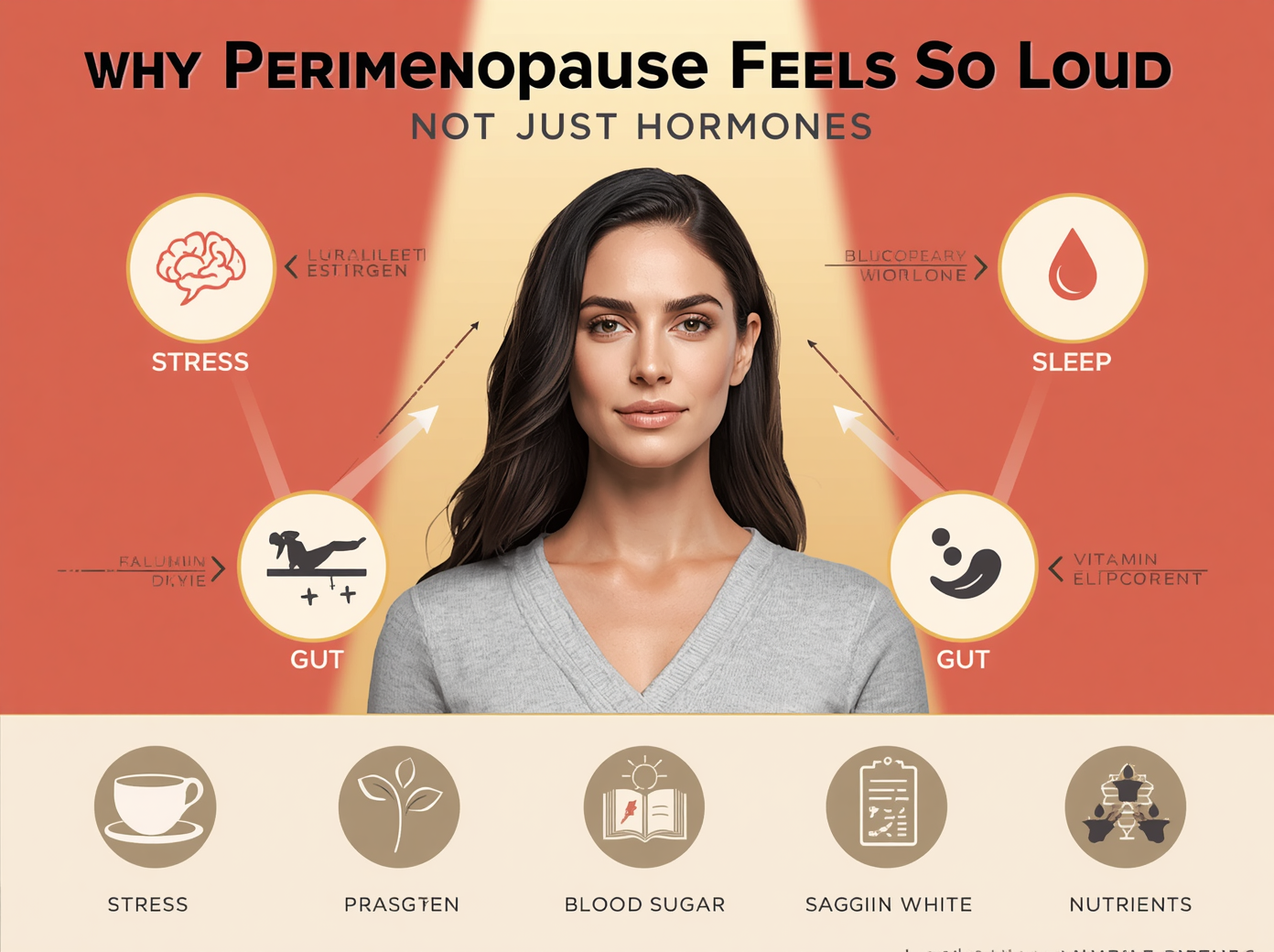
Did you know that your stress response, estrogen handling, sleep quality, blood sugar swings, and gut health can all influence how “loud” perimenopause feels? In other words, it is not always “just hormones.” For many women, perimenopause acts like a spotlight — exposing patterns that were already simmering under the surface. That is one reason two women can be in the same life stage and have completely different symptom experiences.
👉🏾 Translation: if you feel like your body suddenly became dramatic, needy, moody, foggy, overstimulated, or oddly sensitive to caffeine and stress… your body may not be malfunctioning. It may be revealing deeper Metabolic Chaos® patterns and hidden healing opportunities.
✨ Healing Opportunity: this is where a whole-person approach matters. Instead of guessing, look at the bigger picture: hormones, stress, gut health, blood sugar, sleep, nutrient status, and lifestyle rhythms. That is also why supportive rituals — like a calming herbal tea, nourishing meals, prayer, rest, and personalized testing — can be so meaningful in this season.
🩸💭 Why COMT Matters in Perimenopause
Perimenopause is often misrepresented as one straight decline in hormones, but that is not how it usually behaves. During perimenopause, hormone levels can fluctuate, and symptoms can include menstrual changes, vasomotor symptoms, sleep disturbance, low mood, and anxiety. NICE guidance specifically recognizes that these kinds of symptoms can occur in perimenopause and should be taken seriously.
If COMT influences how a woman tends to process catecholamines and some estrogen-related compounds, then fluctuating hormones can feel more dramatic in a woman whose stress chemistry, detoxification capacity, nutrient status, and nervous system are already under strain. That may show up as:
mood swings
anxiety or irritability
low motivation
poor stress tolerance
brain fog
sleep disruption
heightened sensitivity to caffeine or sugar
feeling unlike yourself
This is why two women can both be in perimenopause and yet have very different symptom pictures. One may feel anxious, overstimulated, and unable to switch off. Another may feel flat, foggy, and as if her spark packed a suitcase and left without notice.
COMT may not be the whole answer, but it can be one useful piece of the puzzle.
🚨👀 Symptoms That May Deserve a Closer Look
If you are in perimenopause and noticing any of the following, it may be worth stepping back and looking at the bigger picture:
new or worsening anxiety
low mood
irritability
poor concentration
forgetfulness
low drive or motivation
trouble sleeping
feeling overstimulated
sensitivity to caffeine, chocolate, or tea
stronger PMS-like symptoms
cycle changes
feeling more reactive to stress
using caffeine, sugar, or constant stimulation just to function
These symptoms do not prove a COMT issue. They simply may suggest that a deeper look at hormone handling, neurotransmitter-related patterns, stress physiology, blood sugar, gut health, and nutrient status could be worthwhile.
🧪📊 Testing, Not Guessing: Functional Labs That Can Help Build the Picture
This is where a functional lens can be very helpful. Not because labs are magic, and not because one report tells the whole truth, but because good data can help us stop guessing.
Here are some tools that may help bring context to the conversation:
DNA Hormones / DNA CORE
Genetic panels can identify tendencies in areas such as hormone metabolism, methylation, detoxification, inflammation, and neurotransmitter-related pathways. Again, these are predispositions, not diagnoses, but they can help explain why certain women may need more targeted support.
DUTCH testing
The DUTCH test is designed to assess sex hormones, cortisol patterns, and hormone metabolites, and its reporting includes estrogen metabolism patterns. That can be useful when a woman has symptoms suggestive of estrogen-handling issues, sleep disruption, mood swings, cycle irregularity, or a more complicated hormone picture.
FBCA (Functional Blood Chemistry Analysis)
Blood chemistry can help reveal patterns related to blood sugar balance, thyroid trends, nutrient status, liver burden, inflammation, iron status, and general metabolic function. Since COMT does not operate in isolation, broader chemistry matters.
GI-MAP / DNA Gut
The GI-MAP is a stool test that uses qPCR technology to detect microbes such as bacteria, parasites, fungi, and H. pylori. Gut data can be helpful because digestion, inflammation, bowel regularity, microbial balance, and estrogen recycling all matter in the perimenopause conversation.
MRT
MRT may be considered when food sensitivities and inflammatory burden are suspected contributors to symptoms. In some women, inflammatory reactivity adds fuel to the fire and worsens the broader Metabolic Chaos® picture.
The goal is not to order every lab under heaven. The goal is to use the right labs, in the right woman, at the right time, for the right questions.
That is the difference between testing and collecting expensive confusion.
🧼✨ How to Help “Keep the Gene Clean”
I do not use gene language to frighten women. I use it to encourage stewardship.
When people talk about “keeping COMT clean,” what they usually mean is reducing the burden on the system and supporting the body in the areas that influence gene expression and day-to-day function.
Here are some broad lifestyle supports worth considering:
Support nutrient sufficiency
COMT-related pathways do not function in a vacuum. Nutrients such as magnesium and certain B vitamins often come up in these conversations because overall methylation and metabolic support matter. The exact form and dosing, however, should be personalized rather than guessed.
Respect your caffeine threshold
If coffee now makes you anxious, jittery, wired, moody, or unable to sleep, your body is giving feedback. Listen to it. Some women in perimenopause do far better when they reduce or rethink stimulants.
Support estrogen clearance
Daily bowel regularity, fiber, hydration, movement, adequate protein, and a generally supportive diet can all matter when it comes to hormone handling. A sluggish gut can make hormone symptoms feel louder.
Stabilize blood sugar
Rollercoaster blood sugar can worsen mood swings, cravings, fatigue, and stress reactivity. Protein, fiber, healthy fats, and more consistent meals often help create a steadier internal environment.
Address stress honestly
If your schedule is built on cortisol, caffeine, and righteous indignation, your nervous system may be filing a complaint. Prayer, walking, sunlight, better sleep rhythms, Sabbath rest, and reducing overstimulation can all be deeply supportive.
Lower toxic load where practical
This is not about fear. It is about wisdom. Reducing obvious exposures to endocrine disruptors, harsh fragranced products, and unnecessary chemical load may be a meaningful part of the bigger picture.
This is where I love bringing in a gentle Seventh-day Adventist thread. The body is not merely a machine to manage; it is a gift to steward. Rest, fresh air, sunlight, temperance, nourishment, trust in God, and wise daily habits are not old-fashioned. They are often profoundly relevant.

💊🌿 A Quick Word on Supplements
This is the part where I lovingly but firmly say: please do not build your supplement plan from a 22-second reel by someone with perfect lighting and no context.
Depending on the individual case, some categories that may be considered include:
magnesium
targeted B vitamins
methylation support
nervous system support
liver-supportive nutrients
gut support
targeted hormone-metabolism support
anti-inflammatory support
But the right support for a woman with fast COMT tendencies may not be the right support for a woman with slow COMT tendencies, and neither should be interpreted apart from symptoms, history, and tolerance. More is not always better. Trendy is not always wise. Personalized support matters.
🩺🗣️ How to Talk to a Doctor Who Is Not Perimenopause-Savvy
Let us be honest: many women are dismissed in this stage.
They are told: “Your labs are normal.” “You’re too young.” “It’s just stress.” “It’s just part of getting older.” “Come back when your periods stop.”
That is not always enough, and sometimes it is flat-out unhelpful.
When speaking to a doctor, aim for clear, functional language:
“My symptoms are affecting my quality of life.”
“I’m having mood changes, sleep disruption, cycle changes, and brain fog.”
“I would like to discuss whether this could be related to perimenopause.”
“Can we review other contributing factors such as thyroid status, iron, blood sugar, or hormone-related changes?”
“If this is outside your area, can you refer me to someone experienced in perimenopause?”
Bring a symptom timeline. Note cycle changes. Track sleep, mood, and stress patterns. Be specific. Be respectful. Be prepared. You do not need to be dramatic to be taken seriously. You need to be clear.
And if a clinician is not familiar with the range of perimenopausal symptoms, that does not mean your symptoms are imaginary. NICE guidance recognizes a broad range of symptoms and supports identifying perimenopause based on symptom patterns, especially in the appropriate age group.
🔎 How to Find a Practitioner Who Actually Gets It
If you are looking for more root-cause support, try to find someone who regularly works with women in perimenopause and who understands that hormones do not live in a vacuum.
That may include a:
Traditional Naturopath
Functional Diagnostic Nutrition Practitioner
hormone-literate practitioner
menopause-informed clinician
integrative or functional-minded specialist
Questions worth asking:
Do you regularly work with perimenopausal women?
How do you assess hormone-related symptoms?
Do you use functional testing when appropriate?
How do you look at gut health, blood sugar, inflammation, stress, and detoxification alongside hormones?
Do you individualize protocols, or do you use the same plan for everyone?
A good practitioner should not make you feel silly for asking thoughtful questions. Nor should they reduce everything to “just hormones” without looking at the rest of the terrain.
🙏🏽🌿 Faith, Frustration & Healing Opportunities
Perimenopause can make a woman feel like she is losing herself. But many times, what is really happening is that the body is exposing where support is needed.
That is not always pleasant, but it can be clarifying.
Sometimes the Lord allows what feels disruptive to reveal what has been neglected: rest, nourishment, boundaries, mineral status, stress overload, digestive burden, emotional depletion. That does not mean every symptom has some neat spiritual lesson tied up with a bow. It does mean suffering can invite us to pay attention, seek wisdom, and steward the body with greater care.
Your genes are not greater than God. Your symptoms are not a character flaw. And your body is not your enemy.
There are often real healing opportunities hidden inside the frustration.
📌💡 Final Takeaway
If you are navigating perimenopause and dealing with mood swings, poor sleep, anxiety, low drive, brain fog, cycle changes, or that strange feeling of being unlike yourself, COMT may be worth considering as one clue in a bigger story.
With COMT Val158Met (472 G>A), GG is generally considered faster COMT activity, AA slower COMT activity, and GA somewhere in between. But this is a predisposition, not a diagnosis. It must be interpreted alongside symptoms, stress load, lifestyle, and good clinical context.
This is why I believe in testing, not guessing. Not because every woman needs every lab, but because meaningful data can often reveal what random symptom-chasing cannot.
You are not crazy. You are not lazy. You are not “just hormonal.”
And no, your body did not suddenly decide to become dramatic for sport.
It may simply be asking for a more thoughtful, more personalized, and more whole-person approach.
🌷📞 Call to Action: Ready to Stop Piecing It Together Alone?
If you are tired of being told everything is “normal” while your quality of life says otherwise, there is another way to look at the picture.
As a Traditional Naturopath and Functional Diagnostic Nutrition Practitioner, I help women explore root-cause patterns through a personalized lens—looking at symptoms, history, lifestyle, and functional testing to uncover burdens, patterns, and practical healing opportunities.
Because perimenopause is not the end of you. It is a transition. And with the right support, it can also be an invitation to wiser stewardship, deeper discernment, and better health.

🍵🌿 Calm & Clear COMT Tea
A soothing perimenopause herbal tea for stress, mood, and gentle hormone support
This tea is designed to feel like a warm exhale for the woman whose brain is doing cartwheels, whose hormones are acting unprofessional, and who needs something comforting, grounding, and supportive.
It leans into ingredients often loved for nervous system support, stress resilience, digestion, and gentle women’s wellness support.
✨ What this tea is meant to evoke
Think:
less frazzled, more grounded
less wired, more held together
less “why am I like this?” and more “okay body, I hear you.”
🌸 Ingredients
1 tbsp lemon balm 🍋🌿
1 tbsp holy basil (tulsi) 🌿
1 tsp chamomile 🌼
1 tsp rooibos ❤️
1/2 tsp fresh grated ginger 🫚
1 small cinnamon stick or 1/4 tsp cinnamon ✨
1 tsp dried rose petals 🌹
2 cups filtered water 💧
Optional: 1 tsp raw honey 🍯
Optional: squeeze of fresh lemon 🍋
🫖 Step-by-Step Instructions
1. Boil the water
Bring 2 cups of filtered water to a gentle boil in a small pot or kettle.
Time: about 3–5 minutes
2. Add the herbs
Place the lemon balm, holy basil, chamomile, rooibos, ginger, cinnamon, and rose petals into a teapot, heat-safe jar, or tea infuser.
3. Pour and steep
Pour the hot water over the herbs. Cover and let steep for 10–12 minutes.
Covering it helps keep the delicate aromatic compounds from escaping into the atmosphere like your patience at 3 a.m.
4. Strain
Strain the tea into your favorite mug.
5. Add optional extras
Stir in a little raw honey if desired, and add a tiny squeeze of fresh lemon for brightness.
6. Sip slowly
Drink warm, ideally in a calm moment — morning devotional time, afternoon reset, or evening wind-down.
⏰ Total Time
About 15 minutes total
Prep: 3 minutes
Boil + steep: 12 minutes
🌿 Health Benefits of Each Ingredient
🍋🌿 Lemon Balm
Why it fits this blog: lemon balm is beloved for its gentle calming nature. It is often used to support a frazzled nervous system, occasional stress, and that “my mind won’t sit down” kind of energy.
Potential benefits:
Supports calmness and relaxation
May help with occasional tension and restlessness
Gentle support for mood and evening wind-down
Lovely for women who feel overstimulated
🌿 Holy Basil (Tulsi)
This is one of those herbs that feels wise. Tulsi is often used as an adaptogenic herb, meaning it is traditionally used to help the body adapt to stress.
Potential benefits:
Supports stress resilience
Helps nourish the nervous system
May support mood and mental clarity
A beautiful fit for women in seasons of hormonal and emotional transition
🌼 Chamomile
Chamomile is classic for a reason. She is soft, steady, and quietly gets the job done.
Potential benefits:
Supports relaxation and sleep readiness
Soothes occasional digestive discomfort
Helpful when stress shows up in both the mind and belly
Gentle support for tension and irritability
❤️ Rooibos
Rooibos gives this tea body and warmth without caffeine, which is helpful for women who are already feeling wired or sensitive.
Potential benefits:
Naturally caffeine-free
Rich in antioxidants
A soothing alternative to black tea or green tea
Great for women trying to reduce stimulant overload
🫚 Ginger
Ginger adds a little grounding spice and digestive love.
Potential benefits:
Supports digestion and circulation
Warming and comforting
Helpful for occasional bloating or nausea
Can make the tea feel more balancing and alive
✨ Cinnamon
Cinnamon brings warmth, flavor, and a little blood-sugar-friendly flair.
Potential benefits:
Supports healthy blood sugar balance already within normal range
Adds warmth and satisfaction
Helps make the tea feel cozy without sugar overload
A lovely support herb for women dealing with cravings or energy dips
🌹 Rose Petals
Rose is not just pretty — though yes, she is giving elegance. She also brings a soft, uplifting note that fits beautifully in a women’s wellness tea.
Potential benefits:
Traditionally used for emotional ease and gentle mood support
Adds a soothing floral quality
Makes the tea feel nurturing and feminine
Lovely for tender, emotionally stretched seasons
🍯 Raw Honey (Optional)
A little goes a long way.
Potential benefits:
Adds natural sweetness
Can make the tea more soothing to sip
Helps this feel like a comforting ritual rather than a punishment beverage
🍋 Fresh Lemon (Optional)
A tiny squeeze brightens everything.
Potential benefits:
Refreshing flavor
Adds a light lift to the blend
Makes the tea taste cleaner and more vibrant
💡 Best Time to Enjoy This Tea
This tea works beautifully:
in the evening when you need to come down from the day
during an afternoon reset instead of another coffee
in the morning with prayer or devotional time if you want calm clarity instead of jitters
🙏🏽 A Gentle Note
This tea is not meant to “fix” perimenopause or override functional testing, root-cause work, or personalized care. It is a supportive ritual, not a diagnosis or a cure. But sometimes a nourishing cup of tea can be part of creating the kind of daily rhythm that tells the body, you are safe, you are supported, and we are paying attention now.
📚 References
🧬 COMT, Val158Met & Neurotransmitter / Estrogen Handling
PubMed Central — The role of COMT gene Val158Met polymorphism in mental disorder and treatment response 👉🏾 https://pmc.ncbi.nlm.nih.gov/articles/PMC8595534/
PubMed Central — Catechol-O-Methyltransferase, Cognition, and Psychosis: Val158Met and Beyond 👉🏾 https://pmc.ncbi.nlm.nih.gov/articles/PMC4034686/
PubMed — Catechol-O-methyltransferase and breast cancer risk 👉🏾 https://pubmed.ncbi.nlm.nih.gov/12083324/
PubMed Central — Genetic polymorphisms in the catechol estrogen metabolism pathway and breast cancer risk 👉🏾 https://pmc.ncbi.nlm.nih.gov/articles/PMC2764317/
🌸 Perimenopause Symptoms, Mood Changes & Clinical Recognition
NICE — Menopause: identification and management 👉🏾 https://www.nice.org.uk/guidance/ng23
NHS — Symptoms of menopause and perimenopause 👉🏾 https://www.nhs.uk/conditions/menopause/symptoms/
NHS — Menopause overview 👉🏾 https://www.nhs.uk/conditions/menopause/
NHS — Things you can do for menopause symptoms 👉🏾 https://www.nhs.uk/conditions/menopause/things-you-can-do/
ACOG — The Menopause Years 👉🏾 https://www.acog.org/womens-health/faqs/the-menopause-years
😮💨 Mood, Stress, Sleep & Hormone Transition
NHS — Menopause and sleep problems 👉🏾 https://www.nhs.uk/conditions/menopause/symptoms/
NHS — Help and support for menopause 👉🏾 https://www.nhs.uk/conditions/menopause/help-and-support/
PubMed Central — Association of COMT Val158Met polymorphism with cognition, emotional processing and personality 👉🏾 https://pmc.ncbi.nlm.nih.gov/articles/PMC3049169/
🧪 Hormone & Functional Testing Context
Nordic Laboratories — DNA Hormones 👉🏾 https://nordiclabs.com/testdetail/dna-hormones/9313
Nordic Laboratories — Genetic testing catalogue 👉🏾 https://nordiclabs.com/testcatalogue/type/genetic
DUTCH Test — Official Website 👉🏾 https://dutchtest.com/
DUTCH Test — Interpretive Guide 👉🏾 https://dutchtest.com/resources/dutch-interpretive-guide
GI-MAP (Diagnostic Solutions Laboratory) — GI-MAP Overview 👉🏾 https://www.diagnosticsolutionslab.com/tests/gi-map
LEAP MRT — Mediator Release Test overview 👉🏾 https://www.nowleap.com/the-patented-mediator-release-test/
🦠 Gut Health, Estrogen Handling & Broader Metabolic Context
Diagnostic Solutions Laboratory — GI-MAP Overview 👉🏾 https://www.diagnosticsolutionslab.com/tests/gi-map
PubMed Central — The Gut Microbiome, Estrogen Metabolism and Estrogen-Mediated Diseases 👉🏾 https://pmc.ncbi.nlm.nih.gov/articles/PMC7285766/
PubMed Central — Stress and the gut microbiome: implications for health and disease 👉🏾 https://pmc.ncbi.nlm.nih.gov/articles/PMC7213601/
🩸 Blood Sugar, General Clinical Context & Whole-Person Assessment
NHS — Type 2 diabetes overview 👉🏾 https://www.nhs.uk/conditions/type-2-diabetes/
NCBI Bookshelf — Complete Blood Count 👉🏾 https://www.ncbi.nlm.nih.gov/books/NBK604207/
ACOG — Perimenopausal Bleeding and Bleeding After Menopause 👉🏾 https://www.acog.org/womens-health/faqs/perimenopausal-bleeding-and-bleeding-after-menopause
⚠️ Predisposition, Not Diagnosis
PubMed Central — COMT Val158Met review article (useful for explaining that genotype suggests tendencies, not destiny) 👉🏾 https://pmc.ncbi.nlm.nih.gov/articles/PMC8595534/
NICE — Menopause: identification and management (supports symptom-based clinical recognition rather than reducing everything to one marker) 👉🏾 https://www.nice.org.uk/guidance/ng23
Blog Disclaimer
The health information on this blog is for general educational purposes only and is not intended to diagnose, treat, cure, or prevent any disease. It should not be used as a substitute for professional medical advice. Always consult a qualified healthcare provider before making any health-related decisions
This blog may contain affiliate links, meaning Leaves from the Tree of Life LLC may earn a small commission if you purchase a product or service through these links—at no additional cost to you. Your support helps us continue to provide valuable content. Thank you!
