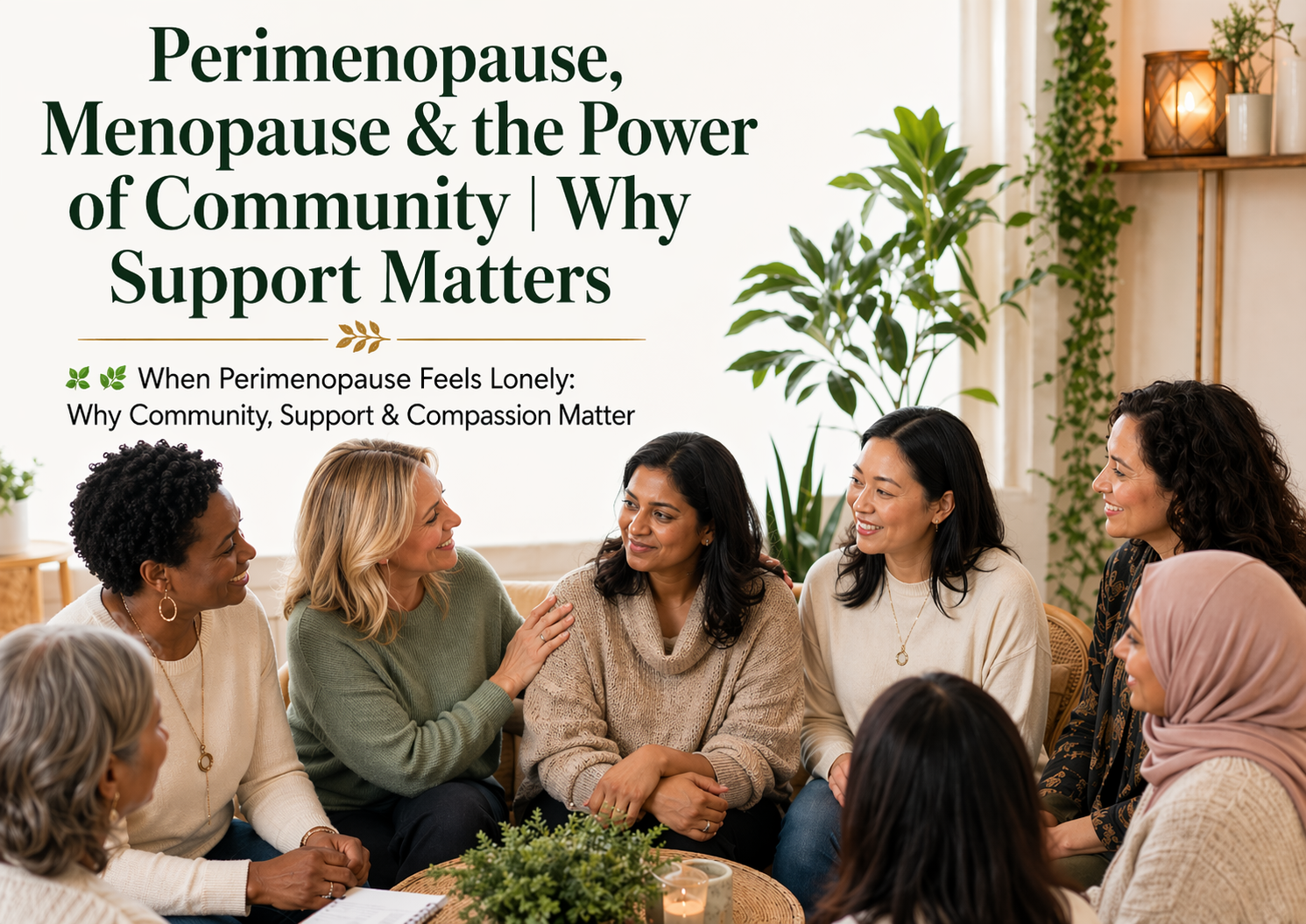
Perimenopause, Menopause & the Power of Community | Why Support Matters
🌿 When Perimenopause Feels Lonely: Why Community, Support & Compassion Matter
🌸 Sis, This Was Never Meant to Be a Solo Mission
Perimenopause can feel like one of the most confusing plot twists in womanhood.
One minute you are managing life, work, family, church, responsibilities, and your usual routine… and the next, your sleep is off, your mood is unpredictable, your cycle is acting brand new, your patience is thin, and your body seems to be speaking a language you do not fully recognize. That is not imaginary, and it is not “just in your head.” Perimenopause commonly brings cycle changes along with symptoms such as hot flashes, mood changes, trouble sleeping, forgetfulness, and difficulty concentrating.
And yet, for something so common, this season is still wrapped in far too much silence.
Too many women feel ashamed to talk about what they are experiencing. Too many are dismissed, laughed off, or told to “just get on with it.” Too many feel like they should be able to power through while quietly wondering why they suddenly feel unlike themselves.
As a Traditional Naturopath and Functional Diagnostic Nutrition Practitioner, I want to say this clearly: perimenopause and menopause are not just hormone events. They are whole-person transitions. This season can affect mood, sleep, stress resilience, confidence, relationships, intimacy, metabolism, and daily function. That is precisely why support matters so much.
And from a faith-based perspective, this matters too. We were never designed to carry every burden alone. Scripture points us again and again toward community, compassion, wise counsel, and bearing one another’s burdens. There is something deeply healing about being seen, heard, and supported during a transition that can otherwise feel isolating and taboo.
Sometimes the first healing opportunity is not another supplement.
Sometimes it is finally having a safe space to say,
“Something feels off, and I need support.”
💬 The Silent Struggle: Why Perimenopause Can Feel So Isolating
One of the hardest things about perimenopause is that it can make a woman feel disconnected from herself before anyone else notices anything is wrong.
Symptoms may come in waves. Some women first notice heavier or more erratic periods. Others notice sleep disruption, anxiety, irritability, vaginal dryness, brain fog, lower stress tolerance, low mood, or a body that suddenly does not “bounce back” the way it used to. The Menopause Society notes that changes in menstrual flow and frequency are common in perimenopause because hormone production and ovulation become more erratic.
The Menopause Society
Now add real life on top of that.
You may still be showing up for your family, trying to function well at work, serving in ministry, supporting everyone else, and attempting to hold it all together while your own body feels like it switched operating systems without warning. That is a lot.
This is where the isolation often creeps in.
Because if no one around you is talking openly about perimenopause, it can start to feel like you are the only one struggling. And when women feel alone, they are more likely to minimize symptoms, question themselves, delay asking for help, and carry unnecessary shame. Best-practice guidance on menopause mental health notes that family and partner support can reduce stigma and improve coping during this transition.
From a functional perspective, this is also the season where underlying MetabolicChaos® may become more obvious.
A woman may already be carrying blood sugar instability, gut dysfunction, nutrient depletion, inflammation, chronic stress, poor sleep, or a dysregulated nervous system. Then perimenopause enters the chat and suddenly the body starts waving every little red flag it has been trying to manage quietly for years. Hormonal shifts do not always create every problem from scratch, but they often expose what the body has been compensating for all along. NIH notes that menopause and the transition into it can affect sleep, mood, concentration, physical comfort, and overall wellbeing.
That does not mean you are broken.
It means your body is communicating.
And when a woman is dismissed in that season, it often adds emotional burden to an already stressed system. Compassion is not extra. It is part of wise support.
🫱🏾🫲🏼 Why Community Is More Than “Nice” — It Can Be Part of the Healing Process
Community is not just a “nice idea” for women in perimenopause and menopause.
It can be one of the most stabilizing, sanity-saving parts of the journey.
And let’s be real: this transition is not just emotional. It is physiological too. As estrogen, progesterone, and testosterone begin to fluctuate and decline, many women notice changes in mood, sleep, stress tolerance, libido, cycles, and that strange feeling of, “Why do I feel so unlike myself?”Estrogen supports mood, brain function, temperature regulation, and vaginal and urinary tissue. Progesterone helps support calm, sleep, and cycle rhythm. Testosterone plays a role in energy, motivation, muscle, and sexual desire. So when these hormones start acting brand new, it can leave a woman feeling off, fragile, overwhelmed, or just plain not at home in her own body.
And that can bring grief.
Grief over the loss of predictability.
Grief over fertility shifting or ending.
Grief over the body, energy, confidence, or ease she once had.
For some women, this season can get very heavy. Depression, dark thoughts, marital strain, and even divorce can show up during this transition. Not because a woman is weak or “doing too much,” but because hormones, sleep disruption, stress, identity shifts, and existing Metabolic Chaos® can all collide at once. That is exactly why community matters so much. No woman should be left to drag herself through this season in silence, shame, or confusion.
When a woman finds a safe group of people who understand, listen, and do not judge, it helps soften the isolation so many women carry quietly. Support can normalize the experience, reduce shame, improve coping, and encourage a woman to seek the help she needs instead of just suffering through it with a smile and a headache.
This support can look like:
a trusted friend who truly listens
a sister, cousin, or aunt who has walked the road before
a husband willing to learn instead of getting defensive
a church women’s group that makes room for honest conversation
counseling or talking therapy
a local support group or meetup
an online community with discernment, warmth, and healthy boundaries
Because emotional support is not “just in your feelings.” It affects the whole person. The nervous system responds to safety. Feeling heard, supported, and less alone can ease emotional strain and help create a more supportive healing environment. That does not replace testing, root-cause work, or individualized care—but it absolutely can support them.
And let me lovingly add this little bit of sass:
a woman in perimenopause does not need more dismissal in a cute outfit. She needs support.
🫶🏽 Friends, Family, Church, Counseling & “Can Somebody Please Just Listen?”
Sometimes women do not necessarily need everyone around them to have all the answers.
They just need someone to stop making them feel crazy.
That may be a friend who says, “I hear you.”
A counselor who helps her process identity shifts, grief, mood changes, or overwhelm.
A husband who learns that this is not merely “bad attitude” but a real physiological and emotional transition.
A church sister who offers prayer, presence, and practical kindness instead of clichés.
Talking therapies are increasingly recognized as a valid support option for menopause-related emotional difficulties. NHS-linked services describe CBT and counseling as helpful tools for improving coping, sleep, motivation, and stress management during this life stage.
As a practitioner, I also believe compassion matters because shame makes it harder for women to seek answers.
When women feel embarrassed by symptoms, they often stay quiet. They delay asking questions. They shrug off changes in mood, sleep, bleeding patterns, or stress tolerance. They tell themselves to be grateful and stop complaining.
But silence does not solve root causes.
Compassion creates space for investigation.
And that is where many healing opportunities begin.
For women of faith, this is also where support can become deeply spiritual. We serve a God who is not indifferent to women’s suffering. Rest, fellowship, wise counsel, prayer, community, and tender care are not signs of weakness. They are often part of His provision.
There is a reason even Scripture points people back to gathering, encouraging, comforting, and strengthening one another. Sometimes the healing environment is not just built through food, sleep, and supplements. Sometimes it is also built through fellowship, truth, and compassionate presence.
And if that sounds a little Seventh-day Adventist in the best way, well… amen. There is something profoundly restorative about community, rest, practical health principles, and trust in God working together instead of being artificially separated.
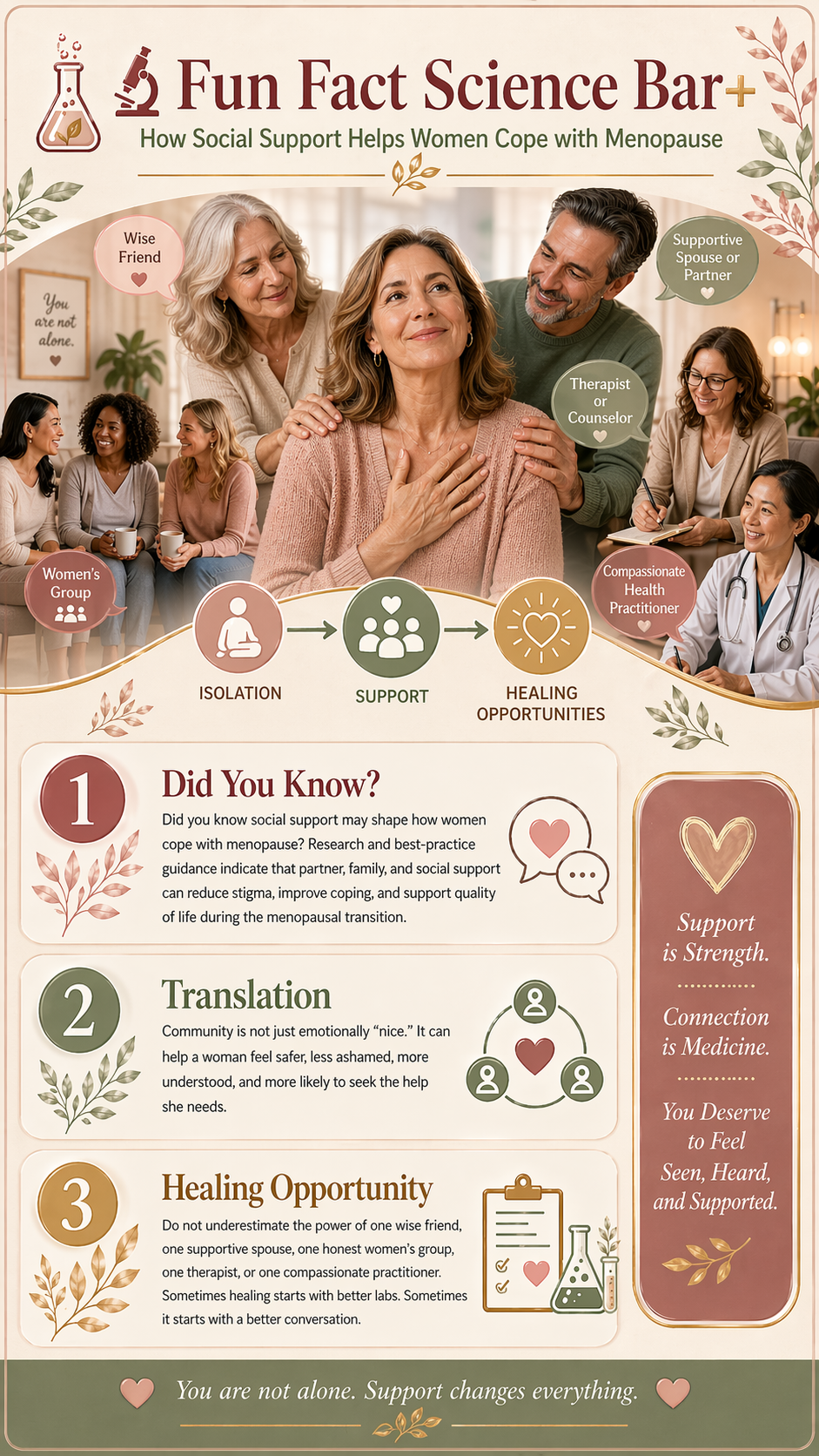
🔬 Fun Fact Science Bar+
Did you know social support may shape how women cope with menopause? Research and best-practice guidance indicate that partner, family, and social support can reduce stigma, improve coping, and support quality of life during the menopausal transition.
👉🏾Translation: Community is not just emotionally “nice.” It can help a woman feel safer, less ashamed, more understood, and more likely to seek the help she needs.
✨Healing Opportunity: Do not underestimate the power of one wise friend, one supportive spouse, one honest women’s group, one therapist, or one compassionate practitioner. Sometimes healing starts with better labs. Sometimes it starts with a better conversation.
🏡 No Support Group in Your Area? Sis… You May Need to Build One
Now let’s talk practical.
What if there is no local support group? No meetup. No church conversation. No women’s circle talking about this. No safe space nearby.
Then this may be your invitation to create one.
Not a massive empire. Not a dramatic production. Just a simple, intentional beginning.
That could look like:
a monthly menopause meetup at a local café
a church women’s wellness circle
a private online group for women in midlife
a walking group for women navigating perimenopause
a “tea, truth, and hormones” evening in your home
a book-and-discussion group on women’s health in midlife
a support chat where women can share, pray, learn, and encourage one another
There are already examples of community menopause hubs and support forums being created locally to help women listen, learn, connect, and support one another.
And that is beautiful, because sometimes women are not waiting for a perfect system. They are waiting for permission.
Here it is: you have permission.
You do not need to be the world’s leading expert to gather women together with kindness, confidentiality, and good sense. You simply need a heart for support and the wisdom to know when to encourage someone toward professional care.
A few tips if you create your own space:
Keep it warm and non-judgmental.
Make confidentiality clear.
Do not let it become a random advice circus.
Welcome shared experience, but encourage discernment.
Have a list of trusted resources and practitioners to refer out to when needed.
Keep it honest, compassionate, and practical.
In other words: less chaos, more care.
🧠 From a Functional Perspective: Why Support Matters Physiologically Too
This is the part that often gets missed.
Community is not only emotionally helpful. It can also support physiology.
When a woman feels chronically unseen, invalidated, stressed, and alone, that state can add to an already burdened nervous system. Perimenopause is often a season when poor sleep, stress reactivity, blood sugar instability, inflammation, and adrenal strain become harder to ignore. Good sleep and emotional support matter because sleep and stress affect mental and physical wellbeing broadly.
Again, I am not saying community magically fixes hormones.
I am saying that support can reduce the load.
And reducing the load matters.
From an FDN perspective, this is one reason we do not look at symptoms in isolation. We look at the bigger picture. Hormones are talking to the gut. The gut is talking to the brain. Stress is talking to blood sugar. Sleep is talking to resilience. Inflammation is talking to everything. This is why women often feel like “something is missing” when they only receive surface-level answers.
Because often, something is missing.
Sometimes it is proper investigation.
Sometimes it is lifestyle alignment.
Sometimes it is nutrient support.
Sometimes it is compassionate education.
Sometimes it is a safe community.
Usually, it is a combination.
That is why I want women to stop thinking of support as optional fluff. In many cases, it is part of creating the conditions in which healing can actually happen.
✨ Compassion Is Not Coddling — It Is Wisdom
Let me say this with a little sass and a lot of love:
Women in perimenopause do not need more dismissal wrapped in lipstick.
They do not need to be told to “calm down,” “be grateful,” “try harder,” or “stop overthinking.”
They need honest information.
They need room to breathe.
They need practical support.
They need people who will listen.
They need compassionate care that does not reduce them to a stereotype.
Compassion is not coddling. It is wisdom.
It recognizes that a woman can be strong and still need support. Faithful and still tired. Intelligent and still confused by what her body is doing. Loving and still emotionally stretched thin.
This transition deserves more tenderness than our culture often gives it.
And if you are reading this as someone who supports women—friend, husband, sister, daughter, church leader, practitioner—please hear me: your posture matters. A listening ear, a non-defensive attitude, and a willingness to learn can make an enormous difference.
Sometimes the ministry is not fixing.
Sometimes the ministry is understanding.
🌸 A Gentle but Honest Next Step
If you are in perimenopause or menopause and have been feeling isolated, ashamed, confused, or like nobody quite gets it, please know this: you are not alone, you are not imagining it, you are not failing, and you do not have to navigate this transition without support.
There is no prize for suffering in silence, sis.
This season can feel tender, disorienting, and at times deeply lonely—but that does not mean you are weak, dramatic, or falling apart. It means you are human, and this transition is real. Sometimes the first healing opportunity is simply admitting that you need a softer place to land.
So seek out wise community. Talk to trusted friends and family. Consider counseling if needed. Find a practitioner who will actually listen. Join a support group. And if you cannot find one, prayerfully consider creating one. Because no woman should have to walk through this season feeling silenced when what she really needs is compassion, clarity, and support.
There is help.
There is support.
There is wisdom.
And yes, there are still healing opportunities here too.
If you are a woman in perimenopause or menopause and you know in your gut that something is missing, you are in the right place. At Leaves from the Tree of Life, we help women look beyond surface-level answers and explore the bigger picture from a Traditional Naturopathic and Functional Diagnostic Nutrition perspective—stress, symptoms, lifestyle patterns, possible root contributors, and the healing opportunities the body may be revealing.
So whether your next step is joining a support group, opening up to someone you trust, seeking counseling, or pursuing more personalized guidance, please hear this clearly:
Needing support is not weakness. It is wisdom.
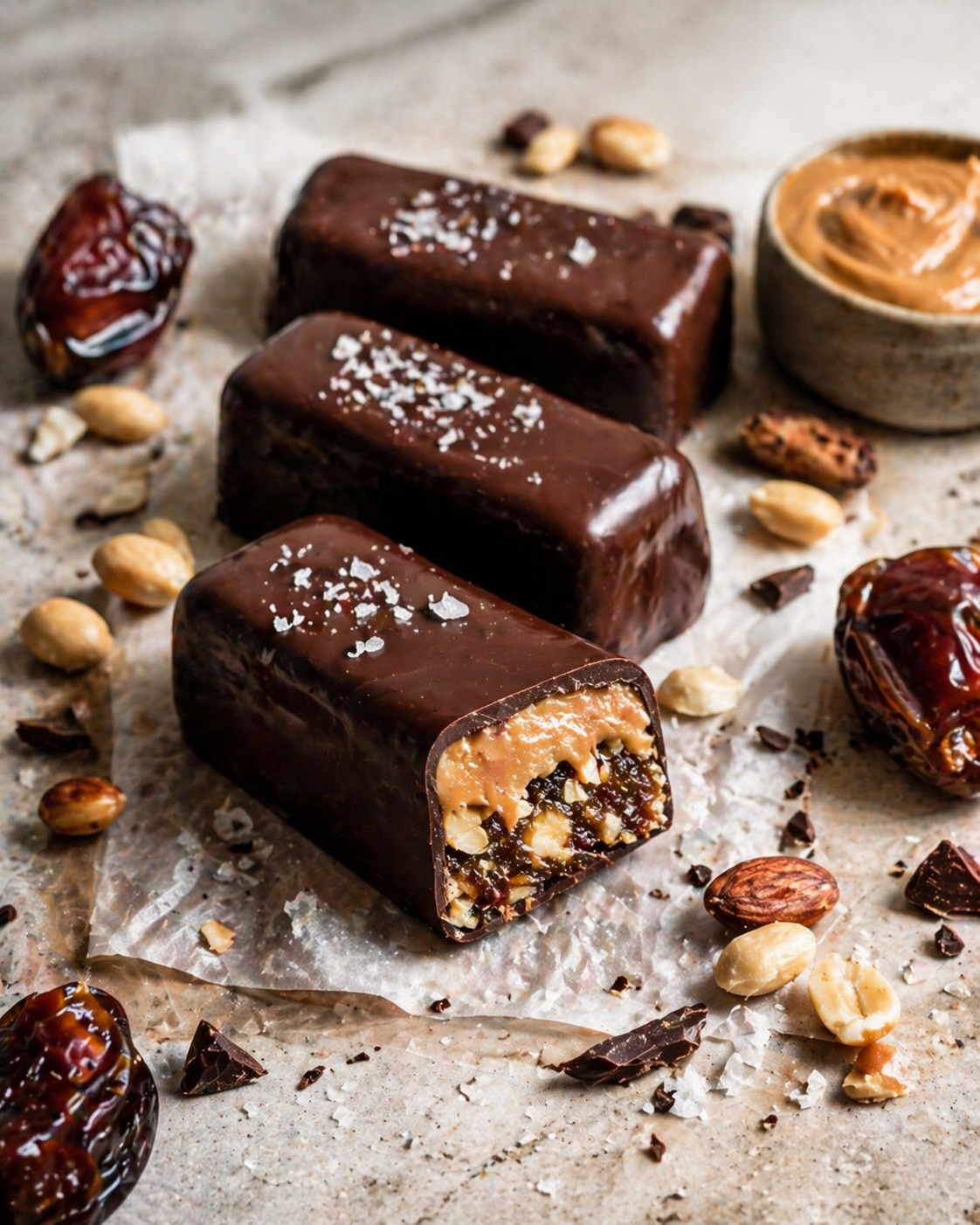
🍫 Healthy No-Bake plant based “Snickers”-Style Bars
A little wholesome chocolatey comfort for when you’re feeling blue
Sometimes you want a treat that feels indulgent without sending your energy, mood, and cravings into absolute chaos. These healthier no-bake plant based “Snickers”-style bars are rich, chewy, chocolatey, and satisfying, but made with simple ingredients like dates, nuts, natural peanut butter, and dark chocolate. The original recipe uses a date-and-nut base, a peanut butter–maple caramel layer, and a dark chocolate topping, and recommends soft dates, gentle chocolate melting, and a proper chill time for best texture.
They are the kind of sweet bite that feels like a hug… but with better ingredients and less foolishness.
⏱️ Time
Prep: 20 minutes
Chill time: 30–45 minutes
Total: About 50–65 minutes
🍽️ Servings
8 small bars
🛒 Ingredients
🌰 Base Layer
1 cup soft Medjool dates, pitted
1 cup mixed nuts (almonds, cashews, or walnuts work well)
3 tbsp unsweetened cocoa powder
1 tbsp chia seeds or ground flaxseeds
1 tsp vanilla extract
Pinch of sea salt
🥜 “Caramel” Layer
1/2 cup natural peanut butter
2 tbsp maple syrup
1 tbsp coconut cream or unsweetened plant milk
1/2 tsp vanilla extract
Tiny pinch of sea salt
🍫 Chocolate Topping
1/2 cup dark chocolate (ideally 70% or higher)
1 tsp coconut oil
Optional: crushed peanuts + flaky sea salt for topping
👩🏽🍳 How to Make It
1️⃣ Make the base
Add the dates, mixed nuts, cocoa powder, chia or flax, vanilla, and sea salt to a food processor. Blend until the mixture becomes sticky and holds together when pressed. The original recipe notes that soft, fresh dates work best for texture, and if your dates are dry, soaking helps.
2️⃣ Press it into the pan
Line a small loaf tin or container with parchment paper. Press the base mixture in firmly and evenly.
3️⃣ Mix the caramel layer
In a bowl, stir together the natural peanut butter, maple syrup, coconut cream or plant milk, vanilla, and sea salt until smooth. The original recipe’s caramel uses peanut butter and maple syrup, and suggests spreading evenly for consistent bites.
4️⃣ Spread the caramel
Spoon the peanut butter mixture over the base and smooth it out evenly.
5️⃣ Melt the chocolate
Gently melt the dark chocolate with the coconut oil using short microwave bursts or a double boiler. The source specifically recommends melting chocolate gently so it does not seize.
6️⃣ Top it off
Pour the melted chocolate over the caramel layer and spread evenly. Sprinkle with crushed peanuts and a tiny pinch of flaky sea salt if using.
7️⃣ Chill
Place in the fridge for 30–45 minutes until set. The original recipe chills the bars for about 30 minutes and stresses not rushing the set time.
8️⃣ Slice and enjoy
Lift out, cut into 8 small bars, and enjoy chilled or slightly softened.
🌿 Why This Version Is a Healthier Treat
Medjool dates 🌴
Naturally sweet and sticky, dates help bind the bars without needing refined sugar. They also provide fibre and potassium. The original recipe uses dates as the main sweet, binding base ingredient.
Mixed nuts 🌰
Nuts add texture, healthy fats, and a little protein, which helps make the bars more satisfying than a straight sugar bomb. The original recipe recommends mixed nuts and even notes that almonds or cashews work especially well.
Unsweetened cocoa powder 🍫
Cocoa brings that deep chocolate flavor without extra sugar. The original base includes cocoa powder for a rich chocolatey taste.
Chia seeds or flaxseeds ✨
These were my healthy upgrade. They add fibre and plant compounds while helping the base hold together nicely.
Natural peanut butter 🥜
Peanut butter makes the caramel layer creamy and satisfying, while contributing some protein and healthy fats. The original recipe uses natural peanut butter as the main caramel ingredient.
Maple syrup 🍁
A little goes a long way here. It keeps the caramel smooth and sweet, but using less than a typical dessert recipe helps keep things balanced. The original recipe uses maple syrup in the caramel layer.
Dark chocolate 🍫
Dark chocolate gives that classic snickers-style finish while generally containing less sugar than milk chocolate. The original topping is melted dark chocolate.
Sea salt 🧂
Just a touch makes the chocolate and peanut flavor pop. The source even suggests a sprinkle of sea salt as an optional finishing touch.
💡 Helpful Tips
Use soft dates for the smoothest, stickiest base. If yours are dry, soak them briefly in warm water first.
Spread each layer evenly so every bite tastes balanced.
Melt chocolate slowly and gently to avoid a thick or grainy topping.
Keep them in the fridge for the best texture. The original recipe says refrigerated storage keeps them fresh for about a week, and freezing is also an option.
❄️ Storage
Store in an airtight container in the fridge for up to 1 week. You can also freeze them for longer storage. The source recommends chilling for best texture and says freezing works well too.
💛 Little Encouragement
When you are feeling low, sometimes you do not need a sugar overload and a side of regret. Sometimes you just need a nourishing little treat that feels comforting, tastes decadent, and does not completely throw your body under the bus.
These bars do the job beautifully.
If you want, I can also.
📚 References
🌸 Perimenopause, Menopause & Symptom Awareness
The Menopause Society — Perimenopause (Patient-friendly overview of cycle changes, symptom patterns, and the menopause transition) 👉🏾 https://menopause.org/patient-education/menopause-topics/perimenopause
National Institute on Aging (NIH) — What Is Menopause? (Overview of perimenopause, menopause symptoms, emotional wellbeing, sleep changes, and when to seek help)
👉🏾 https://www.nia.nih.gov/health/menopause/what-menopause
The Menopause Society — Menopause Education for Patients (Reliable patient education hub for menopause, symptoms, treatment options, and practical support) 👉🏾 https://menopause.org/patient-education
🫱🏾🫲🏼 Social Support, Stigma & Quality of Life
FIGO Best Practice Recommendations for the Mental Health of Women in the Menopause Transition (Highlights how partner, family, and social support can reduce stigma, improve coping, and support wellbeing)
👉🏾 https://pmc.ncbi.nlm.nih.gov/articles/PMC13094689/
Barriers to Accessing Effective Treatment and Support for Menopausal Symptoms (Explores stigma, embarrassment, knowledge gaps, and why women may delay seeking support)
👉🏾 https://pmc.ncbi.nlm.nih.gov/articles/PMC10657761/
Women’s Knowledge and Attitudes to the Menopause (Shows how limited knowledge and negative attitudes can leave women unprepared for menopause-related changes)
👉🏾 https://pmc.ncbi.nlm.nih.gov/articles/PMC10469514/
🫶🏽 Counseling, CBT & Emotional Support
NHS — Help and Support: Menopause (Explains support options, including counselling, CBT, and how to access talking therapies) 👉🏾 https://www.nhs.uk/conditions/menopause/help-and-support/
NHS — Menopause Treatment (Includes information on cognitive behavioural therapy for low mood, anxiety, sleep problems, and some physical symptoms during perimenopause and menopause)
👉🏾 https://www.nhs.uk/conditions/menopause/treatment/
Coventry, Warwickshire & Solihull Talking Therapies — Menopause (Example of NHS talking therapies support for menopause-related mental health symptoms, including counselling and CBT)
👉🏾 https://www.talkingtherapies.covwarkpt.nhs.uk/menopause/
👩🏽🤝👩🏼 Community, Shared Experience & Peer Support
Women’s Menopausal Experiences in the UK (Discusses how women access menopause support and the importance of support systems in real-life experience)
👉🏾 https://pmc.ncbi.nlm.nih.gov/articles/PMC11780249/
Factors Affecting Health-Related Quality of Life in Women with Menopause Symptoms (Notes the value of communication, support groups, and shared experience in improving quality of life)
👉🏾 https://pmc.ncbi.nlm.nih.gov/articles/PMC12660856/
Clinical Practice Guidelines on Menopause: An Executive Summary and Recommendations (Includes social interaction and supportive lifestyle measures as helpful for mood and wellbeing in postmenopausal women)
👉🏾 https://pmc.ncbi.nlm.nih.gov/articles/PMC7688016/
😴 Mood, Sleep & Coping During the Transition
NHS — Menopause: Things You Can Do (Practical lifestyle guidance for mood changes, anxiety, rest, relaxation, and sleep support) 👉🏾 https://www.nhs.uk/conditions/menopause/things-you-can-do/
Management of the Perimenopause (Peer-reviewed review on mood, sleep, symptom management, and co-management options during perimenopause)
👉🏾 https://pmc.ncbi.nlm.nih.gov/articles/PMC6082400/
The Menopause Guidebook — The Menopause Society (Comprehensive consumer guide covering hot flashes, mood changes, sexual health, sleep, and practical menopause education)
👉🏾 https://menopause.org/patient-education/the-menopause-guidebook
🙏🏽🌿 Whole-Person Support, Lifestyle & Faith-Aligned Care
Recommendations From the 2023 International Evidence-Based Guideline for the Assessment and Management of Polycystic Ovary Syndrome (Useful broader women’s health guideline model emphasizing education, lifestyle, mental health, and patient-centred care) 👉🏾 https://pmc.ncbi.nlm.nih.gov/articles/PMC10505534/
Harvard T.H. Chan School of Public Health — Lifestyle Medicine (Overview of how lifestyle interventions support chronic disease prevention and overall health)
👉🏾 https://www.hsph.harvard.edu/lifestylemedicine/
Adventist Health Studies — Lifestyle & Longevity Research (Long-term research relevant to faith-informed lifestyle patterns, plant-forward living, rest, and whole-person wellbeing)
👉🏾 https://adventisthealthstudy.org/studies
Blog Disclaimer
The health information on this blog is for general educational purposes only and is not intended to diagnose, treat, cure, or prevent any disease. It should not be used as a substitute for professional medical advice. Always consult a qualified healthcare provider before making any health-related decisions
This blog may contain affiliate links, meaning Leaves from the Tree of Life LLC may earn a small commission if you purchase a product or service through these links—at no additional cost to you. Your support helps us continue to provide valuable content. Thank you!
