How to Navigate Perimenopause, Protect Your Capacity, and Advocate for Your Health at Work
🌸 Introduction: When the Woman Who Handles Everything Suddenly Feels Like She’s Running on Wi-Fi With One Bar
There is a particular kind of exhaustion that high-achieving women know well.
It is not just “I need a nap” tired.
It is not just “I had a long week” tired.
It is the kind of tired where your brain feels foggy, your patience is thinner than usual, your sleep is playing games, your body feels unfamiliar, and your once-reliable focus has started acting brand new.
And because you are the woman people depend on, you may keep pushing.
You show up for the meetings.
You manage the responsibilities.
You carry the mental load.
You keep the calendar, the home, the business, the team, the ministry, the family, and sometimes everybody’s emotions too.
But somewhere in the middle of all that excellence, your body begins whispering:
“Sis, we need to talk.”
For many executive women, business owners, leaders, and professionals, perimenopause and menopause arrive during peak responsibility years. You may be building a career, managing staff, caring for children or aging parents, supporting a marriage, serving in ministry, navigating health concerns, and trying to stay spiritually grounded.
And then come the symptoms.
Fatigue. Brain fog. Anxiety. Night sweats. Hot flashes. Mood shifts. Poor sleep. Weight changes. Bloating. Low motivation. Low libido. Joint aches. Forgetfulness. Irritability. Less stress tolerance. And that lovely midlife moment where you walk into a room and wonder whether you came for your phone, your tea, or your last ounce of patience.
This guide is for the woman who knows something is shifting and wants to understand her body without fear, shame, or dismissal.
Because perimenopause is not the end of your leadership.
It is a new chapter that requires a new strategy.
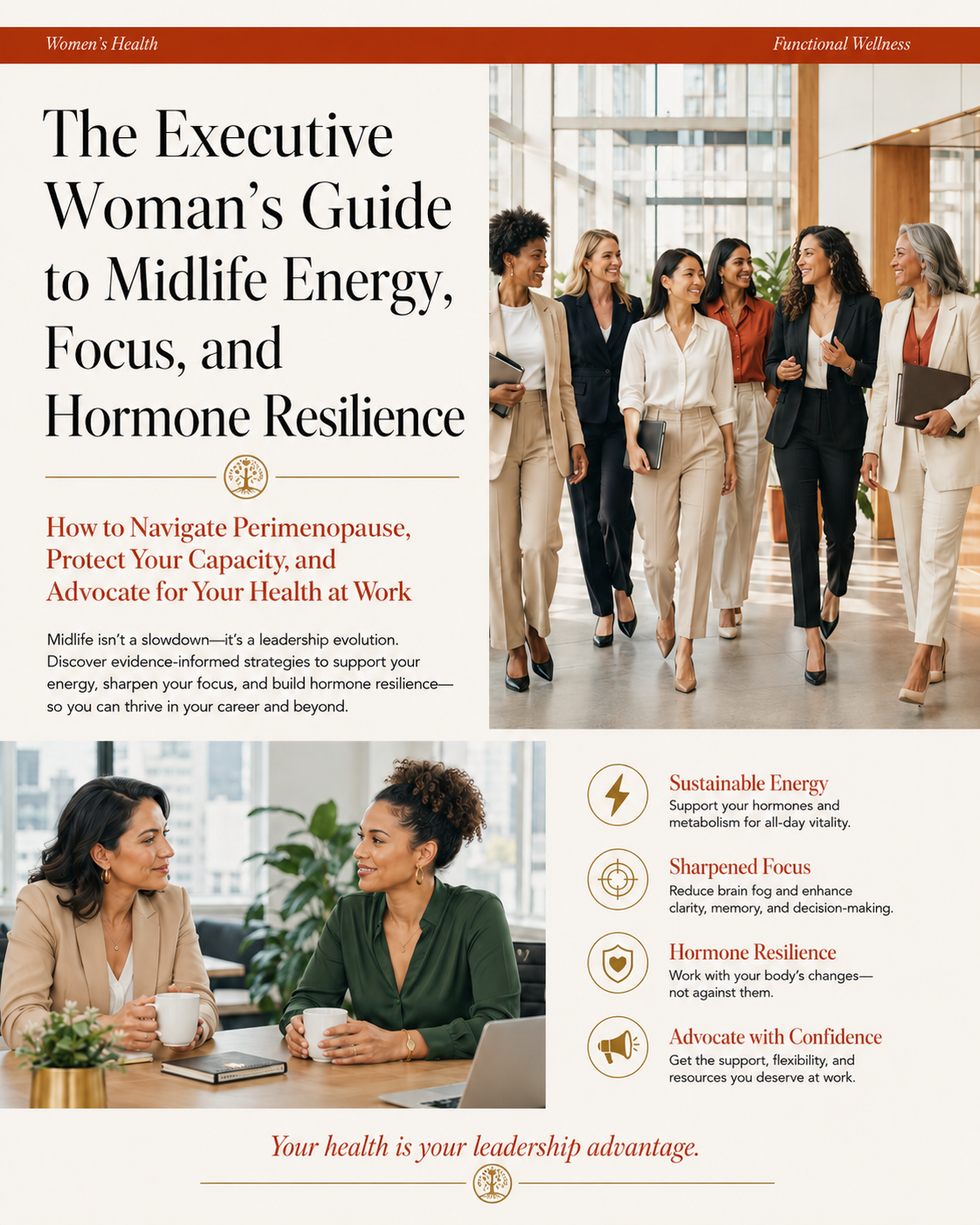
💼 Why Midlife Health Is Now a Workplace Conversation
Workplace menopause support is becoming a business issue because women in midlife are not disappearing into the background. Many are in leadership roles, business ownership, management, entrepreneurship, healthcare, education, ministry, corporate spaces, and caregiving-heavy seasons.
These women are experienced. Skilled. Wise. Valuable. Needed.
Yet many are also navigating hormone shifts that can affect energy, focus, mood, sleep, and confidence at work.
This matters because when women are unsupported, businesses can lose talent, leadership, productivity, creativity, and institutional wisdom. Menopause support is not about giving women excuses. It is about creating an environment where women can continue to thrive instead of silently suffering.
And let’s be honest—women have been silently suffering for far too long.
For years, many women were told to push through, calm down, lose weight, sleep more, stress less, or accept that “this is just aging.”
But midlife women deserve better than vague advice and a pat on the back.
They deserve understanding.
They deserve options.
They deserve proper evaluation.
They deserve supportive workplaces.
They deserve practitioners and medical professionals who listen.
They deserve to be seen as whole women, not walking hormone problems.
This is a new season not only for women, but also for workplaces and medical professionals. The conversation is changing. More people are listening. More research is emerging. More women are asking better questions.
And yes, there needs to be patience and compassion on both sides.
Women need space to advocate without shame.
Medical professionals need room to keep learning and improving.
Employers need education so they can support women wisely.
And society needs to stop acting like midlife women have passed their expiration date.
Because they have not.
Midlife women are not finished.
They are becoming.
🔥 Step 1: Understand That Energy Changes Are Not Always About Willpower
One of the biggest mistakes high-performing women make is assuming fatigue means they are failing.
So they push harder.
More coffee.
More discipline.
More productivity hacks.
More “I just need to get myself together.”
But midlife fatigue is often not a character flaw. It can be a signal that the body is under deeper stress.
During perimenopause, hormones can fluctuate dramatically. Estrogen and progesterone shifts may influence sleep, stress response, blood sugar balance, inflammation, mood, and brain function. Add chronic stress, skipped meals, poor recovery, nutrient depletion, gut issues, thyroid changes, and emotional pressure—and the body can move into what we call Metabolic Chaos®.
Metabolic Chaos® is not a diagnosis. It is a way of describing what happens when multiple body systems are under stress and symptoms begin showing up across the whole person.
This may look like:
Feeling tired even after sleeping
Waking up between 2–4 a.m.
Needing caffeine to function
Crashing in the afternoon
Feeling wired but exhausted
Losing motivation
Struggling to recover from stress
Feeling less resilient than before
Your body is not betraying you.
Your body is communicating.
And the goal is not to silence every symptom. The goal is to understand what the symptom may be pointing to.
That is where the healing opportunities begin.
🧠 Step 2: Protect Your Focus Like It Is a Leadership Asset—Because It Is
Brain fog can feel deeply unsettling for women who are used to being sharp, articulate, organized, and mentally quick.
You may forget words.
Lose your train of thought.
Struggle to concentrate.
Feel overstimulated by too many tasks.
Read the same paragraph five times.
Or open your laptop and stare at the screen like it personally offended you.
For an executive woman, this can feel threatening.
You may begin questioning yourself:
“Am I losing my edge?”
“Can I still handle this role?”
“What if people notice?”
“What if I am not as capable as I used to be?”
Pause right there.
Brain fog does not mean you are no longer brilliant. It means your brain may need better support.
Hormone changes, poor sleep, stress, inflammation, blood sugar swings, thyroid imbalance, nutrient deficiencies, and gut health can all influence cognitive function.
That is why focus support must go deeper than buying another planner.
Practical focus support may include:
Eating balanced meals with protein, fiber, and healthy fats
Avoiding long gaps without food if blood sugar dips worsen anxiety or brain fog
Hydrating and supporting minerals
Getting morning light to support circadian rhythm
Reducing multitasking where possible
Taking short nervous system breaks between meetings
Protecting sleep like a non-negotiable business meeting
Tracking when brain fog is worse in your cycle or stress rhythm
Asking for reasonable workplace adjustments when needed
Focus is not just a mindset issue.
It is a body issue.
A hormone issue.
A nervous system issue.
A metabolic issue.
A lifestyle issue.
And for many women, it is also a workplace design issue.
You were not created to run at full capacity every day without rest, rhythm, or recovery.
Even God built rest into creation.
That Sabbath principle is not just spiritual poetry—it is divine wisdom for human design.
🧪 Step 3: Get a Baseline—Because Guessing Is Not a Wellness Plan
One of the most empowering things a midlife woman can do is get baseline testing.
Not because numbers define your worth.
Not because every symptom needs panic.
Not because we worship lab reports over common sense.
But because testing gives context.
And context helps you advocate.
A baseline can help you understand what is happening in your body before symptoms become more disruptive. It can also help you track changes over time and support better conversations with your doctor, practitioner, or healthcare team.
Depending on the woman and her symptoms, helpful areas to explore may include:
Full thyroid panel, including antibodies when appropriate
Iron status, ferritin, B12, folate, and vitamin D
Blood sugar markers such as fasting glucose, insulin, and HbA1c
Lipid markers and cardiovascular risk patterns
Inflammation markers
Liver and kidney function
Hormone patterns
Cortisol rhythm and stress response
Gut health markers
Nutrient status
Food sensitivity or immune-trigger patterns when clinically relevant
From a Functional Diagnostic Nutrition perspective, testing helps us look for patterns behind the symptoms.
Fatigue may not just be fatigue.
Anxiety may not just be anxiety.
Bloating may not just be bloating.
Brain fog may not just be “getting older.”
These symptoms may be signs of deeper imbalance and healing opportunities that deserve investigation.
Testing can help identify contributors to Metabolic Chaos® such as:
Gut dysfunction
Blood sugar imbalance
Nutrient insufficiency
Hormone dysregulation
Stress burden
Inflammation
Detoxification stress
Poor recovery
Thyroid patterns
Food or environmental triggers
The goal is not to diagnose through functional testing. The goal is to gather information, support the body wisely, and collaborate with appropriate healthcare providers when medical evaluation is needed.
Testing gives you language.
And language gives you power.
🗣️ Step 4: Advocate at Work Without Feeling Like You Have to Tell Your Whole Business
Many women are afraid to speak up at work because they do not want to be judged, misunderstood, or treated as less capable.
That fear is understandable.
But advocacy does not mean oversharing.
You do not have to walk into HR with your hormone chart, your sleep tracker, your supplement list, and a PowerPoint titled “My Ovaries and Me.”
Please don’t. Unless that is your ministry. Then we need to talk branding.
Professional advocacy can be simple, respectful, and clear.
You might say:
“I’m navigating a health transition that is affecting my sleep and concentration at times. I’d like to discuss practical adjustments that can help me continue performing well.”
Or:
“I’ve noticed that back-to-back meetings are more difficult during this season. Can we discuss ways to create more breathing room between high-focus tasks?”
Or:
“I’m working with my healthcare team and would appreciate flexibility for appointments and symptom management when needed.”
You are not asking to be excused from excellence.
You are asking for the support needed to sustain it.
Possible workplace supports may include:
Flexible scheduling
Remote or hybrid work options
Short breaks between meetings
Better temperature control
Access to fresh air or a fan
Adjusted workload priorities during high-symptom periods
Quiet workspace options
Compassionate management training
Time for medical appointments
Clear communication around expectations
Advocacy is not weakness.
Advocacy is stewardship.
You are stewarding your health, your capacity, your calling, and your contribution.
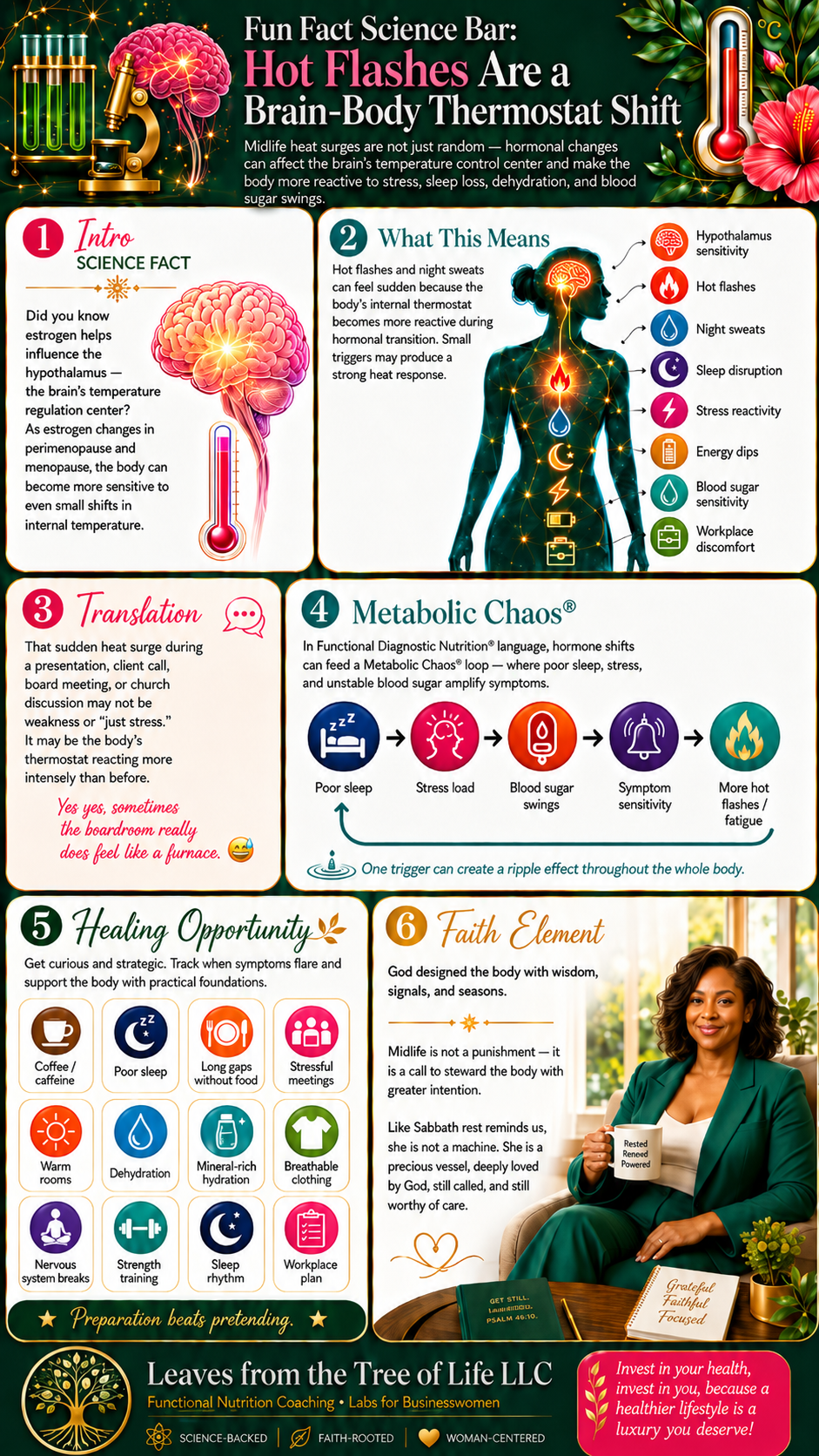
🔬Fun Fact Science Bar
Did you know that during perimenopause and menopause, changes in estrogen may affect the brain’s temperature regulation center — the hypothalamus — making the body more sensitive to small shifts in internal temperature? That is one reason hot flashes and night sweats can feel so sudden and dramatic, like your body went from “professional woman in a meeting” to “someone opened the furnace of affliction” in 0.3 seconds. 😅
👉🏾 Translation:
That sudden heat surge during a presentation, client call, board meeting, or church committee discussion may not be nerves, weakness, or “just stress.” It may be the body’s internal thermostat becoming more reactive during hormonal transition. Poor sleep, caffeine, alcohol, spicy foods, stress, blood sugar swings, dehydration, and even a warm room can sometimes make symptoms feel louder. In Functional Diagnostic Nutrition® language, this can become part of a Metabolic Chaos® pattern, where hormone shifts disrupt sleep, poor sleep drains energy, stress increases symptom sensitivity, and the woman is left trying to lead like a queen while secretly wondering if she can fit inside the office freezer.
✨ Healing Opportunity:
Instead of pushing through and pretending nothing is happening, get curious and strategic. Track when hot flashes or sweats happen: after coffee, during stressful meetings, after poor sleep, during long gaps without food, or in overheated rooms. Support the body with steady blood sugar, mineral-rich hydration, breathable clothing, nervous system breaks, strength training, proper sleep rhythms, and a workplace plan that allows practical adjustments. Sometimes leadership resilience looks like preparation, not pretending.
✝️ Faith Element:
God designed the body with wisdom, signals, and seasons. Midlife is not a punishment; it is a call to steward the body with more intention. Just as Sabbath reminds us that rest is holy and necessary, this season may be reminding the executive woman that she is not a machine — she is a precious vessel, deeply loved by God, still called, still capable, and still worthy of care. 🙏🏾🌿
🌿 Step 5: Build Hormone Resilience Through Daily Foundations
Hormone resilience is not about forcing your body to behave like it did at 25.
It is about supporting your body in the season it is in now.
That means nourishing the foundations.
From a Traditional Naturopathic and Functional Diagnostic Nutrition perspective, the body thrives when the basics are respected consistently.
Not perfectly.
Consistently.
Key foundations include:
🥗 Nourishment
Prioritize whole foods, adequate protein, colorful plants, minerals, fiber, and healthy fats. For many women, blood sugar balance becomes a major midlife priority. When blood sugar swings, mood, anxiety, cravings, fatigue, and focus may worsen.
😴 Sleep Rhythm
Poor sleep can amplify everything. Hormones, mood, appetite, inflammation, pain, and cognition are all affected by sleep. Protecting sleep is not lazy. It is leadership maintenance.
🚶🏾♀️ Movement
Strength training, walking, stretching, and gentle movement can support insulin sensitivity, mood, bone health, muscle mass, circulation, and confidence. Midlife is not the time to punish the body. It is the time to train with wisdom.
🌞 Light, Air, and Rhythm
The Adventist health message has long emphasized simple health principles such as sunlight, fresh air, rest, temperance, nutrition, exercise, water, and trust in God. These are not outdated ideas. They are foundational rhythms for a body under stress.
🙏🏾 Nervous System Stewardship
Prayer, Scripture meditation, Sabbath rest, breathwork, time in nature, quiet mornings, worship, journaling, and healthy boundaries are not just “nice extras.” They help regulate the stress response and remind the body it is safe.
🧂 Minerals and Hydration
Midlife women often need to think beyond plain water. Minerals matter for energy, mood, muscle function, stress resilience, and hydration. This does not mean everyone needs the same supplement. It means mineral status and hydration deserve attention.
🧬 Personalized Support
Your body is not generic. Your plan should not be generic either. What works for your friend, coworker, sister, or favorite influencer may not be what your body needs.
This is why testing, assessment, and personalized care matter.
👑 Step 6: Rewrite the Narrative—You Are Not Less Valuable Because You Are in Midlife
Society has not always honored midlife women well.
Too often, women are praised when they are young, productive, quiet, attractive, agreeable, and endlessly available. Then when they become wiser, more discerning, more vocal, and less willing to tolerate foolishness, society tries to label them as difficult.
No, beloved.
That is not difficult.
That is discernment with boundaries.
Midlife is not a downgrade. It is an invitation to become more honest, more grounded, more spiritually mature, and more aligned with what truly matters.
You are not less valuable because your hormones are shifting.
You are not less feminine because your body is changing.
You are not less capable because you need support.
You are not less spiritual because you feel overwhelmed.
You are not less professional because you are advocating for your health.
You are still precious.
Still intelligent.
Still called.
Still needed.
Still becoming.
And you have the opportunity to create a new narrative.
One where younger women do not fear aging.
One where midlife women are seen as wise, powerful, beautiful, capable, and deeply valuable.
One where workplaces understand that supporting women’s health is not a trend—it is part of building healthier communities and stronger organizations.
One where medical professionals and women work together with patience, humility, curiosity, and compassion.
This is not the end.
This is the chapter where you stop abandoning yourself to keep everyone else comfortable.
And that, sis, is a whole testimony.
💎 Executive Woman’s Midlife Checklist
Here is your practical guide to begin:
✅ Track your symptoms, cycle changes, sleep, mood, energy, and triggers.
✅ Request appropriate baseline labs through your medical provider.
✅ Consider functional testing when deeper patterns need investigation.
✅ Protect your sleep and recovery time.
✅ Balance meals to support blood sugar and energy.
✅ Build strength, not punishment, through movement.
✅ Reduce unnecessary stressors where possible.
✅ Advocate professionally for workplace support.
✅ Find practitioners who listen and understand midlife women’s health.
✅ Remember that your worth is not up for debate.
You are not “too much.”
You are a whole woman with a whole body that deserves whole-person care.
🌿 Call to Action: Turn Midlife Symptoms Into Strategy
At Leaves from the Tree of Life LLC, we help Businesswomen who are Hormonal, Anxious, and Bloated through Functional Nutrition Coaching + Labs.
If you are navigating fatigue, brain fog, anxiety, bloating, sleep changes, hormone shifts, or the feeling that your body is suddenly operating by new rules, you do not have to keep guessing.
Your symptoms may be pointing to healing opportunities.
Through functional nutrition coaching, personalized lifestyle support, and functional lab testing, we help women better understand the root contributors to Metabolic Chaos® so they can support their bodies with clarity, confidence, and wisdom.
This is your season to stop shrinking, stop second-guessing, and stop letting inner doubt or society’s tired opinions define your next chapter.
You are not past your prime.
You are becoming more refined.
More rooted.
More discerning.
More powerful.
More you.
And yes, you can still lead, build, serve, create, mentor, earn, rest, heal, and rise.
Invest in your health, invest in you, because a healthier lifestyle is a luxury you deserve!
🌿 Ready to understand what your body has been trying to tell you?
Book a consultation with Leaves from the Tree of Life LLC and let’s turn your symptoms into strategy.
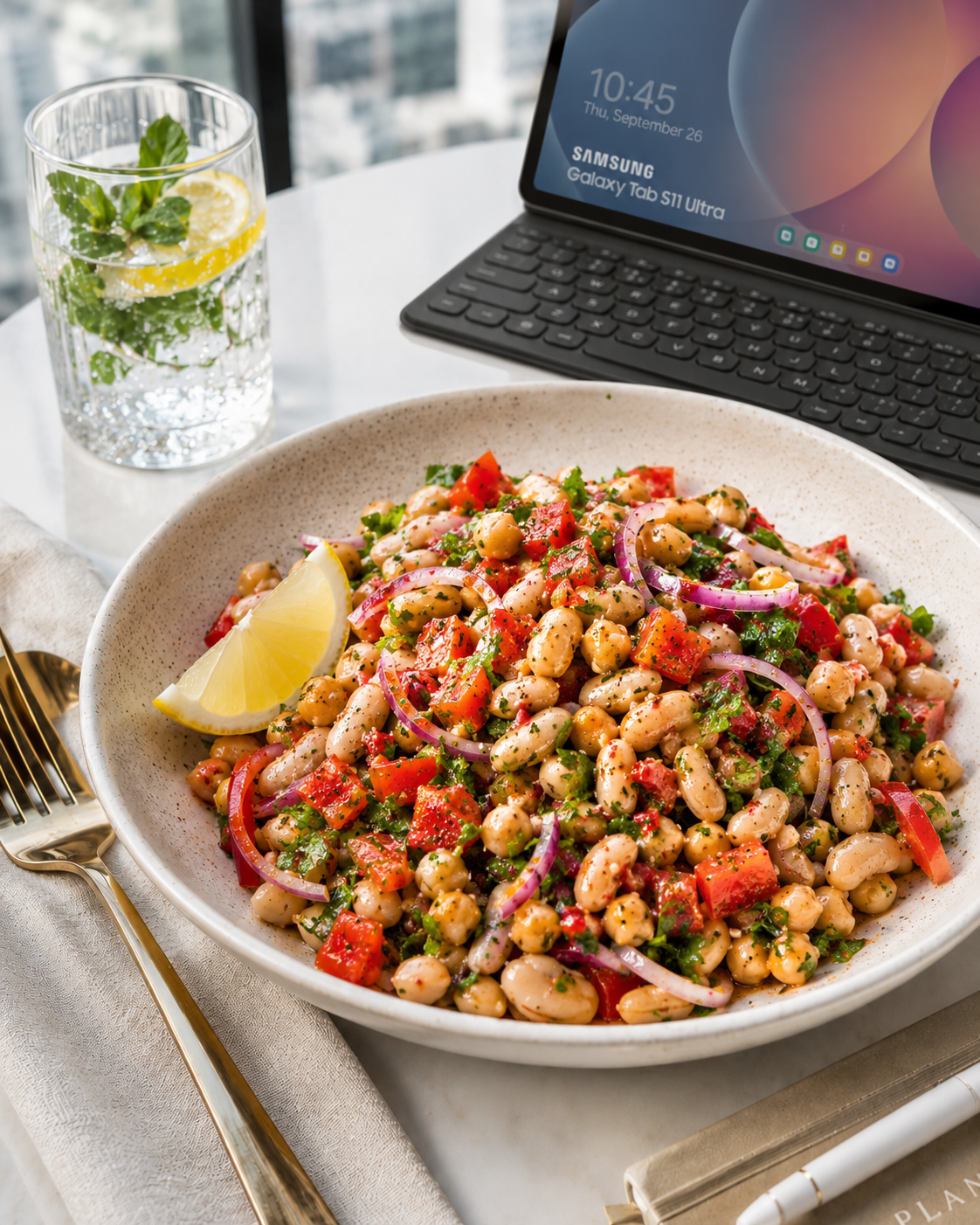
🫘🌿 Turkish-Inspired Bean Salad
A bright, zesty, blood-sugar-friendly bean bowl for the executive woman who needs real fuel
This is not a sad little bean salad sitting in the corner wondering where the seasoning went. No ma’am. This is fresh, tangy, protein-rich, fiber-balanced, mineral-supportive, and full of Mediterranean-inspired flavour.
Think creamy beans, juicy tomatoes, sharp sumac onions, fresh parsley, lemony olive oil dressing, and a gentle cayenne/chili kick that says, “I came prepared for the boardroom and my blood sugar.” 😌🌿
It is simple enough for meal prep, elegant enough for a business lunch, and nourishing enough to support energy, digestion, and satiety.
⏱️ Time
Prep Time: 15 minutes
Marinating Time: 10–15 minutes
Total Time: 25–30 minutes
Serves: 3–4 as a side or 2 as a hearty lunch
🛒 Ingredients
🫘 Bean Base
1 can butter beans, drained and rinsed
1 can chickpeas, drained and rinsed
1 can cannellini beans, drained and rinsed
🍅 Fresh Salad Mix
1 red onion, thinly sliced
2 teaspoons sumac
1 teaspoon sea salt, divided
3 medium tomatoes, diced
½ cup fresh parsley, chopped
Optional: ½ cucumber, diced, for extra freshness and crunch
🍋🌶️ Lemony Chili Dressing
3 tablespoons extra virgin olive oil
1 tablespoon red wine vinegar
1 tablespoon fresh lemon juice
¼ teaspoon cayenne pepper, or to taste
1 teaspoon chili flakes or Aleppo chili flakes / pul biber
Optional: extra chili flakes for garnish
Optional: 1 small garlic clove, finely grated
👩🏾🍳 Step-by-Step Instructions
1. 🧅 Make the Sumac Onions
Add the thinly sliced red onion to a bowl with sumac and ½ teaspoon sea salt.
Massage gently with your hands for 1–2 minutes until the onions soften and release some of their juices.
Let them sit for 10 minutes while you prepare the rest of the salad.
This step helps mellow the onion’s sharpness while giving the salad that beautiful tangy, Turkish-inspired flavour.
2. 🫘 Prepare the Beans
Drain and rinse the butter beans, chickpeas, and cannellini beans.
Add them to a large mixing bowl.
If they are very wet, lightly pat them with a clean towel so the dressing clings better.
3. 🍅 Add the Fresh Ingredients
Add the diced tomatoes, chopped parsley, and cucumber if using.
Then add the softened sumac onions.
Gently toss so the beans stay whole and creamy instead of turning into bean mash. We want elegance, not chaos in a bowl. 😅
4. 🍋🌶️ Make the Dressing
In a small bowl, whisk together:
Extra virgin olive oil
Red wine vinegar
Fresh lemon juice
Cayenne pepper
Chili flakes or Aleppo chili flakes
Remaining ½ teaspoon sea salt
Garlic, if using
Taste and adjust.
Add more lemon for brightness, more olive oil for richness, or more chili flakes if you want her to have a little personality. 🌶️
5. 🥗 Toss and Rest
Pour the dressing over the bean salad and gently toss until everything is coated.
Let it rest for 10–15 minutes before serving so the beans absorb the flavour.
This salad gets even better as it sits, making it lovely for meal prep.
6. 🌿 Serve
Serve chilled or at room temperature.
Beautiful serving ideas:
Over romaine or mixed greens
With gluten-free flatbread
Alongside roasted sweet potato
With quinoa or millet
In lettuce cups
As an elegant work lunch with sparkling lemon water
🌿 Health Benefits of Each Ingredient
🫘 Butter Beans
Butter beans are creamy, satisfying, and rich in plant-based protein and fiber. They help support fullness, gut health, and steadier blood sugar.
🧆 Chickpeas
Chickpeas add protein, fiber, folate, and minerals. They make the salad more filling and support balanced energy so you are not crashing halfway through your workday.
🤍 Cannellini Beans
Cannellini beans are mild, creamy, and fiber-rich. They help create a balanced, substantial salad rather than a little side dish pretending to be lunch.
🧅 Red Onion
Red onion contains quercetin and sulfur compounds that support antioxidant activity, immune function, and cardiovascular health. It also brings that sharp, bold flavour that wakes the whole salad up.
🌺 Sumac
Sumac is tangy, lemony, and naturally rich in polyphenols. It gives the onions a beautiful zesty flavour and adds antioxidant support.
🍅 Tomatoes
Tomatoes provide vitamin C, potassium, hydration, and lycopene. They bring colour, freshness, and juicy balance to the creamy beans.
🌿 Parsley
Parsley is rich in vitamin C, vitamin K, antioxidants, and minerals. It brightens the salad and supports digestion.
🥒 Cucumber
Cucumber is hydrating, cooling, and refreshing. It adds crunch and helps lighten the salad.
🫒 Extra Virgin Olive Oil
Extra virgin olive oil provides monounsaturated fats and polyphenols. It supports heart health and helps absorb fat-soluble nutrients from the meal.
🍋 Lemon Juice
Lemon juice adds brightness and vitamin C. It also supports iron absorption from plant foods, which is especially helpful in a bean-based meal.
🍷 Red Wine Vinegar
Red wine vinegar adds acidity and balance. Vinegar with meals may also support a gentler blood sugar response.
🌶️ Cayenne Pepper
Cayenne adds warmth and contains capsaicin, which may support circulation and digestion. A little goes a long way, sis — she is spicy and does not need a microphone.
🌶️ Chili Flakes / Aleppo Chili
Chili flakes add colour, heat, and depth. Aleppo chili is especially lovely because it has a fruity, mild warmth that pairs beautifully with lemon, olive oil, beans, tomatoes, and sumac.
🧂 Sea Salt
Sea salt enhances flavour and balances acidity. Use mindfully, especially if watching sodium intake.
🧄 Garlic — Optional
Garlic adds depth and contains sulfur compounds that support immune and cardiovascular health. It also gives the dressing that “yes, I actually seasoned this” energy.
✨ Functional Nutrition Note
This salad gives you a beautiful trifecta:
Plant protein + balanced fiber + healthy fats
That makes it supportive for women navigating midlife energy dips, blood sugar swings, bloating, cravings, hormone shifts, and the “I need lunch but refuse to eat something sad from a plastic container” season of life.
The beans provide protein and fiber.
The olive oil supports satiety and nutrient absorption.
The lemon, parsley, tomatoes, sumac, and chili bring antioxidants, flavour, and digestive support.
This is the kind of meal that says:
“I have emails, hormones, meetings, and a nervous system to support — and I will not be doing it on bland food.” 😌🌿
🌿 Executive Lunch Tip
Pack the salad in a glass container and keep the lemon wedge separate until serving.
For extra staying power, serve it with:
Avocado
Quinoa
Roasted vegetables
A side of greens
Gluten-free flatbread
A few pumpkin seeds or hemp seeds
Simple. Elegant. Nourishing. Blood-sugar friendly.
Because your lunch should support your leadership, not put you in a 3 p.m.
Reference
💼 Workplace Menopause Support & Business Case
Global Wellness Institute. Workplace Wellbeing Initiative Trends for 2026.
Global Wellness Institute. The Missing Chapter at Work: Closing the Menopause Talent Gap.
UK Government. Offer workplace adjustments for employees experiencing menopause.
UK Government. Menopause and the Workplace: How to enable fulfilling working lives — Government Response.
Equality and Human Rights Commission. Menopause in the workplace: Guidance for employers.
https://www.equalityhumanrights.com/guidance/menopause-workplace-guidance-employers [10] [2]
ACAS. Menopause at work.
https://www.acas.org.uk/menopause-at-work [11] [12]
NHS Employers. Guidance on menopause at work.
https://www.nhsemployers.org/publications/guidance-menopause-work [13] [14]
NHS England. Supporting our NHS people through menopause: guidance for line managers and colleagues.
The Menopause Society. Making Menopause Work™ Employer Guide.
https://menopause.org/wp-content/uploads/workplace/TMS-Making-Menopause-Work-Employer-Guide.pdf [17] [18]
The Fawcett Society. Menopause and the Workplace.
https://www.equallyours.org.uk/fawcett-society-report-menopause-and-the-workplace/ [14] [19]
The Fawcett Society. Landmark Study: Menopausal Women Let Down by Employers and Healthcare Providers.
🌸 Perimenopause, Menopause & Hormonal Changes
NICE. Menopause: identification and management — NG23.
https://www.nice.org.uk/guidance/ng23 [21] [22]
NHS. Symptoms of menopause and perimenopause.
https://www.nhs.uk/conditions/menopause-and-perimenopause/symptoms/ [16] [23]
NHS Inform. Menopause and your mental wellbeing.
NHS Inform. Menopause and the workplace.
British Menopause Society. NICE Guideline: Menopause identification and management.
https://thebms.org.uk/publications/nice-guideline/ [25] [25]
🧠 Energy, Focus, Brain Fog & Sleep in Midlife
NHS. Symptoms of menopause and perimenopause.
https://www.nhs.uk/conditions/menopause-and-perimenopause/symptoms/ [16] [23]
Sleep and sleep disorders in the menopausal transition. PMC.
https://pmc.ncbi.nlm.nih.gov/articles/PMC6092036/ [26]
Cognitive Problems in Perimenopause: A Review of Recent Evidence. PMC.
https://pmc.ncbi.nlm.nih.gov/articles/PMC10842974/ [27]
Menopause and cognitive impairment: A narrative review of current knowledge. PMC.
https://pmc.ncbi.nlm.nih.gov/articles/PMC8394691/ [28]
Impact of menopausal symptoms on work and careers. PMC.
https://pmc.ncbi.nlm.nih.gov/articles/PMC10540666/ [22]
Sleep Disturbance and Perimenopause: A Narrative Review. PMC.
https://pmc.ncbi.nlm.nih.gov/articles/PMC11901009/ [29]
🧪 Baseline Testing, Health Checks & “Test, Don’t Guess” Context
NICE. Menopause: identification and management — NG23.
https://www.nice.org.uk/guidance/ng23 [21] [22]
NHS. NHS Health Check.
https://www.nhs.uk/tests-and-treatments/nhs-health-check/ [30]
NHS. Underactive thyroid — hypothyroidism.
https://www.nhs.uk/conditions/underactive-thyroid-hypothyroidism/ [31]
NICE CKS. Anaemia — iron deficiency: Investigations.
https://cks.nice.org.uk/topics/anaemia-iron-deficiency/diagnosis/investigations/ [23]
NHS. Iron deficiency anaemia.
https://www.nhs.uk/conditions/iron-deficiency-anaemia/ [32]
A Review of Clinical Guidelines on the Management of Iron Deficiency and Iron-Deficiency Anaemia in Women with Heavy Menstrual Bleeding. PMC.
https://pmc.ncbi.nlm.nih.gov/articles/PMC7695235/ [33]
Thyroid Function Tests — Gloucestershire Hospitals NHS.
🌙 Hormone Therapy, Clinical Options & Shared Decision-Making
The Menopause Society. Menopause Topics and Resources.
The Menopause Society. 2022 Hormone Therapy Position Statement.
https://menopause.org/wp-content/uploads/press-release/ht-position-statement-release.pdf [36]
British Menopause Society. Tools for Clinicians.
https://thebms.org.uk/publications/tools-for-clinicians/ [37]
Endocrine Society. Compounded Bioidentical Hormone Therapy Position Statement.
https://www.endocrine.org/advocacy/position-statements/compounded-bioidentical-hormone-therapy [12]
NICE. Menopause: identification and management — NG23.
https://www.nice.org.uk/guidance/ng23 [21] [22]
🌿 Whole-Person Lifestyle, Rest & Faith-Aligned Health Principles
Ellen G. White. The Ministry of Healing.
https://cdn.centrowhite.org.br/home/uploads/2023/01/The-Ministry-of-Healing.pdf [38]
Ellen G. White Writings. The Ministry of Healing.
https://m.egwwritings.org/en/book/135.1 [39]
Adventist.org. How Ellen White Applied Biblical Principles to Health & Wellbeing.
NEWSTART®. About NEWSTART Lifestyle Principles.
https://newstart.com/about/ [41]
Adventist Family Ministries. A Prescription for Optimum Health.
https://family.adventist.org/a-prescription-for-optimum-health/ [42]
Vegetarian Dietary Patterns and Mortality in Adventist Health Study 2. JAMA Internal Medicine / PMC.
https://pmc.ncbi.nlm.nih.gov/articles/PMC4191896/ [43]
Loma Linda University Health. Adventist Health Studies.
https://news.llu.edu/adventist-health-studies [44]
Blog Disclaimer
The health information on this blog is for general educational purposes only and is not intended to diagnose, treat, cure, or prevent any disease. It should not be used as a substitute for professional medical advice. Always consult a qualified healthcare provider before making any health-related decisions
This blog may contain affiliate links, meaning Leaves from the Tree of Life LLC may earn a small commission if you purchase a product or service through these links—at no additional cost to you. Your support helps us continue to provide valuable content. Thank you!
