
Why You Should Only Buy Professional-Grade Nutraceuticals (And Where to Get Them Safely)
Why Buying Professional Grade Nutraceuticals Matters
—and What You Should Know Before You Click “Add to Cart”
In today’s wellness world, supplements are everywhere—from grocery store aisles to Instagram ads. But as a Traditional Naturopath and Functional Diagnostic Nutrition® Practitioner, I can tell you this with absolute certainty: not all supplements are created equal.
If you’re investing in your health, you want to make sure what you’re putting in your body is pure, potent, and purposeful. That’s where professional grade nutraceuticals come in.

What Are Nutraceuticals Anyway?
The term nutraceutical is a combination of “nutrition” and “pharmaceutical.” They include high-quality supplements, herbs, vitamins, minerals, amino acids, antioxidants, and other natural compounds that have a therapeutic benefit for the body. Nutraceuticals are used to:
Support hormonal balance
Heal the gut
Improve brain and mood function
Address chronic inflammation
Aid detoxification
Optimize overall vitality
But—here’s the catch—only when they’re made with integrity.
Why Professional Grade Matters
Professional-grade nutraceuticals are manufactured to the highest standards for quality, purity, bioavailability, and therapeutic dosing. These products are:
Third-party tested for contaminants, potency, and purity
Free from fillers, artificial dyes, GMOs, or allergens (when stated)
Formulated by clinicians, researchers, and medical-grade manufacturers
Often only available through licensed or credentialed health practitioners
They are not the same as the generic, mass-produced vitamins you see on big-box shelves.
What Could Go Wrong with Store-Bought or Online Bargains?
Let’s say you find a “great deal” on magnesium glycinate from a third-party seller on Amazon. It claims to be the same as a reputable brand—but when it arrives, the capsule smells strange. You feel nauseous after taking it. What happened?
Here’s what might be going on:
Counterfeits or tampered products: Some sellers re-bottle expired or imitation products and pass them off as legit.
Poor storage conditions: Supplements lose potency when exposed to heat, light, or moisture. Warehouse storage is not regulated like a clinical dispensary.
Expired or oxidized ingredients: You may not see it—but you will feel it.
Incorrect dosing or hidden ingredients: Some mass-market brands cut corners with fillers, preservatives, or poorly absorbed forms of nutrients.
The result? Wasted money, no results, or worse—adverse reactions.
Where to Buy High-Quality Nutraceuticals
To protect your health and ensure you're receiving real, effective supplements, always purchase from reputable sources, such as:
Professional Dispensaries:
YourHealthBasket Code: WZJI2
Amrita Nutrition Code: KXCTGG
These platforms are built specifically for licensed practitioners and their clients. They offer direct-from-manufacturer shipping, temperature-controlled storage, and ongoing quality checks.
Direct from the Company:
When you buy from these trusted manufacturers, you're getting fresh, untampered products directly from the source.
Where Not to Buy Your Supplements
Amazon (unless it’s the manufacturer’s official storefront)
Costco, Walmart, Walgreens, or similar big-box chains
Unknown online stores or random social media shops
These outlets may carry outdated inventory, tampered goods, or counterfeit products with no guarantee of quality or safety.
How to Tell If a Supplement Company Is Legit: Certifications & Questions to Ask
With so many supplement brands on the market, it's important to know how to spot the ones that prioritize safety, purity, and transparency. Don’t be afraid to do your homework—or even reach out directly to the company.
Look for These Quality Certifications on the Label or Website:
🫴🏾 GMP Certified (Good Manufacturing Practices): Ensures the product was made in a facility with pharmaceutical-grade cleanliness and quality protocols.
🫴🏾 NSF Certified: Indicates third-party testing for contaminants and label accuracy.
🫴🏾 USP Verified (U.S. Pharmacopeia): Verifies ingredient quality and potency.
🫴🏾 ISO 17025 Accredited Lab Testing: Ensures the lab performing the tests is held to the highest global standards.
🫴🏾 Non-GMO, Organic, or Certified Gluten-Free: If relevant to your needs, these should also be clearly indicated by credible third-party logos.
Still Not Sure? Ask the Company These Questions:
Encourage your readers to contact the manufacturer or distributor and ask:
🌿 Do you conduct third-party testing for purity, potency, and contaminants?
(Reputable brands will proudly say yes—and name the lab they use.)
🌿 Can you provide a Certificate of Analysis (COA) for this product?
(This verifies that what’s on the label is truly in the bottle.)
🌿 Are your products manufactured in a GMP-certified facility?
🌿 Do you test for heavy metals, mold, or microbial contamination?
🌿 Where do you source your raw ingredients?
🌿 Is this supplement free from common allergens or synthetic fillers?
Empowering Tip:
If a company refuses to answer your questions or gives vague responses, that’s a red flag. Your health is too important to gamble on mystery pills.
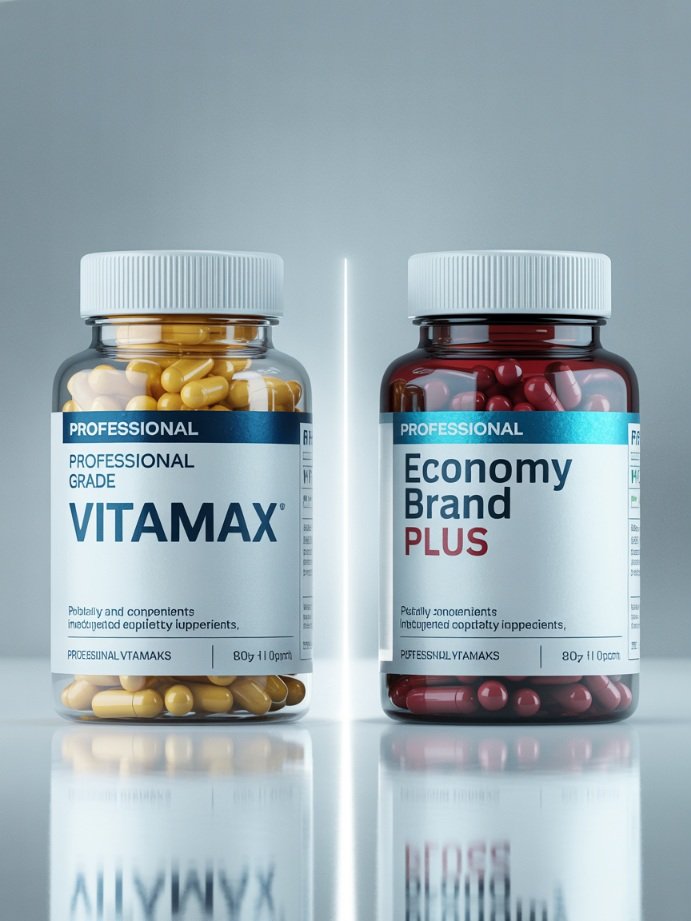
Fun Fact:
The supplement industry is worth over $160 billion globally, but a large chunk of those products never get absorbed properly by the body—either because they're poorly made, improperly stored, or packed with fillers. That means you could be swallowing capsules and still be nutrient-starved. Crazy, right? This is exactly why professional-grade nutraceuticals exist—to ensure your body actually benefits from what you take.
Professional-Grade vs. Non-Professional-Grade Supplement Ingredients: What to Look for and What to Avoid
Not all supplements are created equal. This chart helps you distinguish between safe, effective ingredients in professional-grade nutraceuticals and common low-quality fillers and binders in generic supplements.
| Ingredient Type | Professional-Grade Ingredients | Non-Professional Grade / Avoid | Why to Avoid |
|---|---|---|---|
| Magnesium | Magnesium glycinate, Magnesium citrate | Magnesium oxide | Low absorption rate, can cause diarrhea and stomach upset |
| Vitamin B12 | Methylcobalamin | Cyanocobalamin | Contains a cyanide molecule; less effective for methylation support |
| Folate | L-5-MTHF (Quatrafolic or Metafolin) | Synthetic folic acid | Not well utilized by people with MTHFR mutations |
| Binders | Rice flour, cellulose, vegetable capsule (HPMC) | Talc, shellac, polyethylene glycol (PEG) | May be allergenic, toxic, or difficult to digest; some are used in industrial products |
| Fillers | Organic rice powder, acacia gum, silica (natural) | Titanium dioxide, artificial colors (Red #40, Yellow #5), magnesium stearate (in excess) | Linked to inflammation, poor absorption, or potential toxicity with long-term use |
| Sweeteners | Monk fruit, stevia (organic) | Aspartame, sucralose, saccharin | Artificial sweeteners may disrupt the gut microbiome and metabolic health |
Let’s Keep It Real: Quality Isn’t Cheap
Yes, professional-grade nutraceuticals often come with a higher price tag. But consider this:
You’re investing in healing, not guessing.
You’re paying for results, not just pills.
You’re honoring your body—and God’s temple (1 Corinthians 6:19)—by putting in what’s pure, not what’s cheap.
Steward Your Health with Wisdom
In my clinical practice, I’ve seen women struggling with hormonal chaos, gut dysfunction, anxiety, and fatigue. Many had drawers full of store-bought supplements—but their symptoms lingered because they weren’t absorbing the nutrients or were unknowingly taking harmful formulations.
Your health deserves better. If you're serious about healing, get serious about sourcing.
Professional-grade nutraceuticals are not just supplements—they’re tools for transformation.
Want guidance on what’s right for you? I offer practitioner-recommended supplements and protocols tailored to your needs. Let’s work together to support your body with what it truly needs—no guesswork, just grace and science aligned.

Tropical Tahini Mango Mousse
Creamy. Dreamy. Naturally sweet. Pure indulgence—without the guilt.
Ingredients:
2 ripe mangoes 🥭 (fresh or frozen, thawed)
1 ripe avocado 🥑
2 tbsp tahini ✨ (or raw cashew butter for a milder flavor)
Juice of 1 lime 🍈
1–2 tbsp pure maple syrup 🍁 or Medjool dates (pitted and soaked)
½ tsp vanilla extract 🍨
Pinch of sea salt 🧂
Optional: ¼ tsp ground cardamom or fresh grated ginger 🌿 for a sensual twist
Toppings (optional but recommended):
Toasted coconut flakes 🥥
Chopped pistachios 🌰
Fresh passionfruit or pomegranate arils 💖
Mint leaves for garnish 🌱
Instructions:
1. In a high-speed blender or food processor, combine mango, avocado, tahini, lime juice, sweetener, vanilla, and salt.
2. Blend until completely smooth, creamy, and mousse-like. Taste and adjust sweetness or spice to your liking.
3. Chill in the fridge for 30 minutes for best texture and flavor ❄️
4. Serve in small dessert bowls or glasses, topped with coconut, pistachios, and fruit.
Why it works:
🥭 Mango – rich in skin-loving vitamins A & C
🥑 Avocado – adds gut-healing fiber + healthy fats
✨ Tahini – a powerhouse of calcium & iron
🍈 Lime + 🌿 cardamom – exotic balance and bright flavor
Delicious doesn’t have to mean destructive. This mousse is healing, whole, and holy.
Serve it on Sabbath or after a long day of fasting—your body and soul will say thank you.
References & Citations
1. National Institutes of Health (NIH) Office of Dietary Supplements
National Institutes of Health. (2021). Dietary Supplements: What You Need to Know.
Retrieved from: https://ods.od.nih.gov/factsheets/DietarySupplements-Consumer/
2. U.S. Food & Drug Administration (FDA)
U.S. Food and Drug Administration. (2023). Dietary Supplement Products & Ingredients.
Retrieved from: https://www.fda.gov/food/dietary-supplements
3. ConsumerLab Report on Supplement Contamination
ConsumerLab.com. (2022). Problems with Contamination, Dosage, and Labeling of Supplements.
Summary available at: https://www.consumerlab.com
4. Journal of Dietary Supplements
Geller, A. I., et al. (2015). Emergency department visits for adverse events related to dietary supplements.
New England Journal of Medicine, 373(16), 1531–1540. https://doi.org/10.1056/NEJMsa1504267
5. Council for Responsible Nutrition (CRN)
CRN. (2022). Best Practices for Supplement Quality and Manufacturing Standards.
Retrieved from: https://www.crnusa.org/resources
6. Institute for Functional Medicine (IFM)
IFM. (2021). Clinical Use of Nutraceuticals in Functional Medicine.
Retrieved from: https://www.ifm.org
Blog Disclaimer
The health information on this blog is for general educational purposes only and is not intended to diagnose, treat, cure, or prevent any disease. It should not be used as a substitute for professional medical advice. Always consult a qualified healthcare provider before making any health-related decisions.
This blog may contain affiliate links, meaning Leaves from the Tree of Life LLC may earn a small commission if you purchase a product or service through these links—at no additional cost to you. Your support helps us continue to provide valuable content. Thank you!
✨ Unlock expert wellness insights! 🌿 Subscribe now for exclusive health tips & natural living secrets! 🌱💪🏾
