
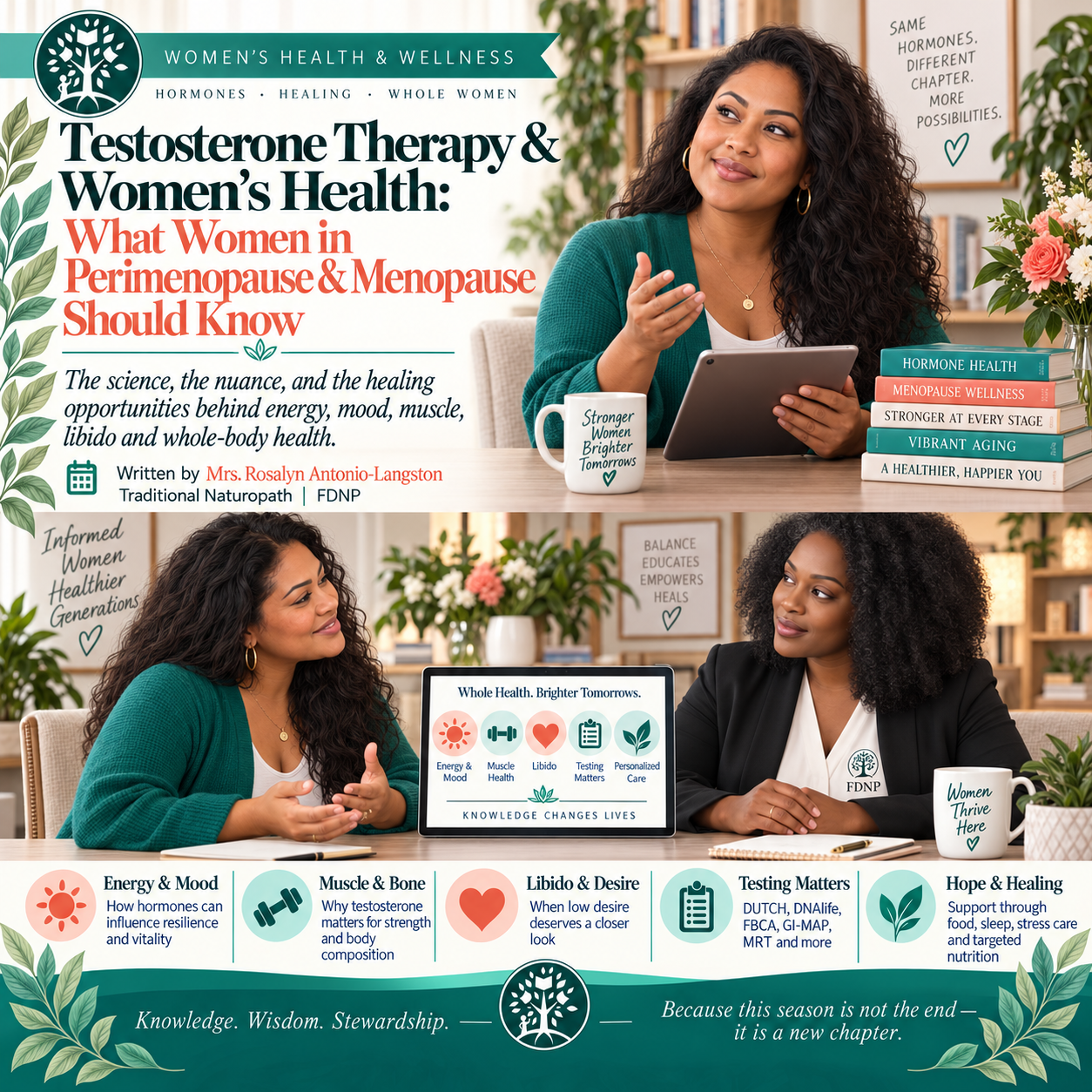
Testosterone Isn’t Just for Men: The Midlife Hormone Conversation Women Deserve
🌿 Testosterone Is a Female Hormone Too—Yes, I Said It
Let’s clear something up before we go any further:
Testosterone is not simply a “male hormone” that somehow wandered into a woman’s body by mistake.
Women make testosterone. Women have androgen receptors throughout the body. And testosterone plays a physiological role in sexual health, reproductive function, bone, muscle, brain function, cardiovascular health and overall wellbeing.
Yet when women enter their 40s and 50s, the menopause conversation tends to revolve almost entirely around estrogen and progesterone.
Are those hormones important? Absolutely.
Are they the whole hormonal story? Nope. 😏
Emerging research is bringing female testosterone physiology back into the conversation—and frankly, it is about time.
But before testosterone becomes the newest menopause miracle being sold across social media, we need to understand what the evidence actually says, where the evidence is still developing, and why testing and individualized assessment matter.
Because hormone care should involve more than:
“You have symptoms. Here, take this.”
🧪 Hold Up…Women Can Have More Testosterone Than Estrogen?
This surprises many women.
Testosterone and estradiol are often reported in different units, which makes casually comparing numbers on a laboratory report misleading.
Estradiol is commonly measured in:
pg/mL — picograms per millilitre
While testosterone may be measured in:
ng/dL — nanograms per decilitre
Here is the conversion:
1 ng/dL testosterone = 10 pg/mL
So, for example:
30 ng/dL testosterone = approximately 300 pg/mL.
A 2026 review published in Women’s Health, “Testosterone: Vital to Female Physiology,” discusses how, when testosterone and estradiol are expressed using comparable units, circulating testosterone concentrations in women can be higher than estradiol concentrations during much of the menstrual cycle.
That does NOT mean testosterone is “more important” than estrogen.
And it certainly does not mean more testosterone is automatically better.
Hormones are not competing for first place. 😂
Hormonal activity depends on much more than the concentration circulating in the bloodstream. It also depends on:
• Hormone receptors
• Sex hormone-binding globulin (SHBG)
• Enzyme activity
• Tissue sensitivity
• Conversion pathways
• Menstrual-cycle stage
• Age
• Metabolic health
• Medications
• Liver metabolism
• And the hormonal environment surrounding that hormone
This is why hormone physiology deserves much more nuance than simply declaring:
“Your testosterone is low.”
🔬 Testosterone 101: What Is It Actually Doing in a Woman?
Before menopause, female testosterone comes from several sources.
The ovaries and adrenal glands contribute directly, while androgen precursors can also be converted into testosterone within peripheral tissues.
Once testosterone enters circulation, much of it is attached to proteins—particularly SHBG and albumin.
Only a relatively small portion circulates freely.
And here is where things become even more interesting.
Testosterone can:
➡️ Act directly through androgen receptors.
➡️ Convert into dihydrotestosterone (DHT) through the enzyme 5-alpha-reductase.
➡️ Convert into estradiol through the aromatase enzyme.
Translation?
Your hormones are having conversations with one another all day long.
They are not individual little islands operating independently.
That becomes especially relevant during perimenopause because hormonal changes are not a neat little staircase where estrogen simply falls lower every year.
Perimenopause can involve tremendous hormonal variability.
Estradiol may surge.
Progesterone may become less predictable as ovulation changes.
SHBG may change.
Adrenal physiology can influence the bigger picture.
And androgen balance can shift too.
That is one reason why I prefer looking at patterns and physiology rather than chasing individual hormone numbers.
🧠💪🏾❤️ Testosterone Does More Than Knock on the Bedroom Door
When most women hear testosterone therapy, they immediately think:
Libido.
And yes, sexual health is where the strongest clinical evidence currently exists.
Testosterone therapy has demonstrated benefits for appropriately selected postmenopausal women experiencing hypoactive sexual desire disorder—HSDD.
HSDD is not simply:
“I’ve been working all day and I would rather sleep tonight.” 😂
It involves persistent or recurrent reduced sexual desire associated with personal distress, after other contributing medical, psychological, medication-related and relationship factors have been considered.
Research has shown improvements in areas such as:
• Sexual desire
• Arousal
• Orgasm
• Sexual pleasure
• Sexual responsiveness
• Sexual distress
Current menopause guidance, including NICE guidance in the UK, supports considering testosterone supplementation for low sexual desire associated with menopause when conventional HRT alone has not been effective.
But testosterone biology certainly does not stop at sexual function.
And that is where newer research becomes very interesting.
🔥 The 2026 Research That Has Women Talking
A 2026 study published in The Journal of Sexual Medicine evaluated women already using transdermal estrogen, with or without progesterone, who later added transdermal testosterone.
The retrospective cohort included 279 women, with an average age of approximately 56.
Researchers examined symptoms across several areas including:
• Mood
• Cognition
• Vasomotor symptoms
• Genitourinary symptoms
• Energy
• Musculoskeletal symptoms
• Neurological symptoms
• Cardiopulmonary symptoms
Approximately three months after testosterone was added, statistically significant improvements were reported in 15 of the 24 symptoms measured.
Among the larger reported changes were improvements in:
Vaginal dryness — approximately 59%
Hot flushes — approximately 55%
Libido — approximately 55%
Improvements were also observed across several symptom categories involving mood, energy, cognition, endocrine symptoms and musculoskeletal complaints.
Interesting?
Absolutely.
Proof that testosterone treats all these conditions?
Not yet.
And that distinction matters.
This was a retrospective observational study, not a randomized placebo-controlled clinical trial.
There was no placebo group.
Some women's underlying HRT regimens had also changed.
Therefore, the research can show an association with improvement, but it cannot establish that testosterone alone caused every improvement observed.
This is promising research—not permission to throw scientific caution out the window.
We can be excited about emerging evidence while still respecting the hierarchy of evidence.
Both can live in the same house. 😏
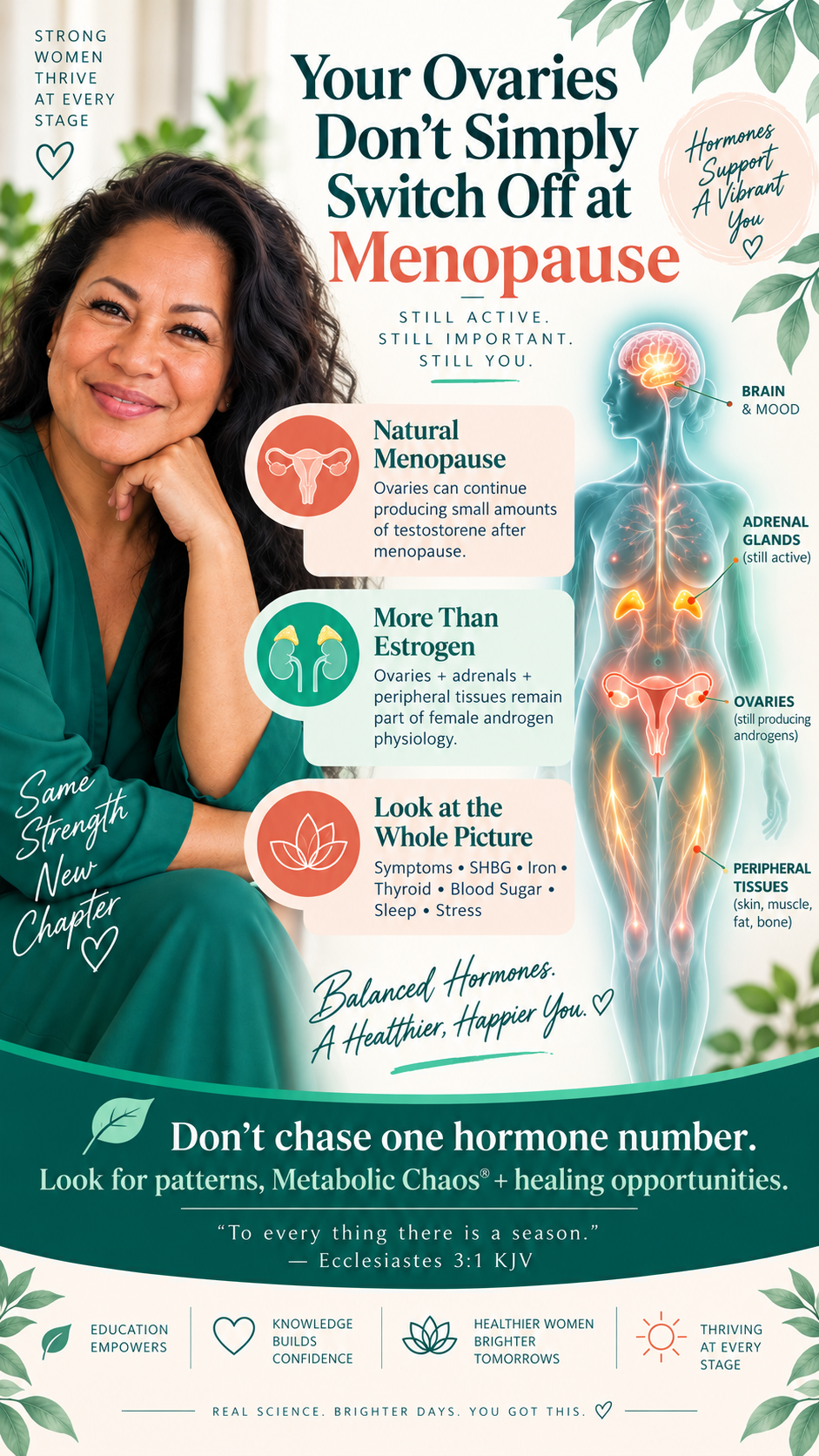
🔬Fun Fact Science Bar+
Did you know the ovaries do not simply “switch off” after menopause? While estrogen production changes dramatically, postmenopausal ovaries can continue producing small amounts of testosterone and other androgens. Women who have had both ovaries surgically removed generally have lower testosterone levels than women who experience natural menopause—another reminder that natural menopause and surgical menopause are not hormonally identical.
👉🏾 Translation: Menopause is not an “all hormones gone” event. 😏 Your ovaries, adrenal glands and peripheral tissues remain part of an interconnected hormone network. That is why symptoms cannot automatically be blamed on estrogen—or testosterone—without looking at the bigger picture.
✨ Healing Opportunity: Consider the whole terrain: symptoms, ovarian status, SHBG, estrogen therapy route, iron/ferritin, thyroid, blood sugar, nutrition, sleep and stress. The goal is not to chase one hormone number—it is to uncover patterns of Metabolic Chaos® and identify appropriate healing opportunities.
✝️ Faith Element: “To every thing there is a season…” — Ecclesiastes 3:1 KJV. Menopause is another season of physiology—not the end of vitality. Understanding and supporting the body God created is part of good stewardship. 🌿🙏🏾
🧠 “But I’m Exhausted, Foggy, Flat and Losing Muscle…”
This is where things can get complicated.
Symptoms such as:
• Fatigue
• Brain fog
• Decreased motivation
• Reduced libido
• Poor exercise recovery
• Muscle changes
• Sleep disruption
• Mood changes
• Hair changes
may overlap with changes in androgen physiology.
But—and this matters tremendously—the same symptoms can also occur with:
Iron deficiency.
Anemia.
Thyroid dysfunction.
Insulin resistance.
Inadequate estrogen.
Poor sleep.
Chronic stress.
Nutrient insufficiencies.
Insufficient protein or caloric intake.
Medication effects.
Inflammation.
Gastrointestinal dysfunction.
Blood-sugar dysregulation.
Sometimes several of these are happening simultaneously.
This interconnected dysfunction is something I often describe as Metabolic Chaos®.
Metabolic Chaos® is not a medical diagnosis. It is a useful functional concept describing what can happen when multiple physiological stressors begin influencing one another until it becomes difficult to identify where one problem ends and another begins.
So instead of only asking:
“Is my testosterone low?”
I prefer another question:
“What patterns may be contributing to how I feel, and where are the healing opportunities?”
Now we are investigating.
🧬 Testing Before Guessing: Because Symptoms Are Clues, Not Diagnoses
A woman should never be reduced to one testosterone result.
And one laboratory result should never become the supreme ruler of her endocrine system.
There is no universally accepted testosterone level that independently diagnoses HSDD in women.
A result should be interpreted alongside symptoms, medical history, medications, menstrual or menopause status, SHBG and the bigger metabolic picture.
When testosterone therapy is being medically considered, conventional serum testing remains particularly important.
Serum total testosterone and SHBG can help establish a baseline and allow the prescribing clinician to monitor treatment so testosterone exposure remains within an appropriate physiological female range.
But functional testing can answer additional questions.
The goal is not to order every laboratory test simply because we can.
The goal is to ask:
What question are we trying to answer?
Testing Before Guessing
Different tests answer different questions. The goal is not to collect laboratory reports—it is to understand the patterns contributing to symptoms and identify meaningful healing opportunities.
🩸 Serum Testosterone + SHBG
Primary question: What is the current circulating androgen picture?
Helps establish baseline total testosterone and SHBG and is important for medical monitoring when testosterone therapy is prescribed.
📊 Functional Blood Chemistry Analysis — FBCA
Primary question: What metabolic patterns may be contributing to the symptoms?
Provides context around iron and ferritin, glucose regulation, thyroid patterns, liver function, lipids, inflammation, proteins and nutrient-related markers.
🧪 DUTCH Complete / DUTCH Plus™
Primary question: How are steroid hormones being metabolized?
Can provide additional information about urinary sex hormones, androgen metabolites, estrogen metabolites, DHEA and cortisol patterns. It complements—but does not replace—appropriate serum monitoring for prescribed testosterone.
🧬 DNAlife® Hormones
Primary question: Where might genetic predispositions influence hormone pathways?
Evaluates selected genetic variants associated with steroid hormone synthesis, transport, metabolism and detoxification pathways. Genetics show tendencies—not current hormone concentrations or destiny.
🦠 GI-MAP®
Primary question: Is gastrointestinal dysfunction part of the bigger clinical picture?
May provide information about selected microbes, pathogens and digestive or intestinal immune markers when bloating, altered bowel habits and gastrointestinal symptoms are present. GI-MAP does not diagnose testosterone deficiency.
🥗 MRT®
Primary question: Could food-related immune reactivity be contributing to symptoms?
May be incorporated selectively when food-triggered symptoms are being investigated within a personalized nutrition strategy. It is not a hormone test and does not diagnose hormone deficiency.
SYMPTOMS + HISTORY + APPROPRIATE TESTING + CLINICAL CONTEXT
↓
Identify Patterns → Look for Metabolic Chaos® → Find Healing Opportunities
Educational graphic only. Functional testing does not replace medical diagnosis, appropriate serum monitoring or evaluation by a qualified prescribing clinician.
The important takeaway?
Different tests answer different questions.
DUTCH is not a replacement for serum testosterone monitoring.
DNAlife does not tell us what your testosterone concentration is today.
GI-MAP does not diagnose a hormonal deficiency.
MRT does not diagnose menopause.
And FBCA is not a prescription for testosterone.
Instead, these tools can help us understand different pieces of the terrain surrounding the woman experiencing the symptoms.
That distinction is extremely important.
🩸 A Testosterone Number Without SHBG Can Miss Part of the Story
SHBG stands for sex hormone-binding globulin.
Think of SHBG somewhat like a hormone transportation system.
Testosterone attached tightly to SHBG is not available to tissues in the same way as unbound testosterone.
This means two women could have similar total testosterone concentrations but potentially have very different biological contexts because their SHBG levels differ.
Higher SHBG can reduce the proportion of testosterone readily available to tissues.
Lower SHBG can increase relative androgen availability.
SHBG itself can be influenced by several things including:
• Estrogen exposure
• Route of estrogen administration
• Insulin resistance
• Thyroid physiology
• Liver function
• Body composition
• Certain medications
• Age
Oral estrogen, for example, typically raises SHBG more than transdermal estrogen.
That is one reason I am rarely impressed when one isolated hormone number gets waved around with:
“There! We found the entire problem!”
Physiology usually has more receipts than that. 😏
⚖️ Testosterone Therapy Is NOT a “More Is Better” Situation
The goal of female testosterone therapy is not to push testosterone into male or supraphysiological ranges.
The goal—when therapy is medically appropriate—is generally to maintain exposure within the physiological female range while improving the clinical problem being treated.
That matters because excessive androgen exposure can produce unwanted effects including:
• Acne
• Increased facial or body hair
• Oily skin
• Scalp hair loss in susceptible women
With substantially excessive exposure, concerns can include more pronounced androgenic effects such as voice changes and clitoral enlargement, some of which may not fully reverse.
This is why responsible testosterone therapy involves:
appropriate patient selection + appropriate dosing + monitoring + reassessment.
Not:
“My friend felt amazing on testosterone, so give me hers.”
Please don’t. 😂
🇬🇧 For My UK Ladies: Why Testosterone May Be Prescribed “Off-Label”
Women in the UK sometimes become concerned when they discover testosterone may be prescribed off-label.
Off-label does not automatically mean experimental, unsafe or inappropriate.
It means the specific medicine being used does not currently carry a UK marketing authorization specifically for that particular female indication or dosing regimen.
Current menopause guidance allows testosterone to be considered in appropriate women experiencing low sexual desire associated with menopause when HRT alone has not sufficiently helped.
The critical issue is appropriate prescribing and monitoring.
Women deserve clinicians who understand female physiology and female dosing, rather than simply shrinking a male protocol.
🌱 Before Adding Another Hormone…Look at the Terrain
There is something else I do not want women taking away from this conversation:
Tired = testosterone.
No ma’am. 😂
Hormones operate inside a biological environment.
That environment includes:
🥦 Nutrition
💪🏾 Muscle and resistance training
🩸 Iron status
🧠 Stress physiology
😴 Sleep
🦋 Thyroid function
🦠 Gastrointestinal health
🍠 Blood-sugar regulation
🌿 Liver function
🚽 Bowel regularity
☀️ Vitamin D and sunlight exposure
🥗 Adequate calories, protein and micronutrients
A woman could have beautiful hormone numbers on paper while still feeling awful because she is iron deficient, under-eating, sleeping five hours every night, experiencing insulin resistance or dealing with gastrointestinal dysfunction.
At the same time, we need to stop pretending every legitimate hormonal problem can be corrected with broccoli, yoga and positive thinking.
Both extremes miss the woman standing in the middle.
The whole-person approach makes far more sense.
And this is one reason I continue to appreciate principles that have long been part of the Seventh-day Adventist health message:
Nutrition. Exercise. Water. Sunlight. Temperance. Fresh air. Rest. Trust in God.
These principles do not replace appropriate medical care.
They help form the foundation from which we care for the incredible body God designed.
“I will praise thee; for I am fearfully and wonderfully made.” — Psalm 139:14 KJV
Supporting your body through the menopause transition is not weakness.
It is stewardship.
💡 So…Should Every Woman in Menopause Be Taking Testosterone?
No.
Should testosterone continue to be dismissed as merely a male hormone?
Also no.
For appropriately selected postmenopausal women experiencing distressing low sexual desire, evidence supporting physiologic testosterone therapy is meaningful.
The emerging research surrounding testosterone and areas such as:
• Energy
• Cognition
• Musculoskeletal health
• Mood
• Vasomotor symptoms
• Genitourinary symptoms
• General wellbeing
is fascinating.
But much of that broader evidence is not yet strong enough to establish testosterone as a treatment for all of those symptoms.
There is a huge difference between saying:
“Testosterone has biological roles in these tissues.”
and saying:
“Testosterone therapy has been proven to treat every symptom associated with these tissues.”
Science requires us to know the difference.
Women deserve better than hormone fear.
But we also deserve better than hormone hype.
🌳 Your Symptoms Deserve Investigation—Not Guesswork
Maybe you are running a business.
Managing employees.
Meeting deadlines.
Caring for your family.
Supporting everybody around you.
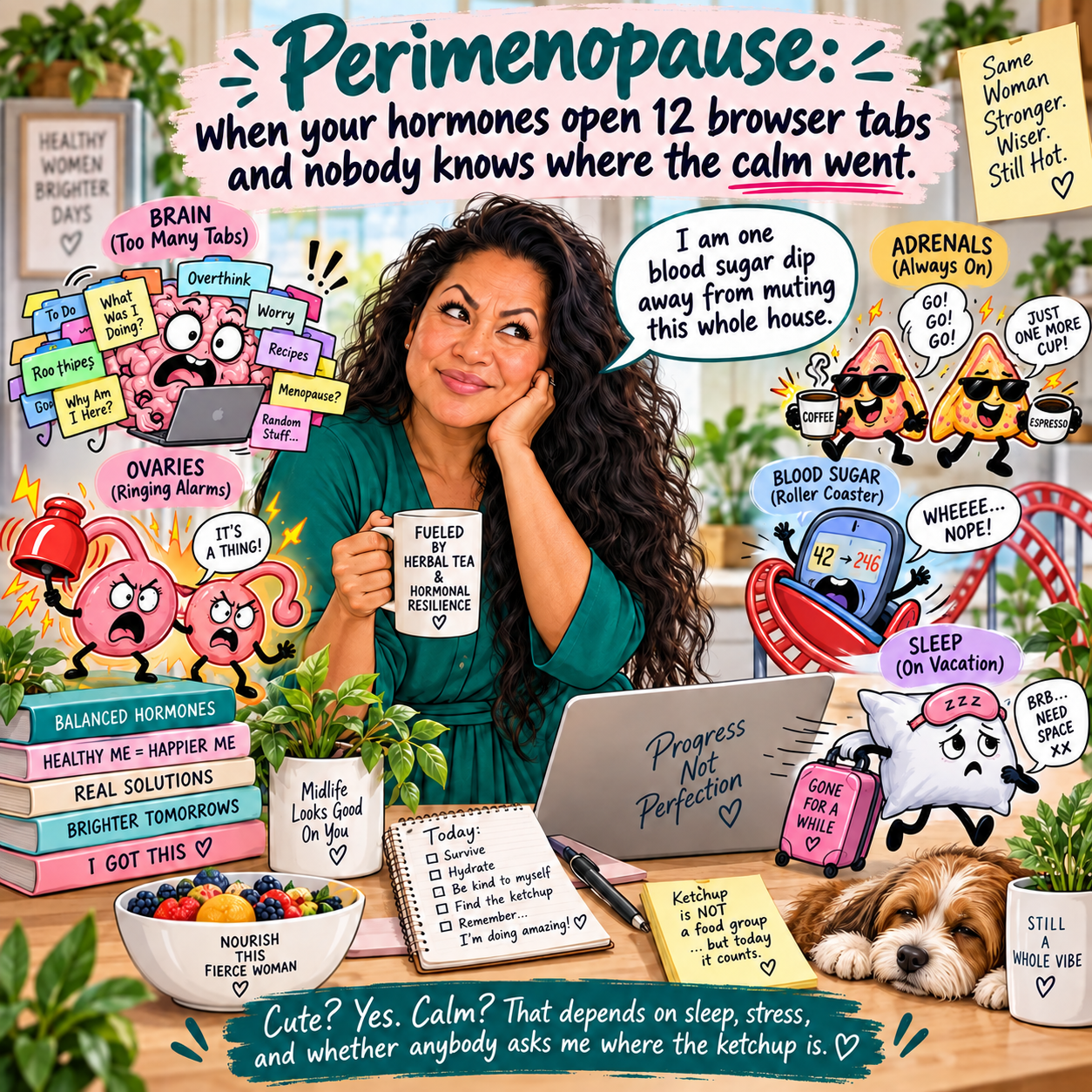
And meanwhile your body seems to have opened twelve browser tabs without asking your permission. 😂
Your sleep is changing.
Your digestion is changing.
Your periods are changing.
Your tolerance for stress is changing.
Your energy has changed.
Your libido has changed.
And suddenly someone tells you:
“Well, you’re getting older.”
No.
Getting older is not a laboratory diagnosis.
And menopause should not automatically mean silently tolerating symptoms that are affecting your quality of life.
At Leaves from the Tree of Life LLC, we help Businesswomen who are Hormonal, Anxious, and Bloated through Functional Nutrition Coaching + Labs.
As a Traditional Naturopath and Functional Diagnostic Nutrition Practitioner, I use detailed health history, functional laboratory testing, nutrition and lifestyle assessment to look for patterns contributing to Metabolic Chaos® and identify meaningful healing opportunities.
This may include tools such as:
🧪 DUTCH testing
🧬 DNAlife® Hormones
📊 Functional Blood Chemistry Analysis
🦠 GI-MAP®
🥗 MRT®
…and other testing selected according to the individual woman—not because every woman needs every test.
When testosterone or another prescription hormone therapy may be appropriate, that conversation belongs with a qualified prescribing healthcare professional.
Functional nutrition and medical care do not have to compete.
Good collaborative care puts the woman at the centre.
🌿 Invest in your health, invest in you.
👉🏾 CLICK HERE to jump on a Discovery Call
Your hormones may be changing.
That does not mean your best years are behind you.
Sometimes it simply means your body needs a different kind of support for this season.
And there may be far more healing opportunities available than you have been led to believe.
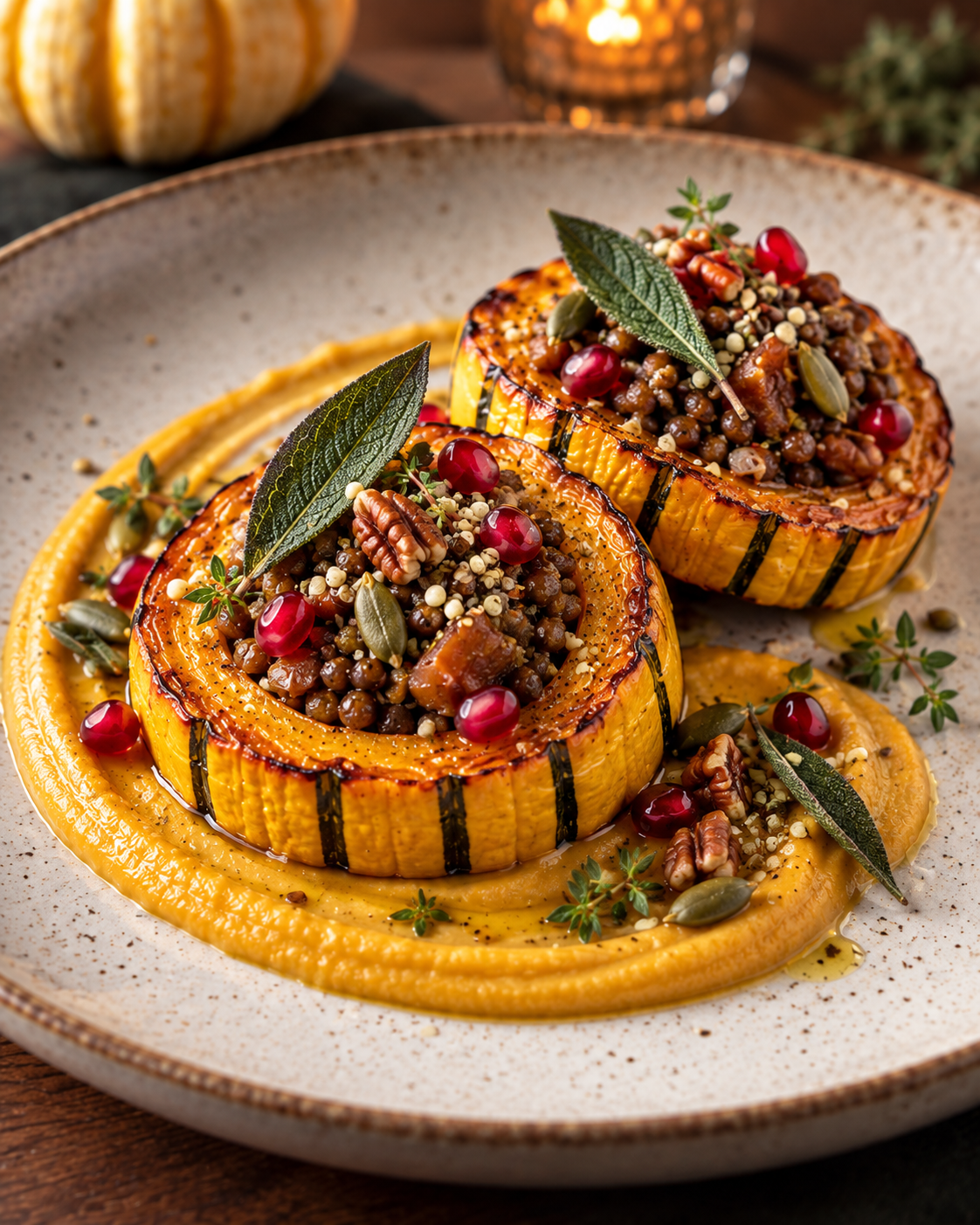
🍁Crispy Delicata Rings with Smoky Lentil-Chestnut Crumble & Velvet Pumpkin-Sage Cream
A mouth-watering autumn testosterone-supportive recipe that is savoury, slightly sweet, creamy, crunchy, elegant, and absolutely not giving “boring wellness food.” 😌
Think: roasted delicata squash rings, a smoky lentil-chestnut crumble, a silky pumpkin-sage cream, and a crunchy pepita-hemp sprinkle on top.
Yes ma’am — texture, beauty, and nourishment all on one plate. 🍽️
⏰ Time
Prep Time: 20 minutes
Cook Time: 30 minutes
Total Time: 50 minutes
Serves: 4
🛒 Ingredients
For the roasted delicata rings
2 medium organic delicata squash
1 tbsp extra virgin olive oil
1 tsp ground cinnamon
1/2 tsp smoked paprika
1/2 tsp sea salt
1/4 tsp black pepper
For the smoky lentil-chestnut crumble
1 cup cooked green or brown lentils
1 cup finely chopped cooked chestnuts
1/2 small red onion, finely diced
2 cloves garlic, minced
1 tsp fresh sage, finely chopped
1/2 tsp dried thyme
1 tsp tamari or coconut aminos
1/2 tsp smoked paprika
1 tbsp olive oil
Sea salt and black pepper, to taste
For the velvet pumpkin-sage cream
1 cup pumpkin purée
1/2 cup cooked cannellini beans
1/3 cup unsweetened organic soy milk
1 tbsp cashew butter
1 small roasted garlic clove
1/2 tsp dried sage or 1 tsp fresh sage
1/2 tsp sea salt
Pinch of nutmeg
For the crunchy topper
3 tbsp pumpkin seeds (pepitas)
2 tbsp hemp hearts
1 tbsp chopped pecans
1 tsp sesame seeds
Pinch of sea salt
Optional garnish
Fresh sage leaves
Pomegranate arils
Microgreens
👩🏾🍳 Step-by-Step Instructions
1. Roast the delicata squash
Preheat oven to 200°C / 400°F.
Slice the delicata squash into thick rings and scoop out the seeds. Toss with olive oil, cinnamon, smoked paprika, sea salt, and black pepper. Arrange on a lined baking tray and roast for 22–25 minutes, flipping halfway, until tender and lightly caramelized.
2. Make the smoky lentil-chestnut crumble
While the squash roasts, heat olive oil in a skillet over medium heat. Add red onion and sauté for 3–4 minutes. Add garlic, sage, thyme, smoked paprika, tamari, lentils, and chopped chestnuts. Cook for another 5–7 minutes, stirring until warm, fragrant, and slightly crisp in places. Season to taste.
3. Blend the velvet pumpkin-sage cream
Add pumpkin purée, cannellini beans, soy milk, cashew butter, roasted garlic, sage, salt, and nutmeg to a blender. Blend until completely smooth and silky. Warm gently on the stove if needed.
4. Toast the crunchy topper
In a dry skillet, lightly toast the pumpkin seeds, hemp hearts, pecans, and sesame seeds for 2–3 minutes until fragrant. Add a tiny pinch of sea salt and remove from heat.
5. Assemble your masterpiece
Spread a generous swoosh of pumpkin-sage cream on each plate. Place 2–3 roasted delicata rings on top. Fill the centre or top of the rings with the smoky lentil-chestnut crumble.
6. Finish and serve
Sprinkle generously with the crunchy topper. Add fresh sage, a few pomegranate arils, or microgreens if desired.
Serve warm and prepare to act humble when people ask for the recipe. 😌🍂
🌿 Why These Ingredients Are Testosterone-Supportive
🎃 Delicata Squash
Rich in beta-carotene and complex carbohydrates that can support stable energy and blood sugar balance, which matters for hormone health.
🫘 Lentils
Provide plant protein, iron, folate, and fibre. Adequate protein and blood sugar balance help support healthy hormone production and resilience.
🌰 Chestnuts
A lovely autumn twist that adds a subtly sweet, earthy flavour plus minerals and complex carbs for sustained energy.
🎃 Pumpkin Purée
Provides antioxidants and carotenoids to help support overall wellness and reduce oxidative stress.
🫛 Cannellini Beans
Add creaminess, fibre, and plant protein while helping keep this dish smooth without dairy.
🥛 Organic Soy Milk
Soy foods provide high-quality plant protein and beneficial phytonutrients, making them a smart option for women in midlife.
🥜 Cashew Butter
Adds richness and creaminess, along with healthy fats that help make meals more satisfying.
🌱 Pumpkin Seeds (Pepitas)
One of the stars here. They provide zinc and magnesium, two important minerals involved in hormone health, including testosterone production.
🌿 Hemp Hearts
Contain healthy fats, protein, and minerals, which can support hormone production and satiety.
🌰 Pecans
Bring crunch plus healthy fats and polyphenols for a satisfying autumn finish.
🧄 Garlic
Contains sulfur compounds that support overall health and can complement a nutrient-dense, hormone-supportive diet.
🌿 Sage + Thyme
Not only do they make this dish taste like autumn sophistication, but herbs also bring antioxidant support and gorgeous depth of flavour.
💡 Why This Recipe Works
This dish combines:
✅ Protein
✅ Healthy fats
✅ Mineral-rich seeds
✅ Fibre
✅ Blood sugar support
✅ Smooth + crunchy texture
✅ Autumn comfort without the slump
In other words, it tastes indulgent but still loves you back. 😏
📚 Selected References
Faucett K, Giles LA, Sing E. Testosterone: Vital to female physiology. Women’s Health. 2026;22:17455057261451831. doi:10.1177/17455057261451831.
Hernandez BS, Boyne AM, Fleming B, et al. Improvement in multiple organ systems following testosterone replacement therapy in women previously on standard hormone replacement therapy. The Journal of Sexual Medicine. 2026;23(9):qdag116. doi:10.1093/jsxmed/qdag116.
Lanoff J, Simon JA. Testosterone in Women: Clinical Evidence and Practice Guidelines. Obstetrics and Gynecology Clinics of North America. 2026;53(3):393–410. doi:10.1016/j.ogc.2026.03.003.
Davis SR, Baber R, Panay N, et al. Global Consensus Position Statement on the Use of Testosterone Therapy for Women. The Journal of Clinical Endocrinology & Metabolism. 2019;104(10):4660–4666. doi:10.1210/jc.2019-01603.
Parish SJ, Simon JA, Davis SR, et al. International Society for the Study of Women’s Sexual Health Clinical Practice Guideline for the Use of Systemic Testosterone for Hypoactive Sexual Desire Disorder in Women. The Journal of Sexual Medicine. 2021;18(5):849–867. doi:10.1016/j.jsxm.2020.10.009.
Islam RM, Bell RJ, Green S, Page MJ, Davis SR. Safety and efficacy of testosterone for women: a systematic review and meta-analysis of randomised controlled trial data. The Lancet Diabetes & Endocrinology. 2019;7(10):754–766. doi:10.1016/S2213-8587(19)30189-5.
Panay N. British Menopause Society Tool for Clinicians: Testosterone replacement in menopause. Post Reproductive Health. 2022;28(3):158–160. doi:10.1177/20533691221104266.
National Institute for Health and Care Excellence (NICE). Menopause: identification and management. NICE guideline [NG23]. Published November 12, 2015. Updated April 15, 2026.
Blog Disclaimer
The health information on this blog is for general educational purposes only and is not intended to diagnose, treat, cure, or prevent any disease. It should not be used as a substitute for professional medical advice. Always consult a qualified healthcare provider before making any health-related decisions
This blog may contain affiliate links, meaning Leaves from the Tree of Life LLC may earn a small commission if you purchase a product or service through these links—at no additional cost to you. Your support helps us continue to provide valuable content. Thank you!
