
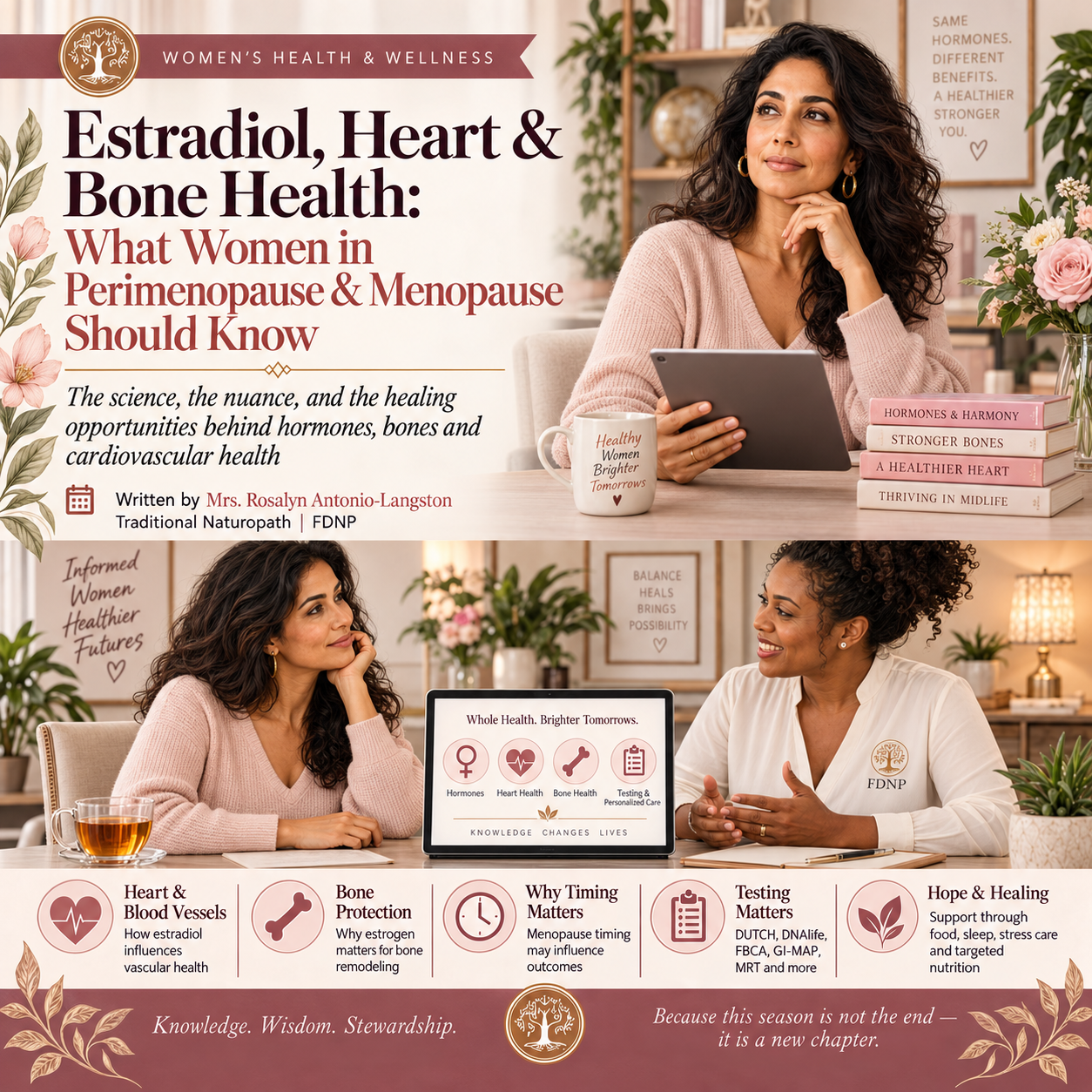
When Estradiol Has More Than Hot Flashes on Its To-Do List: A Perimenopause & Menopause Guide to Heart and Bone Health ❤️🦴
❤️🦴 Midlife Is About More Than Surviving Hot Flashes
There is a strange thing that happens when women enter perimenopause.
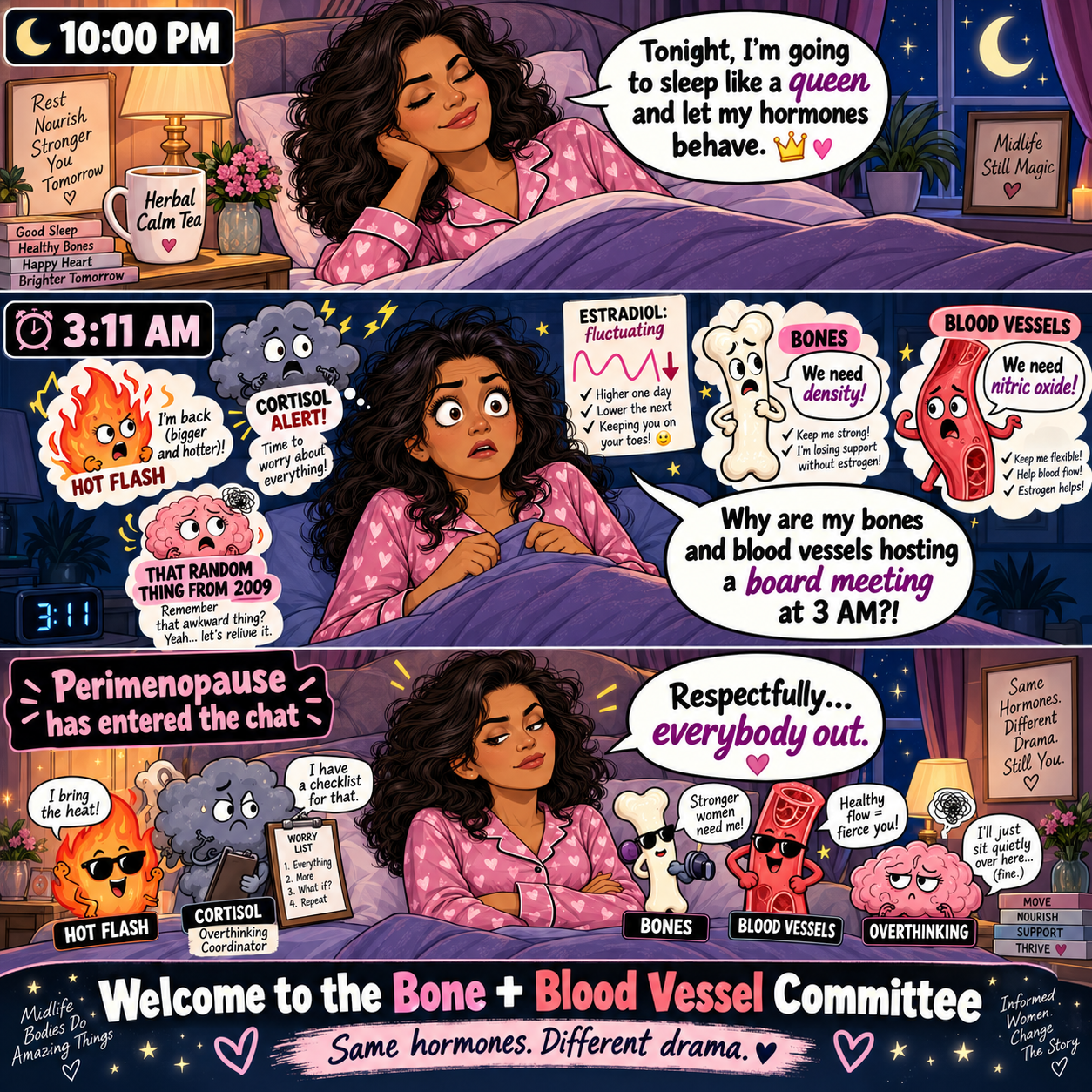
Suddenly, the conversation becomes very focused on hot flashes, night sweats, mood swings, vaginal dryness and whether we are sleeping—or conducting a 3:17 AM emergency board meeting with the ceiling. 😏
Those symptoms matter. A lot.
But estrogen does considerably more in the body than operate your internal thermostat.
Estradiol interacts with the cardiovascular system, skeletal system, brain, metabolism, connective tissue, genitourinary tissues and more. So when ovarian hormone production becomes increasingly unpredictable during perimenopause and eventually declines after menopause, we need to think beyond simply silencing symptoms.
We also need to think about the woman who will hopefully still be living, moving, thinking, serving and thriving in that body 20, 30 and 40 years from now.
And that brings us to a fascinating 2026 review examining transdermal estradiol, serum estradiol concentrations, bone health and cardiovascular health.
The science is getting interesting.
But—and you knew your Traditional Naturopath was going to put a “but” in here—we are not turning one new paper into hormone gospel. 😏
Good science requires context.
Good healthcare requires individualization.
And good functional work asks a bigger question:
What healing opportunities might we be missing?
🔬 First Things First: What Exactly Is Estradiol?
Estradiol, or 17β-estradiol (E2), is the predominant and most biologically active circulating estrogen during much of a woman’s reproductive life.
And estrogen receptors are certainly not confined to the uterus and ovaries.
Estradiol participates in biological signalling involving:
🦴 Bone remodeling
❤️ Vascular function
🧠 Neurological function
🩸 Lipid and glucose metabolism
💪 Body composition
🌡️ Temperature regulation
🌸 Vaginal and urinary tissues
😴 Sleep and circadian physiology
So menopause is not simply an event involving your ovaries.
It is a whole-body endocrine transition.
That helps explain why perimenopause can occasionally feel less like your periods are changing and more like someone quietly installed a new operating system while you were still using the computer. 🙃
🦴 Your Skeleton Is Alive—and Estradiol Has Been Quietly Helping Manage It
Your skeleton is not a stack of calcium sticks holding you upright.
Bone is living, metabolically active tissue undergoing continual remodeling.
Two of the major cellular players are:
Osteoclasts → break down and resorb old bone.
Osteoblasts → help form new bone.
Under healthy conditions, bone breakdown and formation are carefully regulated.
Estradiol is one of the hormones involved in maintaining that balance.
When estrogen declines through the menopause transition, signalling can shift in ways that increase osteoclast activity and bone resorption.
Translation?
You can begin losing bone faster than you rebuild it.
This accelerated loss is one reason the menopause transition is such an important window for thinking proactively about osteopenia, osteoporosis and future fracture risk—even when your bones feel absolutely fine.
Menopausal hormone therapy is recognized as an effective therapy for preventing menopause-associated bone loss, and evidence shows that it reduces osteoporosis-related fractures while therapy is being used.
That does not mean every woman needs menopausal hormone therapy.
It means bone health deserves a legitimate place in the hormone conversation.
❤️ Meanwhile, Estradiol Has Cardiovascular Business Too
Cardiovascular disease remains a major cause of illness and death among women.
Yet many women reach midlife having had substantially more conversations about breast health than vascular health.
Estradiol interacts with the vascular endothelium—the delicate cellular lining inside our blood vessels—and influences vascular tone, lipid metabolism, inflammation and other processes involved in cardiovascular physiology.
But this is where hormone conversations need scientific maturity.
Hormone therapy should not simply be marketed as:
“Take estrogen so you don’t have a heart attack.”
That would go beyond what the evidence establishes.
What we do know is that age, timing of initiation, route of administration and baseline cardiovascular health matter.
For many healthy symptomatic women younger than 60 or within roughly 10 years of menopause, menopausal hormone therapy generally has a more favourable benefit-risk profile than when treatment is first initiated much later.
But MHT is not currently recommended simply as a medication to prevent cardiovascular disease.
There is an important distinction between:
“Estradiol may influence cardiovascular physiology favourably.”
and
“Estradiol prevents heart attacks.”
Those are not the same statement.
Science needs its commas, ladies. 😂
🪟 The Timing Hypothesis: There May Be a Window of Opportunity
One fascinating area of menopause research is the timing hypothesis.
The basic concept is that estradiol may interact differently with relatively healthy blood vessels earlier in menopause than with vessels after many years of established atherosclerosis.
The ELITE trial helped give this idea clinical support.
Women were divided according to how long they had been postmenopausal and randomized to estradiol or placebo.
Among women who were less than six years beyond menopause, estradiol slowed progression of carotid intima-media thickness, a marker used to assess subclinical atherosclerosis.
The same effect was not demonstrated in women who were 10 or more years beyond menopause.
That does not mean estradiol has been proven to prevent cardiovascular events in every recently menopausal woman.
It means something more sophisticated:
The vascular response to estrogen appears to depend, at least partly, on when treatment begins and what condition the vascular system is already in.
That is a very different statement.
And a much more useful one.
🧴 Why Transdermal Estradiol Gets So Much Attention
Transdermal estradiol is delivered through the skin using preparations such as patches, gels or sprays.
One important difference from oral estrogen is that transdermal estrogen largely avoids first-pass metabolism through the liver.
That matters because oral and transdermal estrogen can influence things such as:
🩸 Coagulation pathways
❤️ Triglycerides
🔥 Inflammatory signalling
🍬 Metabolic physiology
🫀 Venous thromboembolism risk
differently.
Current menopause guidance generally recognizes transdermal estrogen as having a more favourable thrombotic profile than oral estrogen, particularly when cardiovascular or clotting risk factors are present.
But please hear the entire sentence:
A more favourable risk profile is not the same thing as zero risk.
Family history matters.
Personal medical history matters.
Blood pressure matters.
Smoking matters.
Metabolic health matters.
Migraine history may matter.
And sometimes the most important question is not simply:
“Which estrogen?”
It is:
“What does the rest of this woman’s physiology look like?”
Welcome to functional thinking. 😏
🧪 The 2026 Estradiol Paper: What Did It Actually Say?
In July 2026, Paul Charles M. Piette and James A. Simon published the review:
“Optimizing estradiol serum levels for optimal skeletal and cardiovascular health during transdermal menopausal hormone therapy.”
The authors examined serum estradiol concentrations produced by transdermal estradiol gel in two clinical trials and compared those findings with observations from studies including KEEPS and ELITE.
Across the two transdermal gel studies, 567 women were included in the efficacy populations.
The authors observed substantial reductions in moderate-to-severe hot flashes and explored whether estradiol concentrations achieved with therapy overlapped with ranges associated in previous research with favourable skeletal and cardiovascular findings.
They proposed that serum estradiol concentrations around 60 pg/mL may represent a biologically useful range associated with symptom improvement and potentially favourable skeletal and vascular effects.
Interesting?
Absolutely.
A universal menopause target?
Not so fast.
🚨 Before Everyone Starts Chasing 60 pg/mL…
This is exactly where social-media menopause information can go sideways.
Please do not read:
“Approximately 60 pg/mL was associated with favourable findings in this review”
and turn it into:
“Every menopausal woman must have an estradiol level of 60 pg/mL.”
Those are not scientifically equivalent statements.
This was a review article.
It did not randomize thousands of women to different serum estradiol targets and demonstrate that 60 pg/mL resulted in fewer fractures, heart attacks or deaths.
Serum estradiol measurements themselves also have limitations.
Results can vary according to:
timing
laboratory assay
route of hormone delivery
absorption
dose
individual physiology
And in perimenopause, your ovaries may still be producing estradiol rather unpredictably.
Tuesday’s estradiol level is not necessarily Thursday’s estradiol story.
Serum testing can sometimes be useful, particularly when a prescribing clinician is investigating poor symptom response or possible absorption problems.
But menopause care should not become a laboratory-number-chasing exercise.
Ladies…
We are treating the woman—not auditioning for the Perfect Hormone Number Olympics. 😏
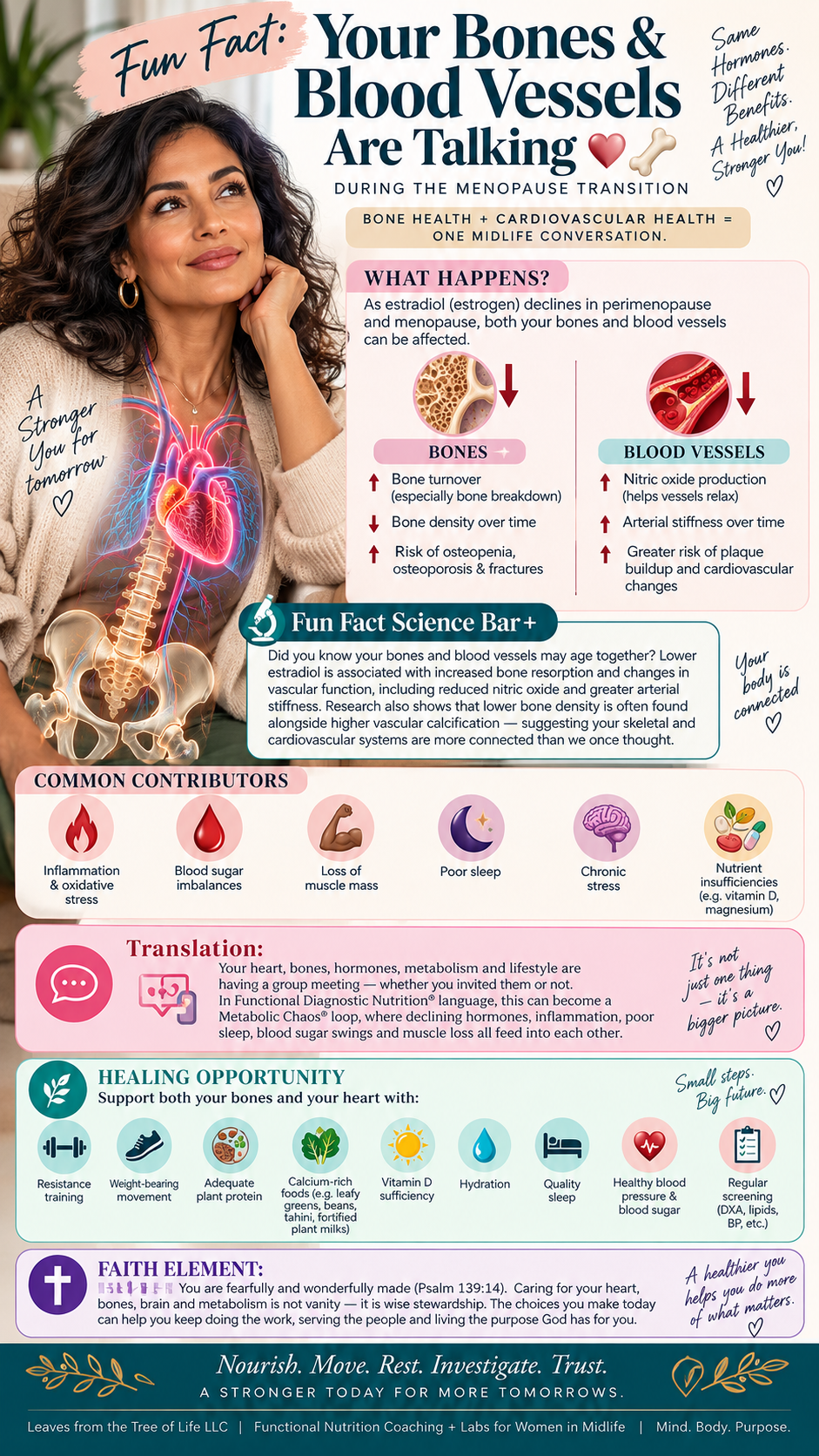
🔬Fun Fact Science Bar+
Did you know your bones and blood vessels may be aging in conversation with each other during the menopause transition? As estradiol declines, bone turnover can accelerate while the vascular endothelium may produce less nitric oxide—the molecule that helps blood vessels relax and stay flexible. Researchers have also observed associations between lower bone density and greater arterial stiffness or vascular calcification, although one does not automatically cause the other.
👉🏾 Translation: Your skeleton and cardiovascular system are not operating in separate departments. Hormonal shifts, inflammation, oxidative stress, blood-sugar regulation, muscle loss and nutrient status can influence both at the same time. In Functional Diagnostic Nutrition® language, this is exactly why we look beyond one symptom and investigate the broader Metabolic Chaos® picture.
✨ Healing Opportunity: Think bone + heart together: resistance training, weight-bearing movement, adequate plant protein, calcium- and magnesium-rich foods, vitamin D sufficiency, stable blood sugar, healthy blood pressure, quality sleep and appropriate medical screening. Strong muscles are a beautiful midlife investment because they support your bones and your metabolic health.
✝️ Faith Element: Scripture reminds us that we are “fearfully and wonderfully made” (Psalm 139:14 KJV). The body is beautifully interconnected. Caring for your heart, bones, muscles and metabolism is not vanity—it is wise stewardship of the body God has entrusted to you. 🌿🙏🏾
🧩 Enter Metabolic Chaos®: Because Hormones Do Not Live Alone
Imagine two women entering perimenopause.
One woman has:
excellent insulin sensitivity
healthy blood pressure
strong skeletal muscle
good nutritional status
adequate vitamin D
regular resistance training
restorative sleep
healthy digestive function
Another woman has:
insulin resistance
low ferritin
digestive problems
disrupted sleep
low muscle mass
elevated triglycerides
nutrient insufficiencies
constipation
chronic stress
inflammatory complaints
Both are technically perimenopausal.
But physiologically?
They are not standing in the same room.
This is where I use the term Metabolic Chaos®—multiple systems influencing one another until symptoms begin arriving in groups and nobody seems quite sure which department started the argument. 😂
Hormones matter.
But hormones do not operate in solitary confinement.
Your gut affects nutrition.
Nutrition affects bone.
Muscle affects glucose disposal.
Glucose regulation influences cardiovascular risk.
Sleep affects appetite, insulin sensitivity and blood pressure.
Stress affects almost everything.
So rather than asking only:
“How do we raise this hormone?”
I also want to know:
“What healing opportunities are hiding underneath this picture?”
🧫 Testing: Because Guessing Is Not a Functional Strategy
I love data.
But I do not believe in ordering every shiny functional test simply because it exists.
Testing should answer a question.
And different tests answer different questions.
No single DUTCH panel, DNA report or stool test can tell you whether menopausal hormone therapy is appropriate for you.
That assessment belongs within the bigger clinical picture and, where prescription therapy is concerned, should involve an appropriately licensed prescribing clinician.
Here is where different testing tools may fit.
🩸 Functional Blood Chemistry Analysis—FBCA
Functional Blood Chemistry Analysis can help us examine conventional laboratory results through a broader nutrition and metabolic lens.
Depending on the woman, useful conventional markers may include:
CBC
ferritin and iron studies
fasting glucose
HbA1c
fasting insulin where appropriate
lipid profile
thyroid markers
liver markers
kidney markers
vitamin D
inflammatory and cardiometabolic markers where indicated
For cardiovascular health, discussions may also include markers such as ApoB and lipoprotein(a) when clinically appropriate.
Because you can have a perfectly respectable estradiol result and still have elevated blood pressure, insulin resistance or an unfavourable lipid profile.
Again:
Treat the woman. Not the spreadsheet.
🧪 DUTCH Testing
DUTCH testing can provide additional information about sex-hormone metabolites and cortisol patterns within a functional assessment.
It may be useful when exploring the wider terrain surrounding:
hormone metabolism
stress physiology
cortisol patterns
certain hormone-related symptom patterns
But DUTCH testing should not be used by itself to diagnose perimenopause, determine cardiovascular risk or prescribe estradiol dosage.
It provides another piece of information.
Not the entire novel.
🧬 DNAlife Hormones
Genetic testing may provide clues about biological pathways involving:
estrogen metabolism
methylation
oxidative stress
detoxification pathways
inflammatory tendencies
DNAlife Hormones may therefore provide another layer when developing an individualized nutrition and lifestyle strategy.
But genetics are not destiny.
A genetic variant is not a diagnosis.
We use genetic information to ask better questions—not frighten women into believing their DNA has already written the final chapter.
🦠 GI-MAP
Now I can hear somebody asking:
“What does my gut have to do with my bones and estrogen?”
Quite a bit indirectly.
Digestive health can influence:
nutrient intake
nutrient absorption
bowel regularity
dietary tolerance
metabolic health
inflammatory burden
For the woman who is hormonal and bloated, constipated, running to the loo or wondering why everything she eats suddenly seems to start an argument, examining gastrointestinal health may reveal additional healing opportunities.
GI-MAP does not tell us whether you need estradiol.
It investigates a different part of the physiological terrain.
Different question.
Different tool.
🍎 MRT
For selected clients experiencing persistent food-associated symptoms, MRT may be incorporated into a broader functional nutrition strategy.
Again, MRT is not:
❌ an osteoporosis test
❌ a cardiovascular-risk test
❌ a hormone-dosing tool
The philosophy should never be:
Every woman needs every test.
It should be:
Right test. Right woman. Right question.
Now that is personalization.
🦴 Don’t Forget the Tests That Actually Assess Your Bones
If we are discussing skeletal protection, we eventually need to talk about the skeleton itself.
Depending on age, clinical history and individual risk, assessment may include:
🦴 DXA/DEXA bone-density scanning
📊 FRAX fracture-risk assessment
☀️ Vitamin D status
🥬 Calcium intake
🏋🏾 Resistance-training history
💊 Medications affecting bone
🧬 Family history
🦴 Previous fractures
🚭 Smoking history
⚖️ Body weight and nutritional status
You cannot reliably feel low bone density.
Osteoporosis can remain quiet for years.
We would much rather identify the risk before your hip files a formal complaint. 😏
❤️ Your Cardiovascular Assessment Needs More Than Estradiol Too
While we are checking hormones, let us not forget the fundamentals.
A meaningful cardiovascular picture considers things such as:
blood pressure
lipid profile
LDL-C and HDL-C
triglycerides
ApoB where appropriate
lipoprotein(a) where appropriate
glucose regulation
insulin resistance
smoking history
exercise
sleep
kidney health
family history
body composition
overall metabolic health
Because hormone optimization cannot compensate for everything else being ignored.
Your endocrine and cardiovascular systems have been communicating behind your back for decades.
We might as well join the conversation. 😂
🧠 A Word About Progesterone: Do Not Leave Her Out of the Group Chat
Estradiol tends to receive the glamorous menopause headlines.
But progesterone deserves considerably more nuance than:
“You only need it if you have a uterus.”
That statement confuses one very important reason for prescribing progesterone with the entirety of progesterone biology.
For women who have an intact uterus and use systemic estrogen, an appropriate progestogen is generally required to protect the endometrium from unopposed estrogen stimulation.
That is well established.
But what happens if the uterus has been removed?
In that situation, progesterone is generally not required for endometrial protection, because there is no endometrium to protect.
However, that does not mean progesterone suddenly becomes biologically irrelevant.
The uterus may have left the building.
The progesterone receptors did not pack their bags with it. 😏🧠
Progesterone is also a neuroactive steroid.
Micronized progesterone can act directly in the nervous system and can also be metabolized into neuroactive compounds such as allopregnanolone.
Allopregnanolone interacts with GABA-A receptors, which are part of the brain’s major inhibitory signalling system and are involved in calming neuronal activity.
This helps explain why micronized progesterone has attracted research attention involving:
😴 Sleep initiation
🌙 Nighttime awakenings
🧠 Nervous-system regulation
🌿 Anxiety-related symptoms
💭 Mood
🧩 Cognition and working memory
Research has found that micronized progesterone can improve some sleep outcomes, particularly sleep-onset latency, although results vary between studies.
Progesterone and its metabolites have also demonstrated neuroprotective and neuroregulatory properties in experimental and preclinical research.
But—and this is important—we should not run ahead of the evidence.
We do not currently have sufficient clinical evidence to tell women:
“Take progesterone to prevent dementia.”
or
“Progesterone prevents stroke.”
Those claims would go beyond what has been established.
A woman without a uterus may still use micronized progesterone when her qualified prescriber determines that it is appropriate, based on symptoms, goals, tolerance and individual health circumstances.
Not because she needs uterine protection.
But potentially because progesterone’s biology extends far beyond the uterus.
And one more distinction matters:
Progesterone is not automatically interchangeable with every synthetic progestin.
Micronized progesterone is chemically identical to endogenous progesterone, while synthetic progestins can differ in receptor activity and physiological effects.
That does not mean:
“All progestins are bad.”
It means:
Different molecules have different pharmacology.
Precision matters.
🌿 Hormone Therapy and Lifestyle Do Not Need to Fight Each Other
One of the things I appreciate about the historic Seventh-day Adventist health message is its emphasis on whole-person stewardship.
Nutrition matters.
Exercise matters.
Water matters.
Sunlight matters.
Temperance matters.
Fresh air matters.
Rest matters.
And trust in God matters.
That philosophy does not require us to pretend modern medicine has nothing useful to offer.
Hormone therapy and lifestyle medicine do not need to stand on opposite sides of the room glaring at one another.
Sometimes a woman may benefit from estradiol and need more fibre.
She may use micronized progesterone and need to address chronic sleep deprivation.
She may need hormone therapy and progressive resistance training.
She may need medical treatment and prayer.
She may need a prescription and fewer ultra-processed foods.
That is not contradiction.
That is whole-person stewardship.
God created a remarkably interconnected body.
Perhaps we should stop trying to care for it as though every organ operates independently.
🫘 Your Bones Need Muscle Too, Madam
If preserving bone is the goal, please do not expect estradiol to do all the heavy lifting.
Literally.
Bone responds to mechanical loading.
That means your midlife strategy should include, when appropriate:
🏋🏾♀️ Progressive resistance training
🚶🏾♀️ Weight-bearing movement
🌱 Adequate protein
🥬 Sufficient calcium
☀️ Appropriate vitamin D status
😴 Restorative sleep
🚭 Avoiding smoking
❤️ Supporting metabolic health
For my whole-food plant-based ladies, calcium-containing foods may include:
calcium-set tofu
fortified unsweetened plant milk
beans
tahini
almonds
appropriate leafy greens
And protein matters too.
Midlife is not the time to live on lettuce leaves, herbal tea and good intentions. 😂
Muscle supports metabolic health, physical independence and skeletal loading.
Estradiol may help support the terrain.
Your lifestyle still needs to give your skeleton a reason to stay strong.
💡 So…Should You Take Estradiol?
A responsible answer cannot come from an Instagram reel.
It cannot come from one estradiol blood test.
And it cannot come from this blog.
Better questions include:
Where are you in the menopause transition?
Which symptoms are affecting your quality of life?
Do you have a uterus?
What are your bone-health risks?
What is your cardiovascular-risk profile?
What is your personal medical history?
What does your family history look like?
What medications are you taking?
What metabolic dysfunction may be occurring alongside hormonal change?
How are you sleeping?
What is happening with your gut?
How strong is your muscle and bone foundation?
And importantly:
What are your goals?
For many healthy women with menopausal symptoms who are younger than 60 or within approximately 10 years of menopause onset, contemporary evidence supports a favourable benefit-risk profile for appropriately prescribed MHT after individualized assessment.
That is considerably more empowering than either extreme:
❌ “Hormones are dangerous.”
or
❌ “Every woman needs hormones.”
Women’s physiology deserves a more intelligent conversation than that.
🌳 Your Midlife Body Is Not Just Making Noise—It Is Giving You Information
Perimenopause can feel chaotic.
Your sleep changes.
Your body composition changes.
Your periods begin freelancing.
Your tolerance for nonsense mysteriously decreases.
And your brain occasionally places perfectly ordinary nouns into witness protection. 😂
Meanwhile, you are still leading the business, serving clients, handling responsibilities, navigating relationships and functioning as though somebody did not quietly rearrange your endocrine system overnight.
You deserve better than:
“Your labs are normal.”
You also deserve better than fear-based hormone messaging.
And you deserve better than an influencer declaring that one hormone, supplement, diet or laboratory number is the answer for every woman.
Empowerment comes from understanding what is happening.
Looking at risk.
Investigating patterns.
Identifying healing opportunities.
Using science without worshipping numbers.
Supporting the foundations God designed the body to require.
And collaborating with the appropriate healthcare professionals when medical treatment is needed.
Sometimes the menopause transition is precisely what forces us to finally look at:
❤️ Cardiovascular health
🦴 Bone strength
💪 Muscle
🧠 Brain health
🦠 Gut function
🩸 Metabolic health
😴 Sleep
🌿 Nutrition
🙏🏾 Spiritual wellbeing
as one interconnected story.
And perhaps that is not merely a crisis.
Perhaps it is an invitation.
🌿 Ready to Investigate Your Metabolic Chaos®?
At Leaves from the Tree of Life LLC, we help Businesswomen who are Hormonal, Anxious, and Bloated through Functional Nutrition Coaching + Labs.
Our approach goes beyond simply chasing individual symptoms.
We look for patterns.
We ask better questions.
And we investigate potential healing opportunities within the nutritional, metabolic, gastrointestinal and lifestyle terrain surrounding your health.
Depending on your individual needs, your assessment may incorporate tools such as:
🧪 DUTCH
🧬 DNAlife Hormones
🧬 DNAlife Health
🩸 Functional Blood Chemistry Analysis
🦠 GI-MAP
🍎 MRT
…and other targeted testing where appropriate.
When menopausal hormone therapy is being considered, prescribed or adjusted, we encourage collaboration with an appropriately licensed prescribing clinician while we work alongside you on the nutrition, gut, metabolic and lifestyle foundations surrounding your health.
Because midlife does not have to mean becoming a stranger in your own body.
It can become the season when you finally understand it more deeply.
Invest in your health. Invest in you. 🌳❤️
👉🏾 CLICK HERE to jump on a Discovery Call
Let’s look beyond “everything is normal” and start investigating where your personal healing opportunities may be hiding.

🍁Hot Girl Harvest Crunch
Pumpkin Spice Maple Granola with Pecans, Pepitas & Cranberry Jewels
Crunchy cinnamon-spiced oats, buttery pecans and magnesium-rich pumpkin seeds are coated with pumpkin, maple and vanilla, then baked until golden and finished with tart cranberry jewels.
Cozy autumn energy without turning breakfast into dessert wearing a wellness label. 😏🍂✨
⏰ Time
Prep: 10 minutes
Bake: 30–40 minutes
Total: 40–50 minutes
Serves: About 12
🛒 Organic Ingredients
🌾 Granola Base
6 cups organic rolled oats
2 cups raw pecans, roughly chopped
1½ cups raw pumpkin seeds
½ cup unsweetened shredded coconut, optional
¼ cup ground flaxseed
2½ tsp pumpkin pie spice
1 tsp cinnamon
½ tsp sea salt
🎃 Pumpkin-Maple Coating
¾ cup organic pumpkin purée
½ cup pure maple syrup
¼ cup unsweetened applesauce
2 tbsp tahini
2 tsp pure vanilla extract
🍒 Autumn Finish
¾–1 cup unsweetened or fruit-juice-sweetened dried cranberries
Optional: ½ cup finely chopped dried apples
👩🏾🍳 Instructions
1️⃣ Mix the Dry Ingredients
Preheat oven to 325°F / 160°C.
Line two large baking trays with parchment paper.
Combine oats, pecans, pumpkin seeds, coconut, flaxseed, pumpkin spice, cinnamon and salt in a large mixing bowl.
2️⃣ Make the Pumpkin-Maple Coating
Whisk together pumpkin purée, maple syrup, applesauce, tahini and vanilla until smooth and creamy.
3️⃣ Get Everything Cozy
Pour the pumpkin mixture over the dry ingredients.
Stir thoroughly until the oats, nuts and seeds are evenly coated.
4️⃣ Bake Until Golden
Spread the granola in a thin, even layer across the prepared trays.
Bake for 30–40 minutes, gently turning the mixture once around the halfway point.
For bigger clusters, resist the temptation to stir it every five minutes. We are making granola, not micromanaging it. 😂
5️⃣ Let It Cool
Remove from the oven when golden and fragrant.
Allow the granola to cool completely on the trays. It will continue crisping as it cools.
6️⃣ Add the Autumn Jewels
Once completely cool, fold in the dried cranberries and optional dried apples.
Store in an airtight container.
🍽️ Cozy Autumn Serving
Spoon the granola over unsweetened organic soy yogurt and top with thinly sliced pear or apple.
Finish with a few pumpkin seeds, a dusting of cinnamon and a tiny drizzle of maple syrup if you are feeling fancy.
Or eat a handful directly from the jar while standing in the kitchen.
We do not judge around here. 😏🍁
🌿 Nutritional Highlights
🌾 Rolled oats: beta-glucan soluble fibre that supports healthy cholesterol and heart health
🌰 Pecans: monounsaturated fats, polyphenols and minerals
🎃 Pumpkin seeds: magnesium, zinc, iron and plant protein
🌱 Flaxseed: fibre, lignans and plant-based ALA omega-3 fats
🥄 Tahini: calcium, magnesium, copper and healthy sesame fats
🎃 Pumpkin: beta-carotene, fibre and natural autumn sweetness
🍎 Applesauce: adds moisture and sweetness while helping replace much of the oil traditionally used in granola
🍁 Maple syrup: provides sweetness without the additional refined sugar used in the original recipe
🍒 Cranberries: polyphenols and tart flavour; choosing unsweetened or minimally sweetened varieties helps keep added sugar lower
✨ Cinnamon + pumpkin spice: antioxidant-rich plant compounds with enough autumn personality to make the kitchen smell glorious
❤️🦴 Why It Fits the Blog
This granola brings together nutrients that complement the bigger heart + bone + metabolic health conversation during perimenopause and menopause.
Oats and flax provide soluble fibre and healthy fats for cardiovascular support, while pumpkin seeds, tahini and pecans contribute magnesium, calcium, zinc, iron and plant protein to the midlife nutrition picture.
Pairing it with calcium-fortified soy yogurt adds even more protein and potentially calcium and vitamin D—important nutrients for maintaining muscle and skeletal health.
It is also significantly lighter on added sugar and oil than traditional granola recipes, which makes it easier to enjoy the pumpkin-spice moment without inviting a blood-sugar rollercoaster to the fall festivities.
Autumn has entered the chat. Metabolic Chaos® was not invited. 😂🍂❤️
📚 Selected Scientific References
Piette PCM, Simon JA. Optimizing estradiol serum levels for optimal skeletal and cardiovascular health during transdermal menopausal hormone therapy.Gynecological Endocrinology. 2026;42(1):2694742. DOI: 10.1080/09513590.2026.2694742.
Hodis HN, et al. Vascular Effects of Early versus Late Postmenopausal Treatment with Estradiol.New England Journal of Medicine. 2016;374:1221–1231. DOI: 10.1056/NEJMoa1505241.
International Menopause Society. Recommendations and key messages on women’s midlife health and menopause.Climacteric. 2025.
Spencer C, Currie H. Measurement of serum estradiol in the menopause transition.Post Reproductive Health. 2025;31(3):224–230. DOI: 10.1177/20533691251366785.
Memi E, Pavli P, Papagianni M, et al. Diagnostic and therapeutic use of oral micronized progesterone in endocrinology.Reviews in Endocrine and Metabolic Disorders. 2024;25(4):751–772. DOI: 10.1007/s11154-024-09882-0.
Nolan BJ, Liang B, Cheung AS. Efficacy of Micronized Progesterone for Sleep: A Systematic Review and Meta-analysis of Randomized Controlled Trial Data.Journal of Clinical Endocrinology & Metabolism. 2021;106(4):942–951. DOI: 10.1210/clinem/dgaa873.
Ettinger B, Ensrud KE, Wallace R, et al. Effects of ultralow-dose transdermal estradiol on bone mineral density: a randomized clinical trial. Obstetrics & Gynecology. 2004. doi:10.1097/01.AOG.0000137833.43248.79. �
Blog Disclaimer
The health information on this blog is for general educational purposes only and is not intended to diagnose, treat, cure, or prevent any disease. It should not be used as a substitute for professional medical advice. Always consult a qualified healthcare provider before making any health-related decisions
This blog may contain affiliate links, meaning Leaves from the Tree of Life LLC may earn a small commission if you purchase a product or service through these links—at no additional cost to you. Your support helps us continue to provide valuable content. Thank you!
