
Why You're Still Tired: 3 Root Causes of Fatigue in High-Achieving Women
Still Tired?
3 Root Causes of Fatigue in High-Achieving Women (That Your Doctor Probably Missed)
You’re doing everything “right.”
You’ve cut out sugar, added more greens, started walking daily, maybe even tried that adrenal supplement from your favorite holistic podcast.
And yet…
You wake up tired.
You drag yourself through the day.
You collapse into bed at night—only to lie awake staring at the ceiling like your body forgot how to power down.
If you’re here, Googling “Why am I still tired?” while sipping a lukewarm herbal tea you forgot you made—welcome. You’re in the right place. This isn’t just a bad week or “getting older.” It’s burnout. But not the kind that gets fixed with a nap or a vacation.
This blog is your guide to the real, root-cause reasons why so many high-achieving, health-conscious women are running on empty—and what to do about it.
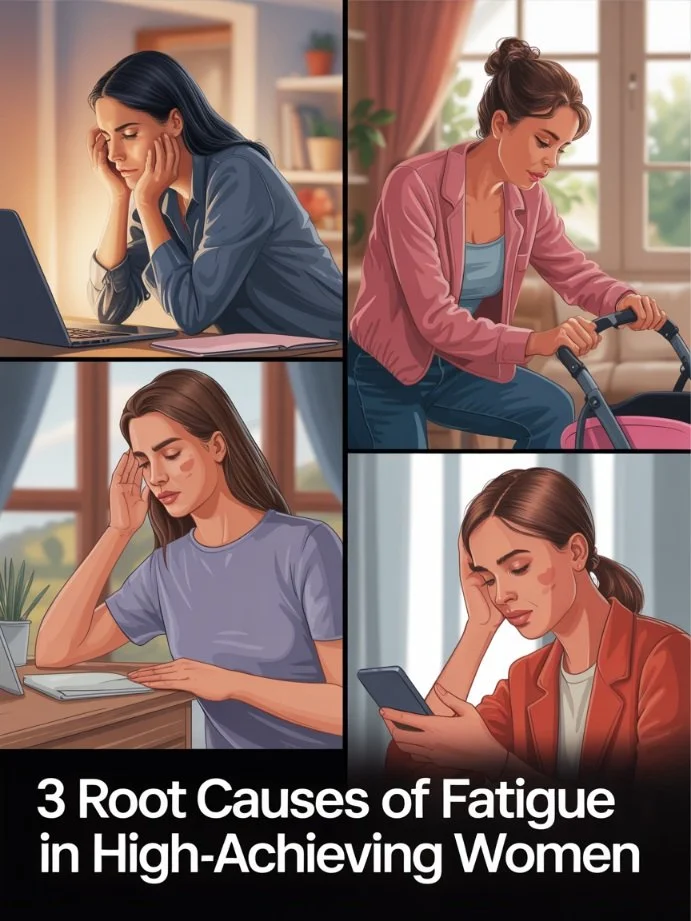
1️⃣ “Why Am I Still Tired?”
Root Causes of Fatigue in High-Achieving Women
(Functional insights for adrenal dysfunction, blood sugar, and mineral depletion)
Fatigue is not your enemy—it’s a message.
If you’ve been ignoring the signs, here’s what might be going on under the surface:
🔥 Adrenal Dysfunction: The Burnout Behind the Burnout
Your adrenal glands manage your stress response. But when your lifestyle is a marathon of deadlines, people-pleasing, overthinking, and emotional labor (all while smiling for the group photo)… your cortisol rhythm gets completely thrown off.
Common signs:
You need coffee to start your day and Netflix to finish it
You're exhausted in the morning, wired at night
You hit a wall around 3 PM
Rest never feels restorative
This isn’t just “stress”—this is HPA axis dysregulation, and it shows up loud and clear in functional labs like the DUTCH Complete.
🍬 Blood Sugar Mayhem: The Crash You Didn’t See Coming
Think blood sugar issues are only for diabetics? Think again.
Unstable blood sugar can zap your energy, spike anxiety, and destroy your focus. It’s especially common in women who:
Skip meals or eat inconsistently
Live on oat milk lattes and vibes
Get “hangry” if they go too long without food
Wake up between 2–4 AM with a pounding heart
Perimenopause adds fuel to the fire, as estrogen fluctuations can impair insulin sensitivity.
Balanced energy starts with balanced blood sugar. That means protein, fat, and fiber with every meal, not just green juice and good intentions.
⚡ Mineral Depletion: Running on Empty
You can eat like a wellness queen and still be mineral deficient. Why? Because stress, sweat, gut issues, medications, and even “clean” diets can deplete minerals like magnesium, potassium, sodium, and zinc.
Without these spark plugs, your cells can’t make energy, regulate hormones, or calm the nervous system.
Warning signs:
Muscle twitches or cramps
Salt cravings
Brain fog
Feeling exhausted after rest
Dizziness when standing
Tools like HTMA (Hair Tissue Mineral Analysis) or a well-interpreted functional blood panel can show you what’s missing.
🧪 BONUS: The Hormones That Dip During Perimenopause
(And Why That’s a Big Deal for Your Energy)
Perimenopause isn’t just a “pre-menopause phase.” It’s a hormonal rollercoaster that starts years before your period fully stops—and it can absolutely mess with your energy, mood, focus, and resilience.
Here’s what’s shifting behind the scenes:
💛 Progesterone — Your Calm & Sleep Hormone
Usually the first to decline in your 30s and 40s.
Low progesterone =
Insomnia or light, restless sleep
Anxiety or irritability
Shorter cycles or heavier periods
Trouble “coming down” after stress
💃 Estrogen — The Mood, Motivation & Metabolism Queen
Estrogen doesn’t just affect your period. It helps with:
Brain function (focus, memory, sharpness)
Bone density
Libido
Blood sugar and insulin sensitivity
When estrogen dips, expect brain fog, mood swings, fatigue, hot flashes, and metabolic chaos.
🧠 Testosterone — The Drive, Strength & Confidence Hormone
Women need it too!
Low levels =
Weakness
Fatigue
Low motivation
Decreased libido
😴 Melatonin — The Sleep-Wake Regulator
Estrogen fluctuations affect melatonin, too.
Result? You’re wide awake at 3AM, counting sheep and life regrets.
🧂 DHEA — The Resilience & Repair Hormone
Made in the adrenals, this hormone helps you bounce back from stress, illness, and exercise. Low levels = low resilience and feeling “fragile” in the face of life.
📉 Insulin Sensitivity — The Silent Shift
Estrogen helps your cells stay insulin-sensitive. With less estrogen, blood sugar becomes harder to manage—leading to fatigue, cravings, weight gain, and mood dips.
🌟 Fun Fact:
Your adrenal glands are only the size of walnuts—but they can make or break your entire energy system.
These tiny glands sit above your kidneys and produce over 50 hormones, including cortisol, DHEA, and adrenaline.
And get this:
Chronic stress can shrink them (yes, really), while weekly rest—like Sabbath—can help them rebound.
So next time you’re tempted to push through another to-do list, remember:
Even your glands need a break.
2️⃣ The Burnout Epidemic
How Perimenopause & Overwhelm Are Linked
(Mental load, hormonal chaos, and how to reset naturally)
Let’s be real: most women aren’t just tired—they’re carrying a weight no one else sees.
The mental load of remembering everyone’s appointments, managing emotions, meal prepping, juggling work demands, and being “the strong one” takes a toll.
Now add:
Progesterone dipping → anxiety & insomnia
Estrogen dropping → brain fog & low motivation
Cortisol peaking → chronic fight-or-flight mode
This isn't just burnout. It’s a hormonal and neurological overload. And your nervous system can't heal in a state of constant alert.
💡 How to Reset (Without Burning It All Down)
Track your symptoms and cycle patterns
Eat nourishing meals (not just “low calorie” ones)
Create boundaries around your time and energy
Breathe. Rest. Ground. (Yes, literally go outside barefoot)
Get functional testing to see what’s driving your personal storm
You don’t need to fix yourself. You need to support yourself. Big difference.
3️⃣ Rest Is a Command, Not a Luxury
What the Sabbath Teaches Us About Health
(A faith-based, scientific look at weekly rest and hormonal recovery)
You weren’t created to hustle 24/7.
Even God rested on the seventh day—and not because He was tired.
He did it to show us the rhythm of renewal.
The Sabbath is more than a religious ritual. It’s a biological necessity.
Studies show that consistent, sacred rest:
Lowers cortisol
Boosts immune function
Improves sleep quality
Balances blood sugar
Enhances heart rate variability (a measure of resilience)
Sabbath rest is countercultural self-respect—it says, “I’m enough even when I’m not producing.”
So whether you observe it biblically or simply commit to 24 hours of rest and delight, it’s one of the most radical health tools you can reclaim.
✨ Let’s Recap
If you’ve been asking:
“Why am I still tired?”
“Why do I feel burnt out even when I rest?”
“Is it just my hormones?”
The answer is layered—but not mysterious.
Chronic fatigue isn’t just about willpower or age. It’s about:
Adrenal dysregulation
Blood sugar imbalance
Mineral depletion
Mental and hormonal overload
Ignoring your body’s God-given need for rest
🔍 Ready to Decode Your Fatigue?
If you’re tired of guessing, tired of being told “everything looks fine,” and tired of being tired—it’s time to get to the root.
✨ Book a consultation or explore our services to uncover your unique healing path with personalized functional testing, whole-body protocols, and compassionate, faith-aligned support.
Because rest isn’t earned—it’s built in.
And energy isn’t a luxury. It’s your birthright.
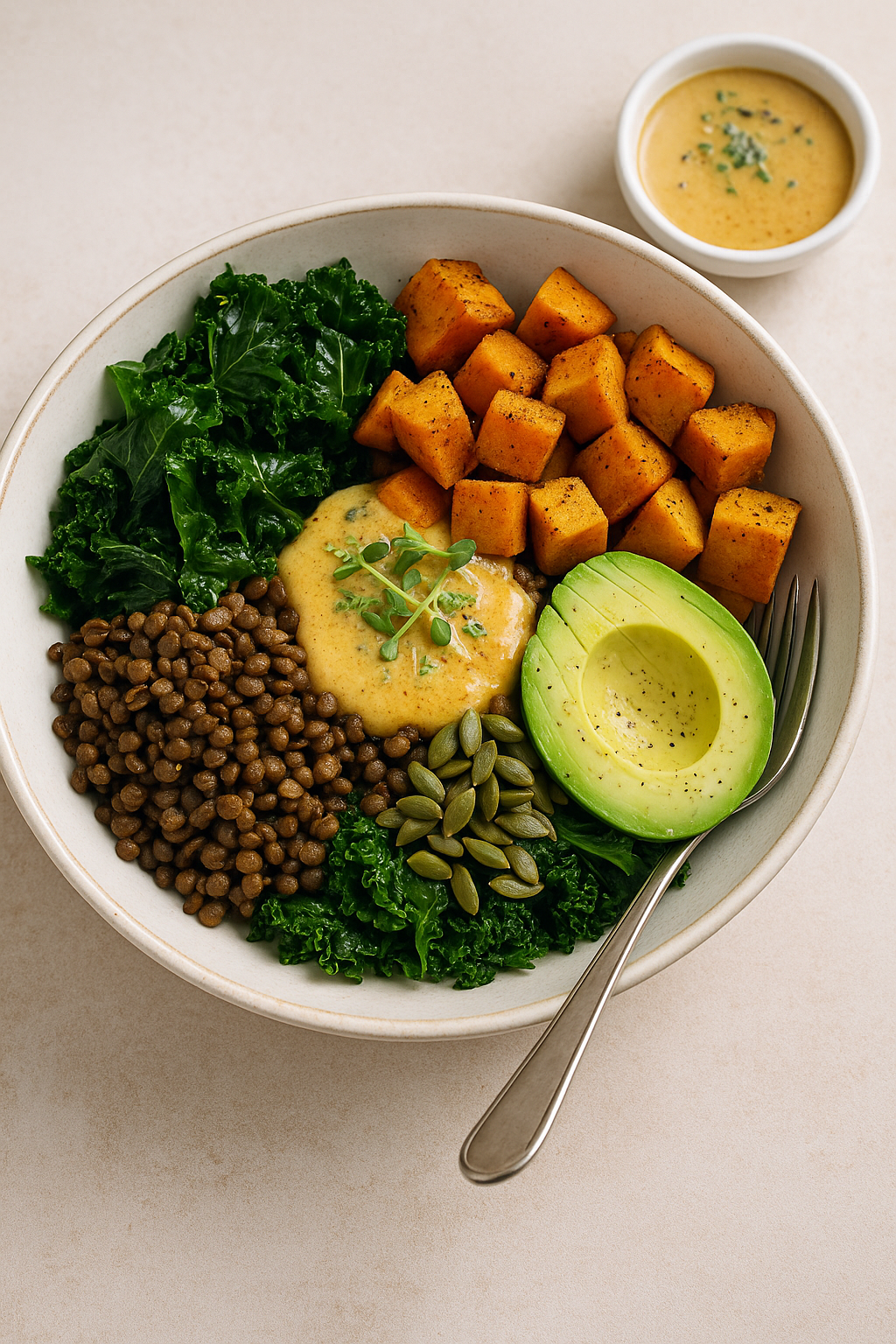
🌿 Golden Glow Sweet Potato & Tahini Power Bowl
A comforting, hormone-loving bowl designed to refuel tired women from the inside out
Perfect for lunch, Sabbath prep, or a gentle reset after a stressful day.
🥣 Why This Works:
This recipe is packed with ingredients that support the adrenal glands, balance blood sugar, and replenish key minerals lost through chronic stress and hormone fluctuations.
🌟 Key Benefits:
Sweet Potatoes 🍠 – complex carbs + potassium to support stable energy & cortisol balance
Tahini 🥄 – rich in magnesium + healthy fats = nourished nervous system
Lentils 🌱 – a clean plant protein with iron and B vitamins for fatigue support
Avocado 🥑 – rich in potassium + healthy fats to boost hormone production
Turmeric & Ginger 🌼 – anti-inflammatory and detox-supportive
Pumpkin Seeds 🎃 – full of zinc and magnesium = mineral magic
Leafy Greens 🥬 – support liver detox + estrogen metabolism
🛒 Ingredients (Serves 2)
Roasted Sweet Potatoes:
2 small sweet potatoes (cubed) 🍠
1 tbsp olive oil
½ tsp sea salt 🧂
½ tsp turmeric
¼ tsp smoked paprika
Pinch of black pepper (for curcumin absorption)
Spiced Tahini Sauce:
2 tbsp tahini 🥄
Juice of ½ lemon 🍋
1 tsp maple syrup 🍁 (optional)
½ tsp grated ginger
1 tbsp warm water (to thin)
Pinch of Himalayan salt
Lentils:
½ cup cooked green or black lentils 🌱
½ tsp cumin
1 tbsp extra virgin olive oil
Pinch of sea salt
Toppings:
½ avocado, sliced 🥑
1 cup lightly sautéed or steamed kale/spinach 🥬
1 tbsp pumpkin seeds 🎃
Optional: microgreens, sprouts, or a sprinkle of hemp seeds 🌿
🔥 Step-by-Step Instructions
1. Roast the Sweet Potatoes
Preheat oven to 400°F (200°C). Toss sweet potato cubes with olive oil, turmeric, paprika, salt, and pepper. Spread on a baking sheet and roast for 25–30 minutes, flipping halfway, until golden and tender.
2. Prepare the Lentils
In a skillet, warm olive oil over medium heat. Add cooked lentils, cumin, and sea salt. Sauté for 3–4 minutes until fragrant and warmed through.
3. Mix the Tahini Sauce
In a small bowl, whisk tahini, lemon juice, ginger, maple syrup, salt, and warm water until smooth and creamy. Set aside.
4. Sauté the Greens
Lightly sauté kale or spinach in a splash of olive oil until wilted but vibrant. Season with a pinch of salt.
5. Assemble the Bowl
Divide the sweet potatoes and lentils into two bowls. Add sautéed greens and avocado slices. Drizzle generously with tahini sauce and sprinkle with pumpkin seeds (and optional microgreens).
6. Savor Every Bite 😋
Take a deep breath, chew slowly, and feel your cells say thank you. ✨
🧘🏾♀️ Pro Tip:
Make a double batch and store the ingredients separately to meal prep for 2–3 days. The sauce also makes a great dip for veggies or drizzle for roasted veggies.
🧠 Functional Food = Functional You
This isn’t just food—it’s fatigue-fighting fuel.
You're not just eating to survive.
You're eating to heal.
To balance.
To glow.
🧠 1. Adrenal Dysfunction & HPA Axis Dysregulation
Reference:
Stress and the HPA axis: the paradox of chronic stress in adrenal fatigue
National Library of Medicine (NIH)
https://www.ncbi.nlm.nih.gov/pmc/articles/PMC4997403/
(Covers how chronic stress alters cortisol rhythms and HPA axis function.)
🍬 2. Blood Sugar Imbalance in Women, Especially During Perimenopause
Reference:
How perimenopause affects blood sugar and insulin sensitivity
Cleveland Clinic
https://health.clevelandclinic.org/perimenopause-and-blood-sugar
(Explains how hormone shifts impact blood sugar control.)
The impact of diet on insulin sensitivity
Harvard T.H. Chan School of Public Health
https://www.hsph.harvard.edu/nutritionsource/carbohydrates/carbohydrates-and-blood-sugar/
(Provides clear insights into balancing blood sugar through food.)
🧂 3. Mineral Depletion & Stress
Reference:
Micronutrient depletion linked to chronic stress
Linus Pauling Institute at Oregon State University
https://lpi.oregonstate.edu/mic
(Covers how stress increases demand for magnesium, zinc, potassium, etc.)
Hair Mineral Analysis for Nutritional Assessment
NIH/National Library of Medicine
https://www.ncbi.nlm.nih.gov/books/NBK548514/
(Discusses HTMA as a tool for assessing mineral status.)
💃 4. Hormonal Changes During Perimenopause
Reference:
Perimenopause: Hormone fluctuations and what to expect
The North American Menopause Society (NAMS)
https://www.menopause.org/for-women/menopauseflashes/perimenopause
(Covers the drop in progesterone, estrogen, testosterone, and more.)
Testosterone and DHEA in aging women
National Library of Medicine
https://www.ncbi.nlm.nih.gov/pmc/articles/PMC3681200/
(Supports testosterone and DHEA’s roles in energy, resilience, and libido.)
😴 5. Sabbath Rest & Hormonal Recovery
Reference:
The biblical and biological case for rest
Duke Center for Spirituality, Theology and Health
https://spiritualityandhealth.duke.edu/
(Explores connections between rest, spirituality, and well-being.)
The Science of Rest and Circadian Rhythms
National Institute of General Medical Sciences
https://www.nigms.nih.gov/education/fact-sheets/Pages/circadian-rhythms.aspx
(Details how regular rest improves hormone rhythms and cellular repair.)
🥣 6. Functional Nutrition for Fatigue
Reference:
The Role of Functional Nutrition in Treating Fatigue
Institute for Functional Medicine (IFM)
https://www.ifm.org/news-insights/addressing-fatigue-through-functional-medicine/
(Outlines root-cause approaches for chronic fatigue and burnout.)
Blog Disclaimer
The health information on this blog is for general educational purposes only and is not intended to diagnose, treat, cure, or prevent any disease. It should not be used as a substitute for professional medical advice. Always consult a qualified healthcare provider before making any health-related decisions
This blog may contain affiliate links, meaning Leaves from the Tree of Life LLC may earn a small commission if you purchase a product or service through these links—at no additional cost to you. Your support helps us continue to provide valuable content. Thank you!
