PMOS Is the New PCOS: What Women Need to Know About the Name Change
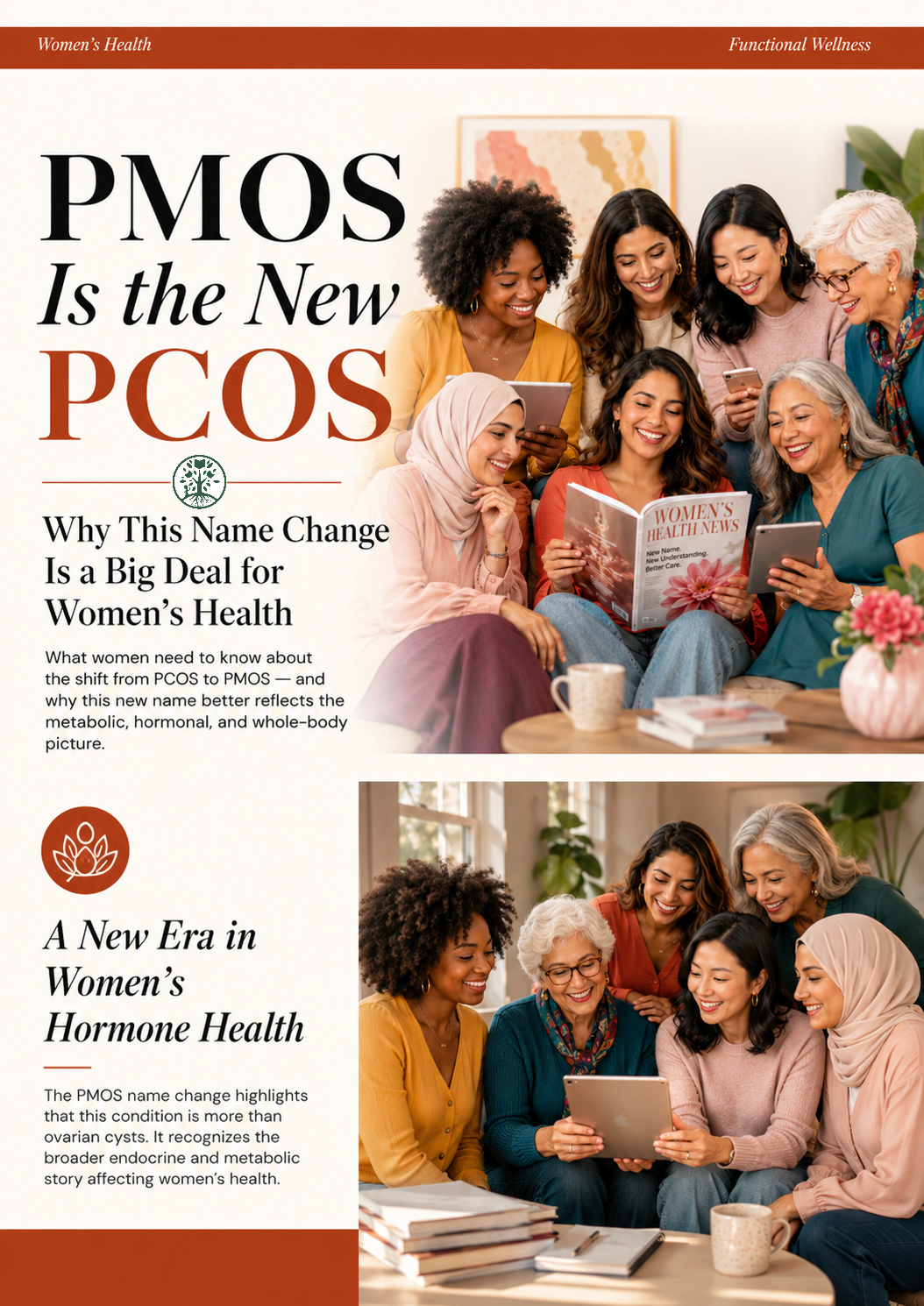
PMOS Is the New PCOS: Why This Name Change Is a Big Deal for Women’s Health
🌸 Introduction: Sis, PCOS Just Got a Whole New Name
For decades, women were told they had PCOS — Polycystic Ovary Syndrome.
And for decades, many women sat there thinking:
“Okay… but what if I don’t have cysts?”
“Why is my blood sugar acting up?”
“Why is my mood all over the place?”
“Why am I exhausted, inflamed, breaking out, gaining weight, losing hair, and being told to just take the pill and come back when I want a baby?”
Exactly.
Now, in a major women’s health update published in The Lancet on May 12, 2026, experts have officially renamed PCOS as PMOS — Polyendocrine Metabolic Ovarian Syndrome. The change came after a long international consensus process involving patients, clinicians, researchers, and more than 50 organizations.
And let me tell you, this is not just a cute little rebrand with a fresh acronym and a new lab-coat aesthetic. This is a big deal.
Because the old name kept the spotlight too narrowly on the ovaries. The new name finally admits what many women and functional practitioners have been saying for years:
This is not just an ovary issue. This is a whole-body endocrine, metabolic, inflammatory, reproductive, emotional, and lifestyle-connected condition.
Translation? The body has been talking. Medicine is finally updating the vocabulary.
🧠 From PCOS to PMOS: What Does the New Name Mean?
PMOS stands for:
Polyendocrine Metabolic Ovarian Syndrome
Let’s break that down in human language, because nobody needs a medical dictionary and a prayer shawl just to understand their own body.
Polyendocrine means multiple hormone systems may be involved. We are talking about insulin, androgens, ovarian hormones, stress hormones, thyroid patterns, appetite signals, and more.
Metabolic points to the role of blood sugar, insulin resistance, weight changes, inflammation, lipids, and cardiometabolic risk.
Ovarian still honors the fact that the ovaries can be involved, especially through ovulation patterns, androgen activity, follicle development, and fertility.
Syndrome means it is a pattern of signs, symptoms, and body-system disruptions — not one single symptom with one single cause.
According to reporting on the Lancet consensus, the old term PCOS was described as inaccurate because it implied pathological ovarian cysts, obscured endocrine and metabolic features, and contributed to delayed diagnosis, fragmented care, stigma, and weaker research framing.
Now that is a mouthful — but it matters.
Because many women were dismissed when they did not have “classic cysts” on ultrasound, even though they had irregular cycles, acne, facial hair growth, insulin resistance, weight changes, mood issues, fatigue, or elevated androgens. PMOS gives clinicians and patients a better framework.
In plain English: the name finally caught up with the chaos.
And yes, around here we call that Metabolic Chaos® — when multiple systems are no longer communicating clearly, and symptoms start showing up like messy little group chats nobody asked to be added to.
🥚 The “Cysts” Were Never the Whole Story
One of the biggest reasons for the name change is that the word “polycystic” has been misleading.
In many cases, what shows up on ultrasound is not true pathological cysts. These are often small arrested follicles — follicles that started developing but did not fully mature and release an egg. The Guardian’s explainer notes that the old name created confusion because the condition does not involve actual ovarian cysts in the way many people imagine.
And here is where many women were done dirty.
Some were told, “You do not have cysts, so you do not have PCOS.”
Meanwhile, their body was waving red flags:
irregular periods, stubborn weight gain, acne, hair thinning, chin hairs trying to start their own ministry, blood sugar crashes, cravings, fatigue, anxiety, low mood, fertility struggles, and inflammation.
But because the ultrasound did not “look right,” they were sent home with confusion instead of a proper investigation.
That is why PMOS matters. It shifts the lens from:
“Do your ovaries look cystic?”
to:
“What is happening across your endocrine, metabolic, ovarian, and whole-body terrain?”
Now we are getting somewhere.
🔥 Why PMOS Fits the Functional health Conversation Better
From a Traditional Naturopathic and Functional Diagnostic Nutrition perspective, this renaming makes sense.
Not because names heal people — they do not.
But because names shape how people are evaluated, treated, researched, and taken seriously.
PMOS better reflects that this condition can involve:
insulin resistance and blood sugar dysregulation
androgen excess
irregular ovulation
inflammation
stress physiology
gut and microbiome influences
liver detoxification and hormone clearance
thyroid and adrenal patterns
nutrient insufficiencies
sleep disruption
mental and emotional health challenges
cardiometabolic risk factors
The World Health Organization has estimated that PCOS affects 10–13% of women globally, with up to 70% remaining undiagnosed. That is not a small niche problem. That is a women’s health crisis wearing a confusing name tag.
The 2023 International Evidence-Based Guideline for PCOS also emphasized evidence-based diagnostic criteria and whole-person care, including the role of hyperandrogenism, ovulatory dysfunction, ovarian morphology or AMH, and the need to exclude other causes.
So no, PMOS is not “just a fertility issue.”
And no, the solution is not simply:
“Lose weight.”
“Take birth control.”
“Come back when you want to get pregnant.”
“Try harder.”
“Stop stressing.”
Ma’am. That is not care. That is a sticky note with a stethoscope.
Women deserve better.
🔬Fun Fact Science Bar+
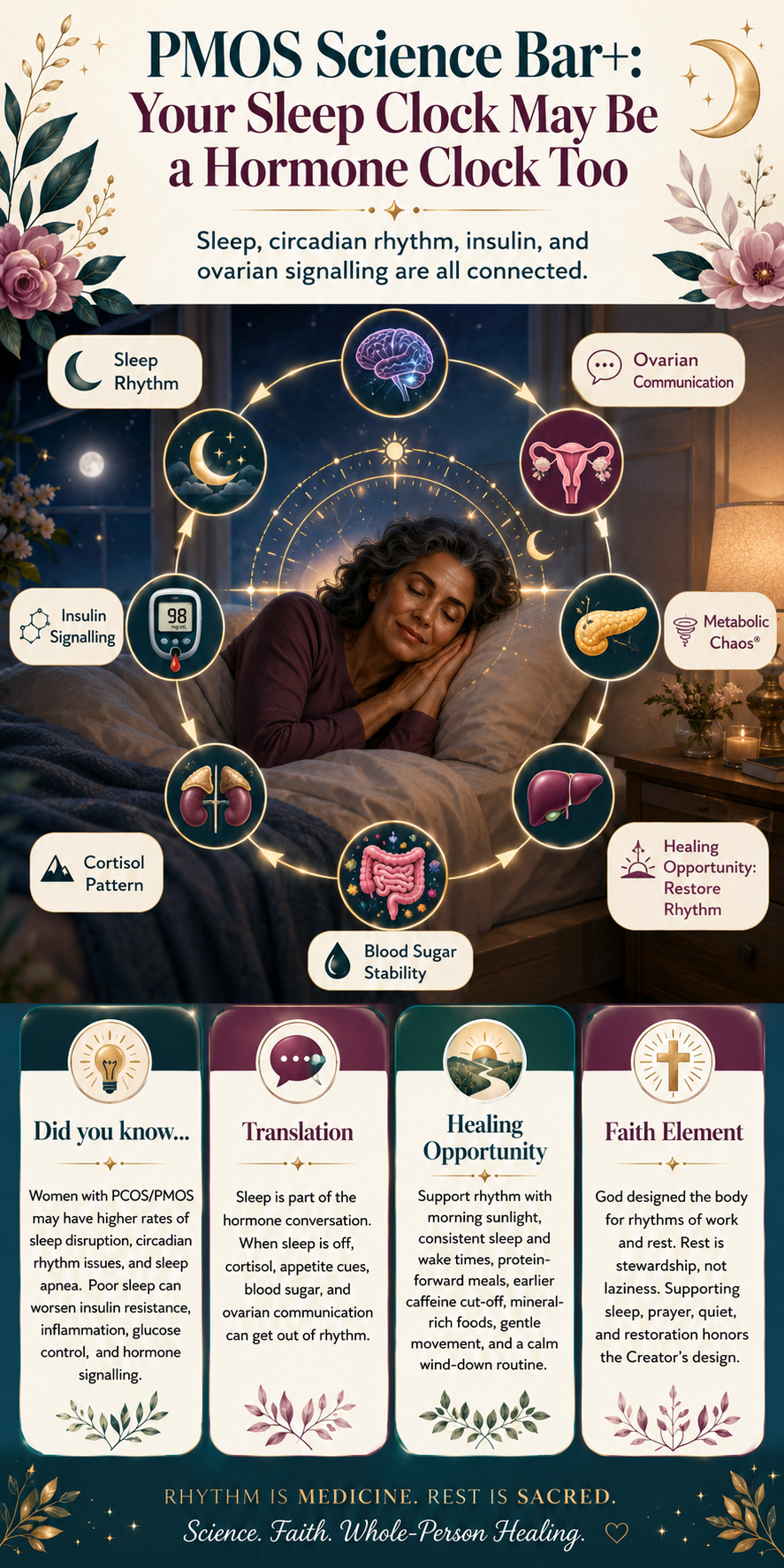
Did you know that women with PCOS/PMOS appear to have higher rates of sleep disturbances, circadian rhythm disruption, and obstructive sleep apnea, and these sleep issues may worsen insulin resistance, inflammation, glucose regulation, and hormone signalling? In other words, PMOS is not just a daytime hormone conversation — your nighttime rhythm may be part of the metabolic story too. Research has linked sleep disruption with insulin resistance, and recent reviews suggest circadian rhythm disruption is positively associated with PCOS patterns.
👉🏾 Translation:
If your sleep is inconsistent, your body may struggle to keep hormones, blood sugar, cortisol, appetite signals, and ovarian communication in rhythm. So that late-night scrolling, revenge bedtime procrastination, skipped breakfast after poor sleep, and “I’ll just survive on vibes and herbal tea” routine may not be helping the PMOS picture. In Functional Diagnostic Nutrition® language, this can feed a Metabolic Chaos® loop, where poor sleep worsens insulin signalling, blood sugar instability worsens cravings and mood, inflammation increases stress load, and the ovaries receive mixed messages from the whole endocrine orchestra.
✨ Healing Opportunity:
Before assuming your hormones are simply “misbehaving,” look at your rhythm clues: Are you waking refreshed? Snoring? Crashing after meals? Wired at night but tired all day? Waking between 2–4 AM? Struggling with cravings after poor sleep? Support the body with morning sunlight, consistent sleep and wake times, protein-forward meals, earlier caffeine cut-off, mineral-rich foods, magnesium support when appropriate, evening screen boundaries, gentle movement, and a calm wind-down routine. And if loud snoring, gasping, morning headaches, or intense daytime sleepiness are present, consider asking a qualified provider about sleep apnea screening — because sometimes the “hormone problem” is also a breathing-at-night problem.
✝️ Faith Element:
God designed the body to work in rhythms — day and night, labour and rest, work and Sabbath. Rest is not laziness; it is stewardship. Even in a world that glorifies hustle, the body still whispers, “Remember the rhythm.” Supporting sleep, quiet, prayer, and true restoration is one way we honour the Creator’s design and give the body space to repair, regulate, and respond. 🙏🏾🌙🌿
🩸 The Metabolic Piece: Why Blood Sugar Deserves a Seat at the Table
One of the most important parts of the new PMOS name is the word metabolic.
This matters because many women with PMOS struggle with insulin resistance, blood sugar swings, cravings, fatigue after meals, stubborn weight gain, increased waist circumference, skin tags, darkened skin folds, and higher long-term risk for type 2 diabetes and cardiometabolic issues. PMOS has been described as affecting weight, metabolic health, mental health, skin, and the reproductive system.
In functional terms, insulin is not just a “blood sugar hormone.” It also communicates with the ovaries, the liver, fat tissue, the brain, and inflammatory pathways.
When insulin is chronically elevated, it can encourage the ovaries to produce more androgens. Higher androgens can worsen acne, facial hair growth, scalp hair thinning, ovulatory dysfunction, and cycle irregularity.
And then women get blamed for “not being disciplined enough.”
No, beloved. Sometimes your body is not failing you — it is adapting to a stressed internal environment.
That does not mean there is no personal responsibility. It means responsibility should be rooted in truth, not shame.
There are healing opportunities here:
stabilizing blood sugar
improving protein and fiber intake
supporting muscle mass
addressing sleep quality
lowering inflammatory load
supporting liver and gut function
managing stress physiology
improving mineral balance
using targeted testing when needed
This is where Test • Don’t Guess becomes more than a slogan. It becomes a mercy.
🌿 PMOS and the Gut-Hormone Connection
Let’s talk gut, because you knew I was going there.
The gut is not just where food goes to be judged by your bloating. The gut plays a role in inflammation, immune signaling, detoxification, nutrient absorption, estrogen metabolism, blood sugar patterns, and even mood regulation.
In women with PMOS patterns, we often want to ask:
What is happening with digestion?
Is constipation slowing hormone clearance?
Is there dysbiosis?
Are there food sensitivities or inflammatory triggers?
Is the liver being overburdened?
Are nutrients needed for hormone metabolism low?
Is stress shutting down proper digestive function?
This does not mean every woman with PMOS needs every functional lab under the sun. We are not running a “green pharmacy” or a “lab test buffet.” But it does mean that symptoms are clues.
From an FDN perspective, symptoms are not annoyances to silence. They are data points. They point toward hidden stressors and healing opportunities.
PMOS gives us permission to stop treating the ovaries like they are acting out in isolation.
The ovaries are part of a larger orchestra.
And if the liver, gut, adrenals, pancreas, thyroid, nervous system, and mitochondria are all playing different songs, we should not be shocked when the hormones sound like jazz in a thunderstorm.
🧬 What Diagnosis May Look Like Going Forward
The name is changing, but diagnostic criteria will not magically change overnight.
Current guidance has generally used the Rotterdam-style framework. In adults, diagnosis has involved at least two of the following: clinical or biochemical hyperandrogenism, ovulatory dysfunction, and polycystic ovarian morphology on ultrasound or elevated AMH, after excluding other causes. The 2023 guideline also notes that when irregular cycles and hyperandrogenism are present, ultrasound or AMH may not be required for diagnosis.
So, for now, many clinicians may use both terms:
PCOS / PMOS
during the transition.
Scientific American reported that the Lancet policy paper outlined a plan for the World Health Organization and International Classification of Diseases to adopt the new terminology over the next few years, with 2028 discussed as a likely international standardization target.
So do not panic if your doctor, lab portal, insurance paperwork, or old diagnosis still says PCOS.
The language is shifting. Systems move slowly. Your body, meanwhile, deserves support now.
💛 The Emotional Side: This Name Change Feels Personal for Many Women
For many women, PMOS is more than a diagnosis. It is years of being dismissed.
It is being told to lose weight without anyone checking insulin.
It is being offered birth control without a conversation about root contributors.
It is crying over hair loss and being told it is “cosmetic.”
It is acne in adulthood and feeling like your confidence got hijacked.
It is trying to conceive and feeling like your body betrayed you.
It is mood swings, anxiety, fatigue, and shame.
It is being told your labs are “normal” when you feel anything but normal.
Patient stories shared in recent coverage described loneliness, confusion, weight stigma, inadequate support, and delayed care.
So yes, this name change matters emotionally too.
Because words can either minimize a woman’s experience or validate it.
PMOS says:
Your symptoms are not random.
Your ovaries are not the only story.
Your metabolism matters.
Your mental health matters.
Your skin symptoms matter.
Your fertility matters.
Your long-term health matters.
You matter.
And for the woman who has been silently wondering, “Am I just broken?”
No, sis.
You are not broken.
You are under-supported, under-investigated, and possibly living in a body that has been trying to get your attention for a long time.
That is not hopeless. That is a healing opportunity.
🙏🏽 A Faith-Rooted Perspective: Your Body Is Not the Enemy
As a woman of faith and a practitioner who believes God designed the body with wisdom, I do not see PMOS as proof that the body is defective.
I see it as evidence that the body is communicating.
In the Seventh-day Adventist health message, we often talk about the importance of lifestyle: nutrition, movement, rest, sunlight, temperance, fresh air, water, trust in God — those beautiful foundations often summarized in A NEW START®.
And no, lifestyle is not a magic wand. We do not use faith or lifestyle to shame women. Please and thank you.
But we also should not underestimate the body’s God-designed capacity to respond when we remove stressors and provide the right conditions for healing.
The body was created with intelligence.
Sometimes PMOS is not the body rebelling. Sometimes it is the body saying:
“Something deeper needs attention.”
That is where wisdom comes in.
That is where testing may help.
That is where nourishment matters.
That is where prayer, rest, boundaries, community, and skilled care belong.
Because healing is not just about chasing perfect periods or flawless skin.
It is about restoring stewardship, rhythm, resilience, and peace in the body God gave you.
🧪 What I Would Want Women to Consider Asking About
This is not medical advice, and it is not a replacement for working with your physician or qualified provider. But if you suspect PMOS or have already been diagnosed with PCOS/PMOS, here are conversations worth having.
Ask about:
Metabolic markers: fasting glucose, fasting insulin, HbA1c, lipids, blood pressure, waist circumference, and inflammatory patterns.
Hormone patterns: androgens, ovulation status, cycle regularity, progesterone patterns, thyroid function, prolactin, and other rule-outs when appropriate.
Nutrient status: vitamin D, iron/ferritin, B vitamins, magnesium, zinc, omega-3 status, and other individualized markers.
Gut and liver clues: digestion, constipation, bloating, food reactions, detoxification burden, and hormone clearance.
Stress and sleep: cortisol rhythm, nervous system load, burnout, sleep apnea risk, and recovery capacity.
Mental health: anxiety, depression, body image distress, emotional eating, and the grief that can come with feeling disconnected from your body.
PMOS requires a bigger lens.
Not fear.
Not shame.
Not “just lose weight.”
A bigger lens.
🌺 The Bottom Line: PMOS Is Not Just a New Name — It Is a New Narrative
The renaming of PCOS to PMOS is historic because it acknowledges what so many women already knew in their bones:
This condition is not just about ovaries.
It is not just about cysts.
It is not just about fertility.
It is not just about weight.
It is not just about willpower.
It is a complex endocrine-metabolic condition that deserves thoughtful, compassionate, whole-person care.
And while a new name will not fix everything overnight, it can change the direction of research, diagnosis, education, and treatment.
That is why this matters.
PMOS invites us to stop reducing women to reproductive organs and start seeing the whole woman:
her hormones, metabolism, mind, skin, fertility, sleep, stress, gut, faith, story, and future.
Now that is the kind of women’s health conversation we needed yesterday.
💌 Call to Action: Ready to Stop Guessing and Start Listening to Your Body?
If you have been diagnosed with PCOS — now PMOS — or you suspect something deeper is going on with your hormones, cycles, blood sugar, mood, skin, or energy, please know this:
You are not crazy.
You are not lazy.
You are not “just hormonal.”
And you do not have to keep piecing together your health from random reels at midnight. Though we have all been there. No judgment. Just hydration and discernment.
At Leaves from the Tree of Life, we help women look at the bigger picture through a Traditional Naturopathic and Functional Diagnostic Nutrition lens — exploring root contributors, hidden stressors, Metabolic Chaos®, and personalized healing opportunities.
Because your body is not a problem to punish.
It is a message to understand.
Test • Don’t Guess.
Invest in your health, invest in you — because a healthier lifestyle is a luxury you deserve.
🥗 The 10 Women Salad
A High-Protein, High-Fiber, Plant-Based Power Bowl for Women Who Need Real Fuel
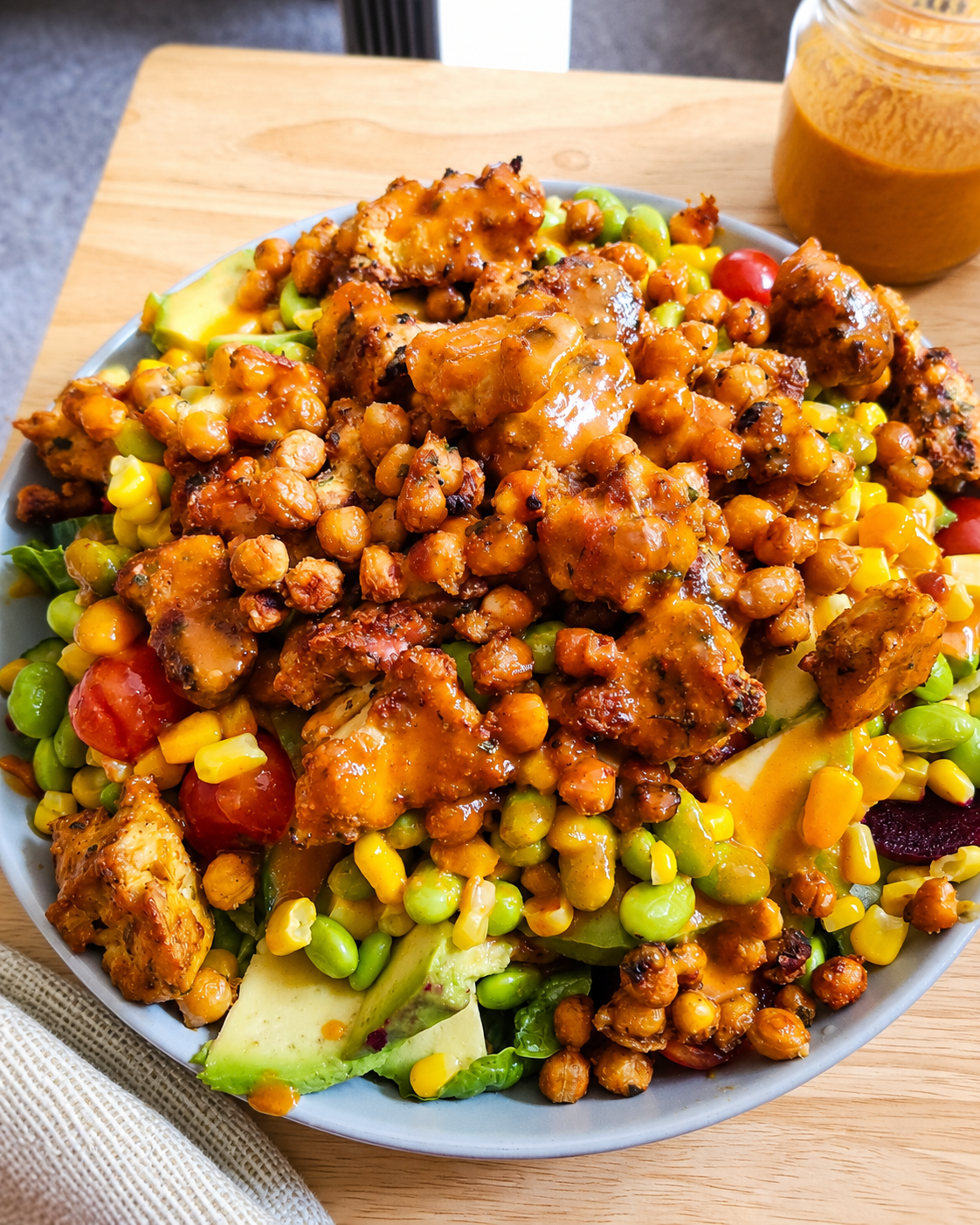
This is not a sad little side salad. No limp lettuce. No “three tomatoes and a prayer.” This is a full-bodied, high-protein, high-fiber, hormone-supportive, blood-sugar-friendly salad that eats like a meal.
I call this the 10 Women Salad because it has the strength, colour, sass, and substance of ten women who have been through life, healed, learned boundaries, and now season their tofu properly. Amen. 😌🌿
It is packed with crispy baked chickpeas, seasoned baked tofu, sweet corn, avocado, tomatoes, romaine lettuce, pumpkin seeds, edamame, beets, and a homemade creamy smoky dressing.
⏱️ Time Needed
Prep time: 20 minutes
Cook time: 25–30 minutes
Total time: 45–50 minutes
Serves: 3–4 large meal salads
🛒 Organic Ingredients
🥗 Salad Base
1 large head organic romaine lettuce, chopped
1 cup organic cherry tomatoes, halved
1 cup organic sweet corn, cooked
1 cup organic shelled edamame, cooked
1 large organic avocado, sliced
1 cup organic cooked beets, cubed or sliced
¼ cup organic pumpkin seeds
1 can organic chickpeas, drained and rinsed
1 block organic extra-firm tofu, pressed and cubed
🧂 For the Crispy Baked Chickpeas
1 can organic chickpeas, drained, rinsed, and dried well
1 tablespoon avocado oil or olive oil
1 teaspoon smoked paprika
½ teaspoon garlic powder
½ teaspoon onion powder
½ teaspoon cumin
¼ teaspoon cayenne pepper, optional
Sea salt and black pepper to taste
🍛 For the Seasoned Baked Tofu
1 block organic extra-firm tofu, pressed and cubed
1 tablespoon avocado oil or olive oil
1 tablespoon tamari or coconut aminos
1 teaspoon smoked paprika
1 teaspoon garlic powder
½ teaspoon onion powder
½ teaspoon turmeric
½ teaspoon dried parsley or Italian herbs
1 tablespoon nutritional yeast, optional
1 tablespoon arrowroot powder or tapioca starch for extra crispiness
🥣 Homemade Creamy Smoky Dressing
This dressing gives “restaurant salad,” but without the mystery oils and suspicious ingredients lurking in the background.
Ingredients
3 tablespoons extra virgin olive oil
2 tablespoons tahini
1 tablespoon apple cider vinegar
1 tablespoon fresh lemon juice
1 teaspoon Dijon mustard
1 teaspoon maple syrup or date syrup, optional
1 small garlic clove, grated
½ teaspoon smoked paprika
¼ teaspoon turmeric
2–4 tablespoons water to thin
Sea salt and black pepper to taste
Optional creamy boost:
Add 2 tablespoons unsweetened coconut yogurt or cashew yogurt for a thicker, creamier dressing.
👩🏾🍳 Step-by-Step Instructions
1. 🔥 Preheat the Oven
Preheat your oven to 200°C / 400°F.
Line a baking tray with parchment paper.
2. 🧆 Make the Crispy Chickpeas
Pat the chickpeas very dry with a clean towel. This is the secret to getting them crispy instead of “soft bean situation.” We are not doing soggy today.
Add chickpeas to a bowl with oil, smoked paprika, garlic powder, onion powder, cumin, cayenne, sea salt, and black pepper.
Spread them on the baking tray in a single layer.
Bake for 25–30 minutes, shaking the tray halfway through, until golden and crispy.
3. 🍛 Season and Bake the Tofu
Press the tofu for at least 10–15 minutes to remove excess water.
Cut into cubes and place in a bowl. Add oil, tamari or coconut aminos, smoked paprika, garlic powder, onion powder, turmeric, herbs, nutritional yeast, and arrowroot powder.
Toss gently until coated.
Place on a separate lined baking tray and bake for 25–30 minutes, flipping halfway through, until golden and slightly crispy on the edges.
4. 🌽 Prepare the Salad Veggies
While the chickpeas and tofu bake, prepare your colourful salad base.
Chop the romaine.
Halve the tomatoes.
Slice the avocado.
Cook and cool the edamame and corn.
Cube or slice the beets.
Layer everything beautifully into a large bowl.
5. 🥣 Blend or Whisk the Dressing
In a bowl or blender, combine olive oil, tahini, apple cider vinegar, lemon juice, Dijon mustard, garlic, smoked paprika, turmeric, sea salt, black pepper, and water.
Whisk or blend until smooth and creamy.
Taste and adjust. More lemon for brightness. More tahini for richness. More water if too thick.
6. 🥗 Build the 10 Women Salad
In a large bowl, layer:
Romaine lettuce first.
Then tomatoes, corn, edamame, beets, and avocado.
Top with crispy chickpeas and seasoned baked tofu.
Sprinkle with pumpkin seeds.
Drizzle generously with the smoky creamy dressing.
Then pause and admire it, because this salad deserves a moment. ✨
🌿 Health Benefits of Each Ingredient
🥬 Organic Romaine Lettuce
Romaine gives hydration, crunch, folate, vitamin K, and volume. It helps make the salad feel abundant without being heavy.
🍅 Organic Tomatoes
Tomatoes provide vitamin C, potassium, and lycopene, a plant compound connected with antioxidant support. They also bring juicy sweetness and freshness.
🌽 Organic Sweet Corn
Corn adds fibre, complex carbohydrates, natural sweetness, and beautiful colour. It helps make this salad satisfying instead of “I ate leaves and now I’m angry.”
🥑 Organic Avocado
Avocado brings healthy fats, potassium, fibre, and creaminess. It helps slow digestion and supports blood sugar balance when paired with protein and fibre.
🧆 Organic Chickpeas
Chickpeas are rich in plant protein, fibre, minerals, and resistant starch. They support gut health, satiety, and steadier blood sugar.
🍛 Organic Tofu
Tofu provides complete plant protein and minerals like calcium and iron, depending on how it is made. Organic tofu is a beautiful option for a high-protein plant-based meal.
🫘 Organic Edamame
Edamame is another high-protein, high-fibre ingredient. It also contains folate, magnesium, and phytonutrients that support metabolic and hormone health.
❤️ Organic Beets
Beets support nitric oxide production, circulation, liver pathways, and antioxidant intake. They also add earthy sweetness and that gorgeous deep colour.
🎃 Organic Pumpkin Seeds
Pumpkin seeds provide magnesium, zinc, iron, protein, and healthy fats. They are especially lovely for women’s hormone, mineral, and nervous system support.
🥣 Tahini Dressing
Tahini adds sesame-based minerals, healthy fats, and creamy richness. The lemon, apple cider vinegar, garlic, and spices bring digestive support and flavour depth.
💪🏾 Why This Salad Is Balanced
This salad gives you:
Protein: tofu, chickpeas, edamame, pumpkin seeds
Fiber: chickpeas, edamame, beets, romaine, corn, avocado
Healthy fats: avocado, tahini, olive oil, pumpkin seeds
Colourful phytonutrients: tomatoes, beets, greens, spices
Blood sugar support: protein + fibre + fat together
Gut-loving texture: crunchy, creamy, juicy, crispy, and fresh
This is the kind of meal that says:
“I love my hormones, but I also like flavour.” 😌
✨ Optional Add-Ons
For extra flavour or variety, add:
Fresh coriander or parsley 🌿
Pickled red onions 🧅
Roasted sweet potato 🍠
Sauerkraut or fermented veggies for gut support
Sesame seeds
A squeeze of fresh lime
Chili flakes for heat 🌶️
🥗 Serving Tip
Serve immediately while the tofu and chickpeas are still warm and crispy over the cool salad base. That warm-crispy-cool-creamy combo is where the magic happens.
For meal prep, store the dressing, crispy chickpeas, tofu, and salad base separately so everything stays fresh.
🌸 Final Note
The 10 Women Salad is colourful, nourishing, filling, hormone-friendly, gut-supportive, and unapologetically dramatic in the best way.
Because sometimes a woman does not need another sad salad.
She needs protein, minerals, crunch, fibre, flavour, and a dressing that understands the assignment.
📚 References
🌸 PMOS Name Change, Lancet Article & Global Consensus
Polyendocrine Metabolic Ovarian Syndrome, the New Name for PCOS — The Lancet
👉🏾 https://www.thelancet.com/journals/lancet/article/PIIS0140-6736%2826%2900717-8/fulltext
PubMed Record — Polyendocrine Metabolic Ovarian Syndrome, the New Name for PCOS
👉🏾 https://pubmed.ncbi.nlm.nih.gov/42119588/
Monash University / EurekAlert — PMOS New Name to Improve Diagnosis and Care 👉🏾 https://www.eurekalert.org/news-releases/1127647
Society for Endocrinology — PMOS Is the New Name for PCOS
Associated Press — PCOS Is Now Called PMOS: What to Know About the Name Change
👉🏾 https://apnews.com/article/9e8d83f2a7866eb1a16d6dd45ef1ec07
Live Science — PCOS Gets a New Name After Years-Long Effort 👉🏾 https://www.livescience.com/health/reproductive-health/the-name-was-inaccurate-pcos-gets-a-new-name-after-years-long-effort
The Guardian — PCOS Renamed PMOS: Symptoms, Meaning, Treatment & Risk Factors
🧬 PCOS/PMOS Diagnosis, Guidelines & Clinical Overview
International Evidence-Based Guideline for the Assessment and Management of PCOS 2023 — Monash University PDF
👉🏾 https://www.monash.edu/__data/assets/pdf_file/0003/3379521/Evidence-Based-Guidelines-2023.pdf
Monash University — PCOS Guideline Hub 👉🏾 https://www.monash.edu/medicine/mchri/pcos/guideline
ASRM — Recommendations From the 2023 International Evidence-Based Guideline for PCOS
RCOG — International Evidence-Based Guideline on PCOS 👉🏾 https://www.rcog.org.uk/guidance/browse-all-guidance/other-guidelines-and-reports/international-evidence-based-guideline-on-polycystic-ovary-syndrome/
WHO — Polycystic Ovary Syndrome Fact Sheet 👉🏾 https://www.who.int/news-room/fact-sheets/detail/polycystic-ovary-syndrome
NHS — Polycystic Ovary Syndrome Overview 👉🏾 https://www.nhs.uk/conditions/polycystic-ovary-syndrome-pcos/
Cleveland Clinic — PCOS Symptoms, Causes & Treatment 👉🏾 https://my.clevelandclinic.org/health/diseases/8316-polycystic-ovary-syndrome-pcos
🔥 Insulin Resistance, Metabolic Health & Cardiometabolic Risk
Insulin Resistance in Polycystic Ovarian Syndrome — PMC 👉🏾 https://pmc.ncbi.nlm.nih.gov/articles/PMC9665922/
Markers of Insulin Resistance in Polycystic Ovary Syndrome — PMC 👉🏾 https://pmc.ncbi.nlm.nih.gov/articles/PMC8984569/
Insulin Resistance, Metabolic Syndrome and Polycystic Ovaries — PMC
👉🏾 https://pmc.ncbi.nlm.nih.gov/articles/PMC12520869/
Risk of Insulin Resistance and Metabolic Syndrome in Women with Hyperandrogenemia — PMC
👉🏾 https://pmc.ncbi.nlm.nih.gov/articles/PMC7922675/
Metabolic Implications of PCOS — PMC 👉🏾 https://pmc.ncbi.nlm.nih.gov/articles/PMC12931838/
🧠 Mental Health, Anxiety, Depression & Quality of Life
Depression in Polycystic Ovary Syndrome — PMC 👉🏾 https://pmc.ncbi.nlm.nih.gov/articles/PMC10607337/
The Psychosocial Aspects of Polycystic Ovary Syndrome — PMC 👉🏾 https://pmc.ncbi.nlm.nih.gov/articles/PMC10823298/
Polycystic Ovary Syndrome and Its Multidimensional Impacts on Women’s Mental Health — PMC
👉🏾 https://pmc.ncbi.nlm.nih.gov/articles/PMC11191963/
Anxiety, Depression, and Quality of Life in Women with PCOS — PMC / Europe PMC
👉🏾 https://europepmc.org/article/pmc/pmc5968645
Clue — PCOS and Mental Health 👉🏾 https://helloclue.com/articles/cycle-a-z/depression-anxiety-and-pcos
😴 Sleep, Circadian Rhythm & Obstructive Sleep Apnea
Sleep Disturbances in Women with Polycystic Ovary Syndrome — PMC 👉🏾 https://pmc.ncbi.nlm.nih.gov/articles/PMC5799701/
Polycystic Ovary Syndrome and Obstructive Sleep Apnea — PMC 👉🏾 https://pmc.ncbi.nlm.nih.gov/articles/PMC2390828/
Polycystic Ovary Syndrome and the Risk of Obstructive Sleep Apnea — PMC
👉🏾 https://pmc.ncbi.nlm.nih.gov/articles/PMC5574283/
Obstructive Sleep Apnea Syndrome in PCOS — Frontiers in Endocrinology
👉🏾 https://www.frontiersin.org/journals/endocrinology/articles/10.3389/fendo.2025.1532519/full
Prevalence of Obstructive Sleep Apnoea in Women with PCOS — PubMed / Europe PMC
👉🏾 https://europepmc.org/article/med/31111411
🌿 Gut Microbiome, Inflammation & Whole-Body PMOS Patterns
Gut Microbiota Dysbiosis in Polycystic Ovary Syndrome — PMC 👉🏾 https://pmc.ncbi.nlm.nih.gov/articles/PMC9998696/
Gut Microbiota: A Hidden Player in Polycystic Ovary Syndrome — PMC 👉🏾 https://pmc.ncbi.nlm.nih.gov/articles/PMC11998441/
The Association Between Gut Microbiome and PCOS — PMC 👉🏾 https://pmc.ncbi.nlm.nih.gov/articles/PMC10405626/
Systematic Review of Gut Microbiota Composition, Metabolic Parameters, and PCOS — PMC
👉🏾 https://pmc.ncbi.nlm.nih.gov/articles/PMC12116390/
Unraveling the Gut Microbiota’s Role in PCOS — PMC 👉🏾 https://pmc.ncbi.nlm.nih.gov/articles/PMC11958223/
🥗 Nutrition, Lifestyle & Blood Sugar Support
British Dietetic Association — PCOS and Diet 👉🏾 https://www.bda.uk.com/resource/polycystic-ovary-syndrome-pcos-diet.html
NHS — PCOS Treatment and Lifestyle Support 👉🏾 https://www.nhs.uk/conditions/polycystic-ovary-syndrome-pcos/treatment/
Office on Women’s Health — PCOS 👉🏾 https://womenshealth.gov/a-z-topics/polycystic-ovary-syndrome
RCOG Patient Information — Polycystic Ovary Syndrome PDF 👉🏾 https://www.rcog.org.uk/media/q5ijt5ur/pi_pcos_update-2022.pdf
🌱 Faith-Aligned Lifestyle Context: Rhythm, Rest, Temperance & Whole-Person Health
Ellen G. White Writings — Ministry of Healing, “The Use of Remedies” 👉🏾 https://m.egwwritings.org/en/book/135.1478
Ellen G. White Writings — Ministry of Healing, “With Nature and With God” 👉🏾 https://m.egwwritings.org/en/book/135.1344
Ellen G. White Writings — Counsels on Health 👉🏾 https://m.egwwritings.org/en/book/20/info
Adventist Health Ministries — Healthful Living Resources 👉🏾 https://www.healthministries.com/health-resources/healthful-living/
Adventist Health Ministries — NEWSTART Lifestyle Principles 👉🏾 https://www.healthministries.com/health-resources/newstart/
Blog Disclaimer
The health information on this blog is for general educational purposes only and is not intended to diagnose, treat, cure, or prevent any disease. It should not be used as a substitute for professional medical advice. Always consult a qualified healthcare provider before making any health-related decisions
This blog may contain affiliate links, meaning Leaves from the Tree of Life LLC may earn a small commission if you purchase a product or service through these links—at no additional cost to you. Your support helps us continue to provide valuable content. Thank you!
