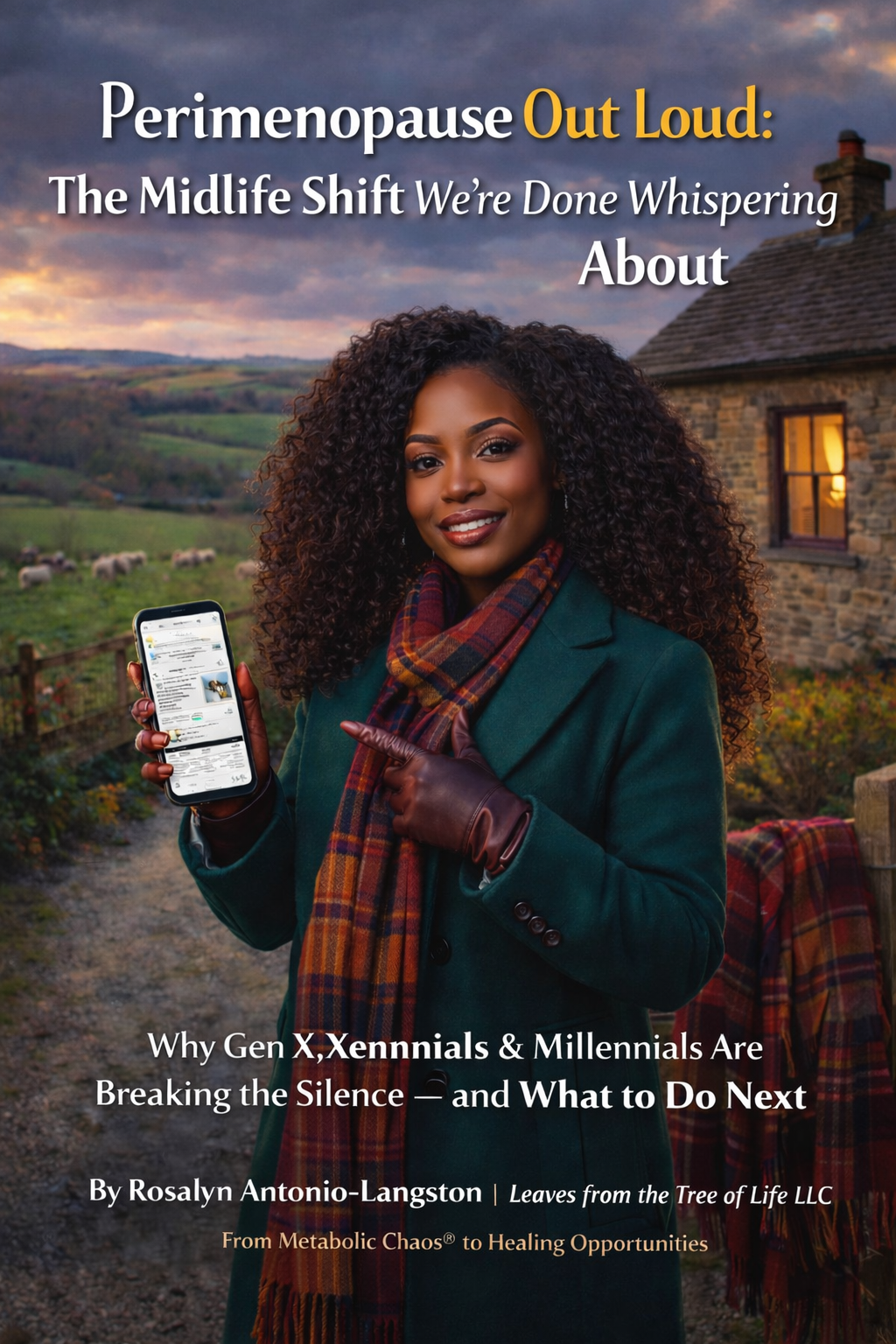
Perimenopause Out Loud: Why Gen X, Xennials & Millennials Are Breaking the Silence (and What to Do Next)
Perimenopause Out Loud: The Midlife Shift We’re Done Whispering About 🎤🔥
👋🏾 If You’ve Been Googling, Scrolling, and Side-Eyeing Your Body… You’re Not Alone
If you’ve got 27 tabs open (DuckDuckGo included), you’ve watched three reels that made you cry, and you’ve asked your group chat, “Is this peri/menopause or am I losing it?”—come closer.
Peri/menopause has stepped out of the shadows in recent years. And honestly? It needed to.
For generations, many women were raised with a quiet message:
“Don’t talk about that.”
Not your cycles. Not your moods. Not your dryness. Not your rage tears. Not the 3:11am wide-awake heartbreak of feeling like a stranger in your own body.
Today, that silence is cracking—and I’m grateful.
I’m Rosalyn Antonio-Langston, a Traditional Naturopath and Functional Diagnostic Nutrition® Practitioner, and through Leaves from the Tree of Life LLC, I want you to hear this clearly:
✅ You are seen.
✅ You are not making this up.
✅ You are not “too young” to be asking questions.
✅ And you are absolutely not alone.
🧬 Quick Generational Cheat Sheet (Because the Internet Argues About This 😅)
Generational cut-offs can vary a bit depending on who’s defining them, but here’s the framework most people mean when they talk about these groups:
Gen X: roughly born 1965–1980
Xennials: roughly born 1977–1983 (the “cusp” between Gen X and Millennials)
Millennials (Gen Y): roughly born 1981–1996
Why it matters for peri/menopause: these groups are hitting (or approaching) the transition at the same time that information access, advocacy, and online community-building are louder than ever—so what used to be whispered is now being named out loud.
🗣️ Why Now? Gen X Started the Conversation… and Everyone Else Joined In
🧱 “Our mothers didn’t talk about it…”
Many women didn’t grow up hearing the word perimenopause—not because it didn’t exist, but because it was taboo. The message was often: be polite, be quiet, push through.
🔥 Gen X said: “Enough.”
Gen X women are hitting midlife and refusing to be dismissed. They’re asking better questions, challenging medical shrugging, and pushing for workplace and healthcare conversations that should’ve been normal decades ago.
📲 Xennials & Millennials are joining the chat (early)
Xennials and Millennials are watching their bodies shift in their 30s and early 40s and saying, “Hold on—why didn’t anyone tell us this could start now?” Social media hasn’t been perfect, but it has given women language, solidarity, and a megaphone.
And here’s the danger of leaving peri/menopause in the dark:
women normalize suffering
symptoms get mislabelled (or minimized)
root causes are missed
and the nervous system stays stuck in a loop of panic + confusion + “what’s wrong with me?”
That’s not acceptable. Not anymore.
💔 The Double Standard: Fertility Is Glorified, Midlife Is Demonized
Let’s say the quiet part out loud.
Society celebrates:
“first period”
“fertility”
“baby bumps”
“bounce back”
“hot girl everything”
But peri/menopause? It gets:
hush tones
jokes
dismissal
invisibility
and a subtle message that aging is a personal failure
Meanwhile, midlife women are holding families together, running companies, leading ministries, carrying emotional labour, and still being expected to “stay cute and quiet” about hormonal reality.
No ma’am. We’re not doing that.
This transition is important, normal, and nothing to be ashamed of.
👩🏾⚕️ Who I Am (and Why You Can Trust This Space)
I’m Rosalyn Antonio-Langston, a Traditional Naturopath and Functional Diagnostic Nutrition® Practitioner. At Leaves from the Tree of Life LLC, I help women take a root-cause approach—so you’re not stuck in symptom-whack-a-mole.
We don’t reduce your experience to:
“it’s just peri/menopause,”
or“your labs are normal,”
or“welcome to aging.”
We look at the whole picture: symptoms, patterns, history, and (when appropriate) functional testing—so you can identify real healing opportunities instead of staying trapped in Metabolic Chaos®.
🙏🏾 “How Do I Prolong Perimenopause?” (Yes—Women Ask Me This)
In my community—my real-life circle—women have come up to me and asked some version of:
“Is there a way to prolong peri/menopause… or delay menopause?”
And I get it. For some women it’s fertility hopes. For others it’s fear—because menopause has been painted as a “decline” instead of a transition.
Here’s the grounded truth:
If you have ovaries and live long enough, menopause is a natural life stage for most women.
There’s no guaranteed “hack” to stop ovarian aging on command.
But here’s the empowering part: ✅ You can influence how supported you feel through peri/menopause.
✅ You can reduce symptom intensity by addressing what’s amplifying the fire.
✅ You can stop guessing and start building a plan that fits your body.
So instead of chasing a magic pause button, we focus on stability, support, resilience, and symptom clarity—because suffering is not a requirement.
🕰️ When Can Perimenopause Start? (And When You Might Notice It)
Many women notice symptoms in their 40s, but symptoms can begin in the mid-to-late 30s for some.
Translation: If you’re 35–45 and thinking, “Something is shifting,” you’re not dramatic—you’re early-aware. That awareness is a gift.
🧩 “How Many Symptoms Are There?” (A Lot. More Than You Think.)
Some symptom lists include 34+ peri/menopause symptoms, and that still isn’t exhaustive.
So yes—peri/menopause can look like:
cycle changes
sleep disruption
anxiety or low mood
brain fog
hot flushes/night sweats
libido changes
weight shifts
joint aches
…and more
And here’s the twist: many of these overlap with thyroid patterns, iron issues, blood sugar dysregulation, gut inflammation, and chronic stress physiology.
That’s why “it’s just hormones” is often an incomplete answer.
🔬Fun Fact Science Bar+
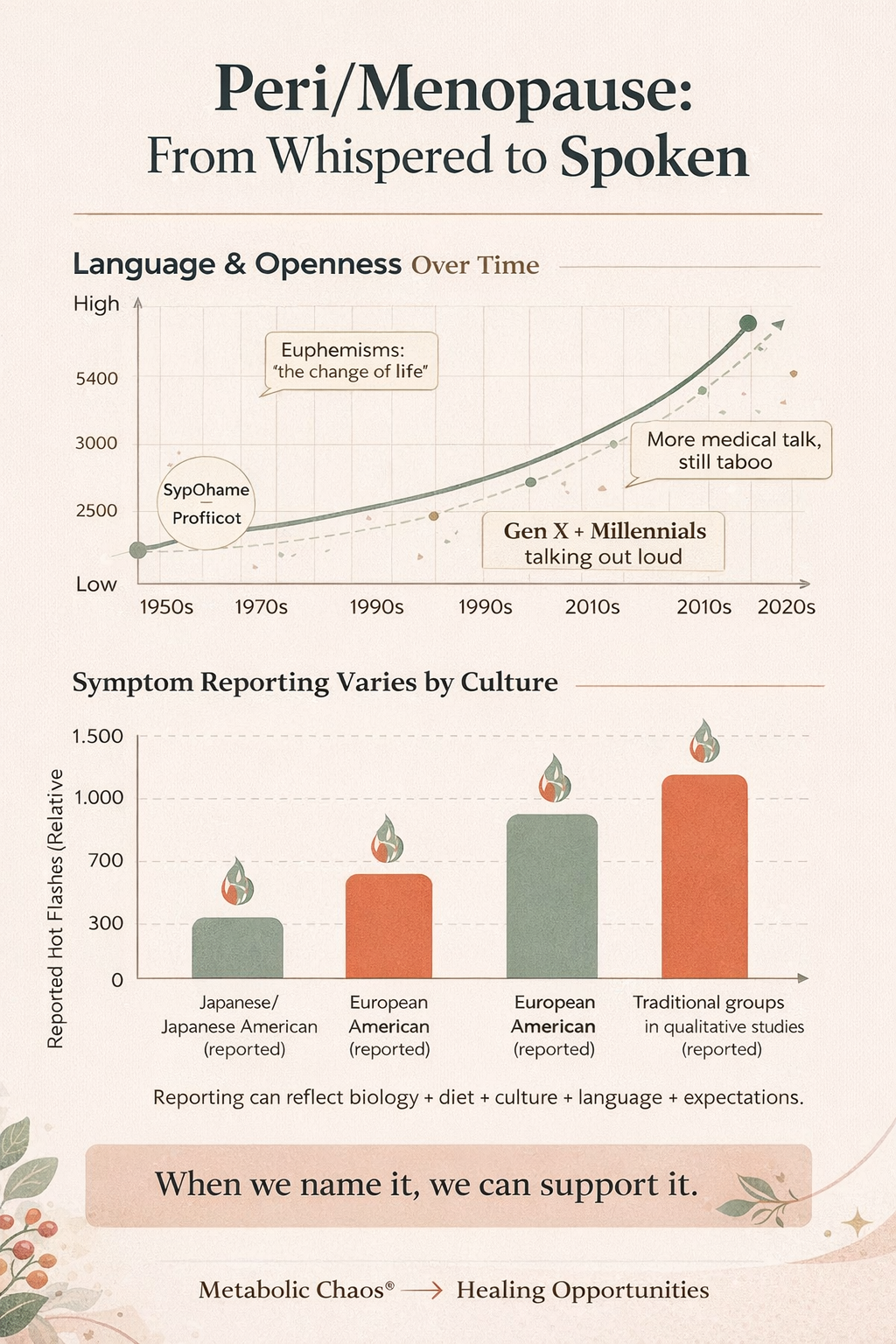
Did you know that for many women in previous generations, peri/menopause wasn’t “a season you talked through”—it was a season you whispered through? In English-speaking cultures it was often called “the change (of life)” (an old-fashioned euphemism), which hints at how indirect—and taboo—this topic could be.
And globally, culture shapes what gets named and what gets reported: cross-cultural research has found differences in how peri/menopause symptoms are described and disclosed. For example, studies have documented lower reported hot-flash frequency in Japanese and Japanese American groups compared with European American groups (with debate about how much is biology vs diet vs culture vs reporting norms).
Qualitative work has also found that some more “traditional” groups (e.g., Navajo women and Latina immigrants in one study) reported fewer or no symptoms, suggesting social framing and expectations can influence what women notice, label, and share.
👉🏾 Translation:
Your grandmother (or auntie, or elder at church) may have been having peri/menopause symptoms… but without language, community permission, or medical support, it often stayed private. In today’s world, Gen X + Xennials + Millennials are doing something powerful: they’re naming it—and that reduces isolation, improves care-seeking, and interrupts “silent suffering.” When peri/menopause stays taboo, women can get stuck in a Metabolic Chaos® loop: stress rises, sleep drops, blood sugar wobbles, mood swings intensify—and it all gets brushed off as “just getting older.”
✨ Healing Opportunity:
Borrow wisdom from both worlds:
Keep the village, add the vocabulary. Start a “midlife check-in” chat with 2–3 trusted women where peri/menopause is a normal topic (no shame, no minimizing).
Track patterns, not panic. Note sleep, cycle changes, mood, temperature shifts, cravings, and energy for 2–4 weeks—then pair your symptoms with targeted functional testing (when appropriate) so you’re not guessing.
Name it early. The earlier you put language on your experience, the faster you can find real support—and real healing opportunities.
✝️ Faith Element:
Scripture never asks women to suffer in silence. Choosing wisdom, seeking counsel, and caring for your “temple” is stewardship—not vanity. Let peri/menopause talk be part of your community compassion: we don’t gossip about women’s bodies—we support them. 🙌🏾
🎯 What to Look For: Peri/Menopause Signs (Grouped for Real Life)
🩸 Cycle & Bleeding Changes
irregular cycles (shorter, longer, skipped)
heavier or lighter bleeding
new/worsening PMS or cramps
💤 Sleep & Temperature Changes
waking at night (especially 2–4am)
night sweats / overheating
“tired but wired”
🧠 Mood, Mind & Nervous System
anxiety, low mood, mood swings
irritability (the spicy kind)
brain fog, lower focus, forgetfulness
⚖️ Metabolic & Energy Shifts
cravings, energy crashes
belly-weight changes
less stress tolerance / slower recovery
🌿 Vaginal/Urinary + Libido Changes
dryness, discomfort
libido shifts
recurrent irritation or urinary changes
🦴 Body Aches & Inflammation
joint aches, stiffness
“why does my body feel older overnight?”
Not a diagnosis—but absolutely worthy of attention.
🧠 Women’s Health Has Been Neglected—And Women Are Done With That
Women’s health has been under-prioritized for decades, and women are tired of being dismissed, minimized, or told to “just deal with it.”
This is part of why Gen X started making noise—and why Millennials and Xennials are amplifying it:
We want to be seen, heard, researched, and supported.
And if you’re reading this thinking, “Finally. Someone said it.”
Yes. That’s exactly the point.
🔬 Functional Testing: When Symptoms + Data Create Real Clarity
If you’ve been googling for months and still feel like something is missing—functional testing can help connect symptoms + patterns + root drivers.
Not because we worship data.
Because data can reduce Metabolic Chaos® and reveal practical healing opportunities.
🧫 GI-MAP + 🧬 DNA Gut
Helpful for mapping gut microbes, inflammation patterns, and genetic predispositions that may influence gut resilience.
🧬 DNA Hormones
Can offer clues about hormone metabolism tendencies so support is more personalized (not trend-based).
🧪 DUTCH
Often used to evaluate hormone patterns and cortisol/stress rhythm insights more comprehensively than a single snapshot.
🍽️ MRT
May be helpful when symptoms feel reactive and you can’t pinpoint food triggers—supporting a more strategic elimination approach.
🩸 FBCA
A functional lens on standard blood work—useful for identifying patterns worth addressing even when results look “normal.”
Important: This list isn’t exhaustive. Testing should be chosen based on your symptoms, history, medications, cycle stage, and any red flags.
🎤 Yes, I’m Making Noise (On Purpose)—And I’m Encouraging You To Do the Same
Part of my mission in this season is encouraging women to stop treating peri/menopause like private shame and start treating it like what it is:
✅ a major health transition
✅ a whole-body recalibration
✅ a topic worthy of education and support
So yes—I’m making noise about peri/menopause.
Not panic. Not doom.
Noise like:
naming what’s happening
breaking the taboo
giving women language and tools
reminding you that you’re not alone
encouraging you to talk about it too
Because silence is expensive.
✝️ Faith-Based Grounding (SDA-flavoured, gentle but firm)
As a Seventh-day Adventist, I believe we’re called to be wise stewards of the bodies God entrusted to us—and part of stewardship is refusing shame.
Your body isn’t “betraying” you.
It’s communicating.
This season can be a holy invitation to reclaim rhythms that restore: rest (yes, Sabbath rest counts), nourishment, movement, sunlight, and community. Not fear. Not secrecy.
🌿 You Don’t Have to Figure This Out Alone
If you’ve been:
googling in circles
feeling dismissed
wondering why your body feels unfamiliar
trying “all the things” with minimal results
…then yes—you’re in the right place. You are being seen and heard here.
✨ Let’s turn the noise into a plan.
Work with Leaves from the Tree of Life LLC and we’ll:
map your symptoms + timeline
decide what testing (if any) is appropriate
build a personalized strategy with clear next steps and real healing opportunities
🌿✨ Start Here
If you’re in that “I’ve been Googling forever but something still feels missing” season, I made a calm, supportive 5-day email course to help you get clarity—without spiraling.
✅ Bite-sized guidance
✅ Root-cause focused (not trend-chasing)
✅ Practical next steps for peri/menopause confusion + Metabolic Chaos® moments
✅ Warm, faith-friendly encouragement (because you’re not meant to do this alone)
💌 Join the 5-Day Email Course here:
https://leaves-from-the-tree-of-life.kit.com/014d1022a6
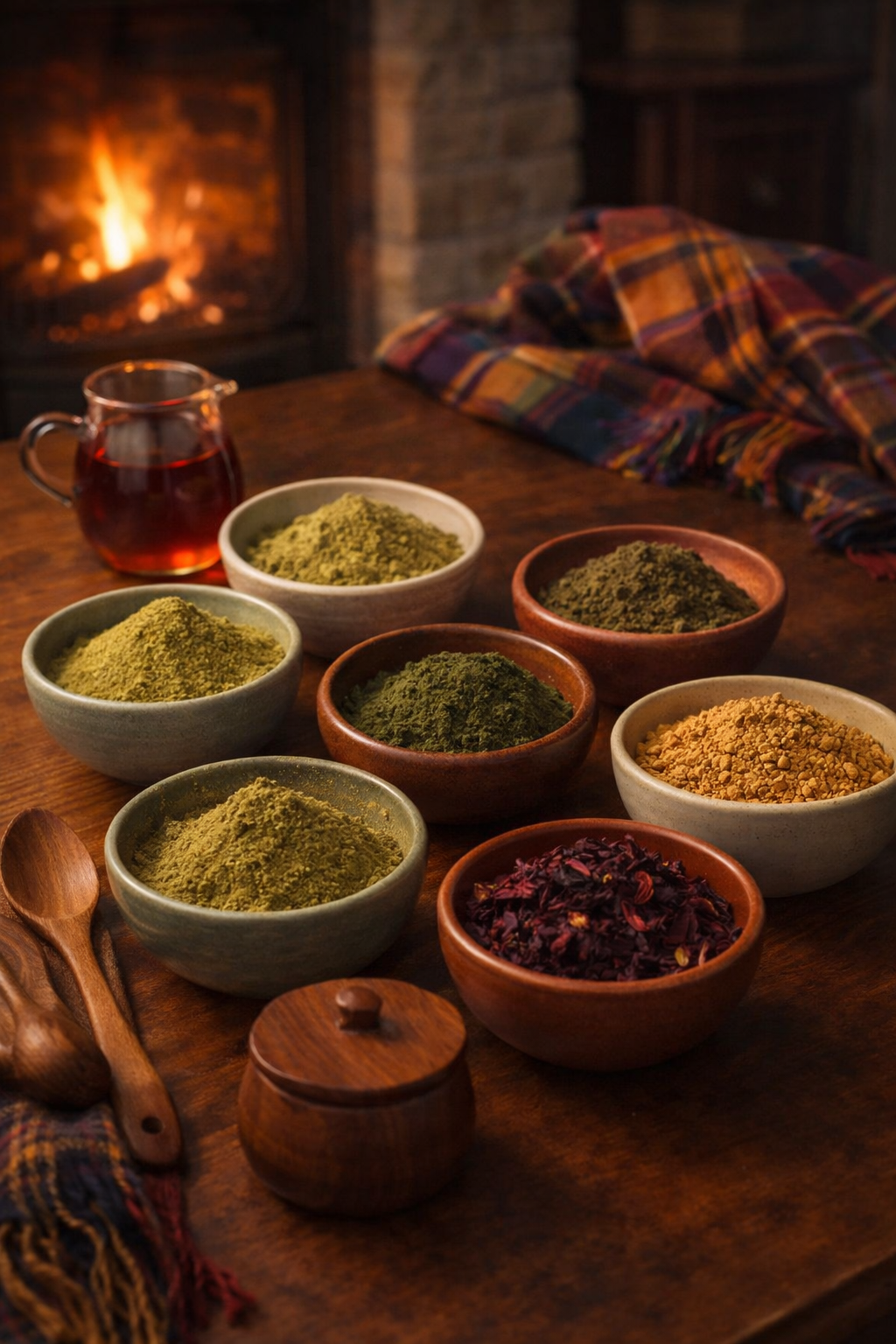
🌿🔥 Perimenopause Power Hair Mask (Indian Herb Edition — No Coconut)
A strengthening, scalp-loving herbal mask designed for the “why is my hair suddenly doing the most?” season: shedding, dryness, breakage, slower growth, thinning edges, and a cranky scalp. This blend focuses on follicle support, scalp circulation, strand strength, and shine—without coconut or its derivatives.
🧺 Ingredients (1–2 applications depending on hair length)
🌱 Core Herbs (Powders)
Amla powder — 2 tbsp
Bhringraj powder — 2 tbsp
Brahmi powder — 1 tbsp
Henna powder (body art quality) — 1 tbsp (optional, see notes)
Fenugreek powder — 1 tbsp (or soak seeds and blend)
Neem powder — 1 tsp (optional for itchy/flaky scalp)
💧 Liquids (Choose Your Base)
Warm hibiscus tea or warm rosemary tea — ~½–¾ cup (add gradually)
Aloe vera gel (pure, no additives) — 2 tbsp (optional but amazing for slip)
🛢️ Oils (No Coconut)
Choose one (or combine):
Jojoba oil — 1 tsp (scalp-friendly, light)
Pumpkin seed oil — 1 tsp (great for midlife hair support)
Black seed (Nigella sativa) oil — ½–1 tsp (scalp soothing)
🍯 Optional Boosters
Raw honey — 1 tsp (humectant + shine)
Vegetable glycerin — ½ tsp (extra moisture; skip if you’re glycerin-sensitive)
✨ What Each Ingredient Does (Benefits)
🥭 Amla (Indian Gooseberry)
Supports stronger strands, shine, and less breakage ✨
Rich in antioxidants that support scalp environment
🌿 Bhringraj (Eclipta alba)
Traditional Ayurvedic herb for hair vitality + scalp support 🌱
Often used for shedding seasons and weak roots
🧠 Brahmi (Bacopa monnieri)
Supports scalp calm and helps reduce “angry scalp” sensations 😌
Great for stress-heavy seasons (hello, peri/menopause)
🍂 Henna (Optional)
Natural plant-based conditioning + strengthening “glaze” 💪🏾
Adds slip, reduces frizz, helps strands feel thicker
⚠️ Can slightly tint light hair or enhance warmth; skip if you don’t want any tonal shift.
🌰 Fenugreek (Methi)
Famous for slip, softness, and helping hair feel less dry 🌾
Great for detangling and reducing breakage from fragile strands
🌿 Neem (Optional)
Helpful for flaky/itchy scalp and buildup-y seasons 🧼
Use lightly—neem is strong!
🌺 Hibiscus or 🌿 Rosemary Tea
Herbal liquid base that supports scalp circulation and shine ✨
Helps the mask spread smoothly without harsh additives
🌵 Aloe Vera Gel (Optional)
Adds hydration + glide and helps soothe the scalp 🌿
Especially helpful if peri/menopause has your scalp feeling dry/tight
🛢️ Jojoba / Pumpkin Seed / Black Seed Oils
Nourish scalp + seal moisture without coconut 🧴
Helps reduce brittleness and improve softness
🥣 Step-by-Step Instructions (Easy + Effective)
1) 🍵 Make your herbal liquid
Brew hibiscus tea or rosemary tea (strong brew).
Let it cool until warm (not hot).
2) 🧪 Mix the powders
In a ceramic or glass bowl, combine:
amla, bhringraj, brahmi
plus henna (if using), fenugreek, neem (optional)
3) 🌀 Add liquid slowly
Pour in warm tea a little at a time, stirring until you get a thick yogurt/batter consistency.
✅ Not watery. ✅ Not cement.
4) 🌵 Add your moisturizers
Mix in aloe gel (optional)
Add your chosen non-coconut oil
Add honey (optional)
5) ⏳ Let it “bloom”
Cover the bowl and let it sit 10–20 minutes so the herbs hydrate and become smoother.
6) 🧤 Apply (Section by section)
Start on damp hair (spritz with water).
Apply to scalp first (if you’re doing scalp support), then pull through lengths.
Twist hair into 4–6 sections.
7) 🧢 Cover + Warmth
Put on a shower cap.
Optional: wrap with a warm towel or use a heat cap.
Leave on 20–40 minutes.
(If using henna, 30–60 minutes is typical, but keep it shorter if you’re cautious.)
8) 🚿 Rinse thoroughly
Rinse with lukewarm water until water runs mostly clear.
Follow with a gentle shampoo if needed (especially if you used oils/honey).
Condition as usual.
🗓️ How Often to Use
Dryness + breakage: 1x weekly
Shedding seasons / scalp support: 1x weekly for 4 weeks, then every 2 weeks
Henna users: every 3–6 weeks (depending on your hair goals)
📝 Notes (So You Don’t Hate Me Mid-Rinse 😅)
If you have low porosity hair, keep the mask more hydrating and less heavy, and use warmth to help it penetrate.
Always patch test if you have sensitivities.
Henna can tint or strengthen significantly—start with ½ tbsp if unsure.
📚 References
🌸 Peri/Menopause Basics (Definitions + What’s “Normal”) NHS — Menopause (overview, ages, symptoms) 👉🏾 https://www.nhs.uk/conditions/menopause/
ACOG — The Menopause Years (peri/menopause overview) 👉🏾 https://www.acog.org/womens-health/faqs/the-menopause-years
Mayo Clinic — Perimenopause: Symptoms & causes (can start in 30s/40s) 👉🏾 https://www.mayoclinic.org/diseases-conditions/perimenopause/symptoms-causes/syc-20354666
Cleveland Clinic — Perimenopause (overview) 👉🏾 https://my.clevelandclinic.org/health/diseases/21608-perimenopause
⏳ Age Ranges + Early/Premature Menopause NHS — Early or premature menopause (definitions <45 / <40) 👉🏾 https://www.nhs.uk/conditions/early-or-premature-menopause/
NHS Inform — Early and premature menopause (POI prevalence estimates) 👉🏾 https://www.nhsinform.scot/healthy-living/womens-health/later-years-around-50-years-and-over/menopause-and-post-menopause-health/early-and-premature-menopause/
ACOG — The Menopause Years (peri years in 30s/40s) 👉🏾 https://www.acog.org/womens-health/faqs/the-menopause-years
📌 Symptom Lists (And Why “Not Exhaustive” Matters) The Menopause Charity — Symptoms list/resources (symptom variety; not one-size-fits-all) 👉🏾 https://www.themenopausecharity.org/
NHS GP practice resource (UK) — “at least 35 symptoms” mention + menopause support info 👉🏾 https://pendletonmedicalcentre.nhs.uk/wellbeing/menopause/
🧠 Perimenopause/Menopause & Anxiety (Symptoms + Management) British Menopause Society — What is the Menopause? (includes anxiety as a symptom) 👉🏾 https://thebms.org.uk/wp-content/uploads/2023/08/17-BMS-TfC-What-is-the-menopause-AUGUST2023-A.pdf
NICE CKS — Management of menopause/perimenopause (sleep, exercise, relaxation for low mood/anxiety) 👉🏾 https://cks.nice.org.uk/topics/menopause/management/management-of-menopause-perimenopause-or-premature-ovarian-insufficiency/
Women’s Health Concern (BMS patient arm) — CBT for menopausal symptoms 👉🏾 https://www.womens-health-concern.org/wp-content/uploads/2023/02/02-WHC-FACTSHEET-CBT-WOMEN-FEB-2023-A.pdf
🌍 Culture, Language & Symptom Reporting Differences Brown et al., 2009 (PMC) — Japanese American vs European American: reported vs objective hot flashes (culture/reporting bias discussion) 👉🏾 https://pmc.ncbi.nlm.nih.gov/articles/PMC2746710/
Obermeyer, 2000 — Menopause across cultures (review) 👉🏾 https://pubmed.ncbi.nlm.nih.gov/10810964/
Gold et al., 2006 (PMC) — SWAN: racial/ethnic differences in vasomotor symptoms across the transition 👉🏾 https://pmc.ncbi.nlm.nih.gov/articles/PMC1483882/
Avis et al., 2015 (JAMA Internal Medicine) — Duration of vasomotor symptoms varies by race/ethnicity (SWAN) 👉🏾 https://jamanetwork.com/journals/jamainternalmedicine/fullarticle/2110996
Morrison et al., 2013 (PMC) — Qualitative “Talking Story” from the Hilo Women’s Health Study (how women describe menopause) 👉🏾 https://pmc.ncbi.nlm.nih.gov/articles/PMC3925469/
🗣️ Why It’s “Trending” Now (System-Level Attention to Menopause) UK Government — NHS update bringing menopause into routine health checks (policy/health-system shift) 👉🏾 https://www.gov.uk/government/news/major-nhs-update-brings-menopause-into-routine-health-checks
🧬 Generations 101 (Gen X, Xennials, Millennials) Pew Research Center — Gen X years (1965–1980) + how Pew defines generations 👉🏾 https://www.pewresearch.org/politics/2015/09/03/the-whys-and-hows-of-generations-research/
Pew Research Center — Millennials years (1981–1996) 👉🏾 https://www.pewresearch.org/short-reads/2019/01/17/where-millennials-end-and-generation-z-begins/
Merriam-Webster — “Xennial” (roughly 1977–1983 cusp cohort) 👉🏾 https://www.merriam-webster.com/wordplay/words-were-watching-xennial
Encyclopaedia Britannica — “Experience the American Generations” (includes Xennials 1977–83) 👉🏾 https://www.britannica.com/topic/Experience-the-American-Generations-Which-Generation-Are-You-2226598
🩺 Women’s Health Research Gaps (Why Many Women Feel “Dismissed”) NIH — Inclusion of Women and Minorities as Subjects in Clinical Research (policy background/resources) 👉🏾 https://orwh.od.nih.gov/toolkit/recruitment/inclusion-women-and-minorities-clinical-research
🧪 Functional Testing Mentioned in the Blog (Primary/Official Sources) DUTCH Test — DUTCH Interpretive Guide (hormones + cortisol context) 👉🏾 https://dutchtest.com/resources/dutch-interpretive-guide
DUTCH Test — Which DUTCH panel is right for me? 👉🏾 https://dutchtest.com/blog/which-dutch-test-is-right-for-me
Diagnostic Solutions — GI-MAP (GI Microbial Assay Plus) overview 👉🏾 https://www.diagnosticsolutionslab.com/tests/gi-map
Oxford Biomedical Technologies — MRT (Mediator Release Test) overview 👉🏾 https://www.nowleap.com/the-patented-mrt-test/
DNA Life — Product listings (DNA tests including hormones/gut offerings) 👉🏾 https://www.dnalife.healthcare/products/dna
Blog Disclaimer
The health information on this blog is for general educational purposes only and is not intended to diagnose, treat, cure, or prevent any disease. It should not be used as a substitute for professional medical advice. Always consult a qualified healthcare provider before making any health-related decisions
This blog may contain affiliate links, meaning Leaves from the Tree of Life LLC may earn a small commission if you purchase a product or service through these links—at no additional cost to you. Your support helps us continue to provide valuable content. Thank you!
