
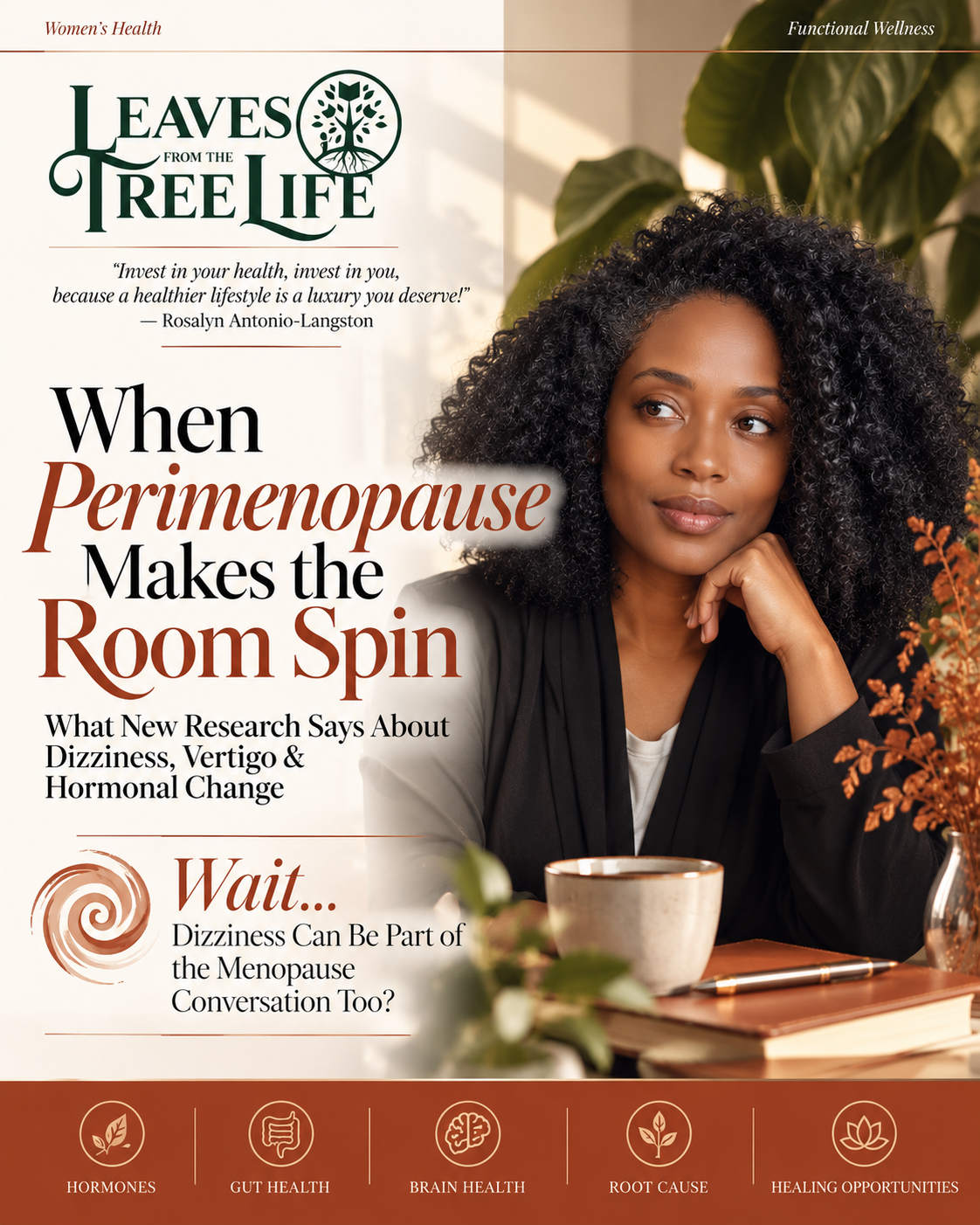
🌀 Wait…Dizziness Can Be Part of the Menopause Conversation Too?
Hot flashes? We have heard about them.
Night sweats? Yep.
Changes in periods, sleep, mood, libido and body composition? Absolutely.
But dizziness, vertigo, motion sensitivity or suddenly feeling like the grocery-store aisle is moving underneath your feet?
Now that conversation has been much quieter.
And ladies, the research world is finally paying closer attention.
Scientists have been investigating a possible relationship between female hormone changes and the vestibular system—the intricate system involving the inner ear and brain that helps us maintain balance, spatial orientation and stability.
This isn't entirely new.
A 2014 study involving patients with benign paroxysmal positional vertigo, or BPPV, reported that perimenopausal women appeared particularly susceptible to BPPV. The researchers found a female-to-male ratio of approximately 3.2:1 during the perimenopausal years and proposed that hormonal fluctuations could contribute to vulnerability.
Then, a 2020 review in Frontiers in Neurology explored several possible connections between perimenopause and BPPV, including estrogen receptors within the inner ear, calcium regulation, otoconia—the tiny calcium-carbonate structures involved in balance—bone metabolism, vitamin D and changing estrogen signalling.
But now we have newer 2026 research adding more pieces to the puzzle.
And that is where things get interesting.
🔬 2026 Research: The Vestibular System Is Joining the Menopause Conversation
A 2026 review published in the Brazilian Journal of Otorhinolaryngology specifically examined the relationship between the menopause transition and dizziness.
The authors concluded that hormonal changes during the menopause transition appear capable of affecting the vestibular system, although they were equally careful to acknowledge that clinical research is still limited.
Potential mechanisms under investigation include changes involving:
energy metabolism within the nervous system
neurotransmitter signalling
inflammatory and immune regulation
microcirculation
neuroprotection and neuroplasticity
the inner ear
central processing of vestibular information
In other words, your balance system isn't sitting in some isolated little bubble inside your ear.
It communicates with the nervous system, circulation, metabolism, hormones, vision, muscles, sensory processing and brain.
Welcome to the human body—where apparently no department works completely independently. 😏
Another 2026 study evaluated 93 women ages 40–65 with recurrent spontaneous vestibular symptoms.
The researchers found that dizziness-related disability was significantly associated with menopausal symptom burden. Many women also experienced symptoms such as tinnitus, motion sickness, light sensitivity, headaches, neck pain, vasomotor symptoms and migraine-related features.
That study does not prove menopause caused their dizziness. It was a relatively small, cross-sectional study from a tertiary neurotology clinic.
But it strengthens the argument that clinicians evaluating a midlife woman with unexplained vestibular symptoms may need to consider her menopause transition as part of the clinical picture, rather than looking exclusively at her ears.
And frankly?
That is progress.
💃🏾 Perimenopause Doesn't Always Walk In Wearing a Hot-Flash Name Tag
One reason perimenopause can be confusing is that it doesn't look the same in every woman.
Some women have dramatic vasomotor symptoms.
Others don't.
Some notice irregular cycles first.
Some are still having fairly predictable periods while experiencing changes in sleep, anxiety, migraines, cognition, energy, body composition, insulin sensitivity, temperature regulation or exercise recovery.
And some women simply know:
“Something has changed.”
That matters because perimenopause isn't diagnosed by whether you have checked off every stereotypical symptom on an internet list.
Hormones can also fluctuate considerably during the menopause transition rather than simply declining in a neat, straight line. That is part of what makes this season so interesting—and occasionally so irritating. 😏
Dizziness may occur during this season, but it should never automatically be blamed on perimenopause.
Dizziness is a symptom, not a diagnosis.
🎢 “Dizzy” Can Mean Several Completely Different Things
This is an important distinction.
One woman says “dizzy” and means:
The room is spinning.
Another means:
I feel like I'm going to faint.
Another means:
I feel off-balance or like I'm walking on a boat.
Another means:
Busy stores, scrolling, traffic, patterns or head movement make me feel disoriented.
And another may have dizziness associated with migraine.
BPPV is just one potential cause of vertigo. It generally occurs when tiny calcium-carbonate particles called otoconia become displaced within the inner ear, producing characteristic positional vertigo.
Other causes of dizziness can include vestibular migraine, inner-ear disorders, dehydration, blood-pressure changes, anemia or iron deficiency, glucose dysregulation, medication effects, thyroid dysfunction, nutrient deficiencies, neurological conditions, cardiovascular problems, autonomic dysfunction and other medical conditions.
That means we don't want to hear:
“You're 47. It's probably menopause.”
…and stop investigating.
Absolutely not.
We want a bigger picture.
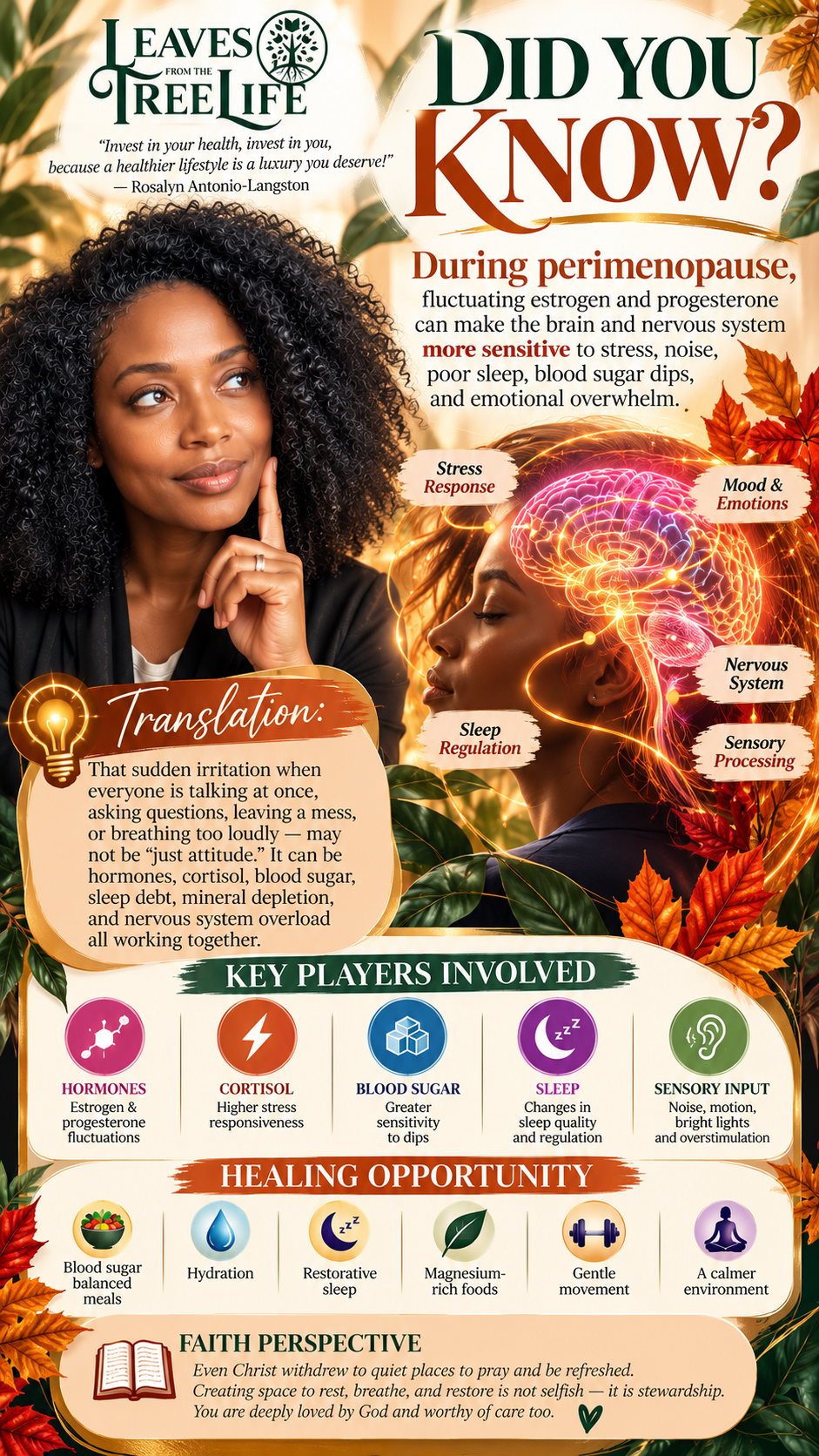
🔬Fun Fact Science Bar — Did You Know?
👀 Your eyes and inner ears are constantly talking to each other. Your vestibulo-ocular reflex (VOR) helps keep what you're looking at steady while your head moves. Emerging research suggests estrogen may influence how these balance pathways adapt and communicate—one possible reason scientists are investigating hormonal transitions and dizziness more closely.
👉🏾 Translation: If scrolling, turning your head, busy patterns or movement around you suddenly feels extra, your brain may be working harder to reconcile information from your eyes, inner ear and body position. That doesn't automatically mean hormones are the cause—but it is another clue worth investigating.
✨ Healing Opportunity: Don't simply label it “menopause dizziness.” Look at the whole picture: vestibular function, migraines, sleep, hydration, blood sugar, iron and nutrient status, medications, stress physiology and hormonal changes. That's where looking for Metabolic Chaos® can become useful.
✝️ Faith Note: We are “fearfully and wonderfully made.” — Psalm 139:14. Even something as simple as keeping your eyes focused while moving reveals just how beautifully interconnected the body really is. 🌿
🌿 This Is Where Root-Cause Thinking Gets Interesting
As a Traditional Naturopath and Functional Diagnostic Nutrition® Practitioner—and as a woman navigating perimenopause myself—I find this emerging research incredibly encouraging.
Not because every dizzy woman suddenly needs a supplement cabinet large enough to qualify as furniture. 😂
But because women's symptoms are increasingly being investigated rather than dismissed.
Mainstream clinical research is asking more questions about women's midlife physiology, while naturopathic and functional approaches have long emphasized looking at interconnected systems and asking:
What else could be contributing to the terrain?
We call this looking for healing opportunities.
In Functional Diagnostic Nutrition®, we may also describe patterns of dysfunction as Metabolic Chaos®—multiple physiological stressors interacting instead of assuming one symptom must have one isolated cause.
The goal isn't to chase symptoms around the body like a medical game of whack-a-mole.
It is to gather clues.
🧪 Testing: Because Guessing Isn't a Functional Strategy
No functional laboratory test can look at a report and declare:
“Congratulations! Your dizziness is perimenopause.”
That isn't how this works.
Testing can, however, help us investigate physiological patterns that may be contributing to the overall picture.
Depending on the woman's history, symptoms and goals, testing might include DUTCH hormone testing to examine sex-hormone metabolites and aspects of cortisol physiology; DNAlife Hormones to explore genetic tendencies involving hormone metabolism and related pathways; Functional Blood Chemistry Analysis (FBCA) to look more closely at patterns involving iron status, glucose regulation, thyroid markers, vitamin D, B vitamins, inflammation, lipids and other standard laboratory markers; GI-MAP when gastrointestinal function, digestion, microbiome patterns or intestinal inflammation warrant investigation; and MRT food-sensitivity testing when clinically appropriate as part of a broader nutrition strategy.
None of these tests diagnose BPPV or replace an ENT, neurotology, neurology, cardiovascular or medical evaluation when indicated.
What they can do is help us ask better questions.
Is blood-sugar regulation contributing to symptoms?
What does iron status look like?
How is thyroid physiology looking?
Is vitamin D low?
What does the stress-response pattern suggest?
Are gastrointestinal problems potentially interfering with nutrient status?
Are there lifestyle, dietary or metabolic patterns adding additional physiological stress?
Testing doesn't give us all the answers.
It gives us more clues with which to build the picture.
And sometimes the clue everyone overlooked is the one that changes the entire conversation.
☀️ Vitamin D, Calcium & Those Tiny Inner-Ear Crystals
Here is another fascinating piece of this story.
Otoconia are made primarily from calcium carbonate, and researchers have increasingly investigated the relationship between BPPV, bone metabolism and vitamin D.
A 2026 randomized clinical trial enrolled 160 adults with confirmed BPPV who also had vitamin D deficiency. Those receiving vitamin D experienced substantially fewer recurrences over 24 months than the placebo group. This trial was not specifically a menopause study, so we shouldn't stretch its findings beyond what researchers actually studied.
Earlier randomized research has also reported fewer recurrences among people with BPPV and low vitamin D when deficiency was addressed.
Translation?
This does not mean:
“Dizzy? Take vitamin D.”
It means:
Check the person. Check the history. Check appropriate labs. Then address an identified need appropriately.
That is a very different philosophy from randomly throwing supplements at symptoms.
⚖️ And Hormones? The Story Is More Complicated Than “Low Estrogen = Vertigo”
Here is where responsible women's health education requires nuance.
The biological research gives us plausible reasons to investigate estrogen, progesterone, neurotransmitters, calcium regulation and the vestibular system.
But hormone therapy is not automatically a treatment for dizziness.
In fact, a large 2026 analysis using UK Biobank data found that both current and previous menopausal hormone therapy use were associated with a higher incidence of recorded BPPV compared with never-use.
The authors specifically described the findings as hypothesis-generating and stated that they do not justify changing an individual woman's menopausal hormone therapy regimen.
That finding may appear to conflict with some older observational research suggesting estrogen therapy could be protective.
And you know what?
That is science doing what science is supposed to do.
Ask questions.
Collect better data.
Challenge simplistic explanations.
Refine the model.
Female physiology deserves something better than “estrogen good” or “estrogen bad.”
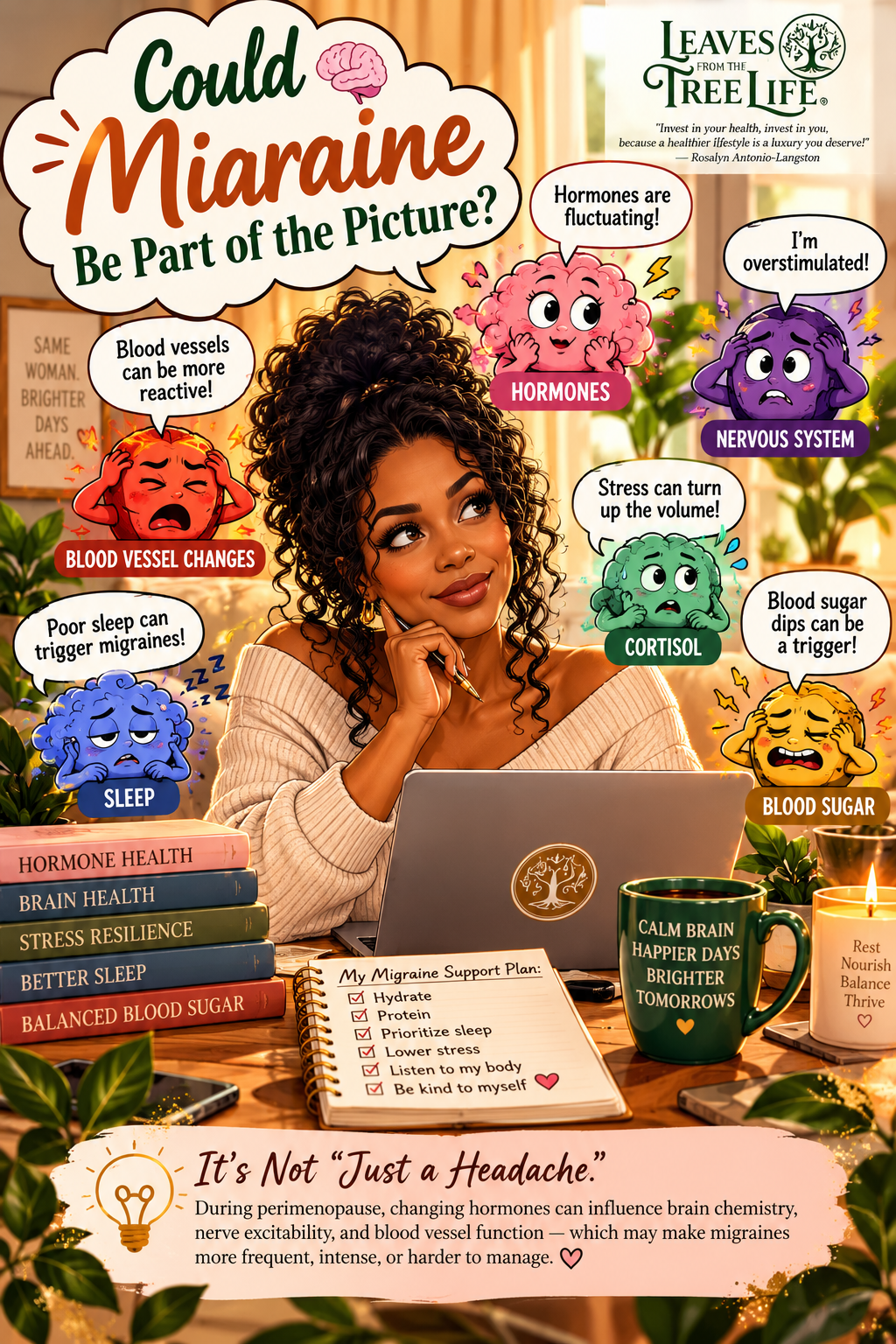
🧠 Could Migraine Be Part of the Picture?
Absolutely.
The 2026 midlife vestibular study is particularly interesting because migraine-related symptoms were extremely common among the women studied.
That matters because vestibular migraine can cause dizziness, imbalance, motion sensitivity and vertigo—with or without the stereotypical pounding migraine headache many people expect.
Researchers are still working out how ovarian hormone fluctuations interact with migraine circuitry and vestibular processing.
So if dizziness appears alongside light sensitivity, motion sensitivity, headaches, visual symptoms, sound sensitivity or a migraine history, that information deserves to be part of the conversation.
Again:
Clues. Not assumptions.
🚨 Please Don't Blame Every Dizzy Spell on Perimenopause
We can recognize the hormone connection without becoming reckless about dizziness.
New or severe dizziness deserves appropriate evaluation—particularly when accompanied by fainting, chest pain, significant shortness of breath, sudden hearing loss, new weakness or numbness, difficulty speaking, new severe headache, significant difficulty walking, vision loss or other sudden neurological symptoms.
And if BPPV is suspected, proper positional testing and an appropriate canalith-repositioning manoeuvre may be much more useful than trying to “balance your hormones” first.
Functional care should complement appropriate medical evaluation, not compete with it.
That is responsible root-cause care.
🌱 Foundations Still Matter—Even When Science Gets Fancy
As much as I love functional testing, I also believe we sometimes underestimate the power of foundations.
Adequate hydration.
Restorative sleep.
Regular movement appropriate for your ability.
Strength training.
Whole-food nutrition.
Adequate protein and micronutrients.
Sunlight.
Fresh air.
Stress management.
Rest.
Temperance.
And trust in God.
That little list may sound familiar to those of us who appreciate the Adventist health message. 🌿
Our bodies are “fearfully and wonderfully made”—Psalm 139:14.
That doesn't mean our bodies never experience dysfunction.
It means we respect their complexity enough to stop treating every symptom like an isolated inconvenience.
Lifestyle foundations do not replace medical care.
But they create an environment in which the body's normal regulatory systems have the resources they need to function as well as possible.
That is where many of our healing opportunities begin.
💛 Ladies, This Is Actually Good News
I know.
Being told researchers have found yet another possible perimenopause symptom doesn't initially sound like good news.
“Excellent. Add dizziness to the list!” 😩😂
But hear me out.
Recognition gives us language.
Language gives us questions.
Questions lead to better research.
Better research can lead to better evaluation.
And better evaluation gives women the opportunity to prepare rather than being completely blindsided.
Perhaps the question won't always be:
“What's wrong with me?”
Perhaps it becomes:
“What is changing in my physiology, what else could be contributing, and what can I support?”
That shift alone is powerful.
Perimenopause isn't the end of your vitality.
It is a physiological transition requiring a different level of awareness, strategy and self-advocacy.
And we are finally getting more information with which to do exactly that.
👩🏾💼 Hormonal. Anxious. Bloated. And Trying to Run a Business Too?
Midlife doesn't exactly clear your calendar while your body figures itself out.
You still have meetings.
Deadlines.
Clients.
Families.
Responsibilities.
And perhaps a body suddenly behaving like it has installed new software without asking permission. 😏
At Leaves from the Tree of Life LLC, we help Businesswomen who are Hormonal, Anxious, and Bloated through Functional Nutrition Coaching + Labs.
Our approach looks beyond symptom chasing to explore patterns, foundations and potential healing opportunities through individualized functional nutrition, lifestyle coaching and appropriate laboratory testing.
If you've been collecting symptoms but haven't been able to connect the dots, your next step may simply be a conversation.
👉🏾 Click here to schedule your Discovery Call
Invest in your health, invest in you, because a healthier lifestyle is a luxury you deserve!
— Rosalyn Antonio-Langston
Traditional Naturopath | Functional Diagnostic Nutrition® Practitioner
🛍️ Where to Buy Professional-Grade Supplements
Supplements should be selected according to individual needs—not because somebody on social media said every woman over 40 needs the same thing.
🇺🇸 United States:
Shop Leaves from the Tree of Life professional supplements
🇬🇧 United Kingdom:
Shop through Amrita Nutrition
Practitioner Code: KXCTGG

🌿💜 Steady & Soothed Lavender Tea
A calming, cozy herbal tea for the woman whose nervous system needs a gentle exhale.
⏰ Time
5–7 minutes
🍵 Ingredients
1½ cups spring water
1 teaspoon organic dried lavender
1 teaspoon real honey
Optional: 1 thin slice fresh ginger
Optional: 1 teaspoon fresh lemon juice
👩🏾🍳 Step-by-Step Instructions
Bring the spring water to a gentle boil in a small pot or kettle.
Add the dried lavender to a tea infuser, tea ball, or directly into your mug or teapot.
If using, add the fresh ginger for an extra warming touch.
Pour the hot water over the herbs and let steep for about 5 minutes.
Strain if needed.
Allow the tea to cool slightly, then stir in the real honey.
Add a little fresh lemon juice if desired.
Sip slowly, breathe deeply, and give yourself permission to enjoy a peaceful pause. 💜
🌿 Health Benefits of Each Ingredient
💧 Spring Water
Supports hydration, which is especially important when dizziness, fatigue, or headaches are part of the conversation.
Provides a simple, refreshing base for this soothing herbal tea.
💜 Organic Dried Lavender
Traditionally used to promote calmness and relaxation.
May complement a peaceful evening routine when stress and overstimulation are running high.
Lovely for those moments when your nervous system is acting just a little extra. 😅
🍯 Real Honey
Adds natural sweetness and a cozy, comforting finish.
Traditionally used to soothe the throat.
Gives this tea a warm, nurturing feel that says, “We’re not doing chaos tonight.” 😌
🌶️ Fresh Ginger — Optional
Traditionally used to support digestion.
May be especially comforting when occasional nausea or digestive discomfort is part of the picture.
Adds a gentle warmth and grounding flavor.
🍋 Fresh Lemon Juice — Optional
Adds a bright, refreshing note.
Pairs beautifully with lavender and honey.
Contains naturally occurring vitamin C and plant compounds.
✨ Why It Fits This Blog Topic
This tea won’t “fix” perimenopause, dizziness, vertigo, or migraines — because let’s be grown and honest. 😏
What it can offer is a calming ritual that encourages hydration, rest, and a more grounded, nervous-system-friendly moment.
And during a season of hormonal transition, sometimes those simple foundational practices become meaningful healing opportunities too. 🌿💜
📚 References
Ogun OA, Büki B, Cohn ES, Janky KL, Lundberg YW. Menopause and benign paroxysmal positional vertigo. Menopause. 2014;21(8):886–889. PMID: 24496089. doi:10.1097/GME.0000000000000190.
Jeong SH. Benign Paroxysmal Positional Vertigo Risk Factors Unique to Perimenopausal Women. Frontiers in Neurology. 2020;11:589605. PMID: 33178127. doi:10.3389/fneur.2020.589605.
Mangia LRL, Bittar RSM. Is there any relationship between the menopause transition and dizziness? Brazilian Journal of Otorhinolaryngology. 2026;92(3):101763. PMID: 41650804. doi:10.1016/j.bjorl.2026.101763.
Mangia LRL, Bittar RSM. Clinical Features of Midlife Women With Isolated Episodic Vestibular Syndrome and Their Relationship With Migraine and Menopause Transition. Otology & Neurotology. 2026;47(5):716–723. PMID: 42108535. doi:10.1097/MAO.0000000000004891.
Li L, Chen J, Han X, Xiao D, Li J, Cui X, Yu H, Wang X. Menopausal hormone therapy and incident benign paroxysmal positional vertigo in postmenopausal women: A prospective cohort study using UK Biobank data. Maturitas. 2026;212:109076. PMID: 42526172. doi:10.1016/j.maturitas.2026.109076.
Tawfeeq HA, Zaidan MA, Ghanim AK. Vitamin D Supplementation for Preventing Recurrent Benign Paroxysmal Positional Vertigo: A Randomized Clinical Study. Annals of Otology, Rhinology & Laryngology. 2026;135(9):720–727. PMID: 42098930. doi:10.1177/00034894261449743.
Jeong SH, Kim JS, Kim HJ, et al. Prevention of benign paroxysmal positional vertigo with vitamin D supplementation: A randomized trial. Neurology. 2020;95(9):e1117–e1125. PMID: 32759193. doi:10.1212/WNL.0000000000010343.
Kong TH, Jung SY, Seo YJ, Shim DB. Vitamin D supplementation in preventing the recurrence of benign paroxysmal positional vertigo. Laryngoscope Investigative Otolaryngology. 2024;9(1):e1225. PMID: 38384364. doi:10.1002/lio2.1225.
Blog Disclaimer
The health information on this blog is for general educational purposes only and is not intended to diagnose, treat, cure, or prevent any disease. It should not be used as a substitute for professional medical advice. Always consult a qualified healthcare provider before making any health-related decisions.
This blog may contain affiliate links, meaning Leaves from the Tree of Life LLC may earn a small commission if you purchase a product or service through these links—at no additional cost to you. Your support helps us continue to provide valuable content. Thank you!
