
Black Box No More: What the New HRT Rules Mean for Women & Their Hormones
✨ Big News for Midlife Hormones (Without the Fear Filter)
If you’ve been quietly researching HRT or BHRT—following menopause doctors on Instagram, bookmarking podcasts, and side-eyeing your hot flashes—this moment is huge.
On November 10, 2025, the U.S. FDA announced it is removing long-standing “black box” warnings from more than 20 menopausal hormone therapy products used to treat hot flashes, night sweats, and other menopause symptoms.
Those boxed warnings—added after early 2000s Women’s Health Initiative (WHI) data—were the loudest caution label the FDA has. They linked hormone therapy to:
Heart attack and stroke
Blood clots
Breast cancer
Probable dementia
Over time, newer evidence showed that for many women—especially those who start HRT under 60 or within 10 years of menopause—those sweeping warnings overstated risk and didn’t reflect a nuanced, age- and timing-based picture.
So now the FDA is:
Removing boxed warnings about cardiovascular disease, breast cancer, and probable dementia
Keeping a boxed warning about endometrial cancer for estrogen-alone products in women with a uterus
Updating labels to focus on individualised decision-making, not blanket fear
This doesn’t mean hormone therapy is a vitamin. It does mean the official messaging is finally closer to what many menopause specialists have been saying for years: context and personal risk matter.
📦 What Was the Black Box Warning, in Plain English?
A boxed (black box) warning is the FDA’s strongest flag on a drug label—literally a bold box around serious risk information.
After the WHI trial, systemic HRT got a class-wide boxed warning. The problem, as people like Dr. Louise Newson in the UK and other menopause educators keep explaining, is that:
Many WHI women were older and far past menopause, not 45–55 and in early transition.
It lumped all types, doses, and routes of HRT together.
It scared women and clinicians away from treatments that, used appropriately, can relieve suffering and may have longer-term benefits for bones, brain, and heart.
The FDA’s shift doesn’t erase risk—it right-sizes it so decisions can be based on you, not a headline from 2002.
💊 HRT 101: What It Is (and What It Actually Helps)
Hormone Replacement Therapy (HRT) is a broad term for regulated, approved hormone therapies used for menopause symptoms.
It can include:
Estrogen alone – usually for women without a uterus
Estrogen + progestogen – for women with a uterus, to protect the uterine lining
Systemic forms – pills, patches, gels, sprays (circulate through the bloodstream)
Local/vaginal forms – low-dose estrogen for dryness, pain with intimacy, urinary urgency
Major organisations and many educators (Dr. Louise Newson, Dr. Carrie Jones, Dr. Jolene Brighten, and others) generally agree on a few core points:
HRT is the most effective treatment for hot flashes, night sweats, and genitourinary syndrome of menopause (GSM).
Route matters—patches and gels can behave differently from pills in terms of clotting and metabolism.
Timing matters—starting around the menopause transition tends to look very different from starting late in life.
Some HRT products use bioidentical hormones (chemically identical to your own estradiol or progesterone). Others use older, non-bioidentical formulations like conjugated equine estrogens or certain synthetic progestins.
So HRT ≠ automatically “synthetic and scary”—it’s a big umbrella with a lot of nuance underneath.
🌿 BHRT 101: Bioidentical, Compounded & the Confusion
Bioidentical hormones have the same molecular structure as human hormones—for example:
17β-estradiol (a form of estrogen)
Progesterone (often called micronised progesterone in oral form)
They are typically derived from plant precursors (soy or yam) but are still made in a lab.
The confusion comes from two different ways the term is used:
Approved bioidentical HRT
Estradiol patches/gels, micronised progesterone capsules, etc.
Regulated; standardised doses; clear labelling and safety data.
Compounded bioidentical hormone therapy (often branded as “BHRT”)
Custom creams, troches, pellets, lozenges from compounding pharmacies.
Marketed as “more natural” or “safer,” but large menopause societies and many clinicians (including Dr. Newson and others) caution that:
Dosing and purity can be inconsistent.
There’s limited high-quality research on long-term safety.
Claims of being “safer” than regulated options are not backed by solid evidence.
Pellets, in particular, are usually compounded. Some experts are especially cautious because pellets can deliver high, non-adjustable doses for months.
So when you see BHRT online, always ask:
“Are we talking about bioidentical molecules in regulated products, or compounded, custom-mixed formulations?”
Those are not the same thing.
⚖️ HRT vs BHRT: An Unbiased, Middle-of-the-Road View
Drawing from the types of conversations you’ll hear from educators like Dr. Carrie Jones, Dr. Jolene Brighten, Dr. Louise Newson, Dr. Jayne Morgan, and Dr. Kelly Casperson, a balanced view looks something like this:
HRT (umbrella term)
Can use bioidentical or non-bioidentical hormones.
Regulated, with known doses, manufacturing standards, and clear labels.
Risks and benefits depend on who is taking it, what they’re taking, how, and when they start.
Bioidentical HRT (regulated)
Uses estradiol and micronised progesterone, which match our own hormones.
Favoured by many specialists when appropriate because we have good data and can discuss risks more specifically.
Compounded BHRT
May be useful in select cases (e.g., allergies to fillers, unusual dosing needs).
But major guidelines warn against using it as the default choice when standard options exist, because of quality-control and evidence gaps.
There’s no halo just because something is “bioidentical,” and no automatic villain cape on “HRT.” The real questions are:
What exactly is in this product?
Is it regulated or compounded?
How does it fit with my cardiovascular, cancer, clotting, and family history?
Is my prescriber up-to-date and willing to discuss nuance, not just say “yes” or “no”?
🔬Fun Fact Science Bar+
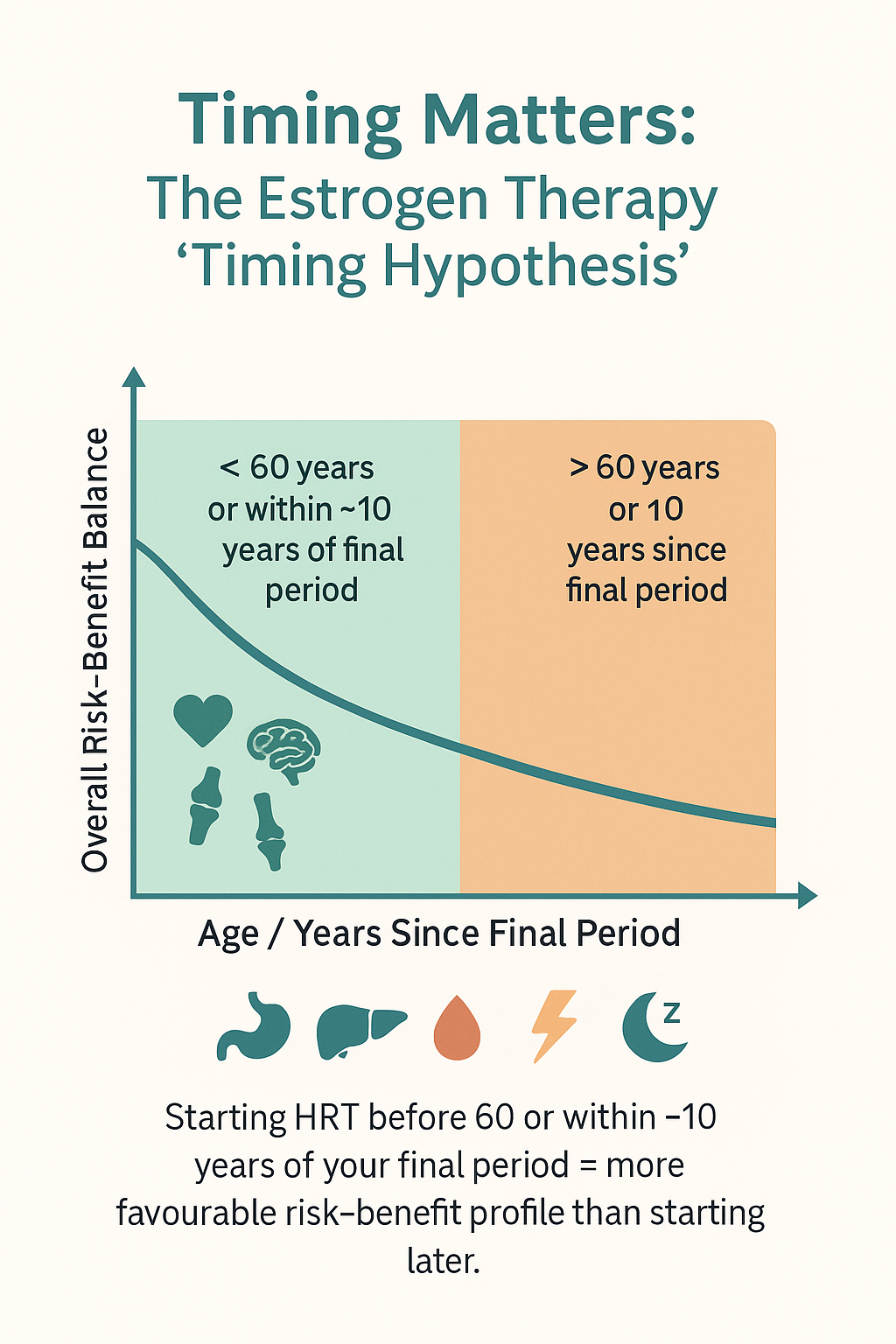
Did you know research supports a “timing hypothesis” for estrogen therapy—meaning starting HRT before age 60 or within ~10 years of your final period is linked with a more favourable risk–benefit picture for heart, brain, and bones than starting it later in life? In early menopause, estrogen receptors on blood vessels and neurons seem more responsive and protective; decades later, the same dose may behave very differently.
👉🏾 Translation: It’s not just if you use HRT/BHRT, but when, what, and for how long—layered on top of your unique Metabolic Chaos® (gut, liver detox, blood sugar, inflammation, stress). Hormones are a tool, not the whole toolbox.
✨ Healing Opportunity: Track your symptoms and cycle history; optimise foundations (sleep, fibre-rich whole foods, movement, blood sugar balance); run targeted labs with a practitioner in your lane; then discuss timing, type (oral vs patch/gel), and dose with a qualified prescriber who understands midlife women—not just “normal ranges.”
✝️ Faith Element: Practise temperance and stewardship—pray for wisdom, gather good information, and remember your body is still a temple, even in hot-flash season. Wise, small, Spirit-led choices add up to calmer hormones and a clearer mind. 🙏🏾
🧬 Metabolic Chaos®, Low Hormones & Hidden Healing Opportunities
From a Functional Diagnostic Nutrition® perspective, hormone therapy is never the whole story.
Perimenopause and menopause sit on top of whatever’s already happening in your internal ecosystem—what we call Metabolic Chaos®:
Gut and microbiome shifts
Liver detox and bile flow
Blood sugar and insulin resistance
Thyroid and adrenal function
Inflammation and immune balance
Nervous system / stress load
Doctors like Dr. Jolene Brighten and Dr. Carrie Jones often highlight that low hormones can carry risks (bone, brain, metabolism) and that diet, sleep, stress, and micronutrient status deeply affect how you experience that transition. Hormones alone can’t out-supplement ultra-processed food, four hours of sleep, and chronic burnout.
Cardiologist Dr. Jayne Morgan talks about how estrogen loss is one reason women’s heart-disease risk climbs after menopause, and why early attention to blood pressure, lipids, and lifestyle is crucial—whether or not you ever use HRT.
Urologist Dr. Kelly Casperson often reminds women that vaginal pain, urinary leaks, and low desire are not things we just “accept” as the price of aging—and that there are evidence-based options (hormonal and non-hormonal) for pelvic and sexual health.
Put simply:
Hormone therapy can be one tool.
The deeper healing opportunities still live in your habits, your environment, your labs, and your nervous system.
🙏🏾 A Quiet, Faith-Aware Lens: Stewardship Over Panic
From a gentle, faith-aware perspective—one that echoes a lot of Seventh-day Adventist health principles—the body is seen as a gift to steward, not a machine to exploit or a project to obsess over.
That shapes the hormone conversation in a few ways:
Lifestyle isn’t optional. The classic pillars—whole plant-rich food, rest (including a true weekly pause), fresh air, sunlight, movement, temperance—are still the foundation, whether or not you ever touch HRT.
Medications are tools, not masters. Using or declining HRT doesn’t define your faith. The question is whether you’re making the decision from fear, pressure, or thoughtful discernment.
Prayer and information can coexist. You can pray for wisdom and read labels, talk to informed clinicians, and learn from trustworthy educators. Those things go together, not against each other.
Instead of,
“Good Christians never use medication,”
a stewardship lens sounds more like,
“Lord, help me honour You with my choices—my sleep, my food, my boundaries, my words—and give me wisdom about if or how tools like HRT fit into that picture.”
Just a hint. Not a hammer.
🧠 Questions to Bring to Your Prescriber (So You’re Not Starting From Zero)
Because this blog is purely educational and not medical advice, here are some conversation-starting questions you might take into an appointment with a licensed prescriber:
Timing & Risk Profile
“Given my age and how long it’s been since my last period, how does that affect the risks and benefits of HRT for me?”
Type & Route
“Are you recommending an estrogen pill, patch, or gel—and why that route for my health history?”
Progesterone & Uterine Protection
“What are you using to protect my uterine lining—and is micronised progesterone an option?”
Bioidentical vs Compounded
“Are these regulated, body-identical products or compounded BHRT? What are the pros and cons of each in my situation?”
Cardiometabolic & Cancer Considerations
“With my personal and family history (heart disease, stroke, clots, breast cancer, etc.), how do you see the risk–benefit balance?”
Non-Hormonal Tools
“If hormones aren’t right for me—or I choose not to use them—what non-hormonal options exist for my worst symptoms?”
Whole-Person Plan
“How can I support my heart, bones, brain, and mood with lifestyle, labs, and other strategies alongside—or instead of—HRT?”
None of these questions obligate you to say yes to anything. They simply put you in the driver’s seat of your own decision-making.
🌅 Wrapping It Up: Clearer Labels, Kinder Conversations
Here’s the essence:
The FDA changing its black box stance is good news for women’s autonomy and access, not a declaration that HRT is “safe for everyone, no questions asked.”
HRT vs BHRT isn’t a good vs evil showdown—it’s about specific molecules, routes, regulation, and your own health story.
Educators like Dr. Carrie Jones, Dr. Jolene Brighten, Dr. Louise Newson, Dr. Jayne Morgan, Dr. Kelly Casperson, and advocates like Tamsen Fadal are all, in their own ways, pushing toward the same thing:
Less stigma
Better information
More nuance
Shared decision-making for women in midlife
From a Traditional Naturopath / FDN-style lens, hormones—if you ever use them—are just one part of the healing opportunities in front of you. Your gut, sleep, blood sugar, nervous system, relationships, and walk with God all matter too.
🫴🏾You don’t have to rush.
🫴🏾You don’t have to suffer in silence.
🫴🏾And you don’t have to choose between faith and science, either.
Take your time, keep learning, pray for wisdom, and have real conversations with clinicians who are willing to discuss both the data and the day-to-day reality of being a woman in this season. 💛
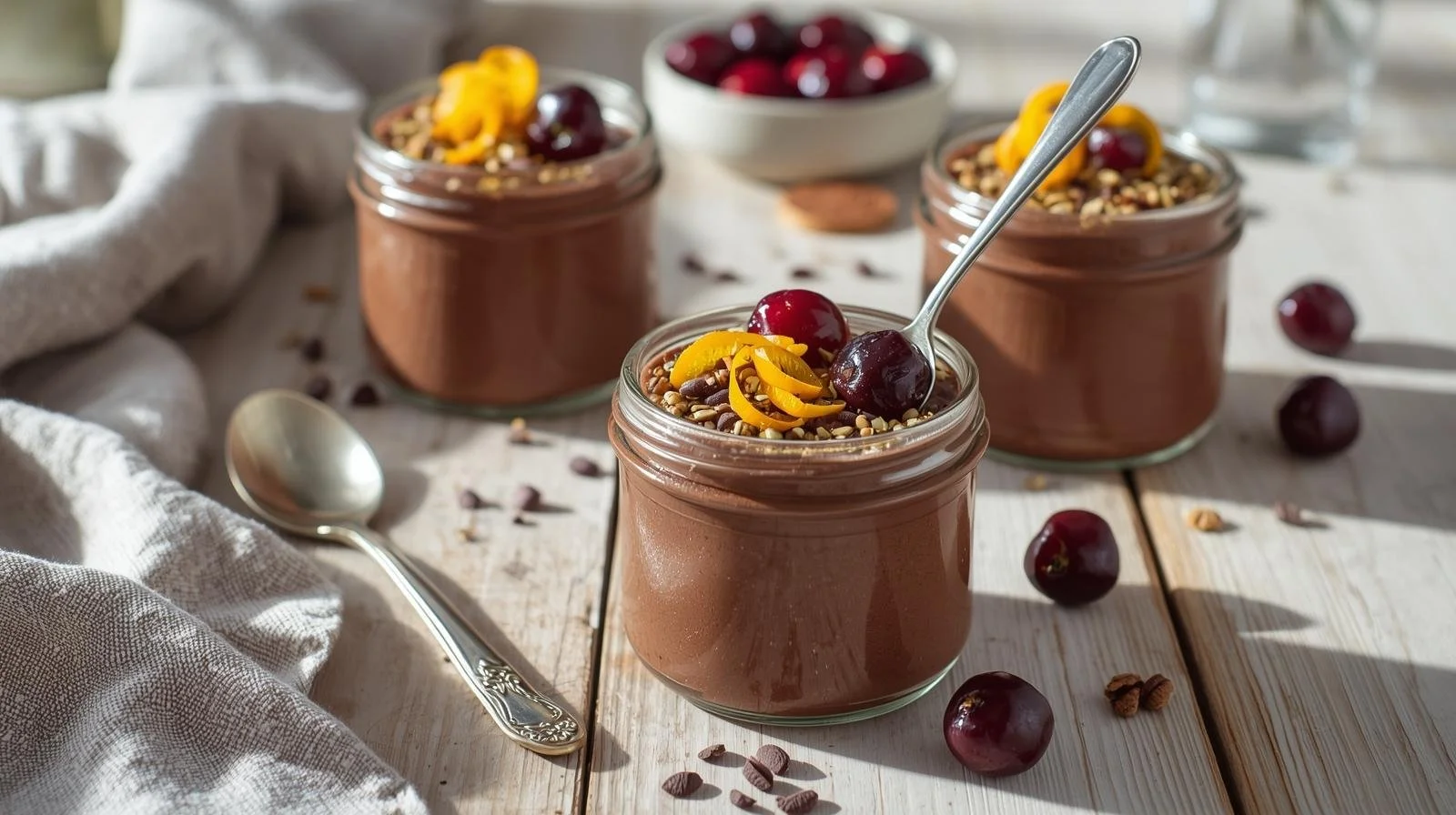
🍫 Cool & Calm Chocolate Cherry Mousse (WFPB, No-Guilt Dessert)
Think Chocolate Pot de Crème meets cherry cheesecake, but without the sugar crash, dairy bloat, or guilt. Creamy, rich, and secretly full of fibre, magnesium, and phytonutrients your midlife hormones will actually appreciate.
Serves 3–4 (depending on glass size)
🧺 Ingredients
🍒 Mousse Base
1½ cups pitted dark cherries (fresh or frozen, thawed)
1 block (300–350g) silken tofu
Soy-free option: use 1½ cups thick plain coconut yogurt or unsweetened almond yogurt
3–4 Medjool dates, pitted (or 2–3 tbsp maple syrup)
3 tbsp unsweetened cacao powder (or cocoa powder)
1 tsp pure vanilla extract
Pinch of fine sea salt
🌱 Omega-Glow Topping (Optional but delicious)
2 tbsp ground flaxseed
1 tbsp chia seeds
2 tbsp crushed walnuts or pumpkin seeds
Zest of ½ orange (finely grated)
✨ To Serve
Extra cherries or berries on top
A sprinkle of cacao nibs (optional crunch)
👩🏾🍳 Step-by-Step Instructions
1️⃣ Blend the Mousse
Add cherries, silken tofu (or yogurt), dates, cacao, vanilla, and salt to a high-speed blender or food processor.
Blend until completely smooth and silky, scraping down sides as needed.
Taste:
Want sweeter? Add 1 more date or a splash of maple syrup.
Want deeper chocolate? Add 1 extra tablespoon of cacao and blend again.
2️⃣ Chill & Set
Divide the mousse into 3–4 small glasses or ramekins.
Cover and refrigerate for at least 1–2 hours so it thickens and the flavours deepen. (Overnight is even better.)
3️⃣ Make the Omega-Glow Topping
In a small bowl, mix ground flaxseed, chia seeds, crushed walnuts/pumpkin seeds, and orange zest.
Stir to combine.
4️⃣ Assemble & Serve 🍨
Just before serving, sprinkle each mousse cup with a spoonful of the Omega-Glow topping.
Add extra cherries/berries and a pinch of cacao nibs if using.
Take a breath, say a little “thank You” for this guilt-free goodness, and enjoy slowly.
🧪 Ingredient Health Benefits (Hormone & Metabolic Chaos® Edition)
Dark Cherries 🍒
Rich in anthocyanins (deep red pigments) that support vascular health and inflammation balance.
Naturally contain melatonin and serotonin precursors, which may support sleep quality—gold in perimenopause.
Silken Tofu 🌱
Provides complete plant protein and gentle phytoestrogens (isoflavones) that can help modulate oestrogen activity in midlife for some women.
Soft, creamy texture without dairy → kinder to gut and skin.
Cacao Powder 🍫
High in magnesium (“the original chill pill”) to support muscle relaxation, nervous system, and sleep.
Packed with polyphenols that support blood vessels and brain health as hormones shift.
Medjool Dates 🌴
Whole-food sweetness with fibre, potassium, and trace minerals—slower blood-sugar impact than refined sugar.
Fibre helps escort used hormones and toxins out, easing Metabolic Chaos®.
Vanilla & Sea Salt ✨
Vanilla adds sweetness without sugar; salt enhances flavour so you can get away with less sweetener.
Ground Flaxseed 🌱
Rich in lignans (phytoestrogens) and soluble fibre that support oestrogen metabolism and bowel regularity.
ALA omega-3s for heart and brain support in midlife.
Chia Seeds ⚫
Fibre + omega-3s + gel-forming texture to support gut motility and blood-sugar steadiness.
Walnuts / Pumpkin Seeds 🧠🎃
Walnuts: omega-3s + polyphenols for brain, mood, and anti-inflammatory support.
Pumpkin seeds: zinc, magnesium, iron—key for immunity, energy, and hormone enzyme pathways.
Orange Zest 🍊
Concentrated citrus polyphenols + vitamin C support detox and collagen.
Bright aroma signals “dessert” to your brain, so you feel satisfied with a truly guilt-free portion.
This mousse is lush enough to feel like a treat, but built like a hormone-savvy snack: fibre, healthy fats, protein, and no refined sugar. Perfect for when you want something chocolatey, cosy, and midlife-body-approved.
📚 References
📖 Menopause, HRT, BHRT & Women’s Health
HHS / FDA — HHS Advances Women’s Health, Removes Misleading FDA Warnings from Hormone Replacement Therapy (press release on removal of certain black box warnings for menopausal HRT)
👉🏾 https://www.fda.gov/news-events/press-announcements/hhs-advances-womens-health-removes-misleading-fda-warnings-hormone-replacement-therapy
U.S. HHS — FACT SHEET: FDA Initiates Removal of “Black Box” Warnings from Menopausal Hormone Replacement Therapy Products
👉🏾 https://www.hhs.gov/press-room/fact-sheet-fda-initiates-removal-of-black-box-warnings-from-menopausal-hormone-replacement-therapy-products.html
Associated Press — The FDA removes a long-standing warning from hormone-based menopause drugs (news coverage of the label change)
👉🏾 https://apnews.com/article/f26a8208fd3f5174ec96d61140439561
Reuters — US FDA to drop black box warnings from menopause hormone therapies
👉🏾 https://www.reuters.com/business/healthcare-pharmaceuticals/us-fda-chief-makary-asks-drugmakers-remove-warnings-hormone-therapy-2025-11-10/
The North American Menopause Society — 2022 Hormone Therapy Position Statement (HT remains most effective for VMS & GSM; risks depend on age, timing, type, route)
👉🏾 https://journals.lww.com/menopausejournal/fulltext/2022/07000/the_2022_hormone_therapy_position_statement_of_the.4.aspx
NAMS — 2022 Hormone Therapy Position Statement (PDF summary)
👉🏾 https://menopause.org/wp-content/uploads/press-release/ht-position-statement-release.pdf
Mayo Clinic — Bioidentical hormones: Are they safer? (bioidentical / “natural” hormones not proven safer than conventional HT)
👉🏾 https://www.mayoclinic.org/diseases-conditions/menopause/expert-answers/bioidentical-hormones/faq-20058460
Cleveland Clinic — Bioidentical Hormones: Therapy, Uses, Safety & Side Effects (overview of FDA-approved vs compounded BHRT)
👉🏾 https://my.clevelandclinic.org/health/treatments/15660-bioidentical-hormones
Cleveland Clinic — Hormone Replacement Therapy (HRT) for Menopause (HRT types, benefits, and risks)
👉🏾 https://my.clevelandclinic.org/health/treatments/15245-hormone-therapy-for-menopause-symptoms
Mayo Clinic — Menopause hormone therapy: Is it right for you? (overview of timing, age, and individual risk–benefit)
👉🏾 https://www.mayoclinic.org/diseases-conditions/menopause/in-depth/hormone-therapy/art-20046372
Files JA et al. — Bioidentical Hormone Therapy (Mayo Clinic Proceedings; comparison of compounded BHRT vs FDA-approved HT)
👉🏾 https://www.mayoclinicproceedings.org/article/S0025-6196(11)60072-4/fulltext
Balance / Dr Louise Newson — Balance-Menopause.com (education on menopause, HRT, and individualised risk)
👉🏾 https://www.balance-menopause.com/
Dr. Carrie Jones — Hormone Education & DUTCH Testing Resources
👉🏾 https://www.drcarriejones.com/
Dr. Jolene Brighten — Perimenopause & Menopause Resources + HRT Podcasts
👉🏾 https://drbrighten.com/podcasts/perimenopause-symptoms-solutions-explained/
Dr. Kelly Casperson — Genitourinary Syndrome of Menopause 101 (You Are Not Broken podcast)
👉🏾 https://kellycaspersonmd.com/episode-221-genitourinary-syndrome-of-menopause-101/
Blog Disclaimer
The health information on this blog is for general educational purposes only and is not intended to diagnose, treat, cure, or prevent any disease. It should not be used as a substitute for professional medical advice. Always consult a qualified healthcare provider before making any health-related decisions
This blog may contain affiliate links, meaning Leaves from the Tree of Life LLC may earn a small commission if you purchase a product or service through these links—at no additional cost to you. Your support helps us continue to provide valuable content. Thank you!
