
Beating Afternoon Slumps: Gut-First Solutions for Sustainable Energy
Beating Afternoon Slumps: Gut-First Solutions for Sustainable Energy
When Your 3 PM Self Feels Like a Deflated Balloon…
You start your morning feeling like a productivity superhero—your smoothie bowl gave you a colorful burst of plant-powered joy. Your mind is sharp, your to-do list is trembling in fear. Then… sometime after lunch… the dreaded slump hits.
Your brain fog rolls in like a stubborn cloud, your eyelids start weighing more than your laptop, and suddenly that leftover muffin or double espresso starts whispering your name.
Here’s the twist: your afternoon fatigue isn’t about being lazy, “getting older,” or needing more caffeine. More often than not, it’s a sign your gut is waving a little white flag—and it has everything to do with Metabolic Chaos®: unstable blood sugar, sluggish digestion, and nutrient absorption gaps.
As a Traditional Naturopath and Functional Diagnostic Nutrition® Practitioner, I’ve seen this story play out countless times. Behind these daily dips in energy lies a tangled web of gut imbalances—and within it, a goldmine of healing opportunities.
Let’s connect the dots.

The Gut–Energy Connection: Your Digestive System’s Hidden Job
Your digestive system is more than a nutrient delivery service—it’s your body’s energy department. When digestion is optimized, you’re not just avoiding bloating—you’re unlocking steady, sustainable power throughout the day.
Here’s how things can go sideways:
Blood Sugar Rollercoaster 🎢
Meals heavy in refined carbs or low in protein and fiber send your blood sugar soaring… and then crashing. Your body responds by demanding quick fixes—usually sugar or caffeine—that only repeat the cycle.
Nutrient Absorption Gaps 🚫
Even the most nutrient-rich plant foods won’t deliver if your gut can’t break them down. Without steady supplies of B vitamins, magnesium, and amino acids, your mitochondria (your body’s “batteries”) can’t make enough energy to keep you sharp.
Sluggish Digestion 🐢
Low stomach acid, inadequate digestive enzymes, or imbalanced gut microbes can slow nutrient delivery, leaving your brain and muscles running on fumes.
This is why gut health is ground zero for sustainable energy.
Plant-Powered Fixes for the Afternoon Slump
Here’s how to fix the dip without relying on a sugar or caffeine bailout:
1. Breakfast with Staying Power 🌱
Start your day with a combo of complex carbs, healthy fats, and plant protein—like quinoa porridge topped with almond butter, chia seeds, and berries. This keeps blood sugar stable and feeds your gut microbes with fiber from the start.
2. Support Your Digestive Fire 🔑
If you feel heavy or bloated after meals, consider a plant-based digestive enzyme blend, like Digestive Enzymes Ultra (Pure Encapsulations). It helps unlock the nutrients from legumes, grains, nuts, and vegetables so your body can actually use them for energy.
3. Hydrate with Purpose 💧
Skip the soda and keep a glass water bottle on hand. Add a splash of coconut water or a pinch of mineral-rich sea salt to replenish electrolytes naturally. Hydrated cells are efficient cells.
4. Make Lunch Light but Powerful 🥗
Instead of heavy, oil-laden fare, go for a vibrant bowl: leafy greens, roasted sweet potato, chickpeas, avocado, sauerkraut, and a tahini-lemon dressing. You’ll stay fueled without triggering a food coma.
5. Move for Metabolic Balance 🚶🏾♀️
A 10–15 minute digest walk after lunch helps regulate blood sugar, stimulates digestion, and gives your brain a mini oxygen bath—perfect for staying sharp through the afternoon.
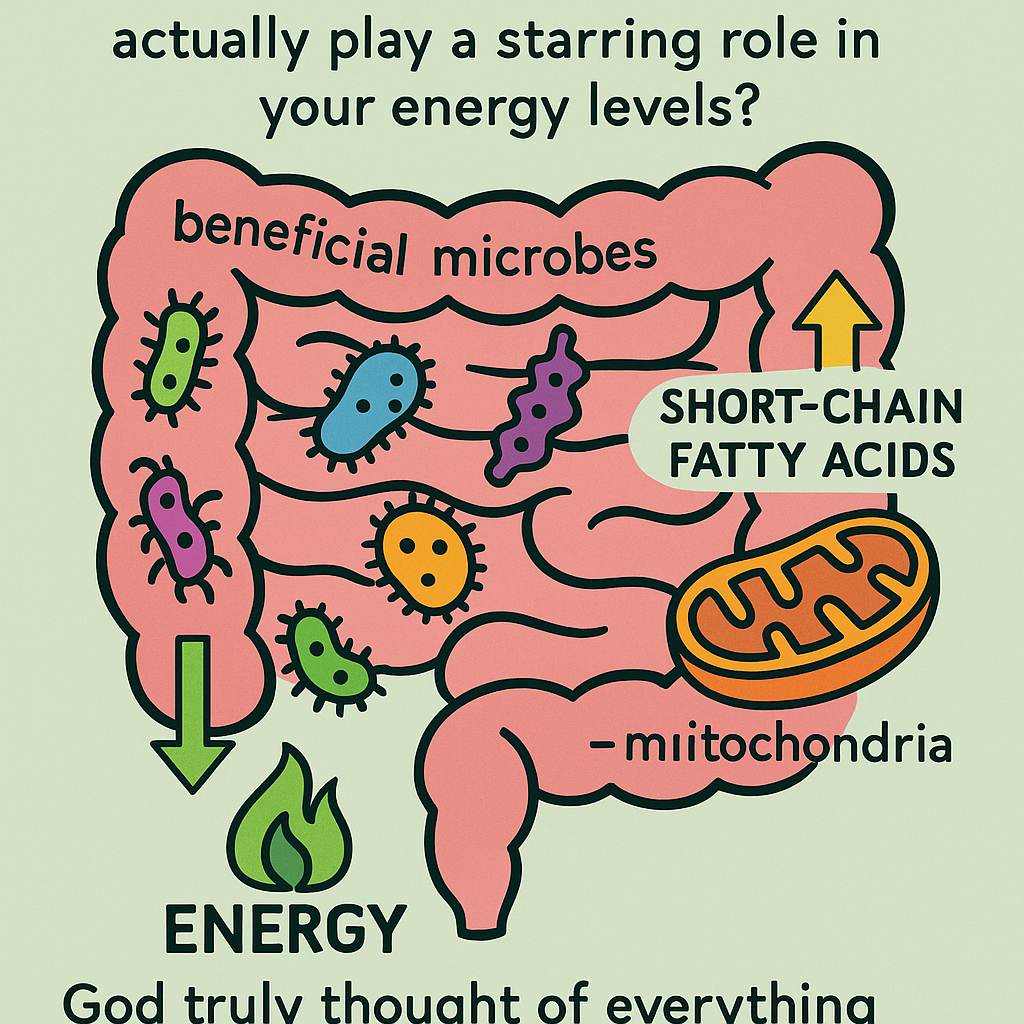
🔬 Science+ Sidebar: Fun Fact
Did you know your gut bacteria actually play a starring role in your energy levels?
Certain beneficial microbes produce short-chain fatty acids (like butyrate) that not only reduce inflammation but also feed your mitochondria—the little power plants inside your cells. Translation: a balanced microbiome literally fuels your energy from the inside out.
God truly thought of everything when He designed our digestive system! 🙌🏾💚
Faith Meets Physiology: Stewarding Your Energy Well
God designed our bodies to run on a rhythm—stable, balanced, and fueled by the good things of the earth. When we’re experiencing energy crashes, it’s often a nudge to care for the systems He entrusted us with, starting with the gut.
Instead of chasing quick fixes, let’s see fatigue as a signal—a built-in reminder to slow down, nourish deeply, and align with the natural design for health.
Your Next Step: Stop Guessing and Start Testing
If you’re already eating a whole-food, plant-based diet but still hitting that 3 PM wall, it’s time to dig deeper. Functional lab testing—like a GI Effects stool test, micronutrient panel, or food sensitivity test—can reveal exactly where digestion, nutrient absorption, or gut balance is falling short.
💬 Let’s Talk – Imagine having a personalized roadmap that shows you exactly what’s draining your energy—and the steps to fix it. As part of our Leaves from the Tree of Life services, I offer targeted testing, plant-powered protocols, and compassionate coaching to uncover your gut’s hidden healing opportunities.
📅 Book your consultation today and explore our services. Let’s design your custom gut-first energy plan so you can feel vibrant from morning to night—without relying on caffeine, sugar, or quick fixes.
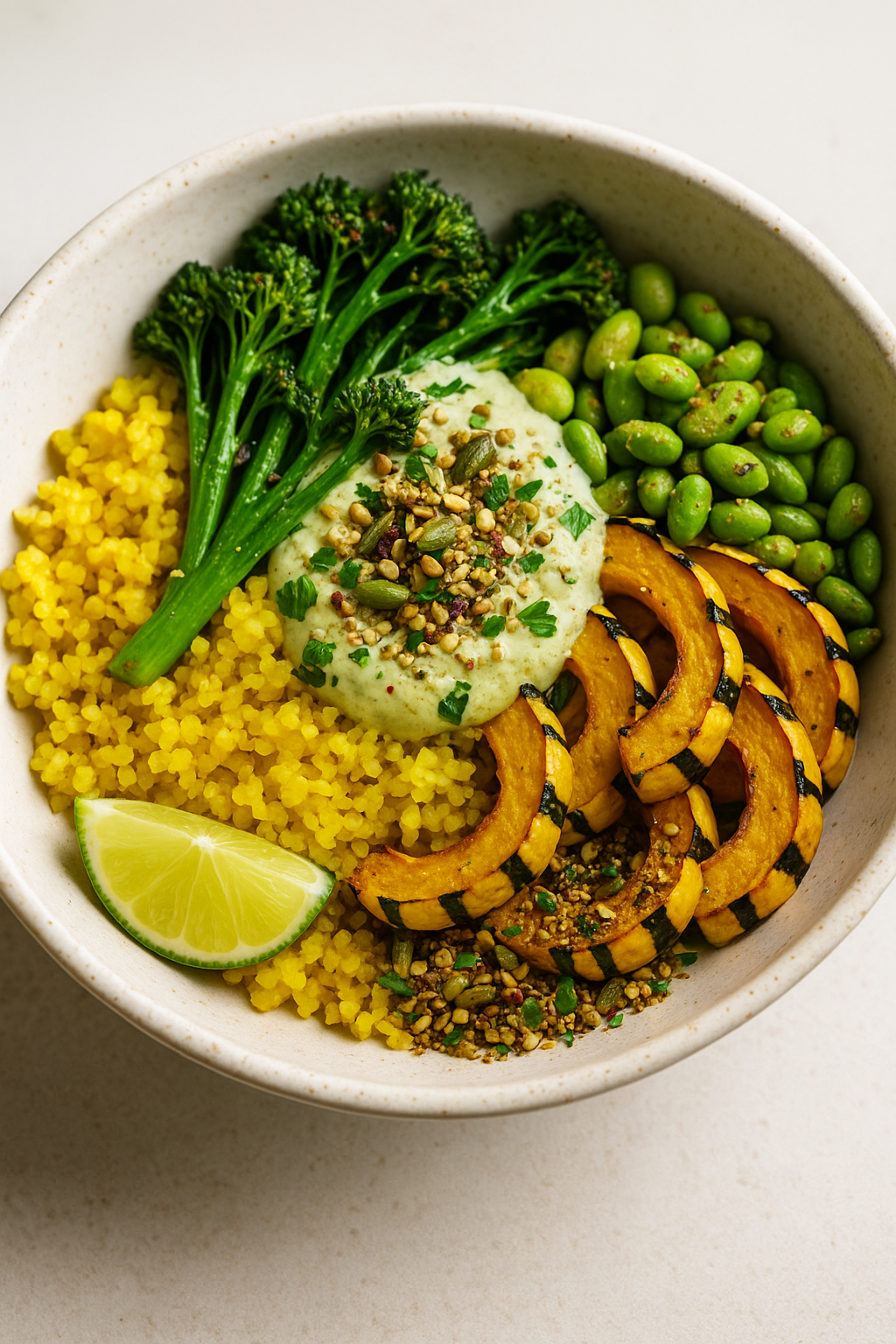
🌞 Saffron-Millet Power Bowl with Crispy Herb Edamame, Delicata & Macadamia–Lime Cream
Serves: 2
Total time: ~30–35 minutes
Vibe: Bright, creamy, savory–sweet, deeply satisfying (minus the 3 PM crash)
Ingredients
Saffron Millet 🌾
¾ cup millet, well-rinsed
1 ½ cups water
1 small pinch saffron threads (crush between fingers)
¼ tsp turmeric
Pinch sea salt
Veg & Protein 🥦💪🏾
1 small delicata squash, seeded & sliced into half-moons (skin on)
1 small bunch broccolini (or tender-stem broccoli), chopped
1 cup edamame (thawed if frozen) — or green peas if preferred
1 tbsp extra‑virgin olive oil (optional)
Sea salt & cayenne pepper
Pumpkin–Hemp “Dukkah” Sprinkle 🌿
2 tbsp pumpkin seeds
2 tbsp hemp hearts
1 tsp sesame seeds
½ tsp ground cumin
½ tsp ground coriander
Pinch smoked paprika (optional)
Pinch sea salt
Macadamia–Lime Cream 🥥🍋
¼ cup macadamia nuts (soak 10 min in hot water, drain)
2 tbsp tahini
Juice of 1 lime (or ½ lemon)
¼ cup fresh parsley
1 small garlic clove
3–5 tbsp water (to thin to pourable)
Pinch sea salt
Step‑by‑Step
1. Simmer the Saffron Millet
Add rinsed millet, water, saffron, turmeric, and salt to a pot. Bring to a boil, then cover and simmer on low 15–18 minutes until fluffy. Rest 5 minutes off heat, covered. Fluff with a fork.
2. Roast the Delicata & Broccolini
Toss squash and broccolini with a tiny splash of olive oil (or dry roast), salt, and pepper. Roast at 210°C / 410°F for 15–18 minutes, flipping once, until edges caramelize.
3. Crisp the Edamame
In a hot skillet (no oil needed), sauté edamame 3–4 minutes until a little toasty. Season with a pinch of salt and pepper. (Use peas the same way—gentle sauté just to warm.)
4. Make the Dukkah
Dry-toast pumpkin, hemp, and sesame seeds in a small pan 2–3 minutes until fragrant. Stir in cumin, coriander, paprika, and salt; remove from heat. Lightly crush with the back of a spoon.
5. Blend the Macadamia–Lime Cream
Blend macadamias, tahini, lime juice, parsley, garlic, salt, and water until silky. Adjust water for drizzle‑able texture. 😍
6. Build the Bowl
Spoon saffron millet into bowls. Top with roasted delicata, broccolini, and crispy edamame. Drizzle generously with macadamia–lime cream. Shower with dukkah. Eat while warm. 💫
Why Your Gut (and Energy) Will Love Every Bite 🔬⚡
Millet — Gentle, gluten‑free whole grain with B‑vitamins and magnesium to support mitochondria and steady energy; easy on sensitive tummies.
Saffron — Rich in carotenoids and safranal; linked to mood and antioxidant support—hello, afternoon focus.
Turmeric — Curcumin supports a healthy inflammatory response, which can reduce “energy tax” from systemic inflammation.
Delicata squash — Slow‑release carbs + beta‑carotene for cellular repair and satiety without the spike‑and‑crash.
Broccolini — Sulforaphane precursors help phase II detox and mitochondrial signaling; fiber feeds the microbiome.
Edamame (or peas) — Clean plant protein + folate and iron to build energy without heaviness.
Pumpkin seeds — Zinc + magnesium for enzyme function and ATP production; great for blood sugar balance.
Hemp hearts — Complete plant protein with omega‑3 ALA to support cell membranes and calm inflammation.
Sesame — Lignans + minerals that complement bile flow and fat digestion.
Cumin & coriander — Classic carminatives that support digestive enzyme activity and ease post‑meal bloat.
Macadamias — Monounsaturated fats that steady blood sugar and keep you full without a crash.
Tahini — Calcium + copper + sesamolin; creamy mouthfeel to satisfy “comfort” cravings.
Parsley — Vitamin C + chlorophyll to freshen digestion and support collagen synthesis (think joints + gut lining).
Lime — Gentle acid aids gastric secretions and enhances mineral absorption (swap to lemon if preferred).
Make it Your Metabolic‑Chaos‑Taming Bowl 🧩
Low‑histamine tweak: use peas instead of edamame; skip smoked paprika; swap lime for lemon or a splash of coconut water.
Extra protein boost: add 2 tbsp more hemp hearts per bowl.
Greens upgrade: toss in steamed courgette ribbons or rocket for extra polyphenols.
References
Blood Sugar Balance & Afternoon Energy Crashes
1. Harvard T.H. Chan School of Public Health – Carbohydrates and Blood Sugar
Explains how refined carbs cause spikes and crashes, and how fiber, protein, and healthy fats stabilize energy.
https://www.hsph.harvard.edu/nutritionsource/carbohydrates/carbohydrates-and-blood-sugar
2. Harvard Health Publishing – Low Blood Sugar: Symptoms, Causes, and Prevention
Discusses blood sugar fluctuations and their role in fatigue.
https://www.health.harvard.edu/a_to_z/hypoglycemia-a-to-z
Nutrient Absorption & Energy Production
3. National Institutes of Health – Magnesium: Fact Sheet for Health Professionals
Covers magnesium’s role in ATP production and energy metabolism.
https://ods.od.nih.gov/factsheets/Magnesium-HealthProfessional
4. National Institutes of Health – Vitamin B12 and Health
Shows the link between B12, red blood cell formation, and preventing fatigue.
https://ods.od.nih.gov/factsheets/VitaminB12-Consumer
5. German Journals Sports Medicine – The Role of Micronutrients in Mitochondrial Function
Explains how deficiencies can limit energy output.
Plant-Based Diet & Sustained Energy
6. Harvard T.H. Chan School of Public Health – Plant-Based Diets: The Basics
Reviews health benefits and metabolic stability from plant-based eating.
https://hsph.harvard.edu/news/vegan-diet-health-environment/
7. Physicians Committee for Responsible Medicine – Plant-Based Diets for Sustainable Energy
Highlights fiber, antioxidants, and phytonutrients in energy balance.
https://www.pcrm.org/good-nutrition/plant-based-diets
Movement After Meals for Energy & Blood Sugar
8. American Diabetes Association – Benefits of Walking After Meals
Shows how post-meal walking helps regulate glucose and prevent energy crashes.
Hydration & Cognitive Performance
9. National Center for Biotechnology Information – Mild Dehydration Affects Mood and Cognitive Performance
Demonstrates how even mild dehydration impairs focus and energy.
https://pubmed.ncbi.nlm.nih.gov/21736786
Blog Disclaimer
The health information on this blog is for general educational purposes only and is not intended to diagnose, treat, cure, or prevent any disease. It should not be used as a substitute for professional medical advice. Always consult a qualified healthcare provider before making any health-related decisions
This blog may contain affiliate links, meaning Leaves from the Tree of Life LLC may earn a small commission if you purchase a product or service through these links—at no additional cost to you. Your support helps us continue to provide valuable content. Thank you!
